Slide 1 of 10
Slide 1 - Title Slide
PERCENTAGE
Understanding Percentages: Fractions, Decimals, and Real-World Applications | Presented by [Your Name], [Class Name]
---
Photo by Vitaly Gariev on Unsplash

Generated from prompt:
Presentation Title:* PERCENTAGE Objective: To create a clear and engaging presentation showcasing understanding of percentage. Topics to Cover: 1. Percentage , fractions and decimal 2. Percentage greater than 100% and percentage less than 1%. 3. Percentage of quantity. 4. Comparing two quantities by percentage 5. A percentage change (Reverse percentage) Slide Guidelines: * Slide 1: Introduction • Title of the presentation • Your name and class • A brief overview of what the presentation will cover * *Slide 1,2 slides of percentage • Examples of topics • Explanation of the process . Conclusion • Summary of key points • What you learned from the project Additional Tips: * Use clear and concise language * Use visuals and illustrations to support your explanations * Include examples and practice problems * Use bullet points and headings to organize your slides * Practice your presentation before presenting it to the class Presentation and Submission: * Present your presentation to the class * You have 3-4 minutes to present 24 class comments
This educational presentation covers the essentials of percentages, their connections to fractions and decimals, handling extremes over 100% or under 1%, key calculations like percentage of quantities, comparisons, changes, and reverse percentages,加上
PERCENTAGE
Understanding Percentages: Fractions, Decimals, and Real-World Applications | Presented by [Your Name], [Class Name]
---
Photo by Vitaly Gariev on Unsplash
1
The interchangeable nature of these three numerical representations
---
Photo by Angie Dutton on Unsplash
2
Looking beyond the standard 0% to 100% range
---
Photo by Sasun Bughdaryan on Unsplash
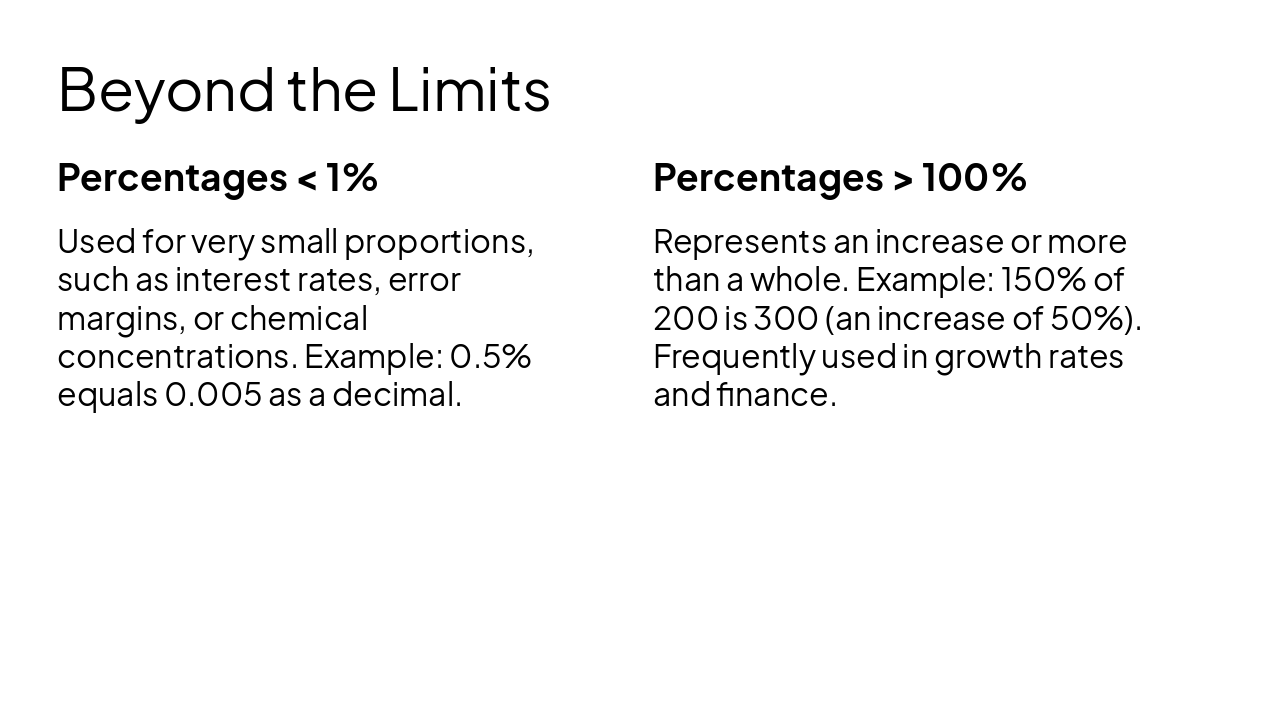
Percentages < 1% Used for very small proportions, such as interest rates, error margins, or chemical concentrations. Example: 0.5% equals 0.005 as a decimal.
Percentages > 100% Represents an increase or more than a whole. Example: 150% of 200 is 300 (an increase of 50%). Frequently used in growth rates and finance.
3
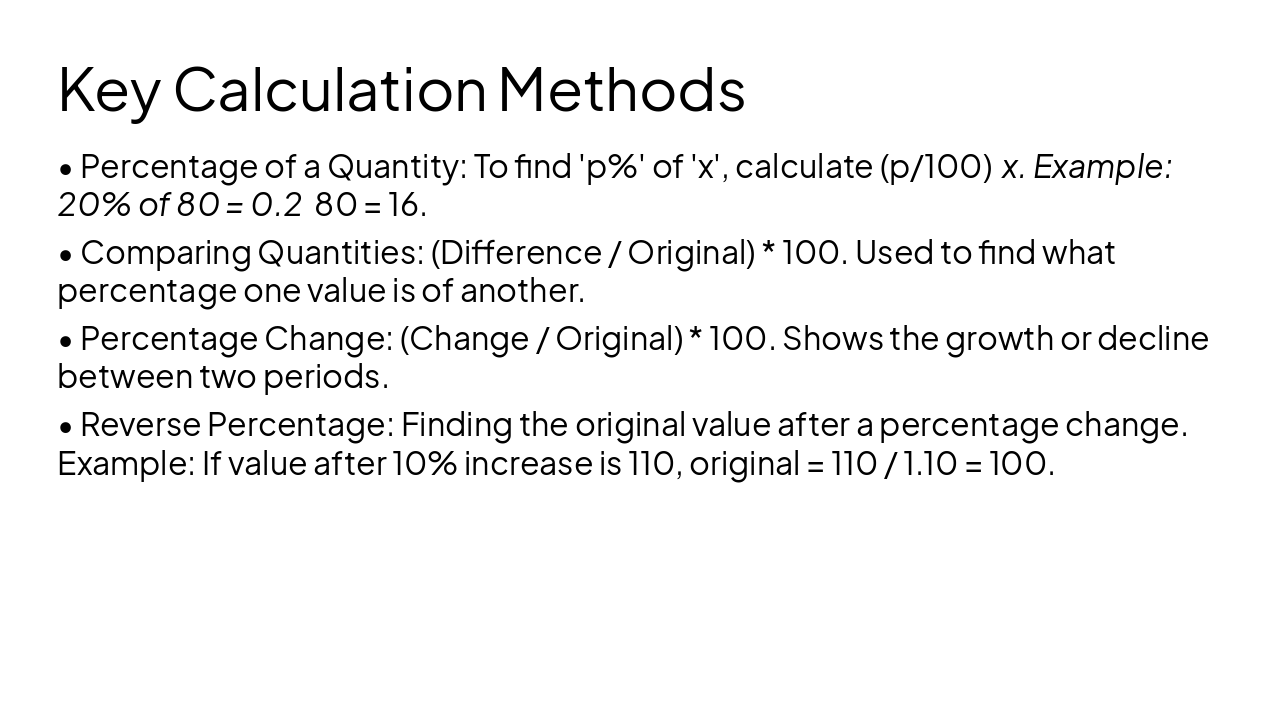
Practical techniques for solving percentage problems
---
Photo by Jakub Żerdzicki on Unsplash

---
Photo by Nick Brunner on Unsplash
Conclusion: Percentages are the universal language of comparison. Mastery allows for precise financial decisions, data analysis, and clear communication.
Applying percentage mastery to real-world problems.
---
Photo by Benjamin Fay on Unsplash
Explore thousands of AI-generated presentations for inspiration
Generate professional presentations in seconds with Karaf's AI. Customize this presentation or start from scratch.