Decompression Sickness (DCS): Understanding "The Bends" and Its Prevention

Generated from prompt:

dcs

This presentation provides a comprehensive overview of Decompression Sickness (DCS), also known as "The Bends". It defines the medical condition, explains its causes and symptoms, identifies key risk factors, outlines effective prevention strategies, and details available treatment options, including hyperbaric oxygen therapy, to ensure thorough understanding and promote safety.

May 22, 202611 slides
Slide 1 of 11

Slide 1 - Decompression Sickness (DCS)

Decompression Sickness (DCS)

Understanding "The Bends" and Its Prevention

---

Photo by Sebastian Pena Lambarri on Unsplash

Slide 1 - Decompression Sickness (DCS)
Slide 2 of 11

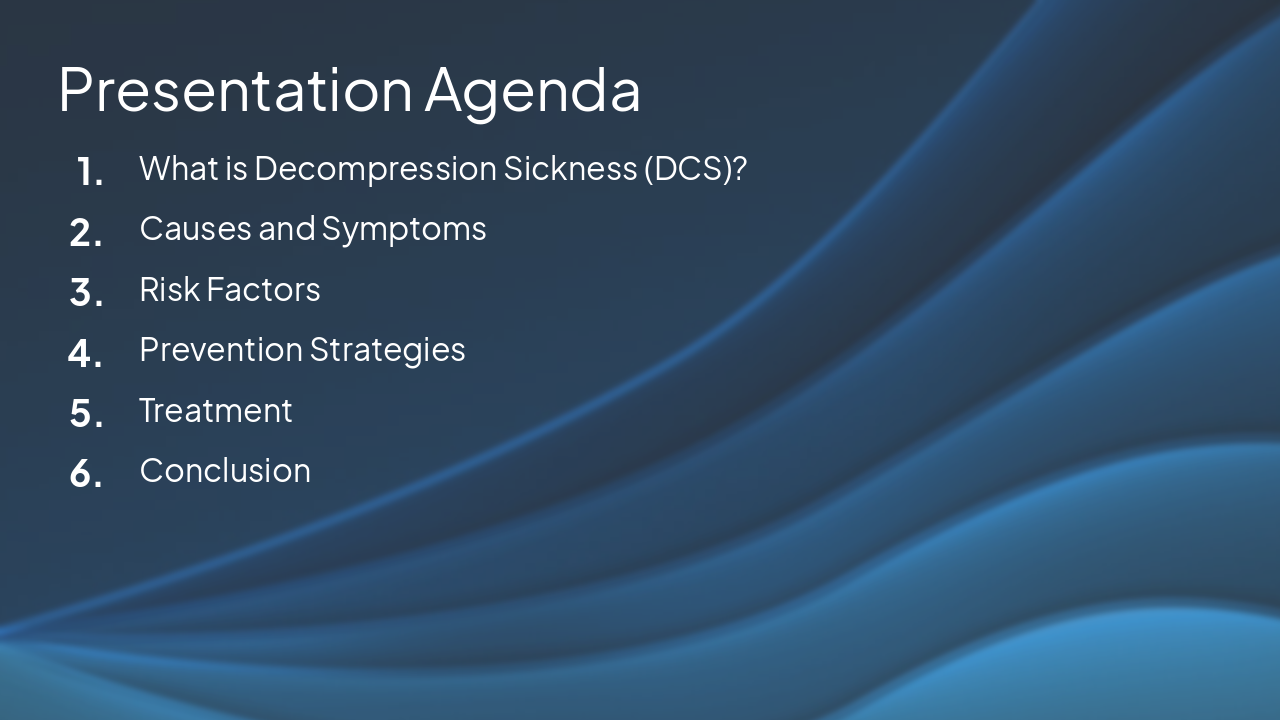
Slide 2 - Presentation Agenda

  • What is Decompression Sickness (DCS)?
  • Causes and Symptoms
  • Risk Factors
  • Prevention Strategies
  • Treatment
  • Conclusion

---

Photo by Martin Martz on Unsplash

Slide 2 - Presentation Agenda
Slide 3 of 11

Slide 3 - What is DCS?

1

Understanding DCS

Defining Decompression Sickness

---

Photo by Cristian Palmer on Unsplash
Slide 3 - What is DCS?
Slide 4 of 11

Slide 4 - What is Decompression Sickness?

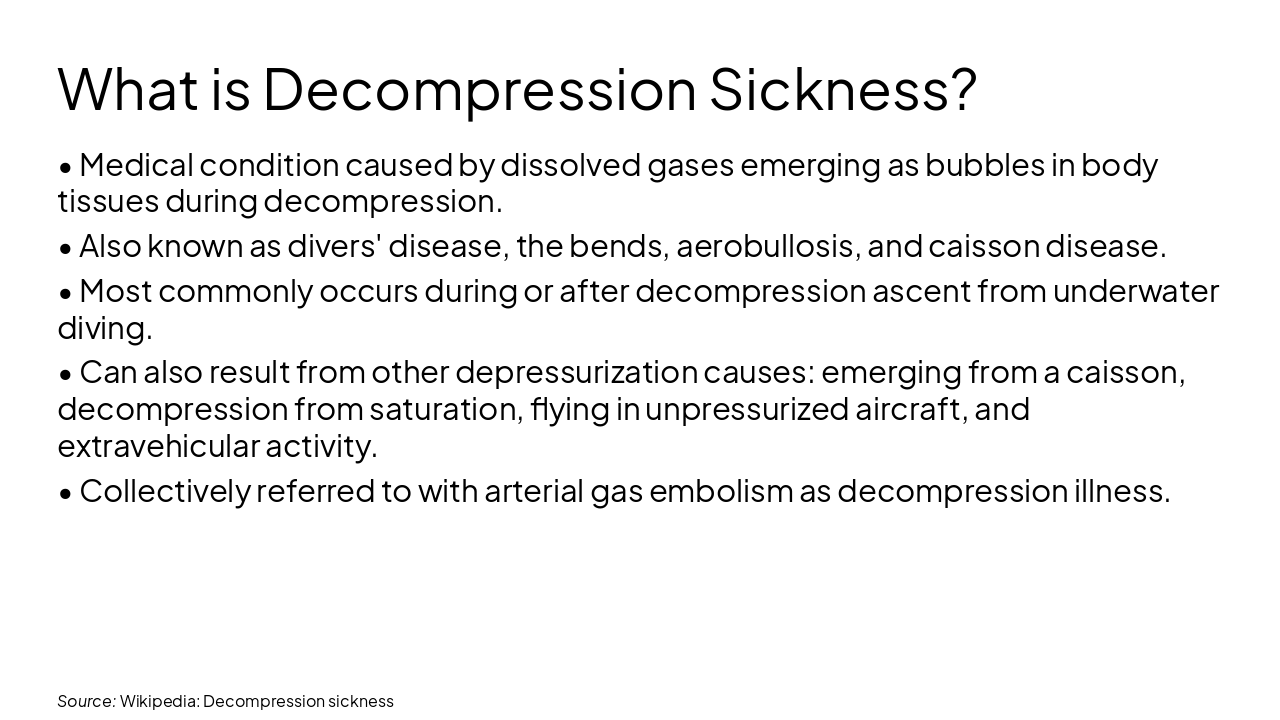
  • Medical condition caused by dissolved gases emerging as bubbles in body tissues during decompression.
  • Also known as divers' disease, the bends, aerobullosis, and caisson disease.
  • Most commonly occurs during or after decompression ascent from underwater diving.
  • Can also result from other depressurization causes: emerging from a caisson, decompression from saturation, flying in unpressurized aircraft, and extravehicular activity.
  • Collectively referred to with arterial gas embolism as decompression illness.

Source: Wikipedia: Decompression sickness
Slide 4 - What is Decompression Sickness?
Slide 5 of 11

Slide 5 - Causes and Symptoms

2

Causes and Symptoms

How DCS Affects the Body

---

Photo by Europeana on Unsplash

Slide 5 - Causes and Symptoms
Slide 6 of 11

Slide 6 - Mechanisms and Manifestations of DCS

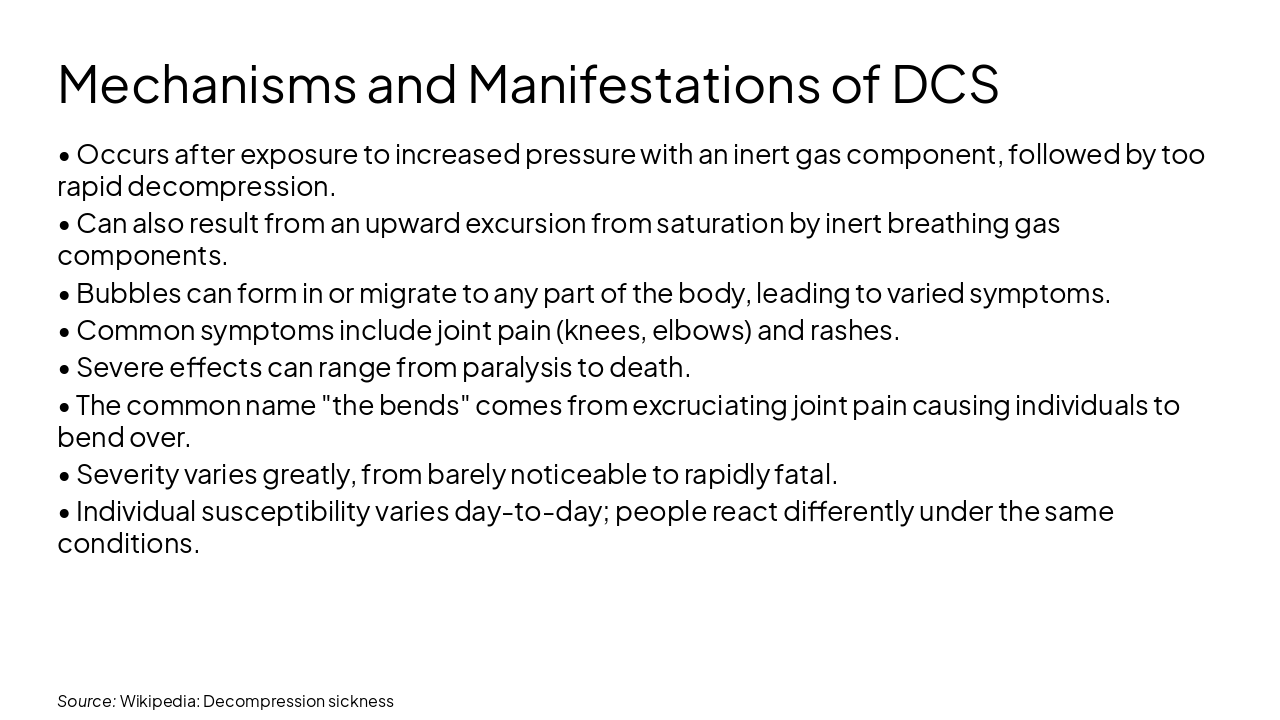
  • Occurs after exposure to increased pressure with an inert gas component, followed by too rapid decompression.
  • Can also result from an upward excursion from saturation by inert breathing gas components.
  • Bubbles can form in or migrate to any part of the body, leading to varied symptoms.
  • Common symptoms include joint pain (knees, elbows) and rashes.
  • Severe effects can range from paralysis to death.
  • The common name "the bends" comes from excruciating joint pain causing individuals to bend over.
  • Severity varies greatly, from barely noticeable to rapidly fatal.
  • Individual susceptibility varies day-to-day; people react differently under the same conditions.

Source: Wikipedia: Decompression sickness
Slide 6 - Mechanisms and Manifestations of DCS
Slide 7 of 11

Slide 7 - Prevention Strategies

3

Prevention Strategies

Mitigating the Risk of DCS

---

Photo by Sebastian Pena Lambarri on Unsplash

Slide 7 - Prevention Strategies
Slide 8 of 11

Slide 8 - Managing and Preventing DCS

  • Risk managed through proper decompression procedures.
  • Uncommon today due to extensive research and prevention efforts.
  • Divers universally use decompression schedules or dive computers.
  • Tools limit exposure and monitor ascent speed.
  • Theoretical decompression risk controlled by tissue compartment with highest inert gas concentration (slowest to outgas).

Source: Wikipedia: Decompression sickness
Slide 8 - Managing and Preventing DCS
Slide 9 of 11

Slide 9 - Treatment of DCS

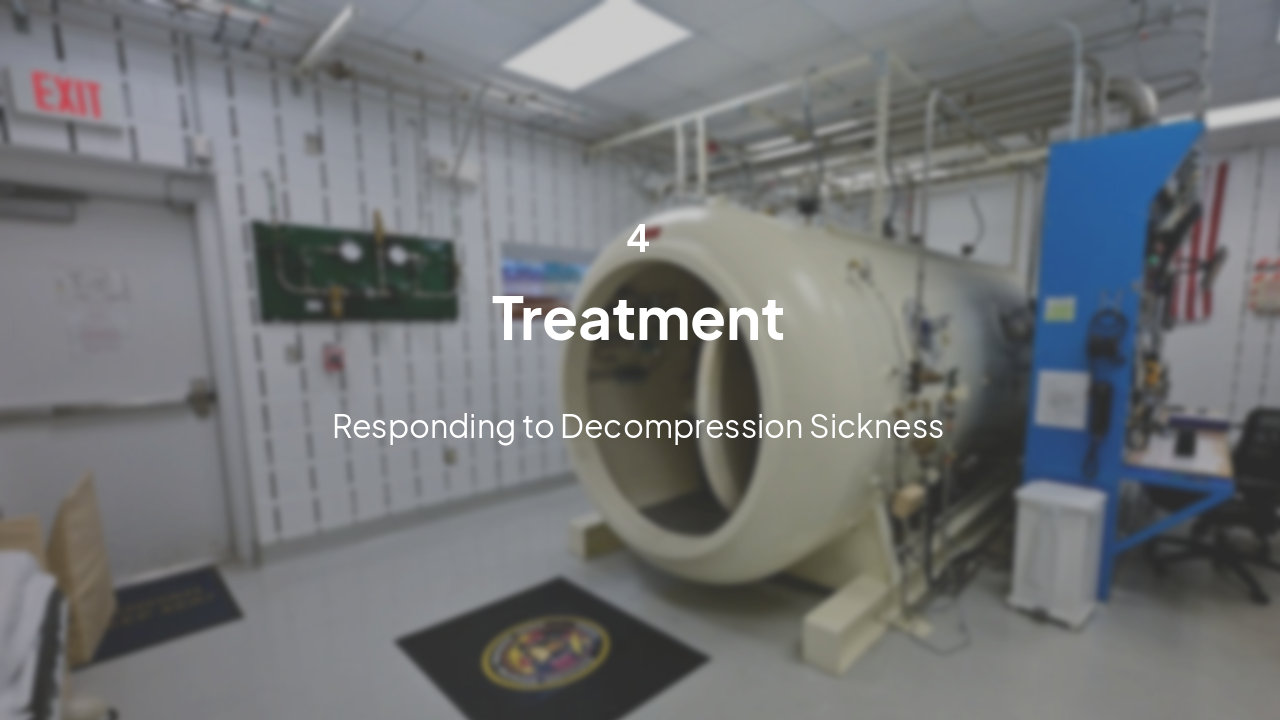
4

Treatment

Responding to Decompression Sickness

---

Photo by Navy Medicine on Unsplash
Slide 9 - Treatment of DCS
Slide 10 of 11

Slide 10 - DCS Treatment Options

  • Primary treatment: Hyperbaric oxygen therapy in a recompression chamber.
  • In-water recompression may be considered if chamber access is delayed, for specific cases.
  • In-water recompression requires skilled personnel and appropriate on-site equipment.
  • Diagnosis confirmed by positive response to treatment.
  • Early treatment significantly increases chances of successful recovery.

Source: Wikipedia: Decompression sickness
Slide 10 - DCS Treatment Options
Slide 11 of 11

Slide 11 - Conclusion

Decompression sickness is a serious condition but is largely preventable and treatable with prompt action and proper protocols.

Safety First in Decompression

---

Photo by Sarah Lee on Unsplash
Slide 11 - Conclusion

Discover More Presentations

Explore thousands of AI-generated presentations for inspiration

Browse Presentations
Powered by AI

Create Your Own Presentation

Generate professional presentations in seconds with Karaf's AI. Customize this presentation or start from scratch.

Create New Presentation

Powered by Karaf.ai — AI-Powered Presentation Generator