Cultural Aspects of Nutrition in the Philippines: Traditions, Health, and Contemporary Challenges

Generated from prompt:

Make a presentation about Cultural Aspects of Nutrition in the Philippines and a over view of the country and religion and traditional food habits and health and economics and Climate Change/Social Justice/Political Issues and GENDER ISSUES

This presentation explores the cultural dimensions of nutrition in the Philippines, starting with a country overview including its geography and demographics. It covers the dominant role of Catholicism and its influence on fiestas and food traditions, diverse traditional dishes shaped by Austronesian, Chinese, Spanish, and American influences. Key sections address health and nutrition inequities, economic transitions, climate change impacts on food security, social justice disparities among 185+ ethnolinguistic groups, political history, and gender issues in food preparation and access.

May 11, 202618 slides
Slide 1 of 18

Slide 1 - Cultural Aspects of Nutrition in the Philippines

Cultural Aspects of Nutrition in the Philippines

Country Overview, Religion, Traditional Food Habits, Health, Economics, Climate Change, Social Justice, Political & Gender Issues

---

Photo by Logan Voss on Unsplash
Slide 1 - Cultural Aspects of Nutrition
in the Philippines
Slide 2 of 18

Slide 2 - Presentation Agenda

  • Country Overview
  • Religion
  • Traditional Food Habits
  • Health and Nutrition
  • Economics
  • Climate Change
  • Social Justice & Political Issues
  • Gender Issues

---

Photo by Frank Lloyd de la Cruz on Unsplash

Slide 2 - Presentation Agenda
Slide 3 of 18

Slide 3 - Country Overview

1

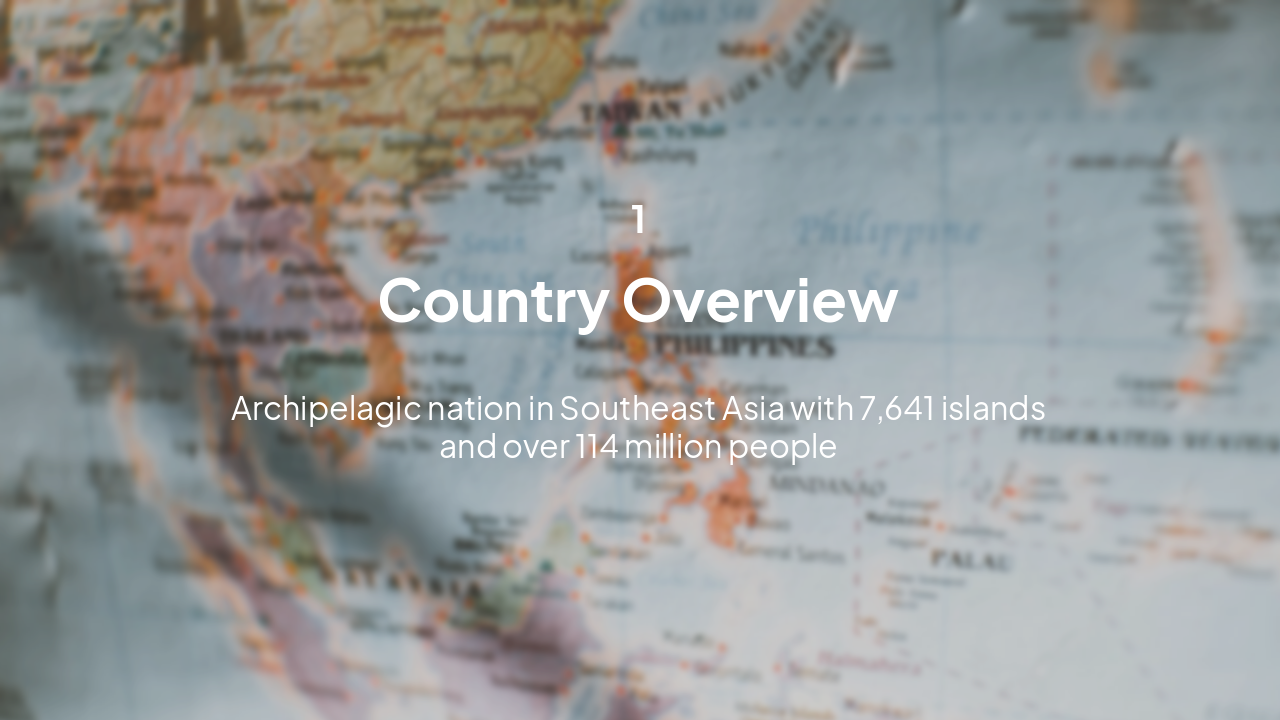
Country Overview

Archipelagic nation in Southeast Asia with 7,641 islands and over 114 million people

---

Photo by Road Ahead on Unsplash

Slide 3 - Country Overview
Slide 4 of 18

Slide 4 - Key Facts

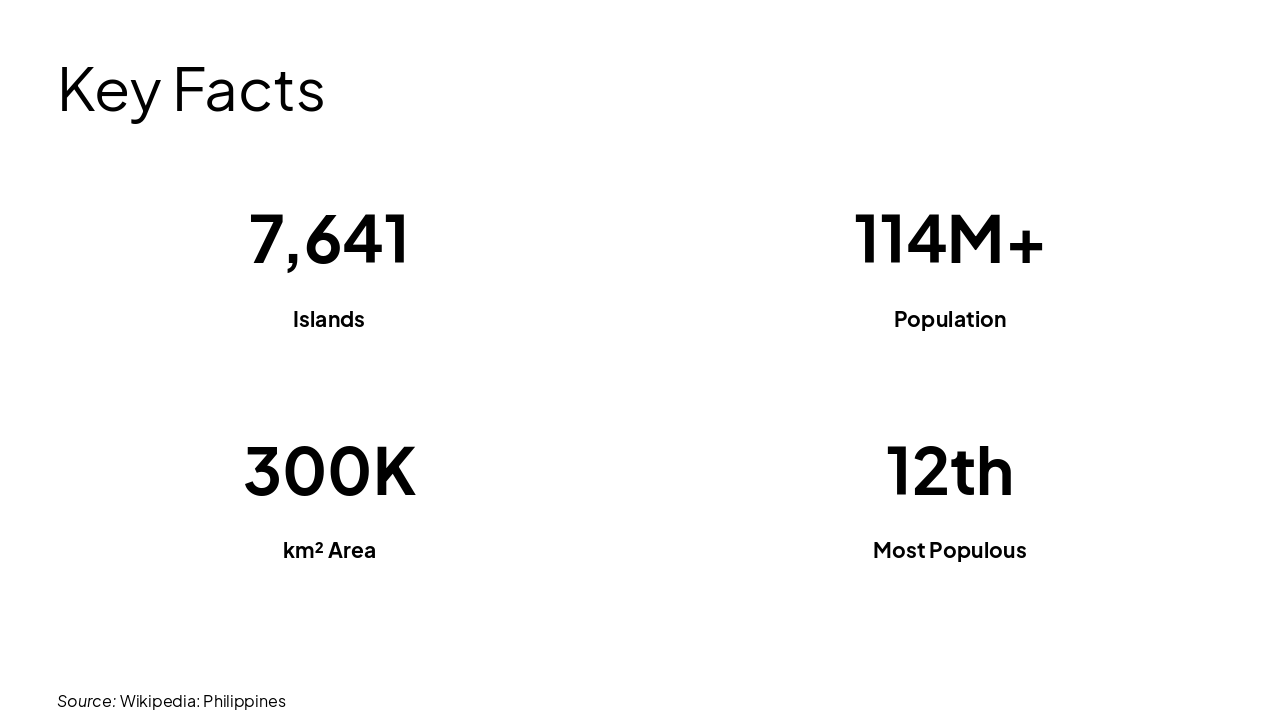
  • 7,641: Islands
  • 114M+: Population
  • 300K: km² Area
  • 12th: Most Populous

Source: Wikipedia: Philippines

Slide 4 - Key Facts
Slide 5 of 18

Slide 5 - Geographical Divisions

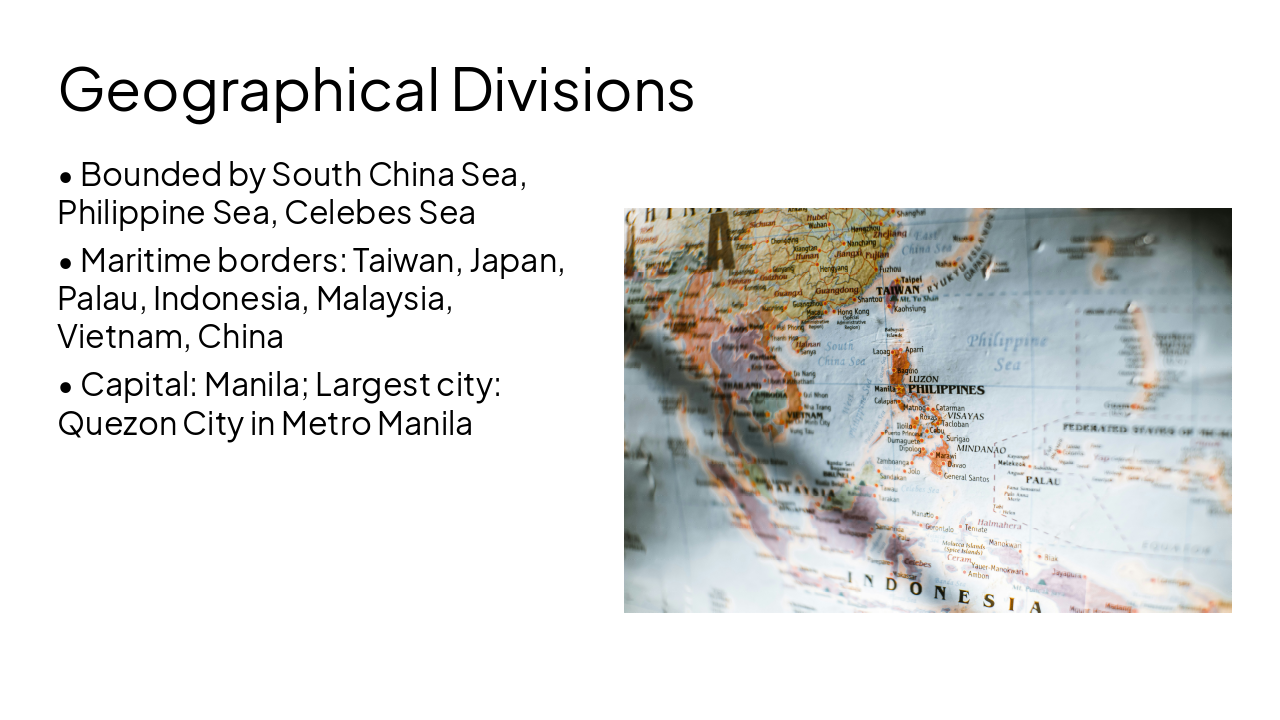
  • Bounded by South China Sea, Philippine Sea, Celebes Sea
  • Maritime borders: Taiwan, Japan, Palau, Indonesia, Malaysia, Vietnam, China
  • Capital: Manila; Largest city: Quezon City in Metro Manila

---

Photo by Road Ahead on Unsplash

Slide 5 - Geographical Divisions
Slide 6 of 18

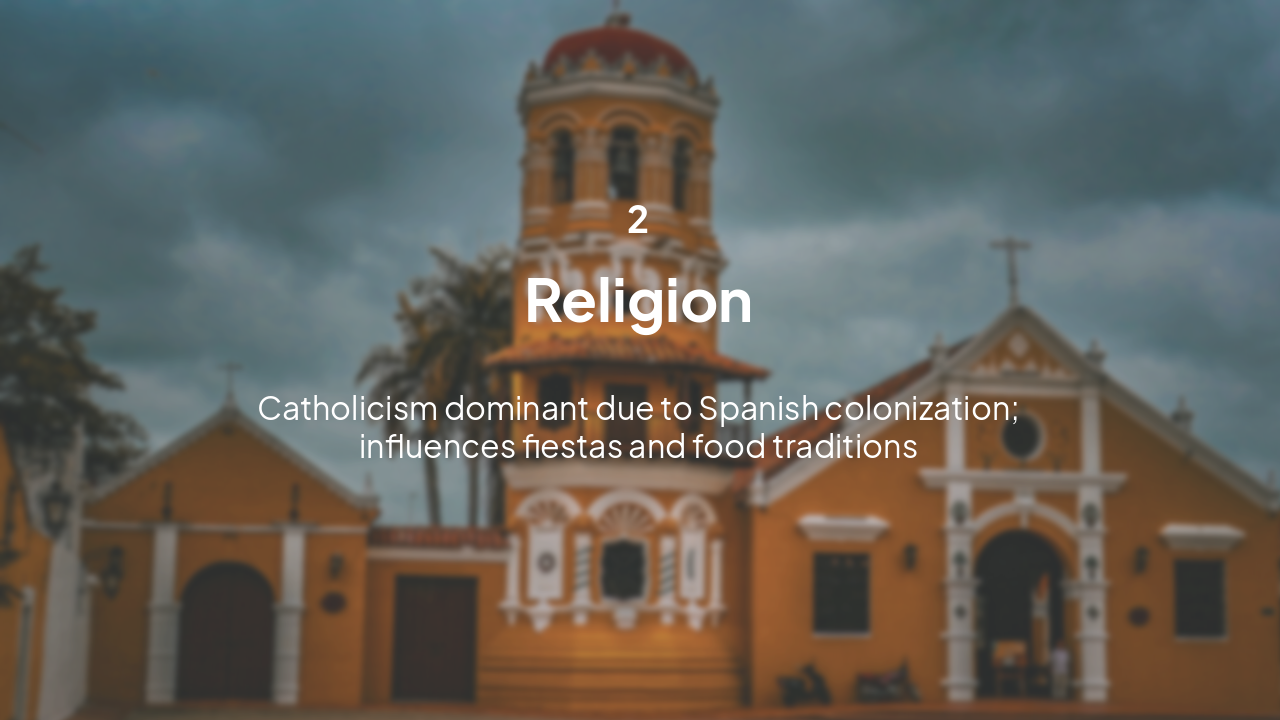
Slide 6 - Religion

2

Religion

Catholicism dominant due to Spanish colonization; influences fiestas and food traditions

---

Photo by Meg von Haartman on Unsplash

Slide 6 - Religion
Slide 7 of 18

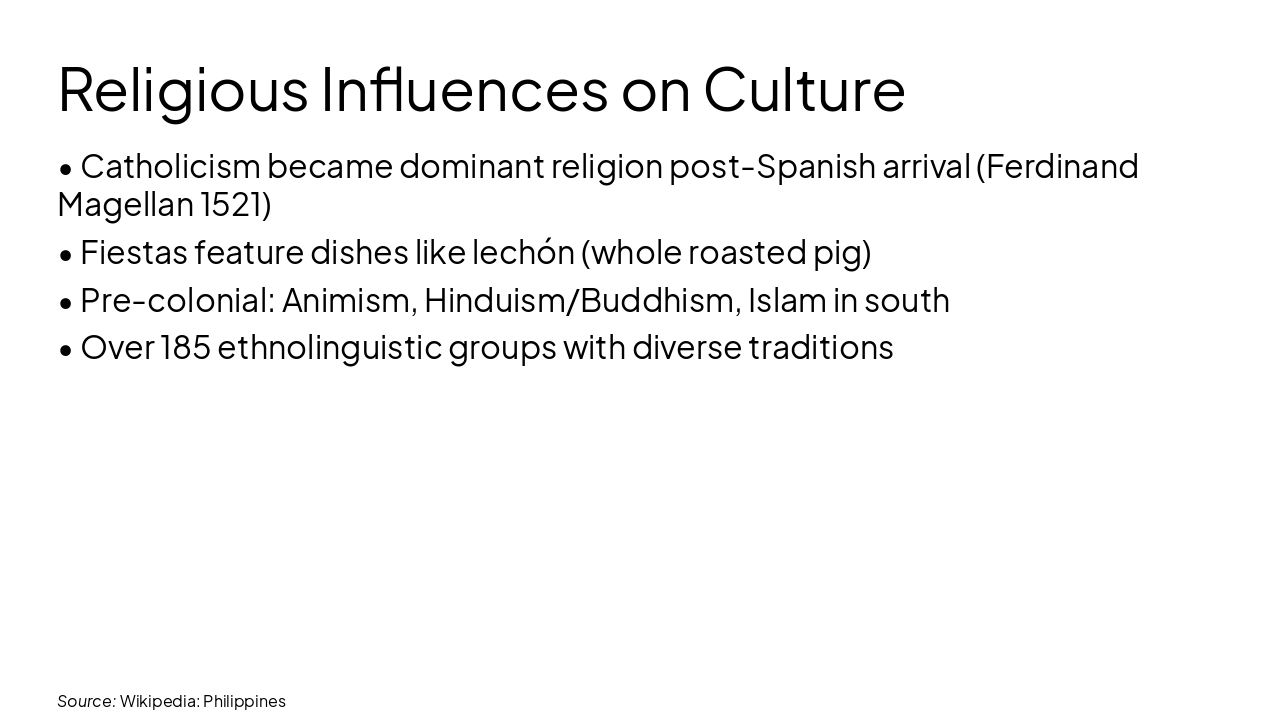
Slide 7 - Religious Influences on Culture

  • Catholicism became dominant religion post-Spanish arrival (Ferdinand Magellan 1521)
  • Fiestas feature dishes like lechón (whole roasted pig)
  • Pre-colonial: Animism, Hinduism/Buddhism, Islam in south
  • Over 185 ethnolinguistic groups with diverse traditions

Source: Wikipedia: Philippines

Slide 7 - Religious Influences on Culture
Slide 8 of 18

Slide 8 - Traditional Food Habits

3

Traditional Food Habits

Diverse cuisine from 100+ ethnolinguistic groups, Austronesian base with Chinese, Spanish, American influences

---

Photo by Anthony DeMarino on Unsplash

Slide 8 - Traditional Food Habits
Slide 9 of 18

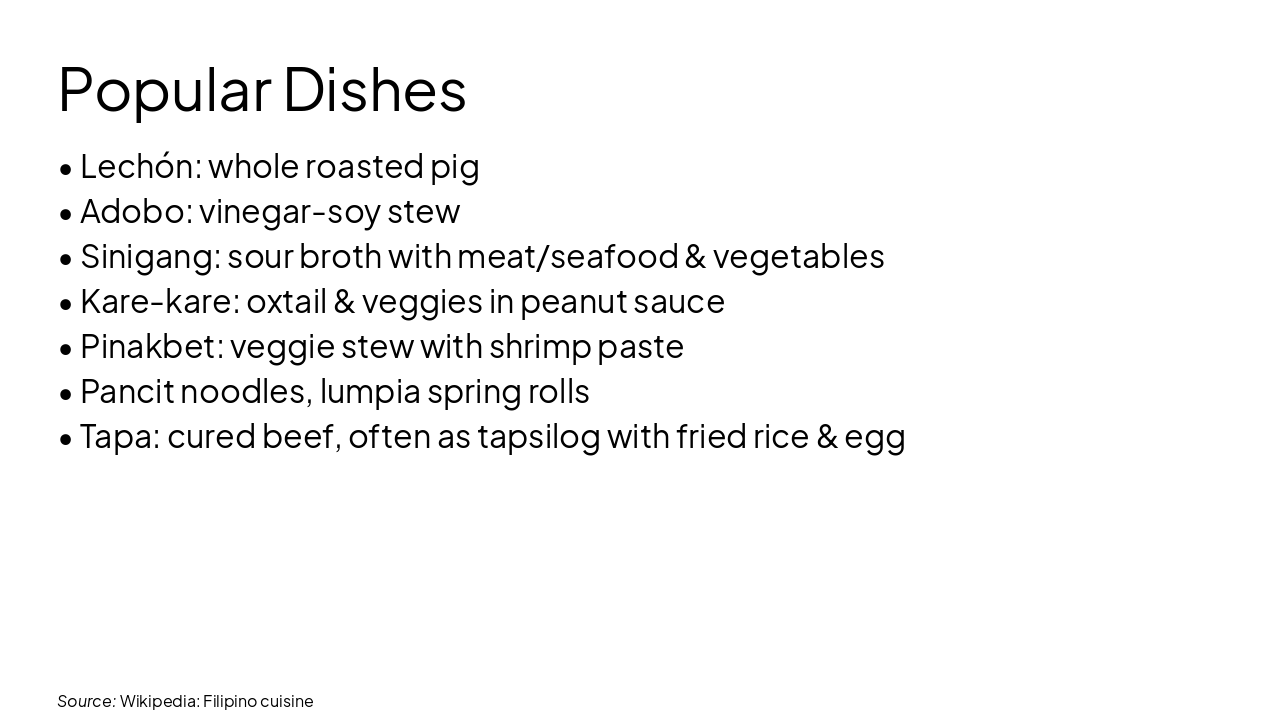
Slide 9 - Popular Dishes

  • Lechón: whole roasted pig
  • Adobo: vinegar-soy stew
  • Sinigang: sour broth with meat/seafood & vegetables
  • Kare-kare: oxtail & veggies in peanut sauce
  • Pinakbet: veggie stew with shrimp paste
  • Pancit noodles, lumpia spring rolls
  • Tapa: cured beef, often as tapsilog with fried rice & egg

Source: Wikipedia: Filipino cuisine

Slide 9 - Popular Dishes
Slide 10 of 18

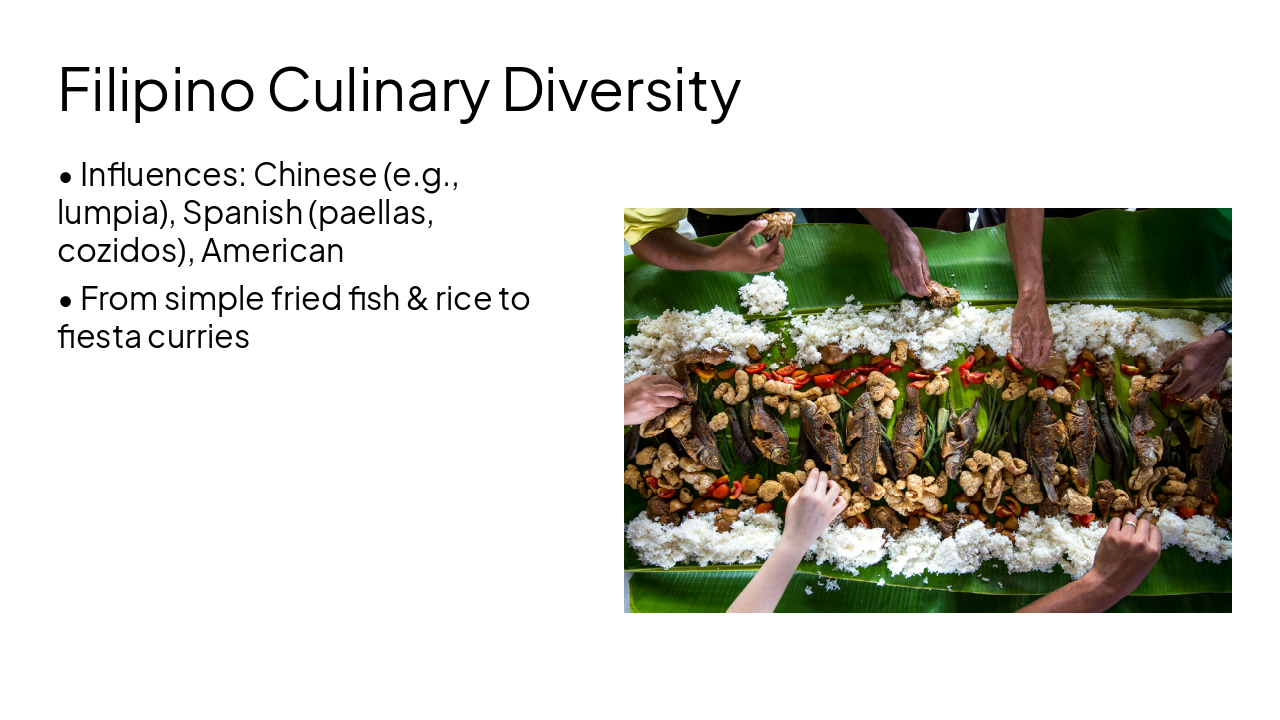
Slide 10 - Filipino Culinary Diversity

  • Influences: Chinese (e.g., lumpia), Spanish (paellas, cozidos), American
  • From simple fried fish & rice to fiesta curries

---

Photo by Avel Chuklanov on Unsplash

Slide 10 - Filipino Culinary Diversity
Slide 11 of 18

Slide 11 - Health and Nutrition

4

Health and Nutrition

Healthcare inequities, climate impacts on diseases, focus on maternal/child health

---

Photo by National Cancer Institute on Unsplash

Slide 11 - Health and Nutrition
Slide 12 of 18

Slide 12 - Health Challenges

  • Significant inequities in access, especially for poor communities
  • Decentralization leads to varying local services
  • Climate change exacerbates infectious diseases
  • National Demographic Health Survey since 1968 for maternal/child health

Source: Wikipedia: Health in the Philippines

Slide 12 - Health Challenges
Slide 13 of 18

Slide 13 - Economics

5

Economics

Emerging market transitioning from agriculture to services/manufacturing

---

Photo by Andrey Andreyev on Unsplash

Slide 13 - Economics
Slide 14 of 18

Slide 14 - Economic Profile

  • Newly industrialized, fast growth despite inequality & corruption
  • Variety of natural resources, high biodiversity
  • ASEAN member, emerging market economy
  • Vulnerable to natural disasters impacting food security

Source: Wikipedia: Philippines

Slide 14 - Economic Profile
Slide 15 of 18

Slide 15 - Key Contemporary Issues

6

Climate, Social Justice, Political, Gender Issues

Interconnected challenges affecting nutrition and culture

---

Photo by Steve Douglas on Unsplash

Slide 15 - Key Contemporary Issues
Slide 16 of 18

Slide 16 - Climate Change & Social Justice

Climate Change Prone to earthquakes, typhoons, monsoons (Pacific Ring of Fire, equator) Exacerbates infectious diseases & food insecurity

Social Justice Widespread inequality, poor healthcare access 185+ ethnolinguistic groups with cultural disparities

Source: Wikipedia: Philippines, Health in the Philippines

Slide 16 - Climate Change & Social Justice
Slide 17 of 18

Slide 17 - Political & Gender Issues

  • History: Martial law (1972-1981), People Power Revolution (1986)
  • Ongoing corruption & political instability
  • Gender: Improving but disparities in rural areas, influenced by culture/religion
  • Nutrition ties: Women key in food prep, affected by economic/health inequities

Source: Wikipedia: Philippines

Slide 17 - Political & Gender Issues
Slide 18 of 18

Slide 18 - Key Takeaways

Rich cultural nutrition traditions face modern challenges Promote equitable health, sustainable practices, social justice

Thank you! Questions?

---

Photo by Cailin Grant-Jansen on Unsplash

Slide 18 - Key Takeaways

Discover More Presentations

Explore thousands of AI-generated presentations for inspiration

Browse Presentations
Powered by AI

Create Your Own Presentation

Generate professional presentations in seconds with Karaf's AI. Customize this presentation or start from scratch.

Create New Presentation

Powered by Karaf.ai — AI-Powered Presentation Generator