Slide 1 of 11
Slide 1 - Title Slide
Job Evaluation & HR Lifecycle Management
Enhancing Organizational Performance through Strategic Job Evaluation and HR Lifecycle Management

Generated from prompt:
Redesign the uploaded HRM PPT (Job Evaluation & HR Lifecycle) with the following STRICT rules: 1. DO NOT change any text content at all (keep wording exactly the same) 2. Improve design, layout, colors, spacing, icons, and visual hierarchy 3. Ensure font size is readable and not too small Design style: - Modern, clean corporate theme - Use consistent color palette (blue, white, grey accents) - Add section divider slides - Use icons for concepts (HR, AI, recruitment, evaluation) - Convert dense text slides into visually structured layouts (columns, cards, infographics) - Highlight keywords in bold - Use proper alignment and whitespace - Add subtle animations (professional, not flashy) Slides to enhance: - Title slide: make visually strong with icons and layout - Objectives slides: convert into bullet cards - Methods: use comparison visuals/tables - AI section: use infographic style - Case study: use timeline/process flow design Keep academic citations and references unchanged. Output: Professional redesigned PPT suitable for presentation.
Explore HR management objectives, job evaluation methods, AI's role in the HR lifecycle, a real-world case study, and strategic takeaways for enhancing organizational performance and efficiency.
Job Evaluation & HR Lifecycle Management
Enhancing Organizational Performance through Strategic Job Evaluation and HR Lifecycle Management
1
Aligning human capital with organizational success.
⚖️ Internal Equity Ensuring fairness and equity in compensation structures through rigorous analysis.
🏆 External Competitiveness Maintaining competitive positioning to attract and retain top industry talent.
⚙️ Organizational Efficiency Optimizing organizational structures for operational agility and clarity.
🎯 Strategic Alignment Linking individual roles to the broader strategic goals of the firm.
2
Systematic frameworks for determining role value.
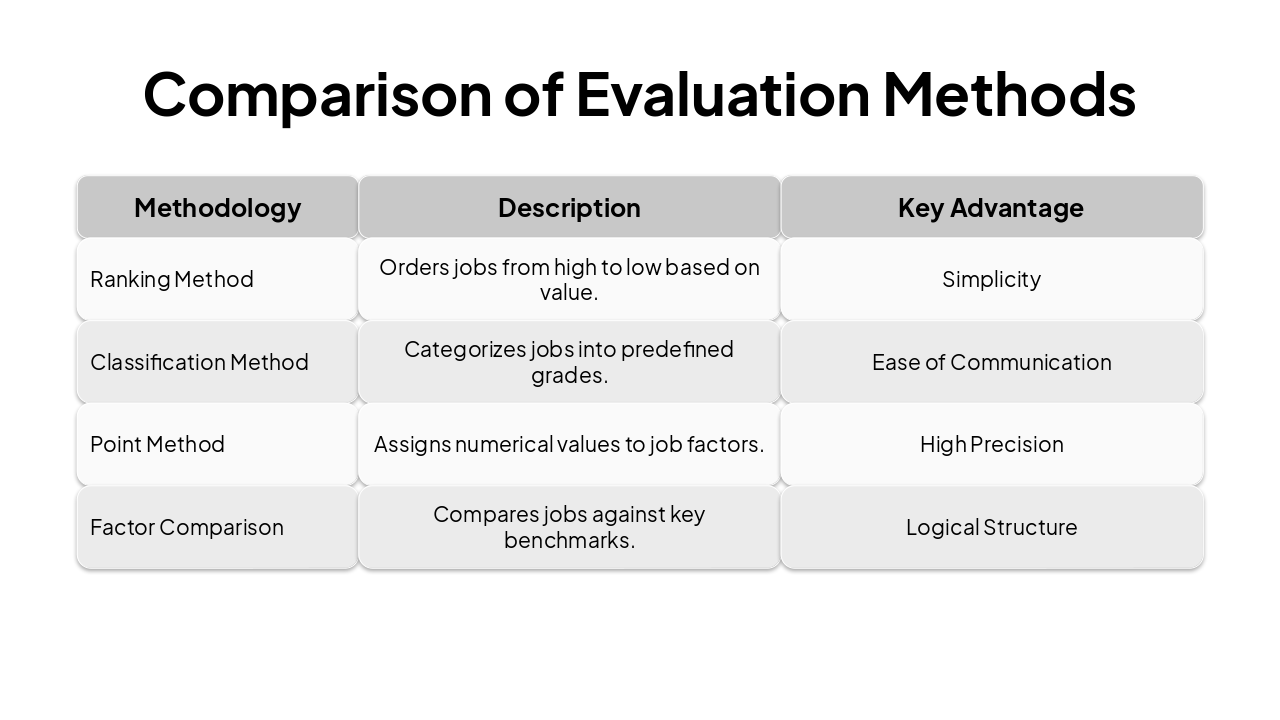
| Methodology | Description | Key Advantage |
|---|---|---|
| Ranking Method | Orders jobs from high to low based on value. | Simplicity |
| Classification Method | Categorizes jobs into predefined grades. | Ease of Communication |
| Point Method | Assigns numerical values to job factors. | High Precision |
| Factor Comparison | Compares jobs against key benchmarks. | Logical Structure |
3
Leveraging intelligence for optimized HR operations.
4
Practical insights from industry implementation.

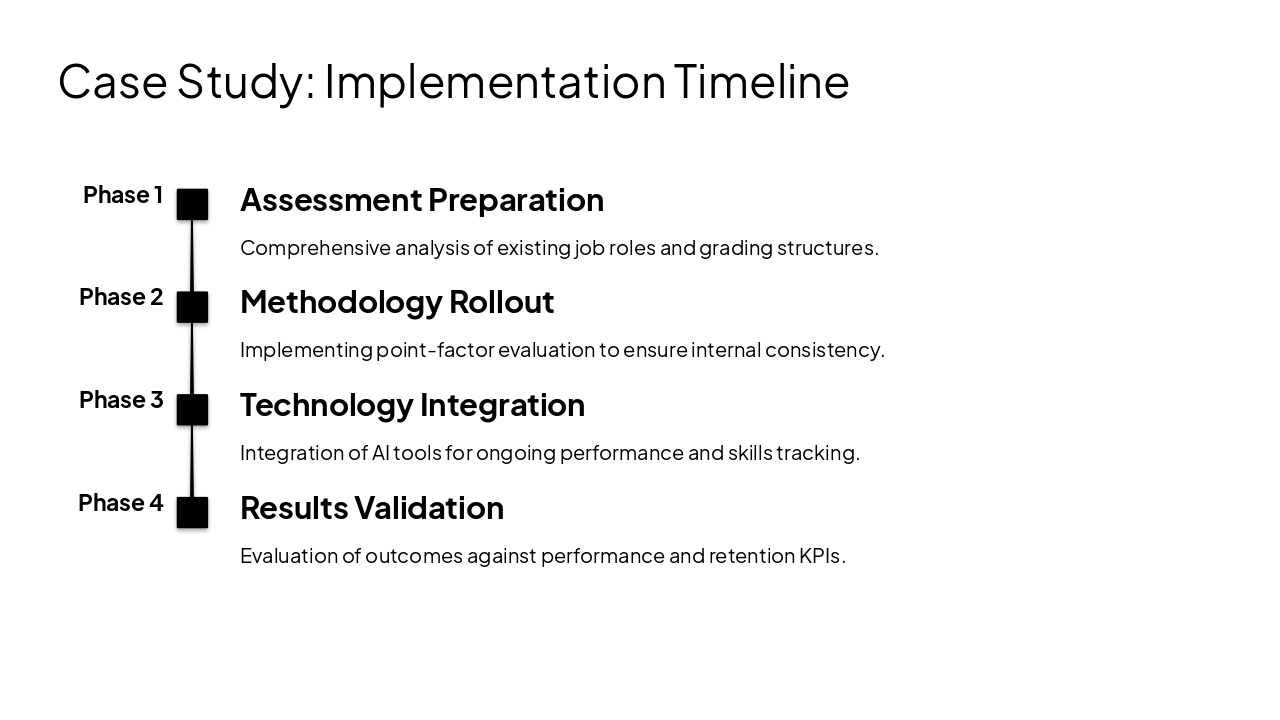
Phase 1: Assessment Preparation Comprehensive analysis of existing job roles and grading structures. Phase 2: Methodology Rollout Implementing point-factor evaluation to ensure internal consistency. Phase 3: Technology Integration Integration of AI tools for ongoing performance and skills tracking. Phase 4: Results Validation Evaluation of outcomes against performance and retention KPIs.
Strategic HR management transforms organizations.
Building a resilient and efficient future for HR.
Explore thousands of AI-generated presentations for inspiration
Generate professional presentations in seconds with Karaf's AI. Customize this presentation or start from scratch.