Understanding Stress: Causes and Consequences

Generated from prompt:

Make a presentation about قاد ليا présentation sur PowerPoint على موضوع les causes de stress et conséquences de stree

This presentation defines stress biologically, explores external and internal causes, details physiological mechanisms like fight-or-flight and HPA axis, outlines health impacts of chronic stress, and discusses management strategies for homeostasis.

April 3, 20267 slides
Slide 1 of 7

Slide 1 - Stress Presentation

Understanding Stress: Causes and Consequences

Understanding Stressors and Their Physiological Impact

---

Photo by Nastuh Abootalebi on Unsplash
Slide 1 - Stress Presentation
Slide 2 of 7

Slide 2 - Presentation Agenda

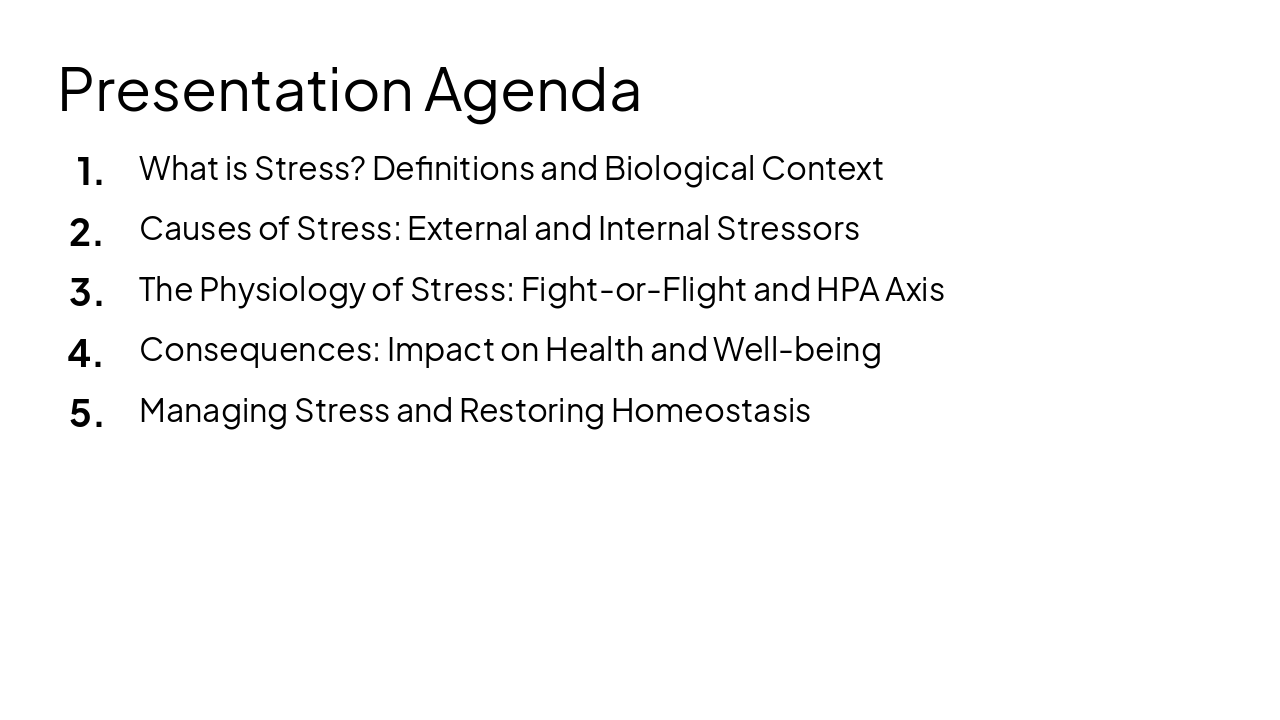
  • What is Stress? Definitions and Biological Context
  • Causes of Stress: External and Internal Stressors
  • The Physiology of Stress: Fight-or-Flight and HPA Axis
  • Consequences: Impact on Health and Well-being
  • Managing Stress and Restoring Homeostasis
Slide 2 - Presentation Agenda
Slide 3 of 7

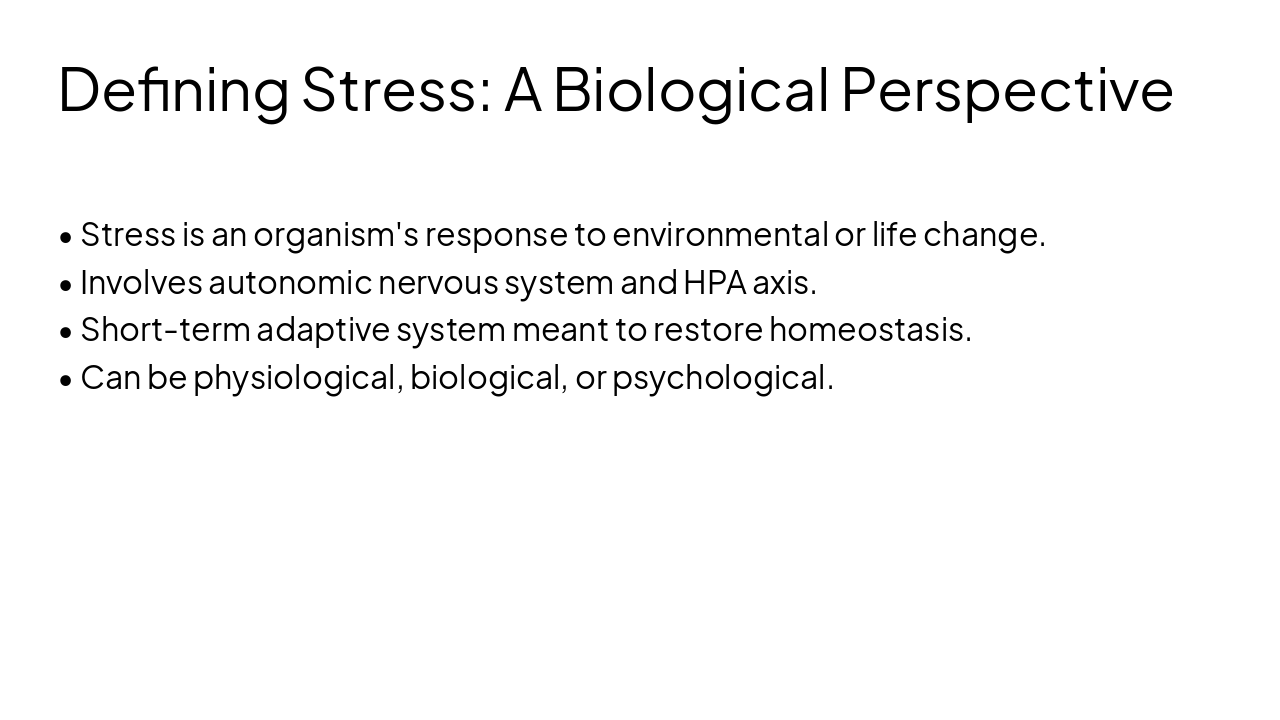
Slide 3 - Defining Stress: A Biological Perspective

  • Stress is an organism's response to environmental or life change.
  • Involves autonomic nervous system and HPA axis.
  • Short-term adaptive system meant to restore homeostasis.
  • Can be physiological, biological, or psychological.
Slide 3 - Defining Stress: A Biological Perspective
Slide 4 of 7

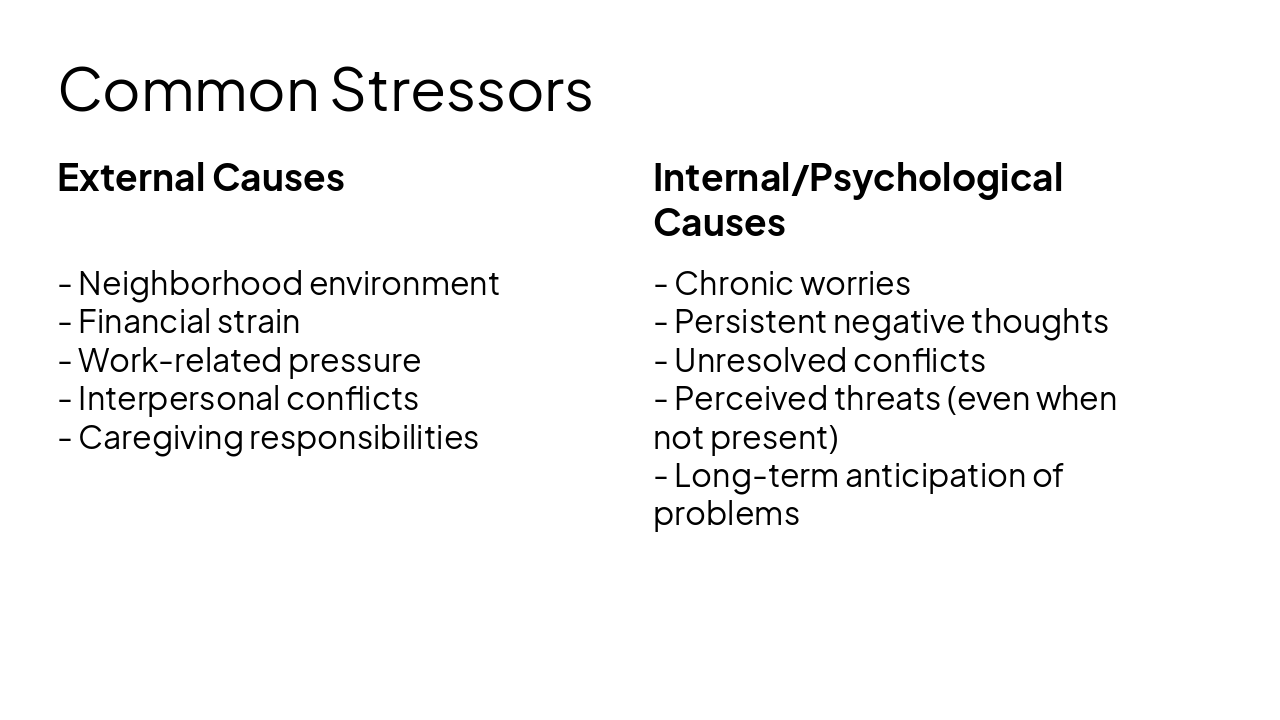
Slide 4 - Common Stressors

External Causes

  • Neighborhood environment
  • Financial strain
  • Work-related pressure
  • Interpersonal conflicts
  • Caregiving responsibilities

Internal/Psychological Causes

  • Chronic worries
  • Persistent negative thoughts
  • Unresolved conflicts
  • Perceived threats (even when not present)
  • Long-term anticipation of problems
Slide 4 - Common Stressors
Slide 5 of 7

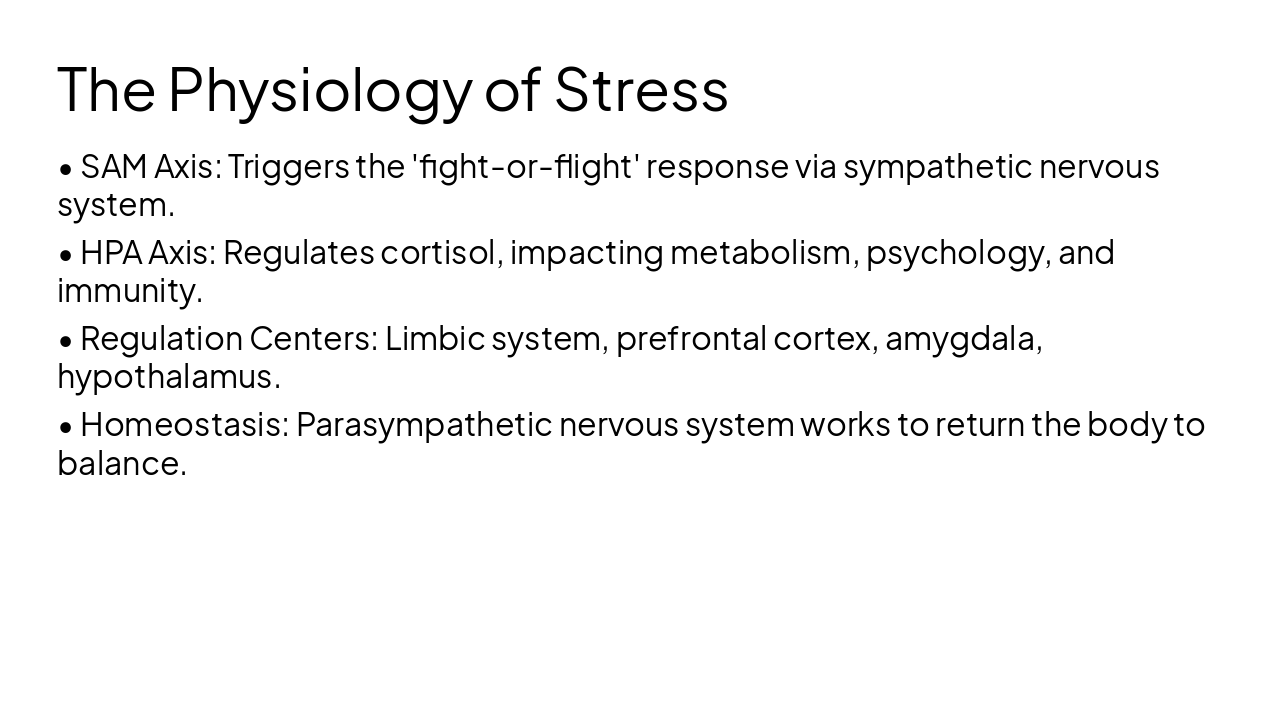
Slide 5 - The Physiology of Stress

  • SAM Axis: Triggers the 'fight-or-flight' response via sympathetic nervous system.
  • HPA Axis: Regulates cortisol, impacting metabolism, psychology, and immunity.
  • Regulation Centers: Limbic system, prefrontal cortex, amygdala, hypothalamus.
  • Homeostasis: Parasympathetic nervous system works to return the body to balance.
Slide 5 - The Physiology of Stress
Slide 6 of 7

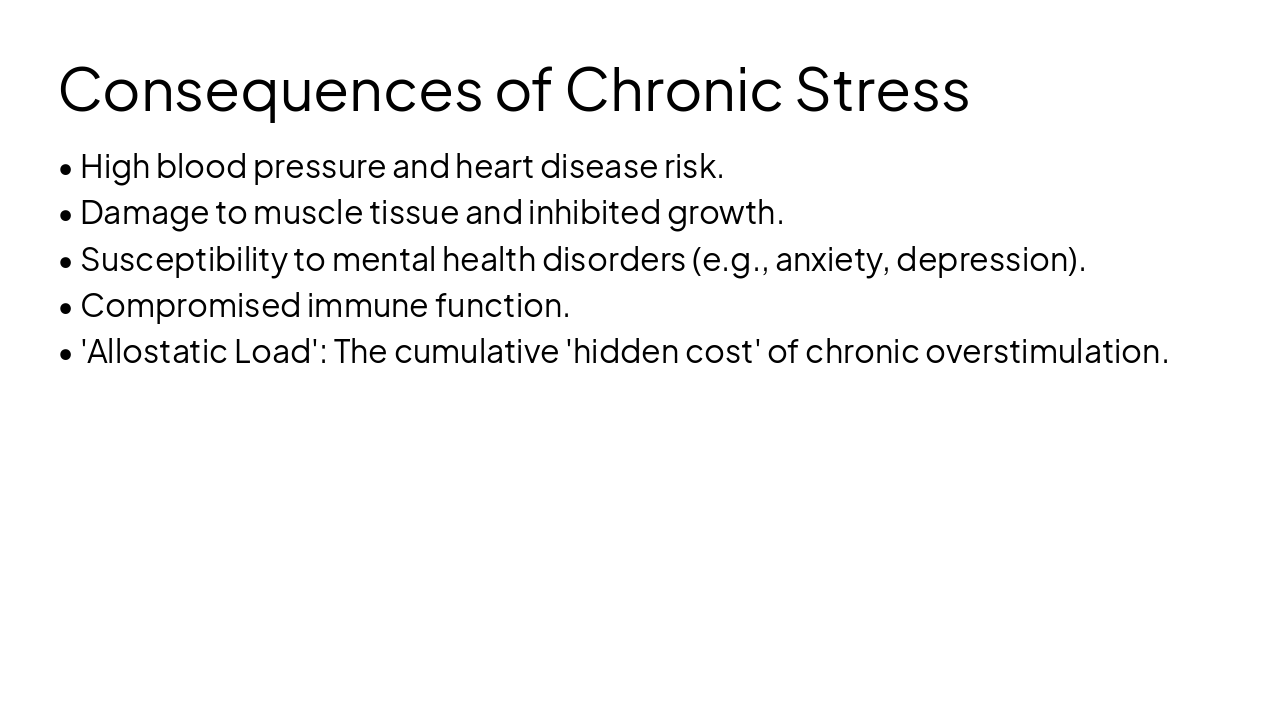
Slide 6 - Consequences of Chronic Stress

  • High blood pressure and heart disease risk.
  • Damage to muscle tissue and inhibited growth.
  • Susceptibility to mental health disorders (e.g., anxiety, depression).
  • Compromised immune function.
  • 'Allostatic Load': The cumulative 'hidden cost' of chronic overstimulation.
Slide 6 - Consequences of Chronic Stress
Slide 7 of 7

Slide 7 - Conclusion

Understanding stress as a physiological adaptive process is key to mitigating its chronic risks.

Summary of Stress Dynamics

---

Photo by Nastuh Abootalebi on Unsplash
Slide 7 - Conclusion

Discover More Presentations

Explore thousands of AI-generated presentations for inspiration

Browse Presentations
Powered by AI

Create Your Own Presentation

Generate professional presentations in seconds with Karaf's AI. Customize this presentation or start from scratch.

Create New Presentation

Powered by Karaf.ai — AI-Powered Presentation Generator