Pediatric Toxicology in the PICU: Streamlined Management &案件

Generated from prompt:

Take the uploaded presentation at /mnt/data/picu_toxicology_expanded_cases.pptx. Apply a simple minimalistic theme (clean white background, minimal colors, modern fonts) and consolidate slides by merging repetitive or closely related content. Reduce text density, convert long bullet lists into concise key points, and group related toxicology cases into fewer, clearer sections while preserving the original educational content. Create a streamlined presentation suitable for teaching PICU toxicology cases.

This deck outlines core principles of toxicologic management in the Pediatric Intensive Care Unit (PICU), reviews common overdose cases like salicylates, TCAs, acetaminophen, and opioids, and shares diagnostic strategies, treatments, and clinicalpear

March 10, 20268 slides
Slide 1 of 8

Slide 1 - Pediatric Toxicology in the PICU

Pediatric Toxicology in the PICU

Streamlined Approach to Clinical Management and Case Review

---

Photo by Navy Medicine on Unsplash
Slide 1 - Pediatric Toxicology in the PICU
Slide 2 of 8

Slide 2 - Agenda

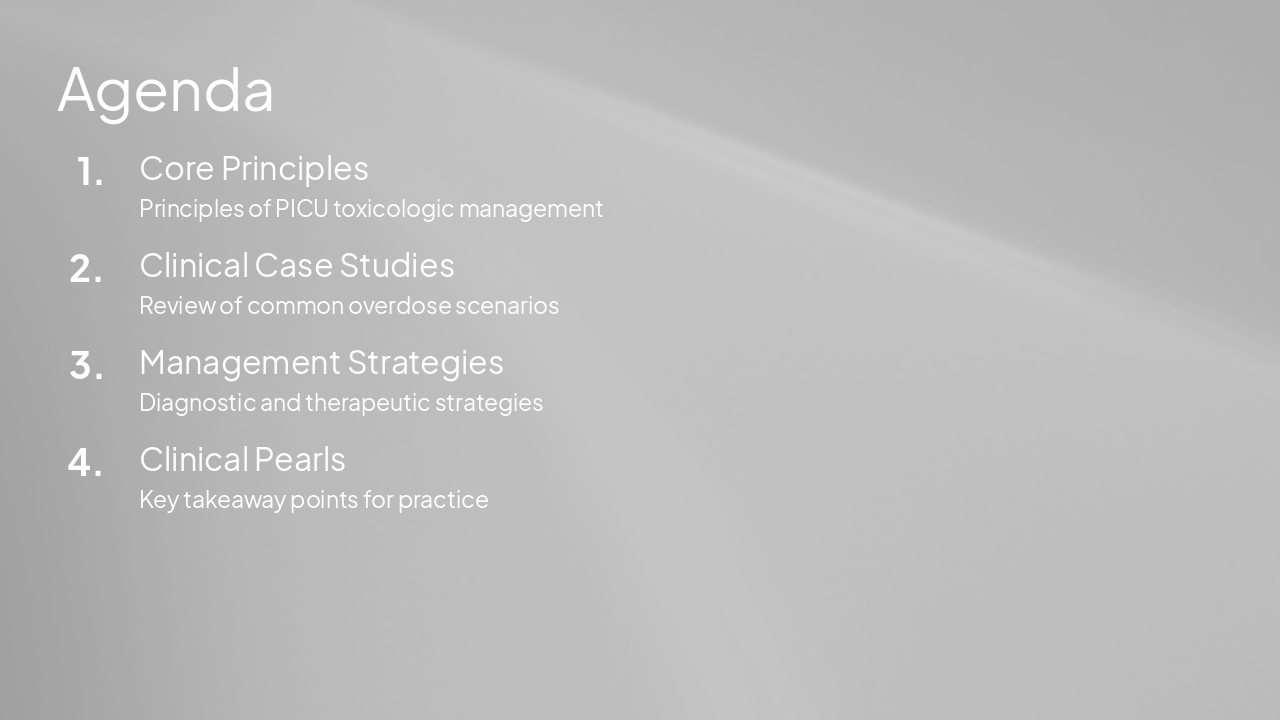
  • Core Principles: Principles of PICU toxicologic management
  • Clinical Case Studies: Review of common overdose scenarios
  • Management Strategies: Diagnostic and therapeutic strategies
  • Clinical Pearls: Key takeaway points for practice

---

Photo by Drew Beamer on Unsplash

Slide 2 - Agenda
Slide 3 of 8

Slide 3 - Section 1

1

Core Principles of Toxicologic Management

Framework for evaluation and stabilization in pediatric patients

---

Photo by Bret Kavanaugh on Unsplash
Slide 3 - Section 1
Slide 4 of 8

Slide 4 - Principles of Stabilization

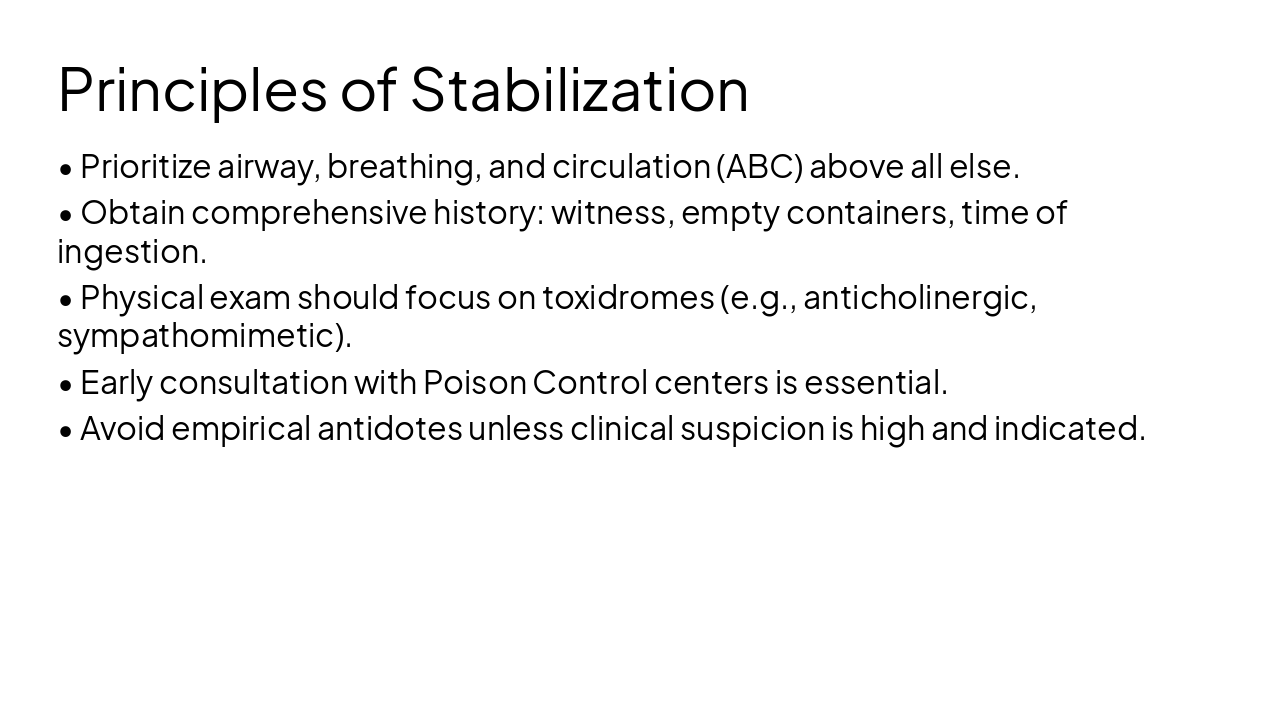
  • Prioritize airway, breathing, and circulation (ABC) above all else.
  • Obtain comprehensive history: witness, empty containers, time of ingestion.
  • Physical exam should focus on toxidromes (e.g., anticholinergic, sympathomimetic).
  • Early consultation with Poison Control centers is essential.
  • Avoid empirical antidotes unless clinical suspicion is high and indicated.
Slide 4 - Principles of Stabilization
Slide 5 of 8

Slide 5 - Section 2

2

Clinical Case Reviews

Representative pediatric toxicology cases and management approaches

---

Photo by Joshua J. Cotten on Unsplash
Slide 5 - Section 2
Slide 6 of 8

Slide 6 - Common Overdoses: Part 1

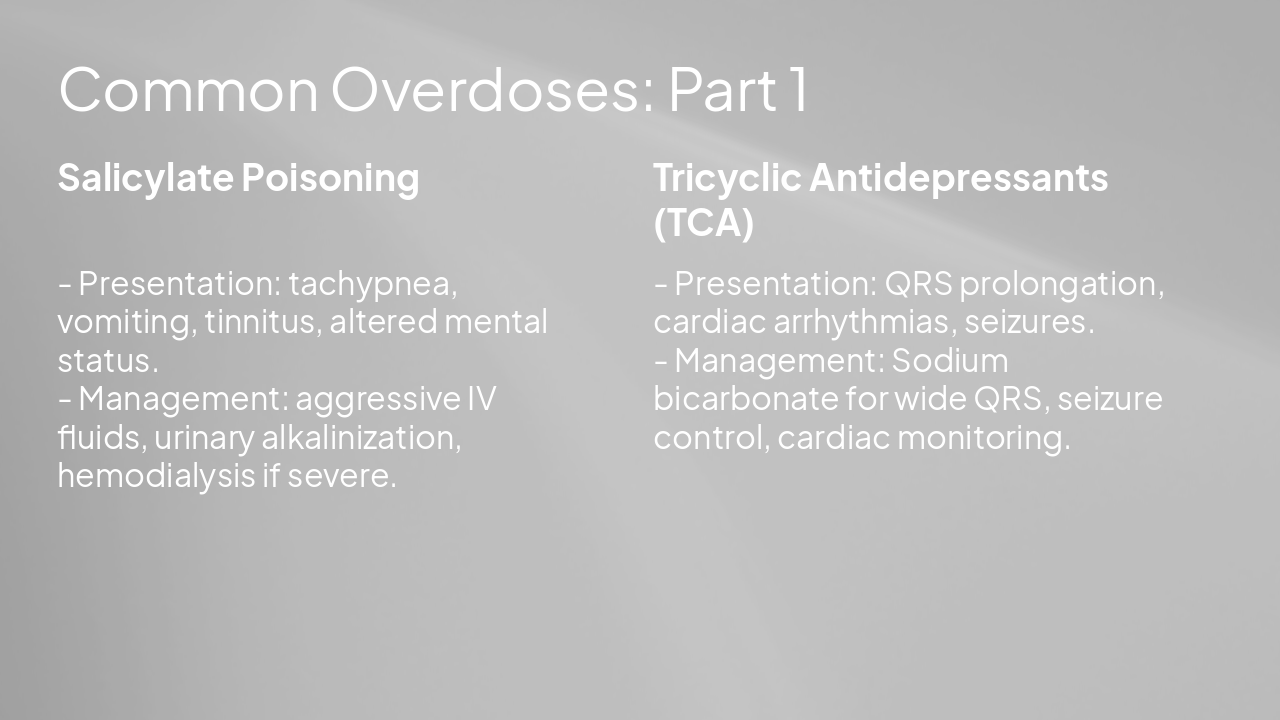
Salicylate Poisoning

  • Presentation: tachypnea, vomiting, tinnitus, altered mental status.
  • Management: aggressive IV fluids, urinary alkalinization, hemodialysis if severe.

Tricyclic Antidepressants (TCA)

  • Presentation: QRS prolongation, cardiac arrhythmias, seizures.
  • Management: Sodium bicarbonate for wide QRS, seizure control, cardiac monitoring.

---

Photo by Drew Beamer on Unsplash

Slide 6 - Common Overdoses: Part 1
Slide 7 of 8

Slide 7 - Common Overdoses: Part 2

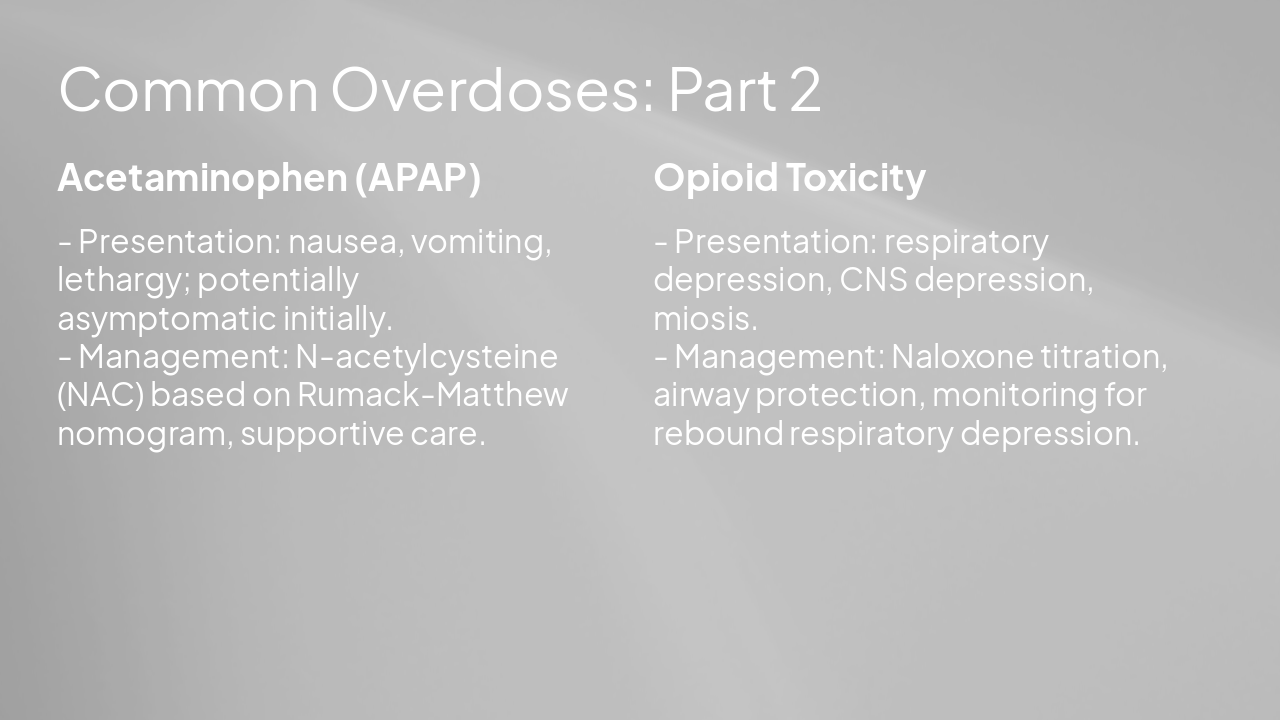
Acetaminophen (APAP)

  • Presentation: nausea, vomiting, lethargy; potentially asymptomatic initially.
  • Management: N-acetylcysteine (NAC) based on Rumack-Matthew nomogram, supportive care.

Opioid Toxicity

  • Presentation: respiratory depression, CNS depression, miosis.
  • Management: Naloxone titration, airway protection, monitoring for rebound respiratory depression.

---

Photo by Drew Beamer on Unsplash

Slide 7 - Common Overdoses: Part 2
Slide 8 of 8

Slide 8 - Conclusion & Key Takeaways

Always prioritize airway stabilization and early specialist consultation. Early identification and targeted management strategies are critical for positive outcomes in pediatric toxicology. Always treat the patient, not the ingestion.

Key takeaways for your practice

---

Photo by Drew Beamer on Unsplash
Slide 8 - Conclusion & Key Takeaways

Discover More Presentations

Explore thousands of AI-generated presentations for inspiration

Browse Presentations
Powered by AI

Create Your Own Presentation

Generate professional presentations in seconds with Karaf's AI. Customize this presentation or start from scratch.

Create New Presentation

Powered by Karaf.ai — AI-Powered Presentation Generator