Slide 1 of 10
Slide 1 - Strengthening Community Resilience
Strengthening Community Resilience
Emergency Preparedness & the APELL Process
---
Photo by Ka Ho Ng on Unsplash
Generated from prompt:
Create a 10-slide disaster-themed professional presentation titled 'Strengthening Community Resilience: Emergency Preparedness & the APELL Process'. Slides: 1 Title with APELL triangle (Industry, Local Authorities, Community). 2 Emergency Preparedness vs APELL comparison with table and mantra 'Disasters are local first. Response must be local first.' 3 Timeline of tragedies: Seveso 1976, Bhopal 1984, Mexico City 1984, Basel 1986, leading to UNEP launching APELL in 1988. Include timeline graphic. 4 The 10-Step APELL Process (2015 edition) grouped into 5 phases: Engagement, Planning, Integration, Validation, Sustainability with flow/process diagram and steps list. 5 Case Study: Bhopal Gas Tragedy – incident, failures, legacy Chemical Accidents Rules 1996. 6 Case Study: Fukushima 2011 cascading disaster and multi-hazard update to APELL 2015 plus rulebook evolution items. 7 APELL in India legal framework – 4-tier hierarchy: Central Crisis Group, State Crisis Group, District Crisis Group, Local Crisis Group (table/diagram). 8 APELL Pilot Projects in India – APELL-LAMP, Trans-APELL, National APELL Centre, expansion. 9 Conclusion & Key Takeaways with call to action about LCG/DDMA and drills. 10 Sources & References including UNEP APELL Handbook, Chemical Accidents Rules 1996, NSC India reports, US EPA cooperation, NDMA guidelines, IAEA Fukushima, ICMR Bhopal. Use disaster/emergency response visual theme with icons, tables, and diagrams.
This deck explores the APELL (Awareness and Preparedness for Emergencies at Local Level) process, comparing it to general emergency preparedness, historical lessons from Bhopal and Fukushima disasters, India's 4-tier legal framework, pilot projects,
Strengthening Community Resilience
Emergency Preparedness & the APELL Process
---
Photo by Ka Ho Ng on Unsplash
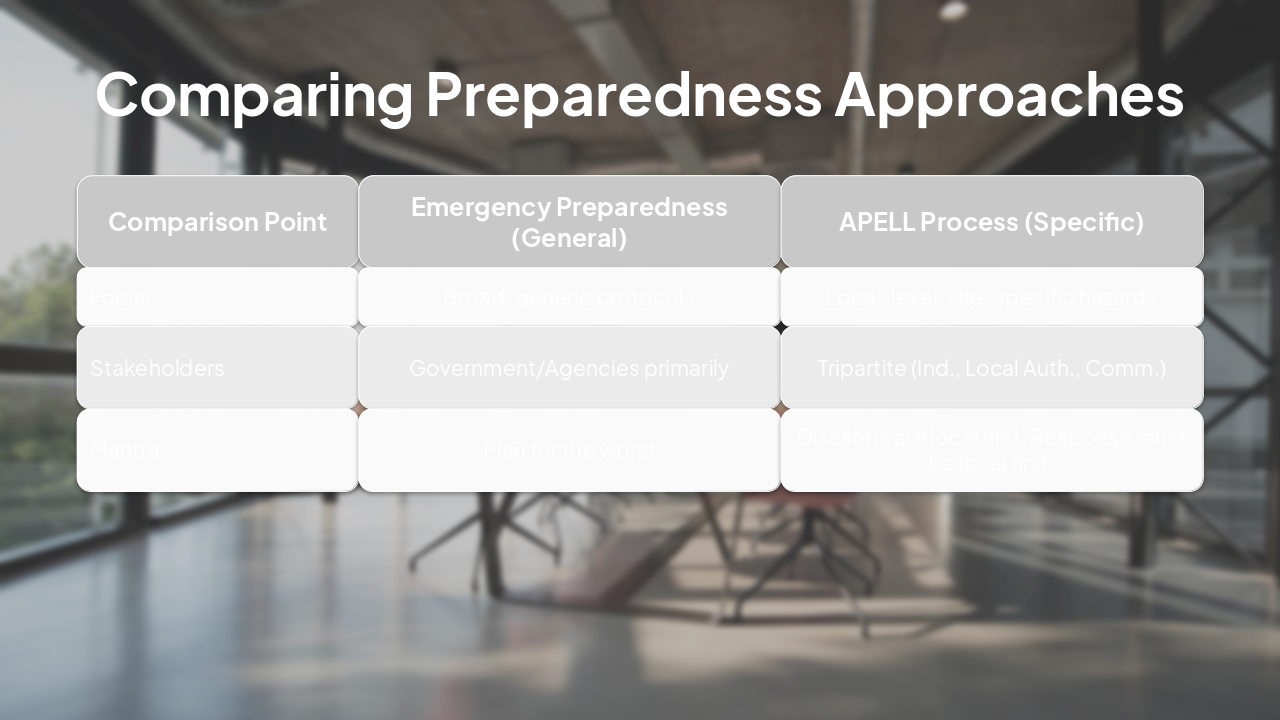
| Comparison Point | Emergency Preparedness (General) | APELL Process (Specific) |
|---|---|---|
| Focus | Broad, generic protocols | Local-level, site-specific hazards |
| Stakeholders | Government/Agencies primarily | Tripartite (Ind., Local Auth., Comm.) |
| Mantra | Plan for the worst | Disasters are local first. Response must be local first. |
---
Photo by Nastuh Abootalebi on Unsplash
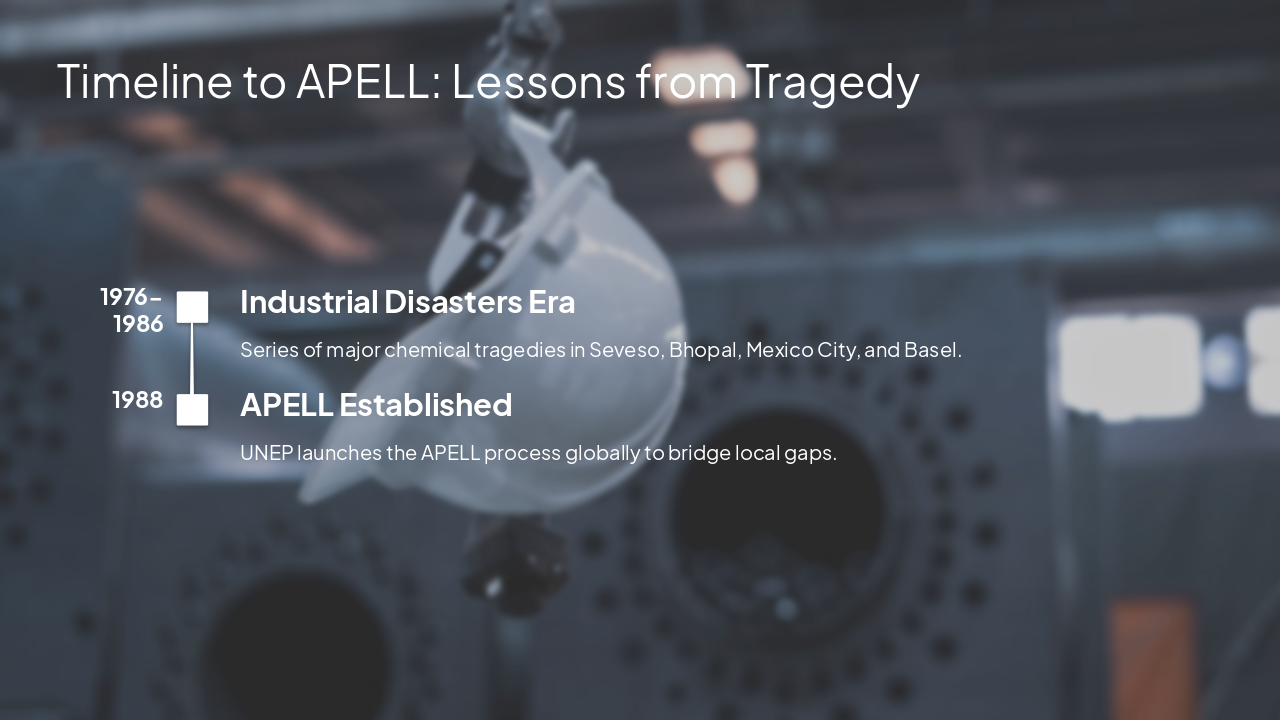
1976-1986: Industrial Disasters Era Series of major chemical tragedies in Seveso, Bhopal, Mexico City, and Basel. 1988: APELL Established UNEP launches the APELL process globally to bridge local gaps.
---
Photo by Ümit Yıldırım on Unsplash
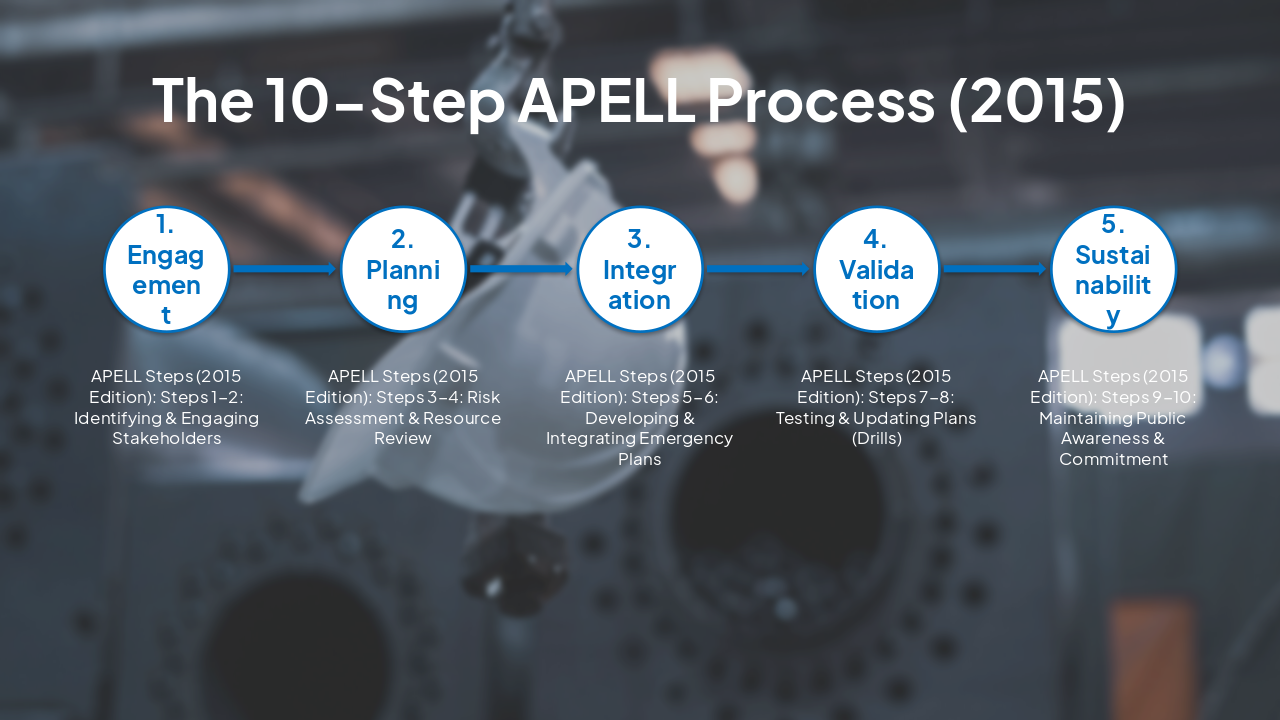
| Phase | APELL Steps (2015 Edition) |
|---|---|
| 1. Engagement | Steps 1-2: Identifying & Engaging Stakeholders |
| 2. Planning | Steps 3-4: Risk Assessment & Resource Review |
| 3. Integration | Steps 5-6: Developing & Integrating Emergency Plans |
| 4. Validation | Steps 7-8: Testing & Updating Plans (Drills) |
| 5. Sustainability | Steps 9-10: Maintaining Public Awareness & Commitment |
---
Photo by Ümit Yıldırım on Unsplash
---
Photo by Ümit Yıldırım on Unsplash
---
Photo by Nicolas HIPPERT on Unsplash
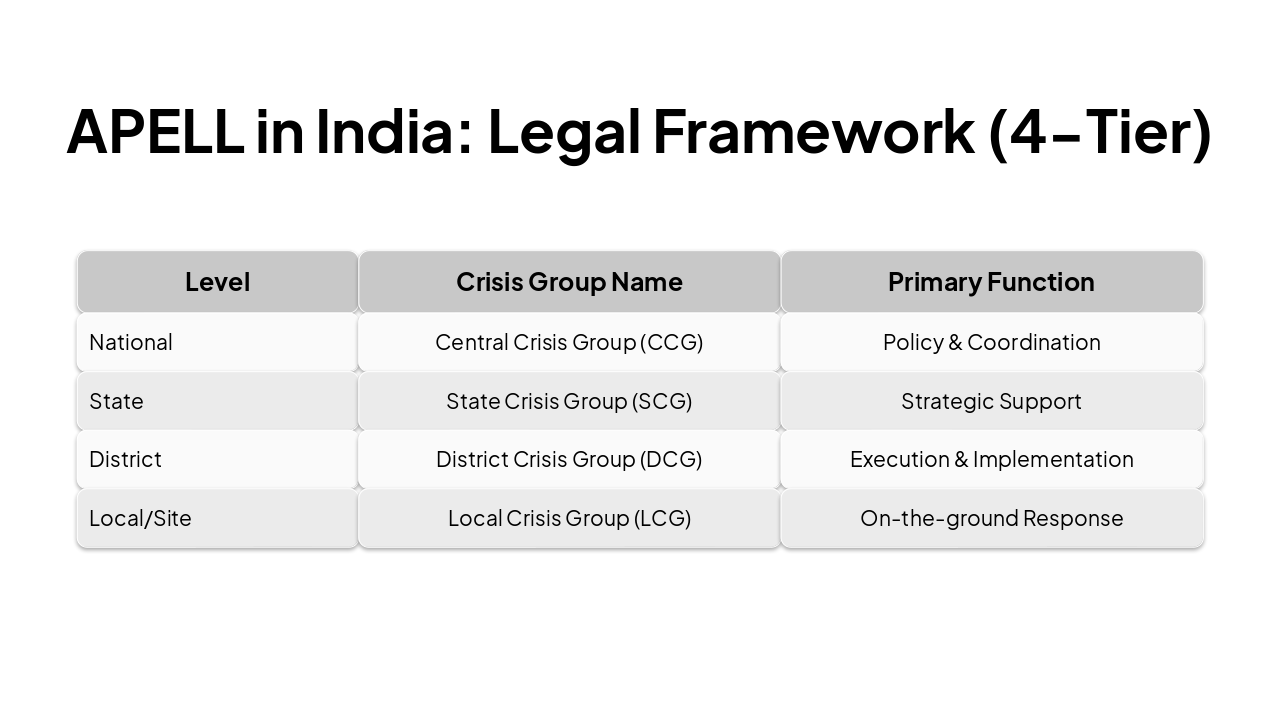
| Level | Crisis Group Name | Primary Function |
|---|---|---|
| National | Central Crisis Group (CCG) | Policy & Coordination |
| State | State Crisis Group (SCG) | Strategic Support |
| District | District Crisis Group (DCG) | Execution & Implementation |
| Local/Site | Local Crisis Group (LCG) | On-the-ground Response |
---
Photo by Joshua Olsen on Unsplash
Community Resilience is Built Locally - Let's Start Now!
Strengthen your LCG and DDMA through regular drills.
---
Photo by JC Gellidon on Unsplash
---
Photo by Iñaki del Olmo on Unsplash
Explore thousands of AI-generated presentations for inspiration
Generate professional presentations in seconds with Karaf's AI. Customize this presentation or start from scratch.