Slide 1 of 11
Slide 1 - Semiconductors The Building Blocks of Modern Technology
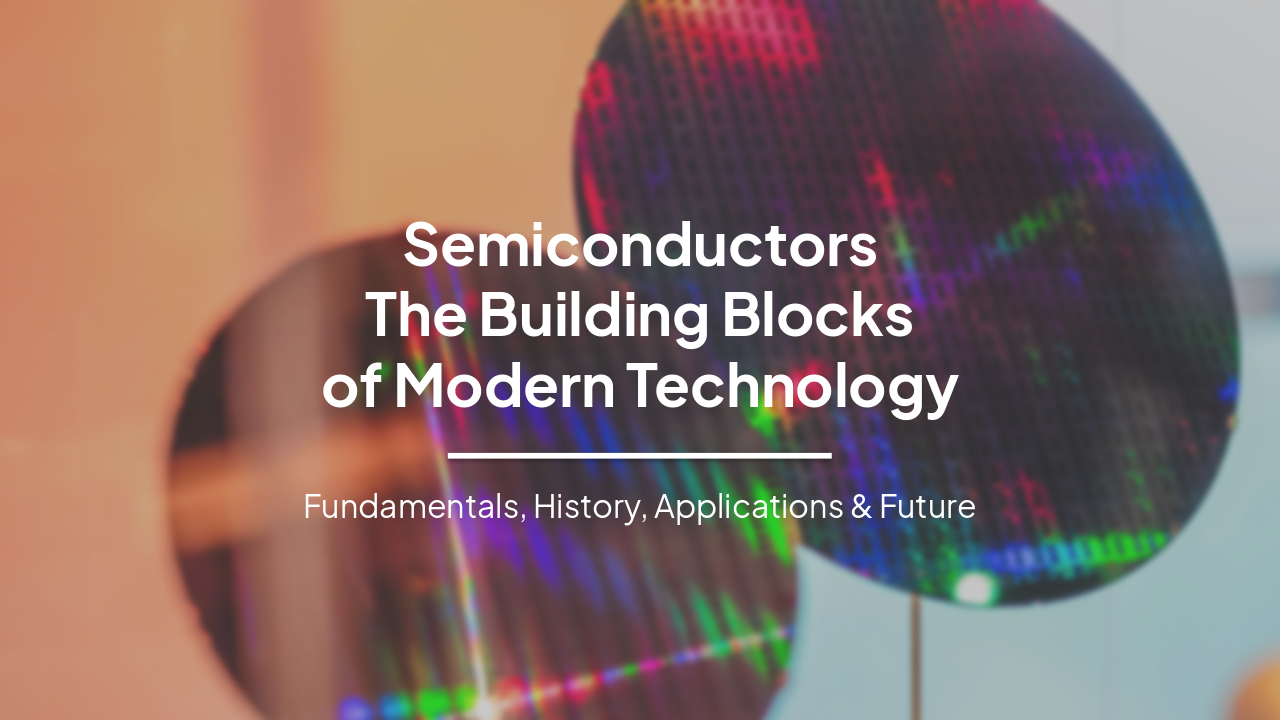
Semiconductors The Building Blocks of Modern Technology
Fundamentals, History, Applications & Future
---
Photo by Igor Shalyminov on Unsplash
Generated from prompt:
make a presentation about semiconductors
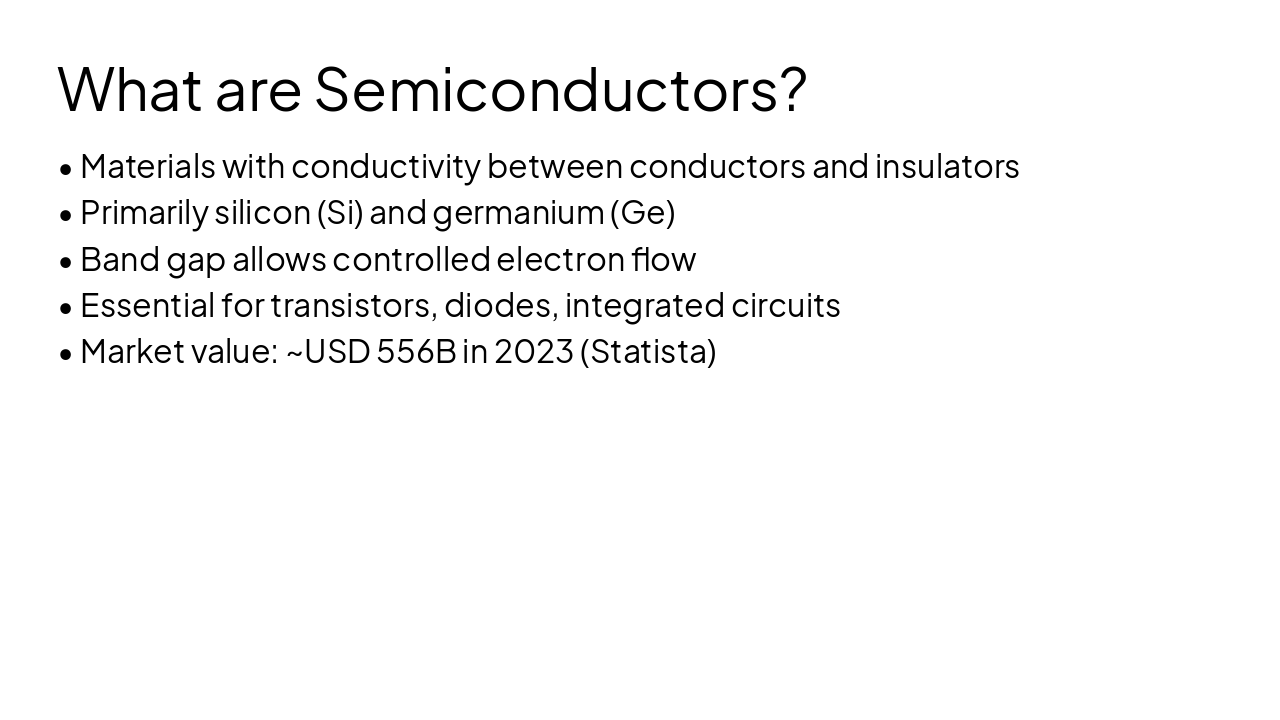
This presentation provides a comprehensive overview of semiconductors, including their fundamentals as materials with conductivity between conductors and insulators, primarily silicon and germanium; historical milestones from the 1947 transistor invention to 2023's 3nm nodes and Moore's Law; how they work through atomic structure, doping, and p-n junctions; key applications in computing, consumer electronics, automotive, renewable energy, and optoelectronics; market statistics showing USD 556B in 2023 with projected growth to 1.2T by 2030; and future trends like 3D stacking, AI chips, quantum,
Semiconductors The Building Blocks of Modern Technology
Fundamentals, History, Applications & Future
---
Photo by Igor Shalyminov on Unsplash
---
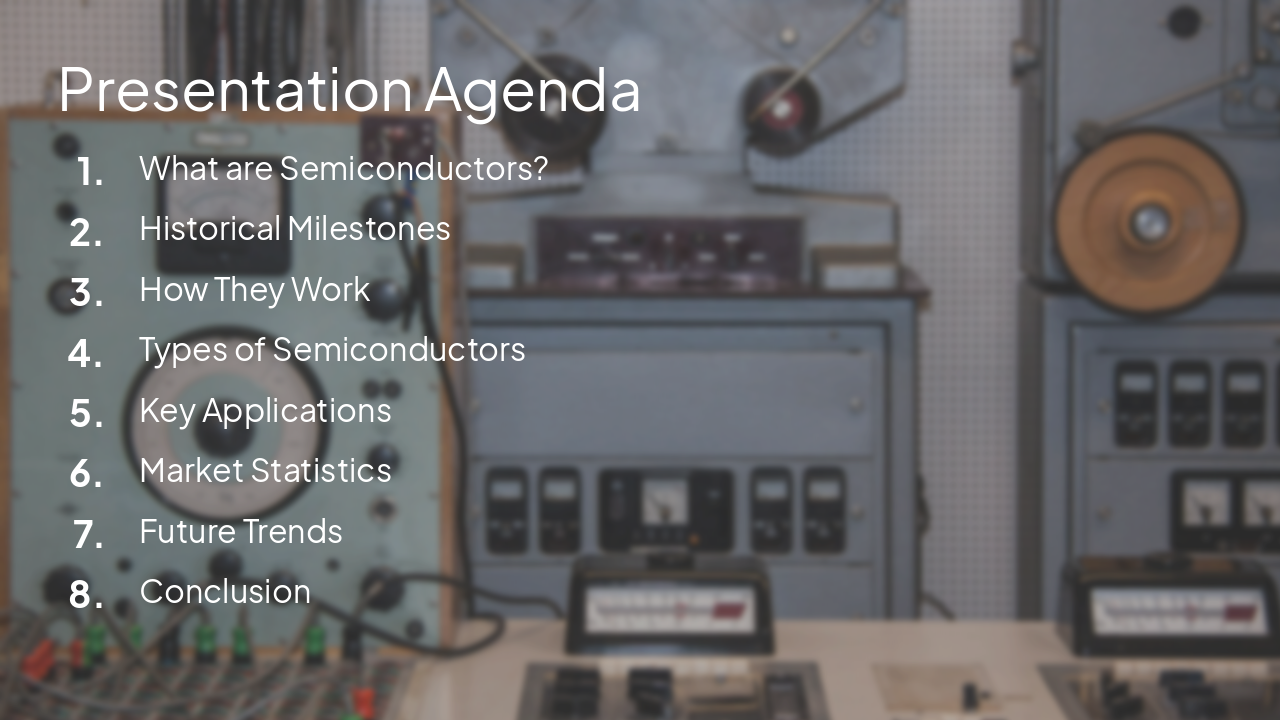
Photo by Geoffroy Berlioz on Unsplash
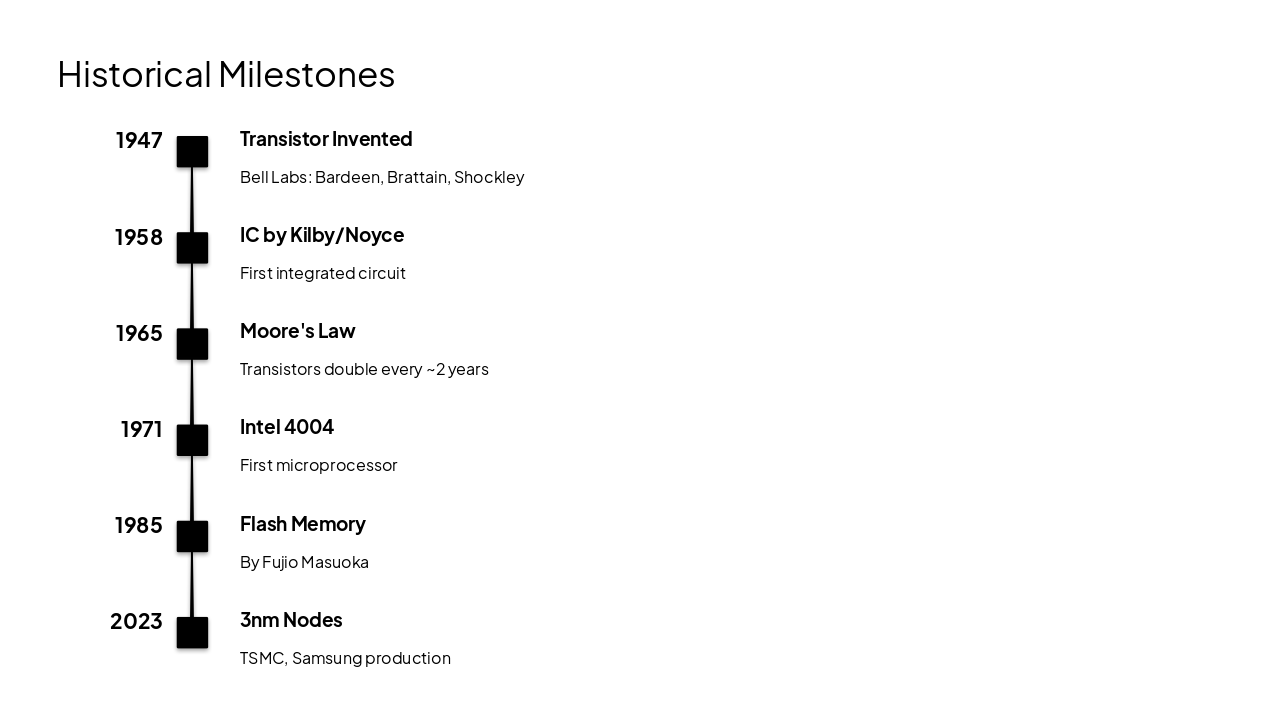
1947: Transistor Invented Bell Labs: Bardeen, Brattain, Shockley 1958: IC by Kilby/Noyce First integrated circuit 1965: Moore's Law Transistors double every ~2 years 1971: Intel 4004 First microprocessor 1985: Flash Memory By Fujio Masuoka 2023: 3nm Nodes TSMC, Samsung production
💻 Computing CPUs, GPUs, memory chips
📱 Consumer Electronics Smartphones, TVs, wearables
🚗 Automotive ECUs, sensors, EVs powertrains
☀️ Renewable Energy Solar cells, power inverters
💡 Optoelectronics LEDs, lasers, photodiodes
---
Photo by Andrew Stutesman on Unsplash
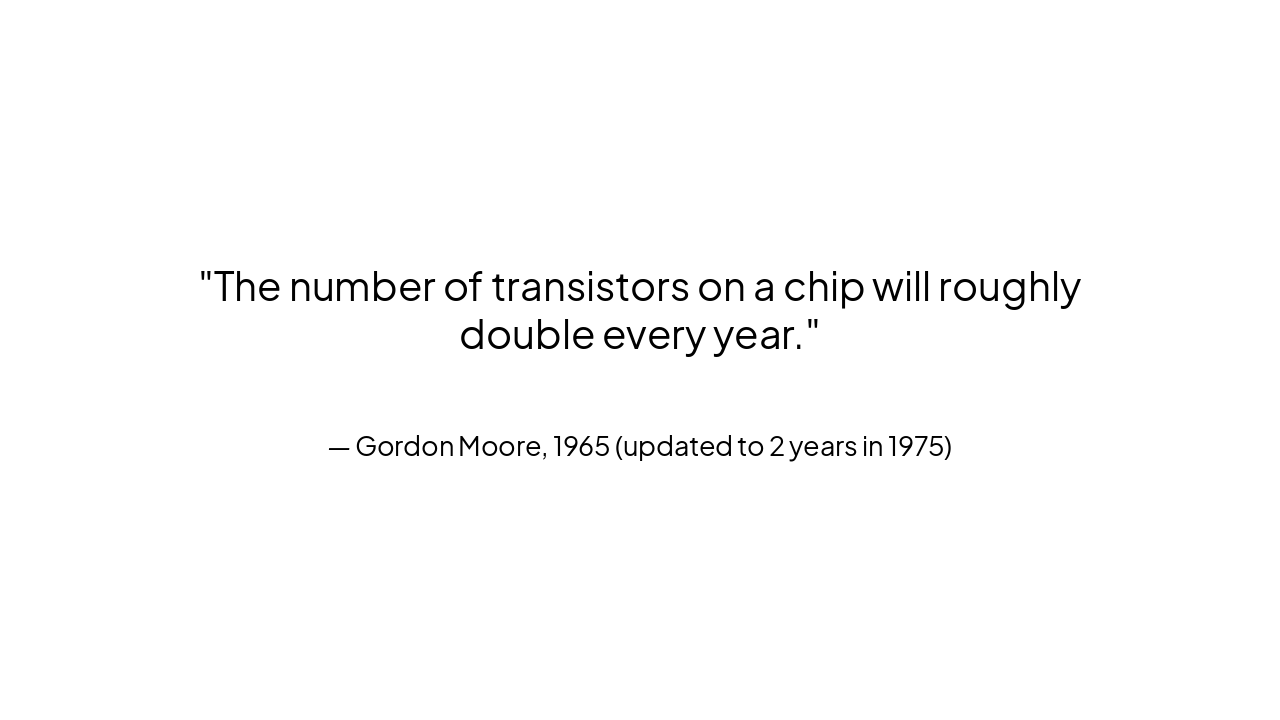
> The number of transistors on a chip will roughly double every year.
— Gordon Moore, 1965 (updated to 2 years in 1975)
Semiconductors drive innovation across industries Future: Smaller, faster, smarter chips
Thank you! Questions?
---
Photo by Logan Voss on Unsplash
Explore thousands of AI-generated presentations for inspiration
Generate professional presentations in seconds with Karaf's AI. Customize this presentation or start from scratch.
