Slide 1 of 11
Slide 1 - Presentation Title
AI Impact on the UK Labour Market: Regulation and Employment Practices
An Analysis of Labour Market Impacts and Regulatory Frameworks in the UK
---
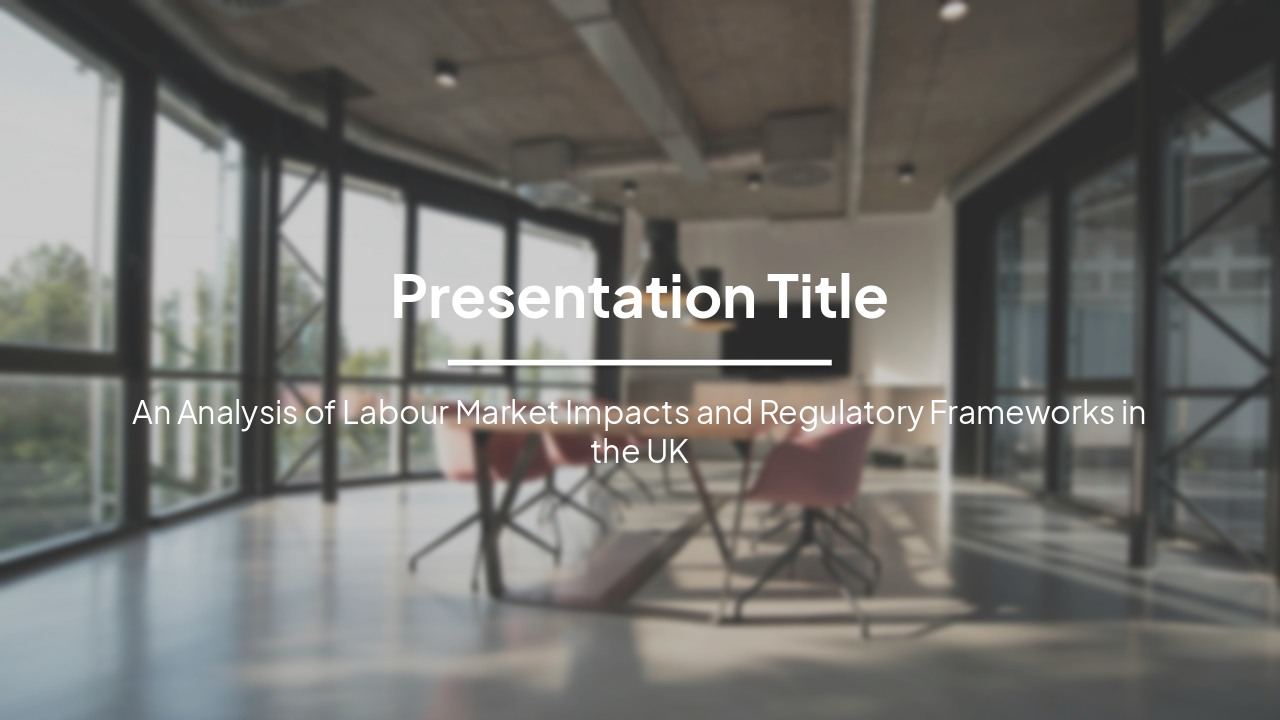
Photo by Nastuh Abootalebi on Unsplash
Generated from prompt:
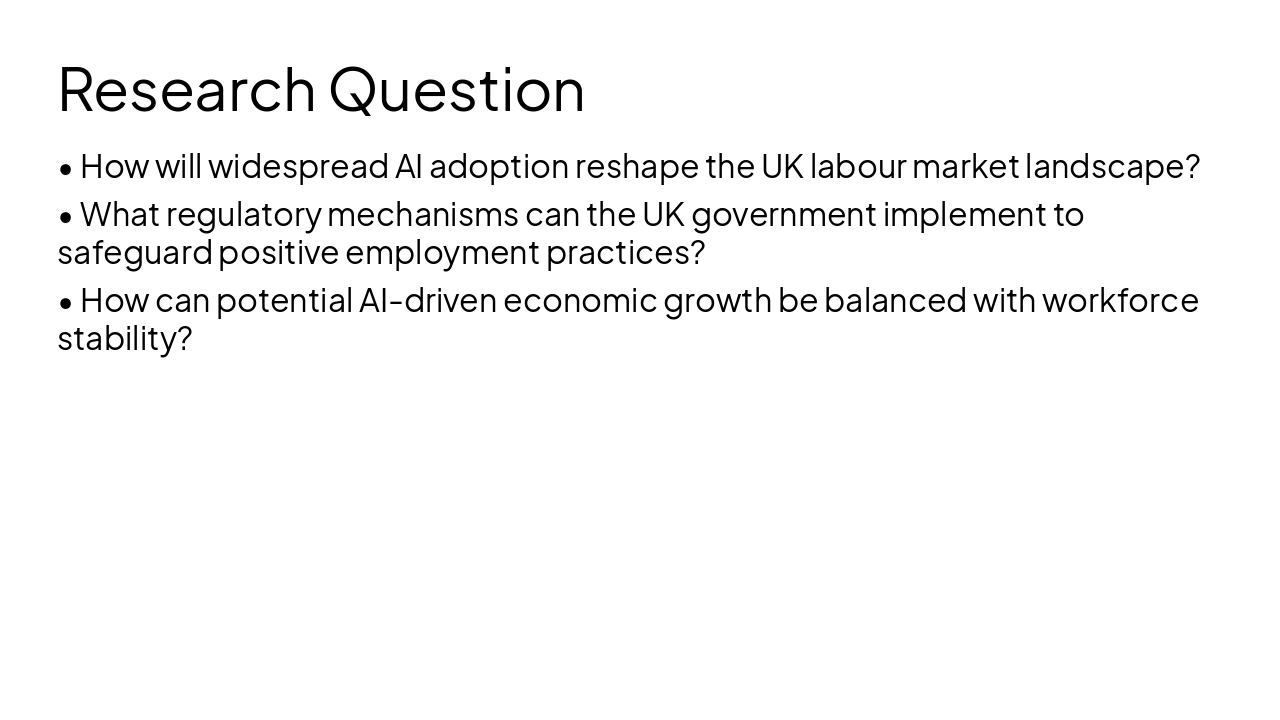
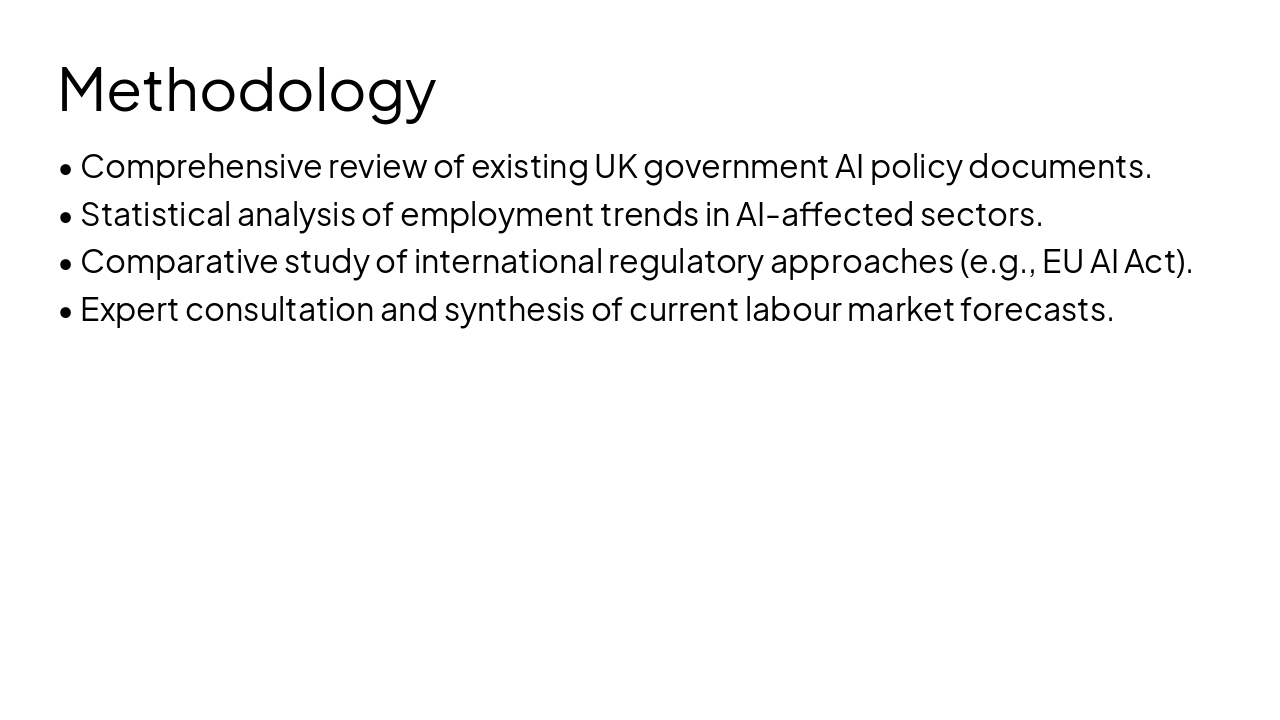
Enhance the visual design and formatting of a presentation titled 'How will AI impact the labour market in the UK, and how could the government regulate it to ensure positive employment practices?'. Keep the original content but improve layout, typography, consistency, and visual appeal. Use modern professional slides with clear section headers, icons, balanced spacing, and better bullet structuring. Include slides for: Title, Quote (Elon Musk), Research Question, Methodology, Outline, AI Job Creation Sectors, At-Risk Sectors, Graph Analysis, Policy Effectiveness, Results, Conclusion. Apply a clean academic style with subtle color palette (blue/white/grey), and add visual hierarchy and minimal text per slide.
An in-depth analysis of AI's effects on the UK labour market, covering job creation in sectors like software and data science, at-risk areas such as administration and manufacturing, employment trends, regulatory frameworks including UK policies and欧
AI Impact on the UK Labour Market: Regulation and Employment Practices
An Analysis of Labour Market Impacts and Regulatory Frameworks in the UK
---
Photo by Nastuh Abootalebi on Unsplash
> AI will be the best or worst thing ever for humanity, so we need to be very careful.
— Elon Musk
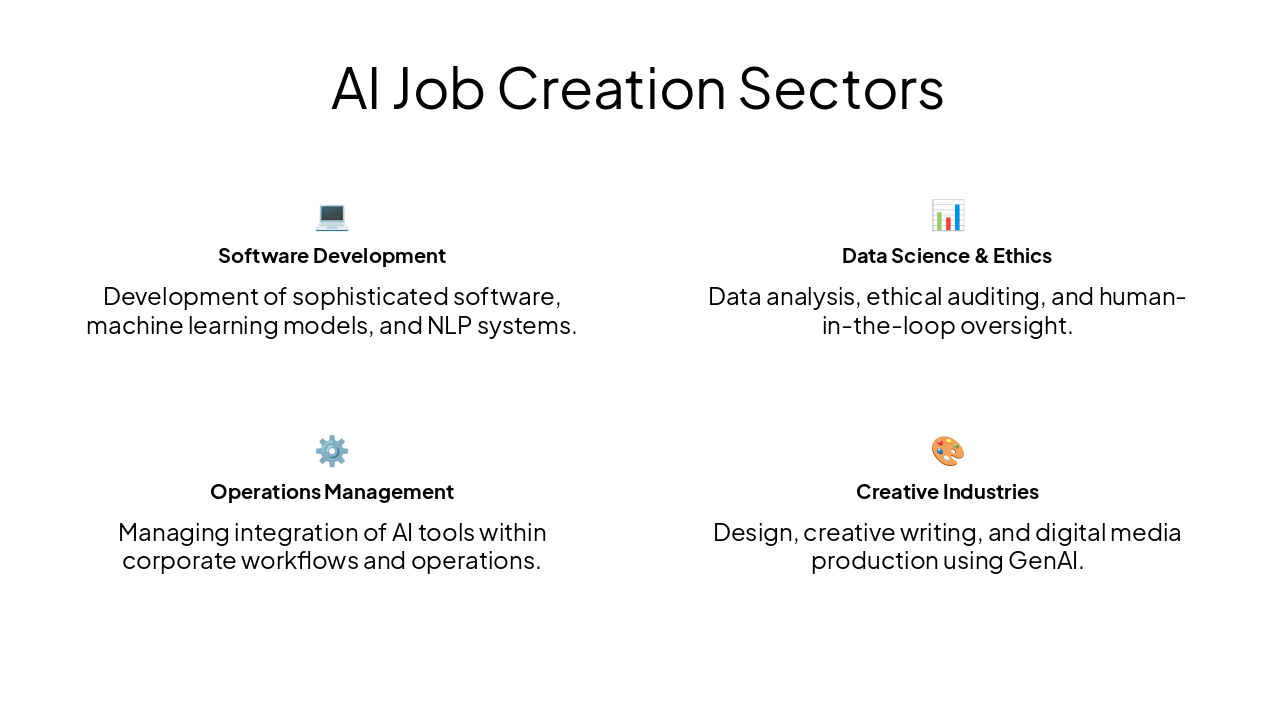
💻 Software Development Development of sophisticated software, machine learning models, and NLP systems.
📊 Data Science & Ethics Data analysis, ethical auditing, and human-in-the-loop oversight.
⚙️ Operations Management Managing integration of AI tools within corporate workflows and operations.
🎨 Creative Industries Design, creative writing, and digital media production using GenAI.
---
Photo by Deng Xiang on Unsplash
Current UK Approach Principled and sector-specific, focusing on innovation and responsible growth via the AI Safety Institute.
International Alternatives Legislative frameworks like the EU AI Act providing strict risk-based classification and enforcement.
Balanced regulation, proactive upskilling, and multi-stakeholder collaboration are essential for harnessing AI's potential while ensuring equitable employment practices. Thank you.
Toward a Sustainable AI-Integrated Labour Market in the UK
---
Photo by Lucas Dudek on Unsplash
Explore thousands of AI-generated presentations for inspiration
Generate professional presentations in seconds with Karaf's AI. Customize this presentation or start from scratch.
