Essential First Aid & CPR Training for Maritime Safety

Generated from prompt:

Create a lightweight but complete presentation titled 'Basic First Aid & CPR Training for Maritime Industry – Khalid Faraj Shipping'. Ensure FAST generation and guaranteed downloadable output. Include 18 slides covering: - What is First Aid - 3 Ps - Role of First Aider - DRABC - Basic First Aid (bleeding, burns, choking, shock, fractures) - CPR steps - AED - Drowning - Hypothermia - Maritime communication - Summary Keep slides simple, clean, and export-ready. Use logo: /mnt/data/KFS _ JJJ.jpg

Comprehensive training deck on basic first aid, CPR, AED use, DRABC protocol, common injuries, maritime emergencies like drowning and hypothermia, communication procedures, and first aid kits for crew at Khalid Faraj Shipping.

March 25, 202618 slides
Slide 1 of 18

Slide 1 - Title Slide

Basic First Aid & CPR Training for Maritime Industry – Khalid Faraj Shipping

Essential Life-Saving Skills for Maritime Safety
Slide 1 - Title Slide
Slide 2 of 18

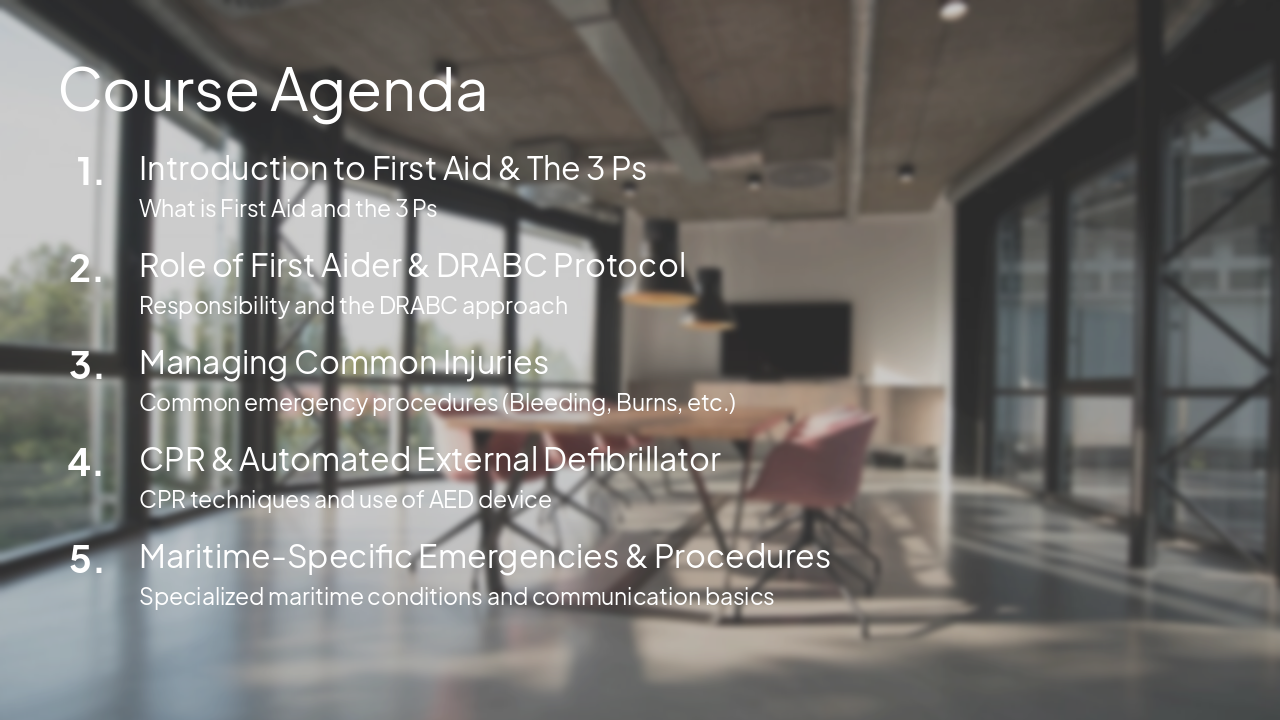
Slide 2 - Course Agenda

  • Introduction to First Aid & The 3 Ps: What is First Aid and the 3 Ps
  • Role of First Aider & DRABC Protocol: Responsibility and the DRABC approach
  • Managing Common Injuries: Common emergency procedures (Bleeding, Burns, etc.)
  • CPR & Automated External Defibrillator: CPR techniques and use of AED device
  • Maritime-Specific Emergencies & Procedures: Specialized maritime conditions and communication basics

---

Photo by Nastuh Abootalebi on Unsplash
Slide 2 - Course Agenda
Slide 3 of 18

Slide 3 - What is First Aid?

  • First aid is the immediate assistance given to any person with a medical emergency.
  • Goals: Preserve life, prevent the condition from worsening, and promote recovery.
  • Crucial until professional medical services arrive.
  • The 3 Ps: Preserve Life, Prevent Worsening, Promote Recovery.
Slide 3 - What is First Aid?
Slide 4 of 18

Slide 4 - The Role of a First Aider

  • Primary objective: Protect the injured and yourself (safety first).
  • Do not endanger yourself to save others.
  • Maintain composure during emergencies.
  • Assess the situation accurately and call for professional help.
  • Provide basic first aid without exceeding your training level.
Slide 4 - The Role of a First Aider
Slide 5 of 18

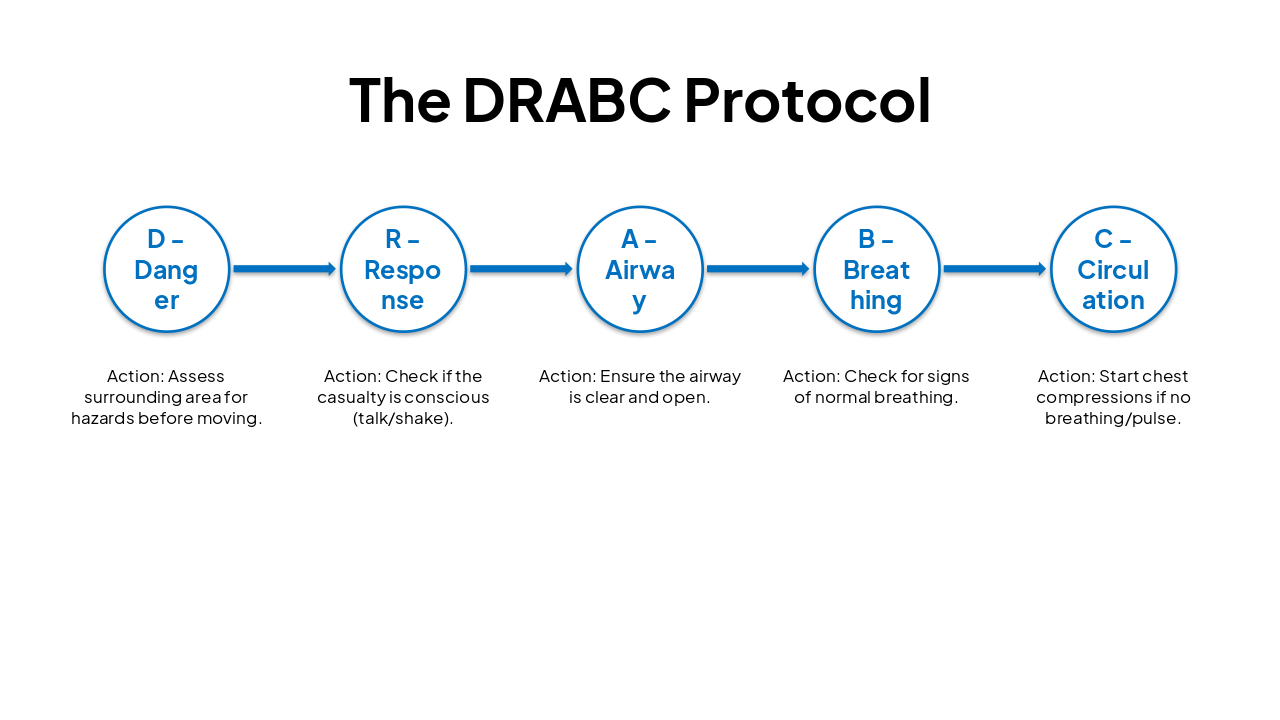
Slide 5 - The DRABC Protocol

StepAction
D - DangerAssess surrounding area for hazards before moving.
R - ResponseCheck if the casualty is conscious (talk/shake).
A - AirwayEnsure the airway is clear and open.
B - BreathingCheck for signs of normal breathing.
C - CirculationStart chest compressions if no breathing/pulse.
Slide 5 - The DRABC Protocol
Slide 6 of 18

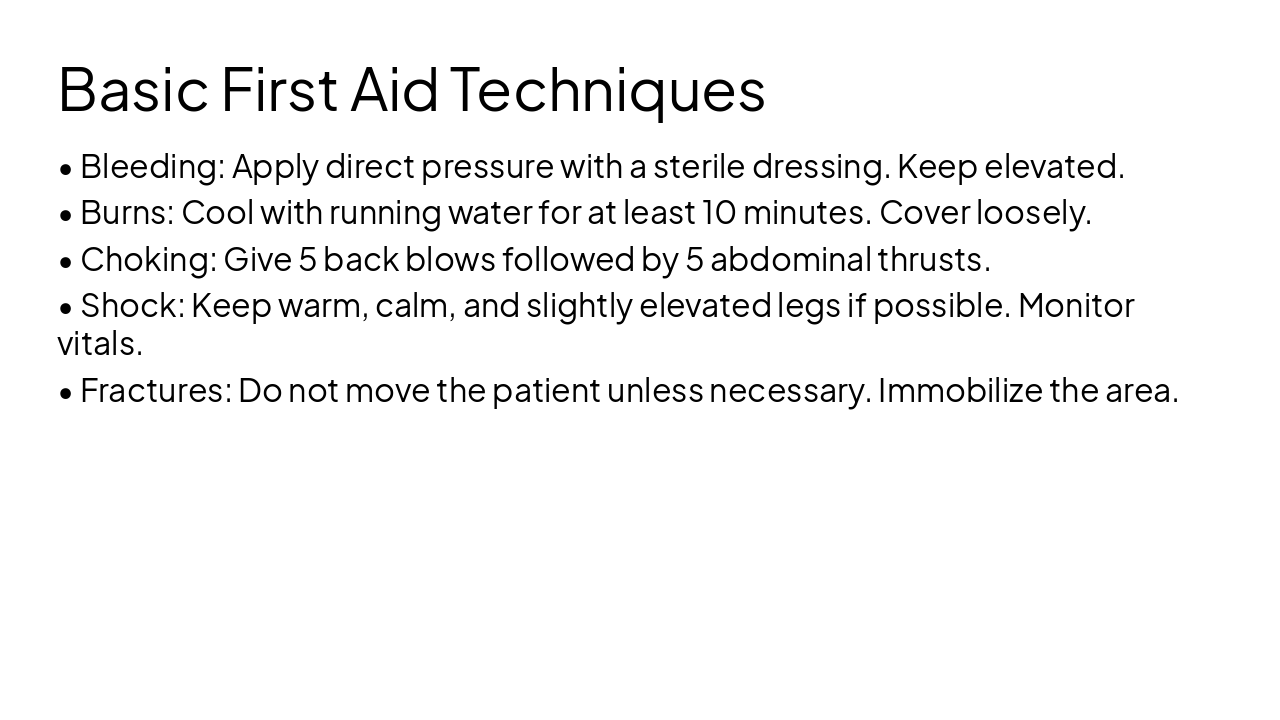
Slide 6 - Basic First Aid Techniques

  • Bleeding: Apply direct pressure with a sterile dressing. Keep elevated.
  • Burns: Cool with running water for at least 10 minutes. Cover loosely.
  • Choking: Give 5 back blows followed by 5 abdominal thrusts.
  • Shock: Keep warm, calm, and slightly elevated legs if possible. Monitor vitals.
  • Fractures: Do not move the patient unless necessary. Immobilize the area.
Slide 6 - Basic First Aid Techniques
Slide 7 of 18

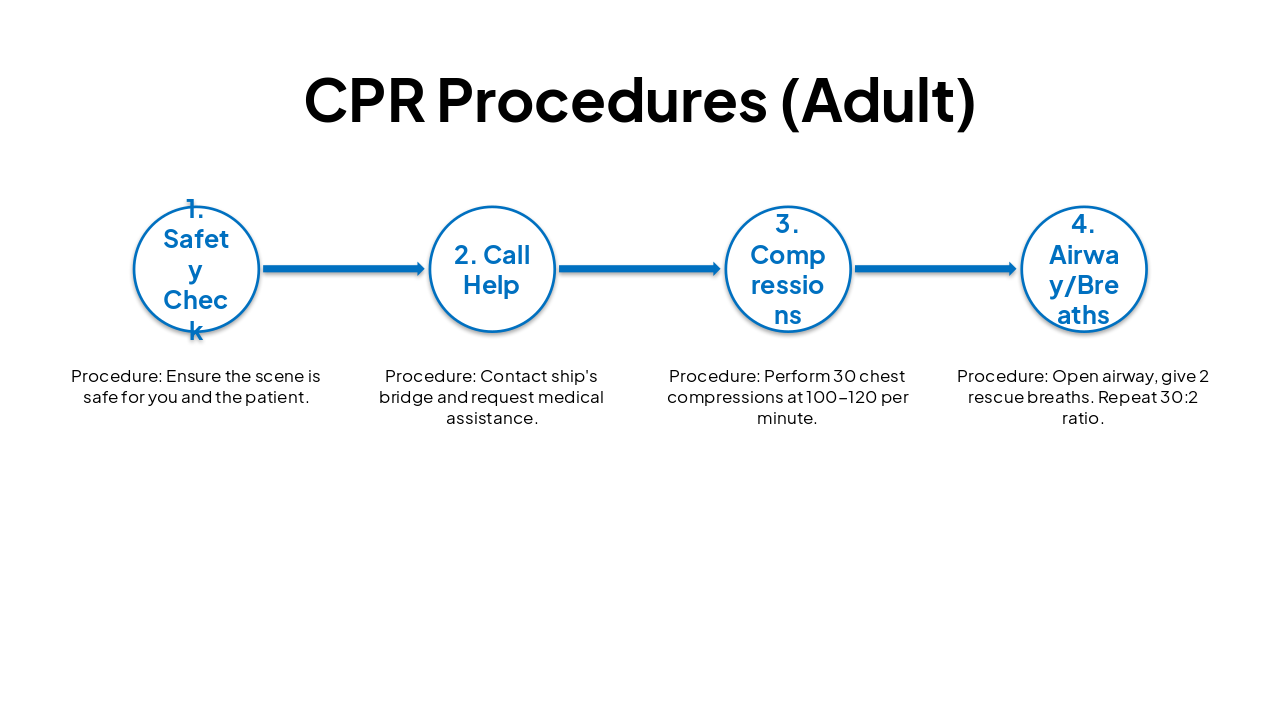
Slide 7 - CPR Procedures (Adult)

StepProcedure
1. Safety CheckEnsure the scene is safe for you and the patient.
2. Call HelpContact ship's bridge and request medical assistance.
3. CompressionsPerform 30 chest compressions at 100-120 per minute.
4. Airway/BreathsOpen airway, give 2 rescue breaths. Repeat 30:2 ratio.
Slide 7 - CPR Procedures (Adult)
Slide 8 of 18

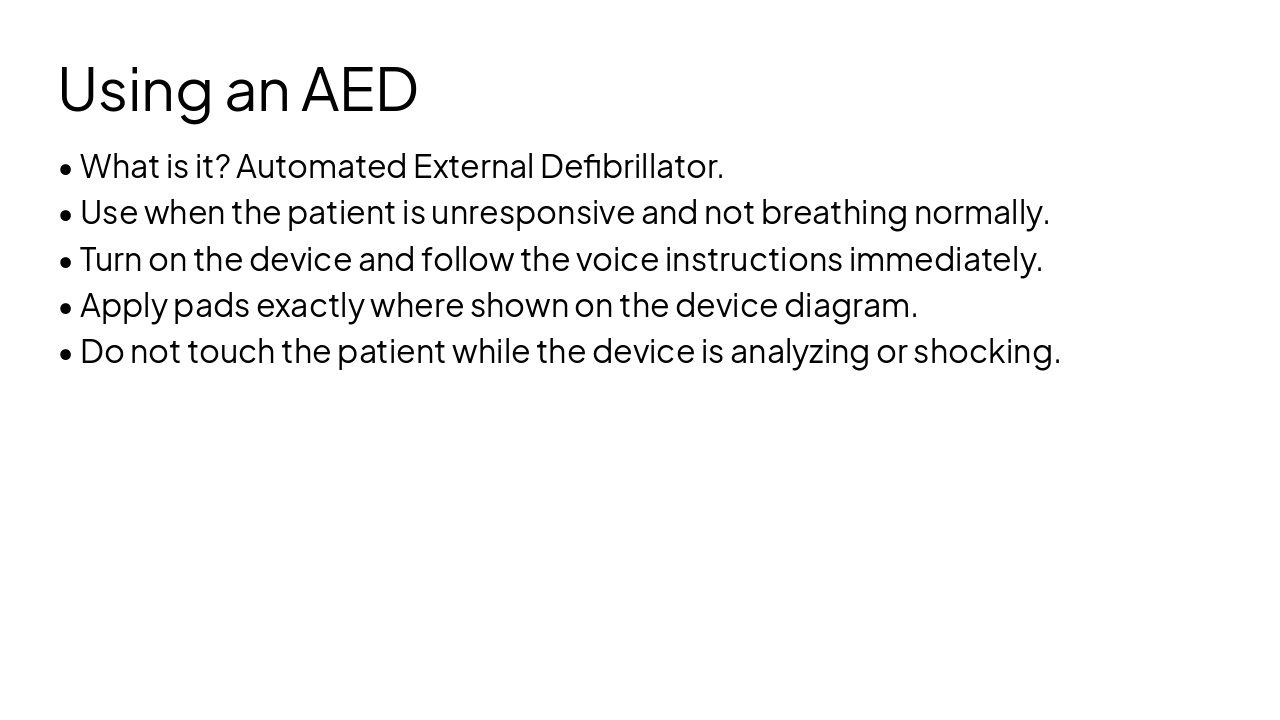
Slide 8 - Using an AED

  • What is it? Automated External Defibrillator.
  • Use when the patient is unresponsive and not breathing normally.
  • Turn on the device and follow the voice instructions immediately.
  • Apply pads exactly where shown on the device diagram.
  • Do not touch the patient while the device is analyzing or shocking.
Slide 8 - Using an AED
Slide 9 of 18

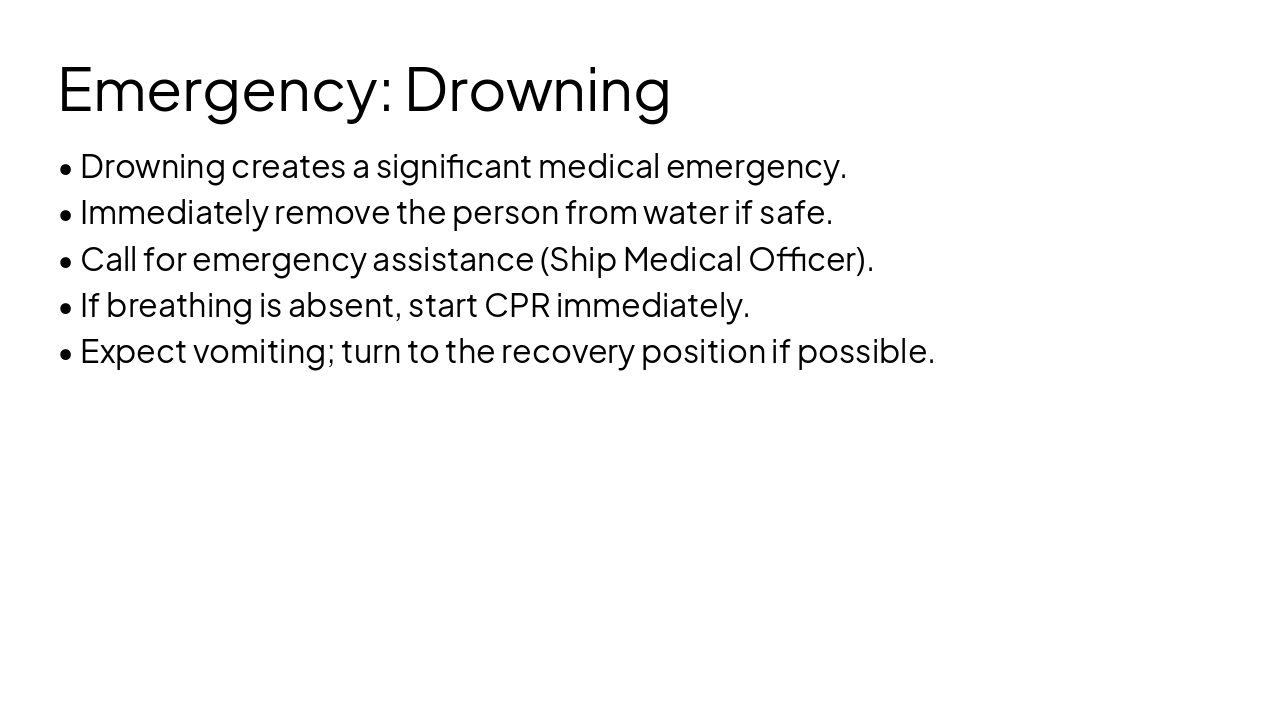
Slide 9 - Emergency: Drowning

  • Drowning creates a significant medical emergency.
  • Immediately remove the person from water if safe.
  • Call for emergency assistance (Ship Medical Officer).
  • If breathing is absent, start CPR immediately.
  • Expect vomiting; turn to the recovery position if possible.
Slide 9 - Emergency: Drowning
Slide 10 of 18

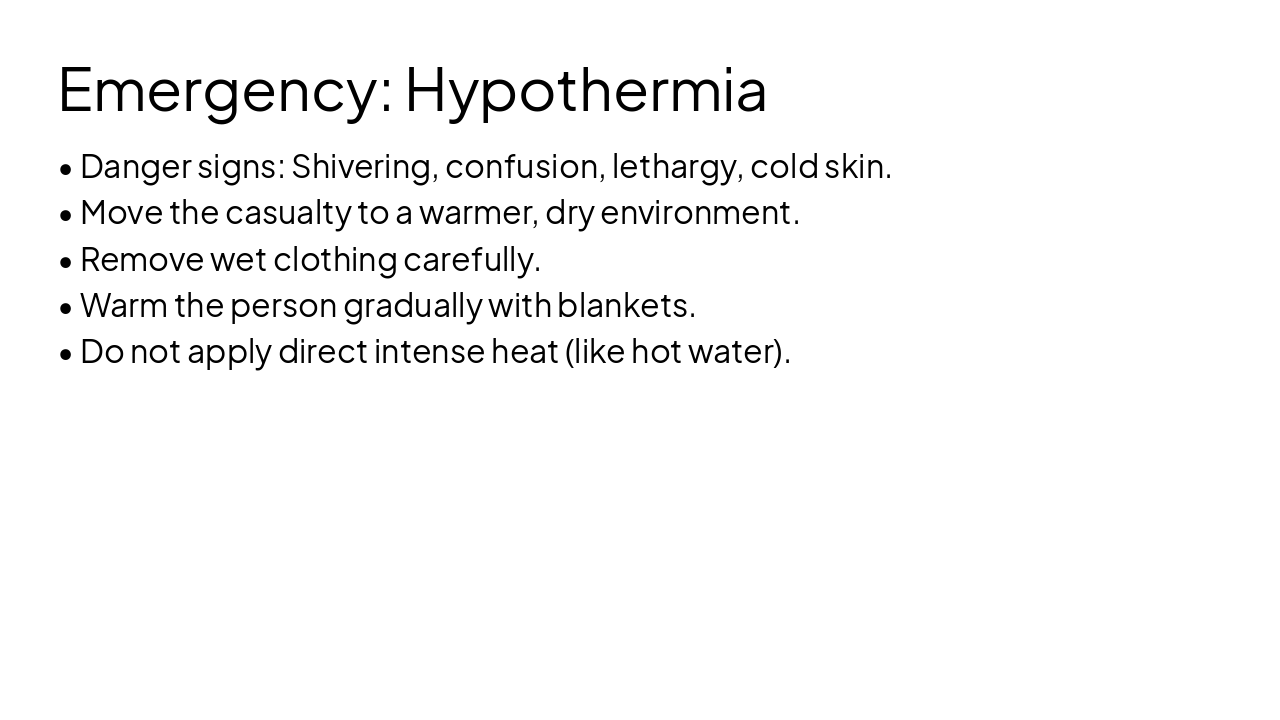
Slide 10 - Emergency: Hypothermia

  • Danger signs: Shivering, confusion, lethargy, cold skin.
  • Move the casualty to a warmer, dry environment.
  • Remove wet clothing carefully.
  • Warm the person gradually with blankets.
  • Do not apply direct intense heat (like hot water).
Slide 10 - Emergency: Hypothermia
Slide 11 of 18

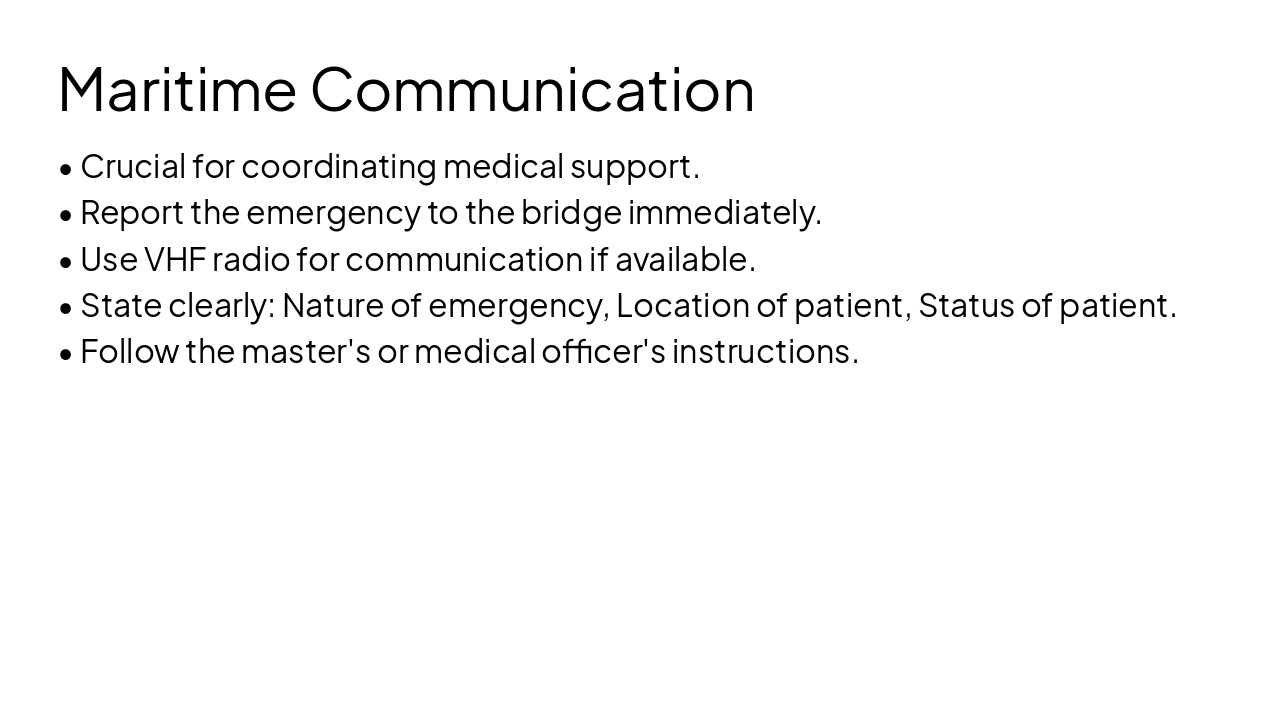
Slide 11 - Maritime Communication

  • Crucial for coordinating medical support.
  • Report the emergency to the bridge immediately.
  • Use VHF radio for communication if available.
  • State clearly: Nature of emergency, Location of patient, Status of patient.
  • Follow the master's or medical officer's instructions.
Slide 11 - Maritime Communication
Slide 12 of 18

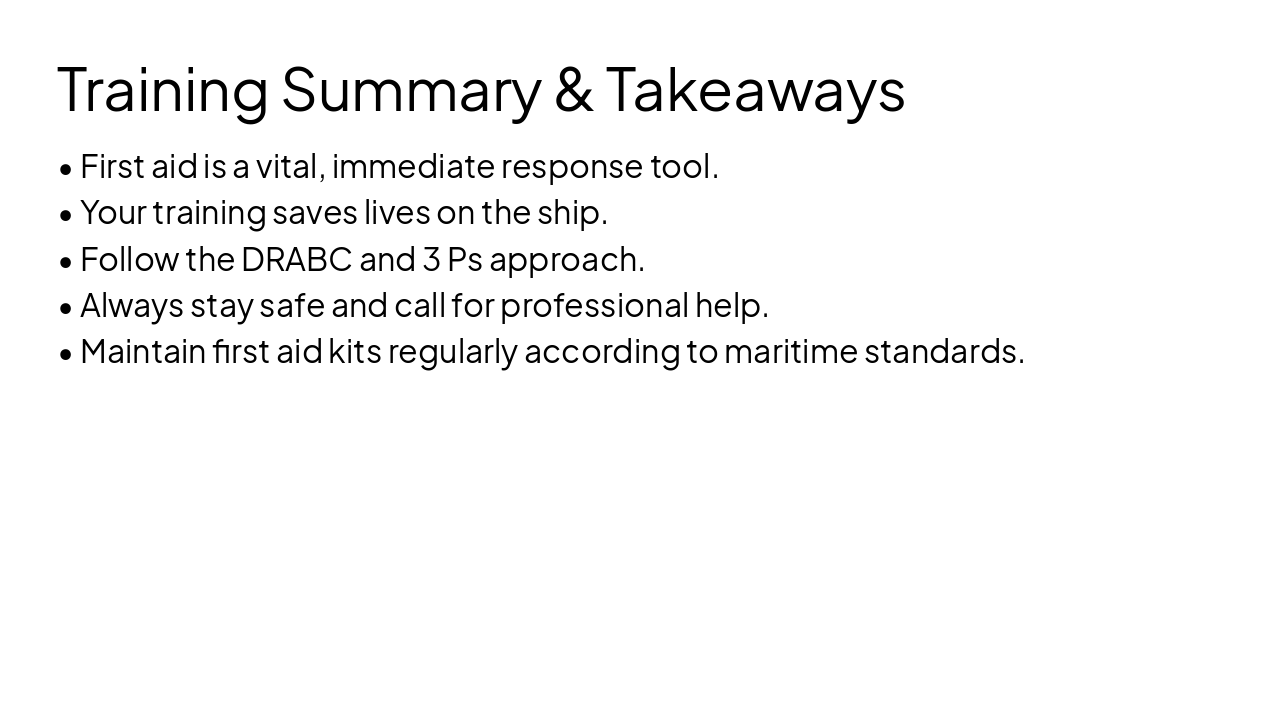
Slide 12 - Training Summary & Takeaways

  • First aid is a vital, immediate response tool.
  • Your training saves lives on the ship.
  • Follow the DRABC and 3 Ps approach.
  • Always stay safe and call for professional help.
  • Maintain first aid kits regularly according to maritime standards.
Slide 12 - Training Summary & Takeaways
Slide 13 of 18

Slide 13 - Conclusion

Thank you for your commitment to maritime safety. Practice your skills regularly.

Safety is a Shared Responsibility at Khalid Faraj Shipping

---

Photo by Nastuh Abootalebi on Unsplash
Slide 13 - Conclusion
Slide 14 of 18

Slide 14 - Section Header

1

Advanced Care & First Aid Kits

Understanding the tools and supplementary care for maritime environments.

---

Photo by Nastuh Abootalebi on Unsplash
Slide 14 - Section Header
Slide 15 of 18

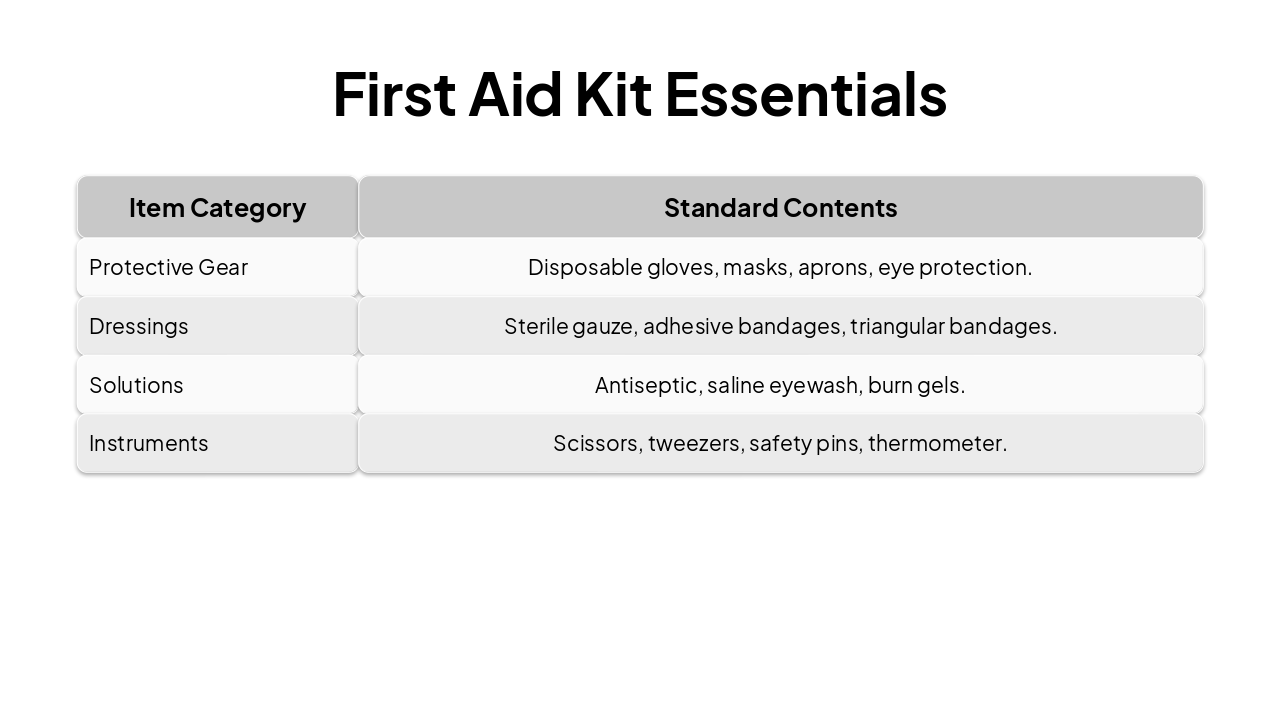
Slide 15 - First Aid Kit Essentials

Item CategoryStandard Contents
Protective GearDisposable gloves, masks, aprons, eye protection.
DressingsSterile gauze, adhesive bandages, triangular bandages.
SolutionsAntiseptic, saline eyewash, burn gels.
InstrumentsScissors, tweezers, safety pins, thermometer.
Slide 15 - First Aid Kit Essentials
Slide 16 of 18

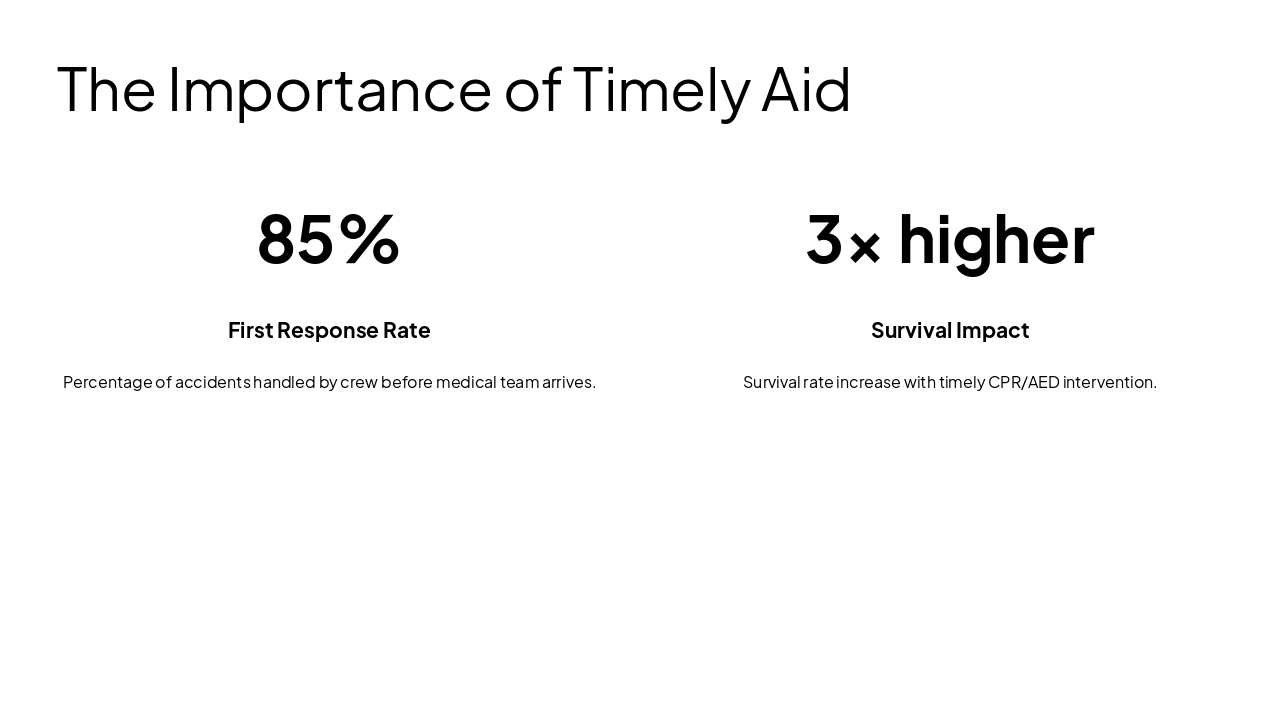
Slide 16 - The Importance of Timely Aid

  • 85%: First Response Rate
  • 3x higher: Survival Impact
Slide 16 - The Importance of Timely Aid
Slide 17 of 18

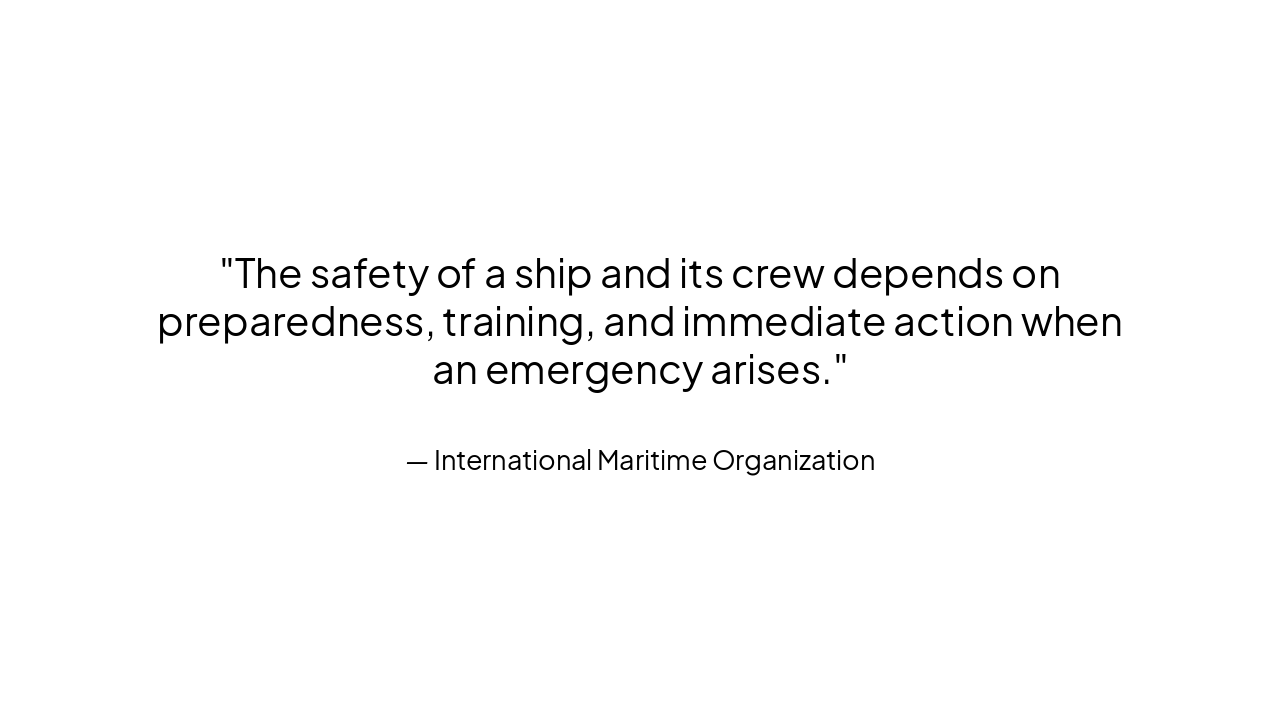
Slide 17 - Safety Commitment

> The safety of a ship and its crew depends on preparedness, training, and immediate action when an emergency arises.

— International Maritime Organization

Slide 17 - Safety Commitment
Slide 18 of 18

Slide 18 - Final Remarks

For any further questions, visit the Ship Medical Office or HR.

Training sessions continue weekly. Please review your manual.

---

Photo by Nastuh Abootalebi on Unsplash
Slide 18 - Final Remarks

Discover More Presentations

Explore thousands of AI-generated presentations for inspiration

Browse Presentations
Powered by AI

Create Your Own Presentation

Generate professional presentations in seconds with Karaf's AI. Customize this presentation or start from scratch.

Create New Presentation

Powered by Karaf.ai — AI-Powered Presentation Generator