Basic First Aid & CPR: Essential Life-Saving Skills

Generated from prompt:

Create a professional presentation titled 'Basic First Aid and CPR Training'. Include around 12-15 slides with clear headings and bullet points. Cover: Introduction to First Aid, Importance of First Aid, Emergency Action Steps (DRABC), Checking Responsiveness, Calling Emergency Services, CPR Overview, Adult CPR Steps, Child and Infant CPR differences, Use of AED, Recovery Position, Treating Bleeding, Burns, Choking (Heimlich maneuver), Shock management, and Safety Tips. Include simple visuals/icons suggestions for each slide. Keep content concise and suitable for beginners.

Beginner-friendly training on first aid fundamentals, including DRABC emergency protocol, CPR techniques for adults, children & infants, AED usage, recovery position, and treatments for bleeding, burns, choking & shock. Empower yourself to stay calm,

March 25, 202614 slides
Slide 1 of 14

Slide 1 - Basic First Aid and CPR Training

Basic First Aid and CPR Training

Essential Life-Saving Skills for Beginners

---

Photo by Nastuh Abootalebi on Unsplash
Slide 1 - Basic First Aid and CPR Training
Slide 2 of 14

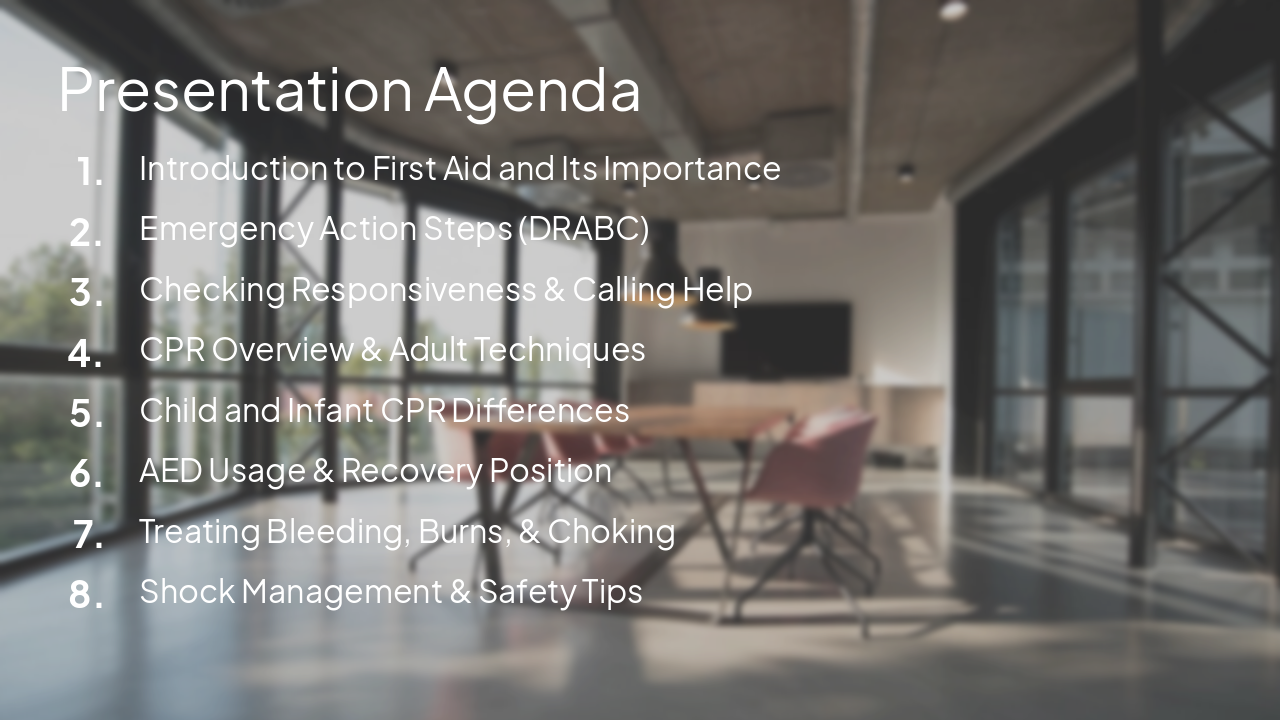
Slide 2 - Presentation Agenda

  • Introduction to First Aid and Its Importance
  • Emergency Action Steps (DRABC)
  • Checking Responsiveness & Calling Help
  • CPR Overview & Adult Techniques
  • Child and Infant CPR Differences
  • AED Usage & Recovery Position
  • Treating Bleeding, Burns, & Choking
  • Shock Management & Safety Tips

---

Photo by Nastuh Abootalebi on Unsplash
Slide 2 - Presentation Agenda
Slide 3 of 14

Slide 3 - Section 1

1

Introduction to First Aid

Understanding the Basics of Immediate Care

---

Photo by Bret Kavanaugh on Unsplash
Slide 3 - Section 1
Slide 4 of 14

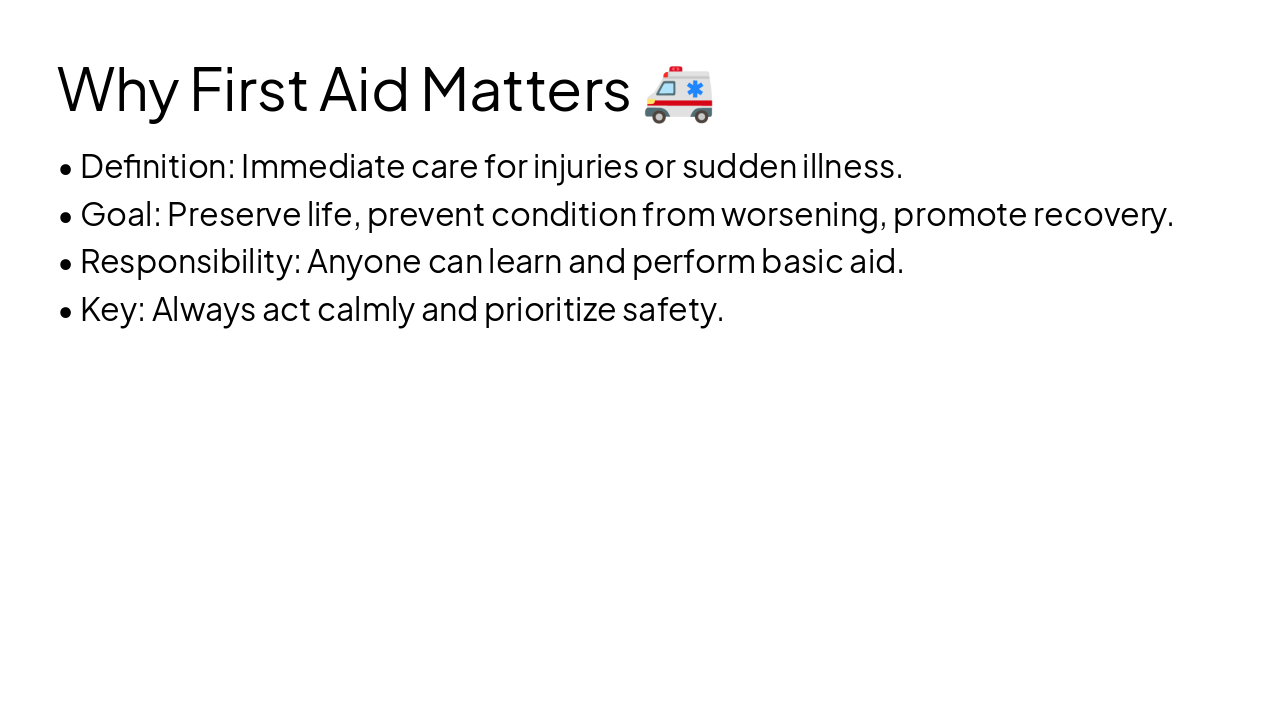
Slide 4 - Why First Aid Matters šŸš‘

  • Definition: Immediate care for injuries or sudden illness.
  • Goal: Preserve life, prevent condition from worsening, promote recovery.
  • Responsibility: Anyone can learn and perform basic aid.
  • Key: Always act calmly and prioritize safety.
Slide 4 - Why First Aid Matters šŸš‘
Slide 5 of 14

Slide 5 - Section 2

2

Emergency Action Plan

The DRABC Protocol

---

Photo by Bret Kavanaugh on Unsplash
Slide 5 - Section 2
Slide 6 of 14

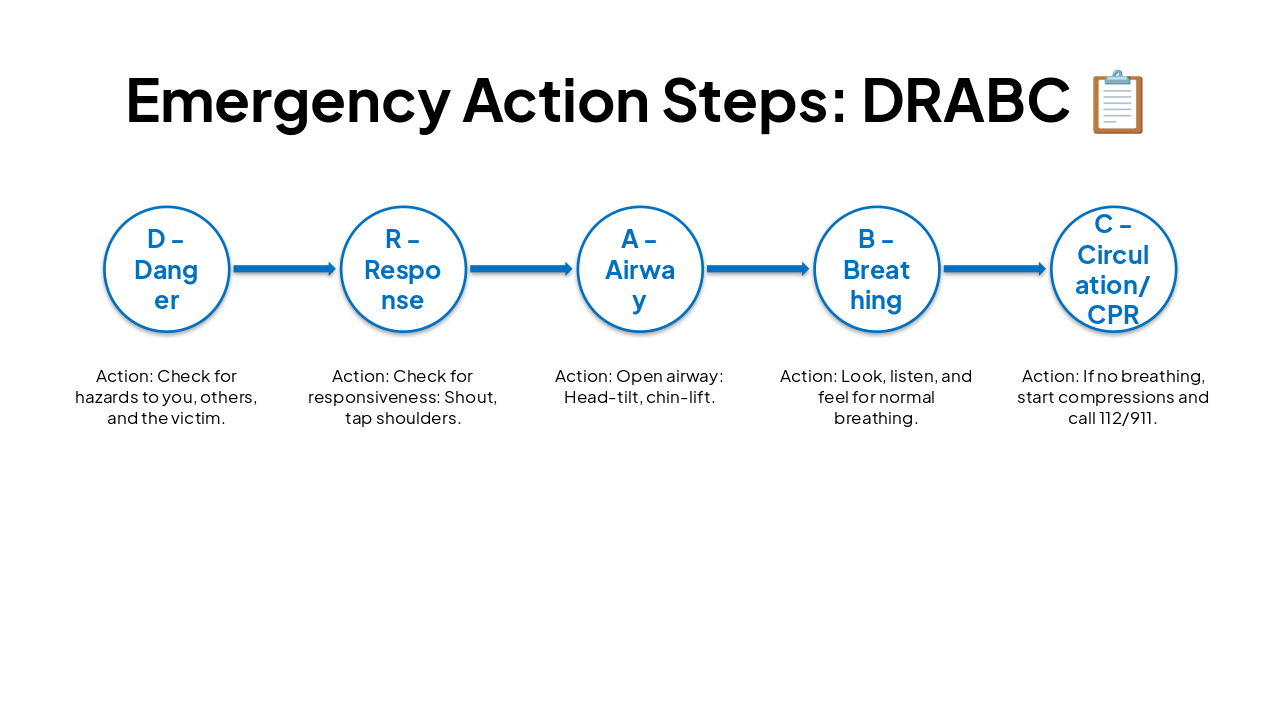
Slide 6 - Emergency Action Steps: DRABC šŸ“‹

StepAction
D - DangerCheck for hazards to you, others, and the victim.
R - ResponseCheck for responsiveness: Shout, tap shoulders.
A - AirwayOpen airway: Head-tilt, chin-lift.
B - BreathingLook, listen, and feel for normal breathing.
C - Circulation/CPRIf no breathing, start compressions and call 112/911.
Slide 6 - Emergency Action Steps: DRABC šŸ“‹
Slide 7 of 14

Slide 7 - Section 3

3

Life Support Basics

CPR and AED Techniques

---

Photo by Bret Kavanaugh on Unsplash

Slide 7 - Section 3
Slide 8 of 14

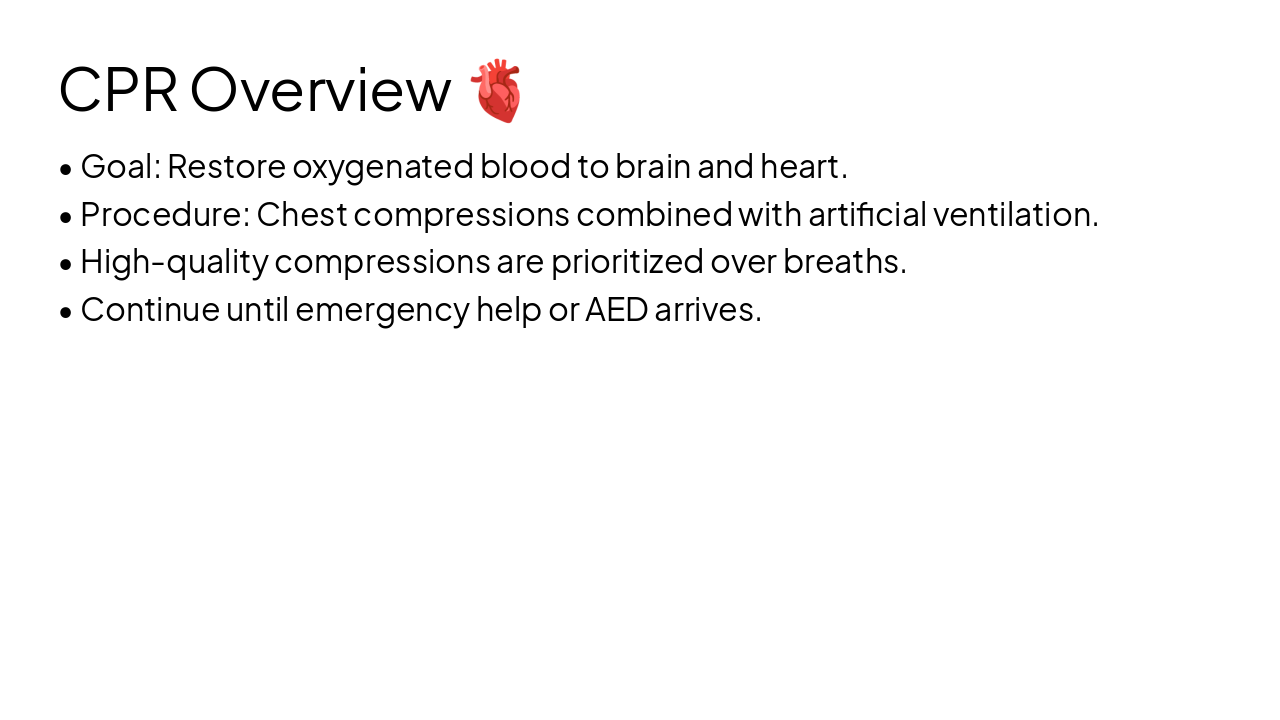
Slide 8 - CPR Overview šŸ«€

  • Goal: Restore oxygenated blood to brain and heart.
  • Procedure: Chest compressions combined with artificial ventilation.
  • High-quality compressions are prioritized over breaths.
  • Continue until emergency help or AED arrives.
Slide 8 - CPR Overview šŸ«€
Slide 9 of 14

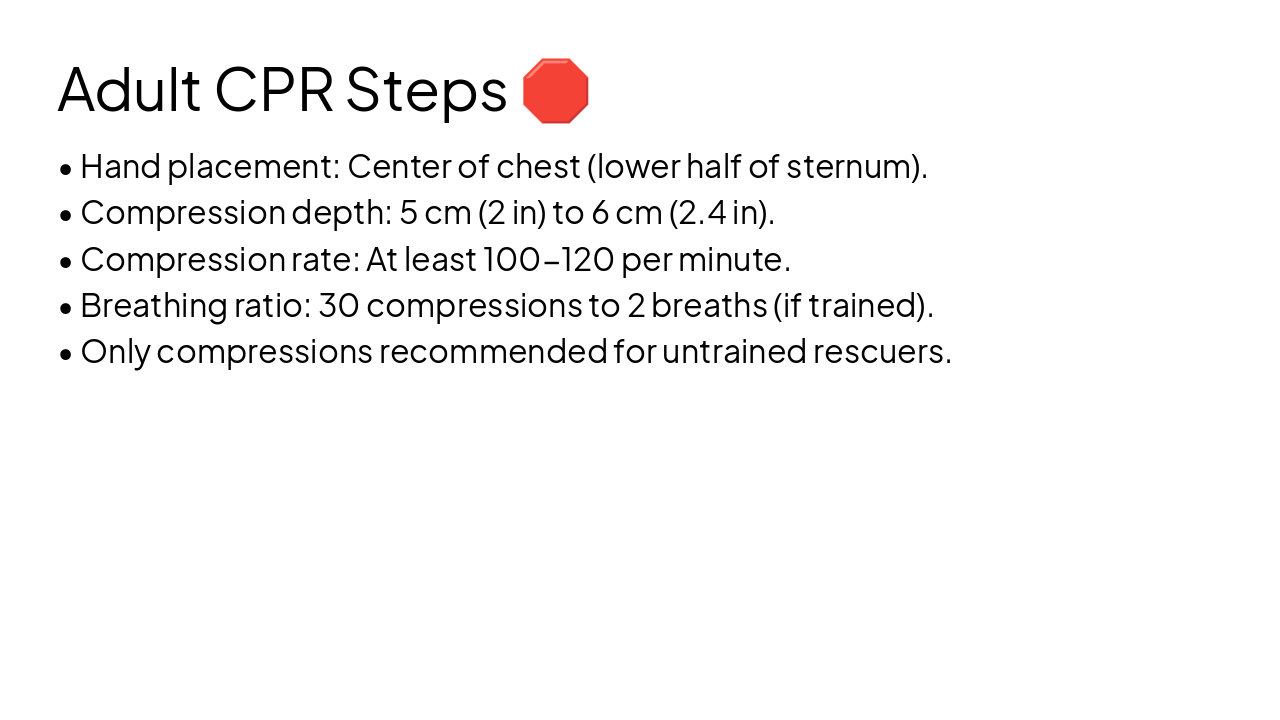
Slide 9 - Adult CPR Steps šŸ›‘

  • Hand placement: Center of chest (lower half of sternum).
  • Compression depth: 5 cm (2 in) to 6 cm (2.4 in).
  • Compression rate: At least 100-120 per minute.
  • Breathing ratio: 30 compressions to 2 breaths (if trained).
  • Only compressions recommended for untrained rescuers.
Slide 9 - Adult CPR Steps šŸ›‘
Slide 10 of 14

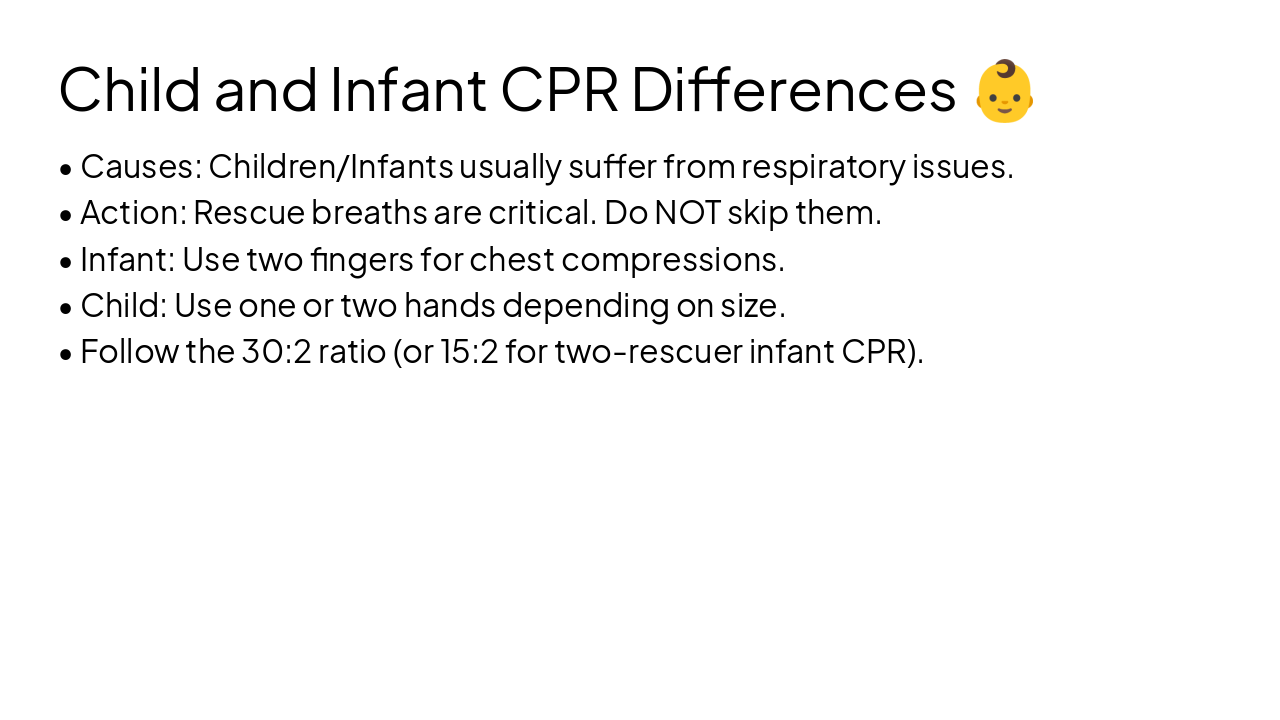
Slide 10 - Child and Infant CPR Differences šŸ‘

  • Causes: Children/Infants usually suffer from respiratory issues.
  • Action: Rescue breaths are critical. Do NOT skip them.
  • Infant: Use two fingers for chest compressions.
  • Child: Use one or two hands depending on size.
  • Follow the 30:2 ratio (or 15:2 for two-rescuer infant CPR).
Slide 10 - Child and Infant CPR Differences šŸ‘
Slide 11 of 14

Slide 11 - Using an AED ⚔

  • AEDs shock the heart back into rhythm (defibrillation).
  • Only effective for certain heart rhythms.
  • Power on immediately and follow voice prompts.
  • Do NOT touch the victim while AED is analyzing.

---

Photo by P. L. on Unsplash

Slide 11 - Using an AED ⚔
Slide 12 of 14

Slide 12 - Section 4

4

Specialized Treatments

Responding to Common Injuries

---

Photo by Bret Kavanaugh on Unsplash
Slide 12 - Section 4
Slide 13 of 14

Slide 13 - Treatment Guidelines 🩹

  • Recovery Position: If breathing but unconscious, tilt head back and turn on side to keep airway clear.
  • Bleeding: Apply direct pressure with sterile gauze. Elevate injury if possible.
  • Burns: Cool immediately under running cool water (not ice) for 20 mins. Cover with cling film/bandage.
  • Choking (Heimlich): 5 back blows followed by 5 abdominal thrusts.
  • Shock: Lay flat, raise legs if no spinal injury, warm with blanket, reassure.
Slide 13 - Treatment Guidelines 🩹
Slide 14 of 14

Slide 14 - Final Summary

Thank you for learning First Aid and CPR.

Stay Calm, Act Fast, Save Lives.

---

Photo by Nastuh Abootalebi on Unsplash
Slide 14 - Final Summary

Discover More Presentations

Explore thousands of AI-generated presentations for inspiration

Browse Presentations
Powered by AI

Create Your Own Presentation

Generate professional presentations in seconds with Karaf's AI. Customize this presentation or start from scratch.

Create New Presentation

Powered by Karaf.ai — AI-Powered Presentation Generator