Earthquakes: Science, Impacts, and Preparedness

Generated from prompt:

earthquake

This presentation offers a comprehensive scientific overview of earthquakes, including fundamentals, causes, mechanisms, historical events, global impacts, consequences, and strategies for risk management and engineering to enhance preparedness.

April 6, 20268 slides
Slide 1 of 8

Slide 1 - Earthquake Presentation

Earthquakes: A Scientific Overview

Understanding Seismic Events and their Global Impact

---

Photo by Pavel Neznanov on Unsplash
Slide 1 - Earthquake Presentation
Slide 2 of 8

Slide 2 - Presentation Agenda

  • Fundamentals of Earthquakes
  • Causes and Mechanisms
  • Significant Historical Events
  • Impact and Consequences
  • Risk Management and Engineering

---

Photo by Markus Spiske on Unsplash
Slide 2 - Presentation Agenda
Slide 3 of 8

Slide 3 - What is an Earthquake?

  • Earthquakes are the shaking of the Earth's surface caused by a sudden release of energy in the lithosphere.
  • This energy release creates seismic waves that propagate through the Earth.
  • The point of rupture is the hypocenter (focus), and the surface point above is the epicenter.
  • Seismicity refers to the frequency, type, and size of earthquakes in a specific region.
Slide 3 - What is an Earthquake?
Slide 4 of 8

Slide 4 - Mechanisms and Causes

  • Primary cause: Geological fault movements (normal, reverse, strike-slip).
  • Secondary causes: Volcanism, landslides, and other seismic events.
  • Human-induced causes: Mining, fracking, and nuclear weapons testing.
  • Elastic-rebound theory: Governs the dynamics of rupture and energy release.
Slide 4 - Mechanisms and Causes
Slide 5 of 8

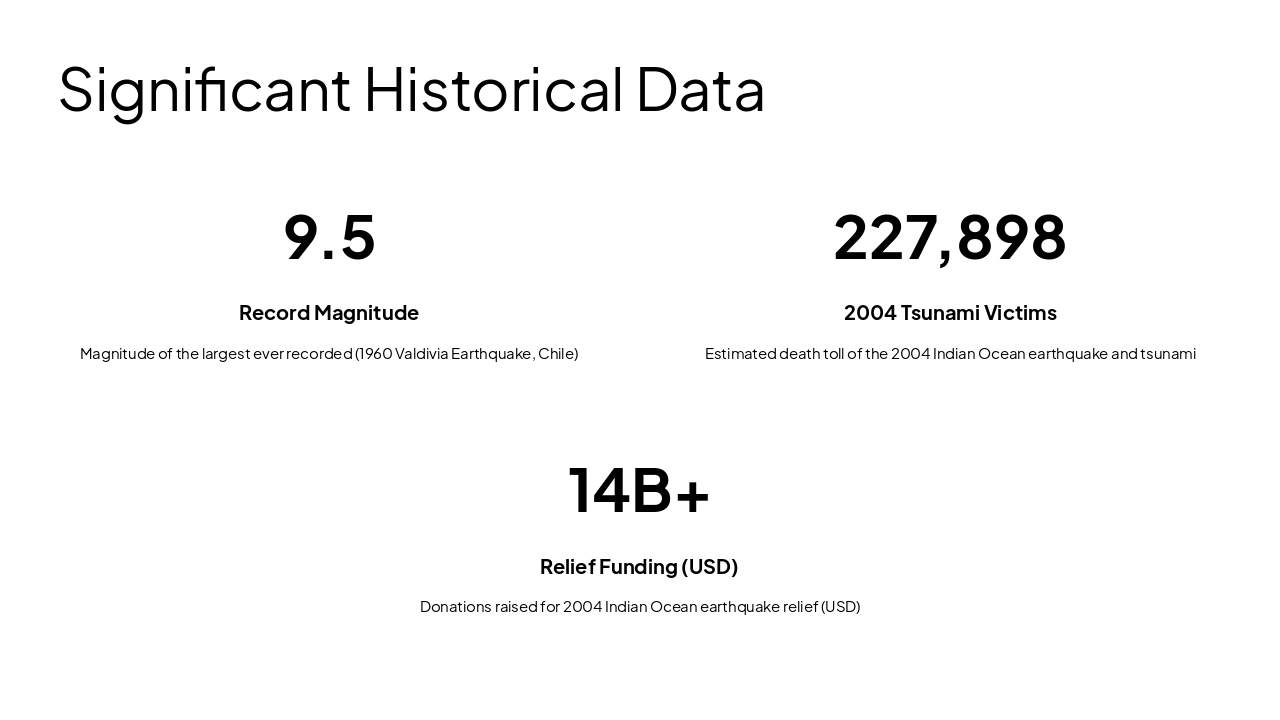
Slide 5 - Significant Historical Data

  • 9.5: Record Magnitude
  • 227,898: 2004 Tsunami Victims
  • 14B+: Relief Funding (USD)
Slide 5 - Significant Historical Data
Slide 6 of 8

Slide 6 - Effects and Consequences

  • Ground shaking and soil liquefaction lead to infrastructure damage.
  • Landslides: Earthquakes can trigger secondary geological hazards.
  • Tsunamis: Offshore epicenters can cause massive seabed displacement, leading to tsunamis.
  • Global influence: Impact on human societies, cultural, and religious beliefs.
Slide 6 - Effects and Consequences
Slide 7 of 8

Slide 7 - Risk Management and Engineering

  • Seismic retrofitting: Strengthening existing structures to withstand shaking.
  • Earthquake engineering: Designing new structures with seismic resilience.
  • Prediction and forecasting: Ongoing efforts to mitigate risks.
  • Preparedness: Crucial for reducing loss of life and property damage.
Slide 7 - Risk Management and Engineering
Slide 8 of 8

Slide 8 - Conclusion

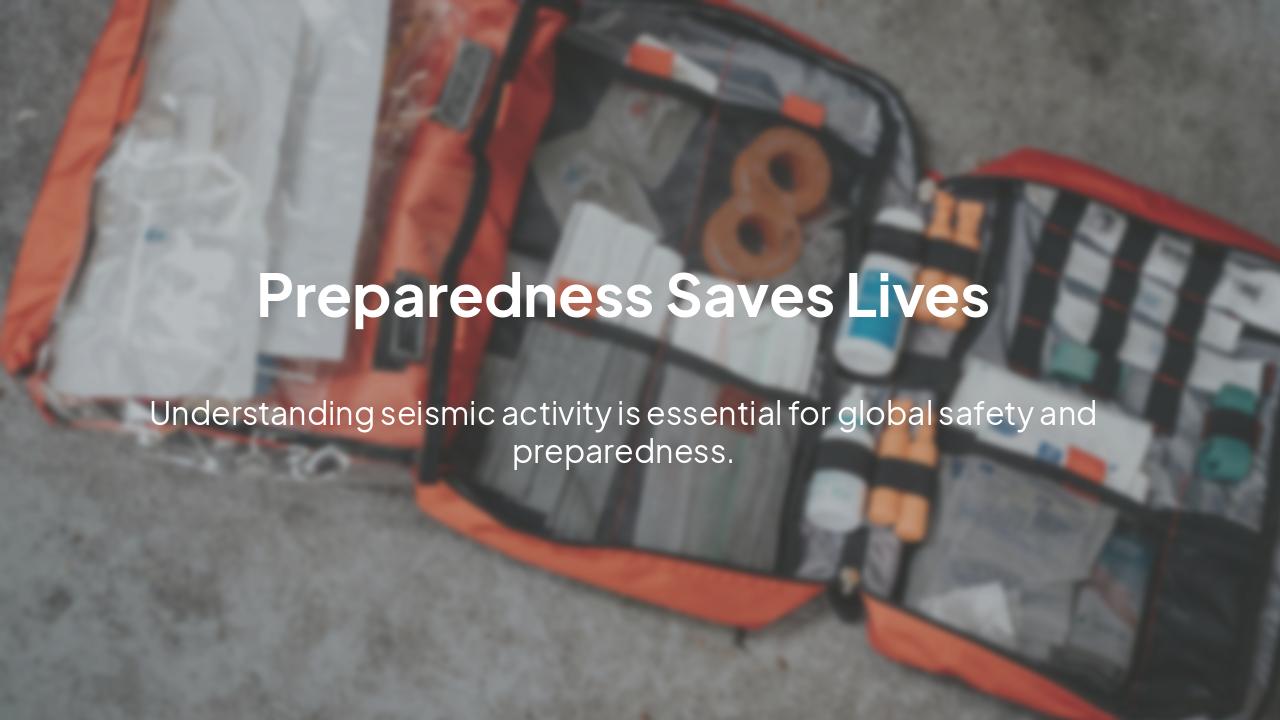
Preparedness Saves Lives

Understanding seismic activity is essential for global safety and preparedness.

---

Photo by Mathurin NAPOLY / matnapo on Unsplash
Slide 8 - Conclusion

Discover More Presentations

Explore thousands of AI-generated presentations for inspiration

Browse Presentations
Powered by AI

Create Your Own Presentation

Generate professional presentations in seconds with Karaf's AI. Customize this presentation or start from scratch.

Create New Presentation

Powered by Karaf.ai — AI-Powered Presentation Generator