Analytical Report: Figures, Equations & Insights
Generated from prompt:
with figures and equations in the report
This deck overviews analytical frameworks, key mathematical models and equations, visual data representations, performance metrics, a case study with numerical results, and conclusions for future optimization.

Slide 2 - Agenda
- Introduction to Analytical Frameworks
- Key Mathematical Models and Equations
- Visual Data Representation (Figures)
- Case Study and Numerical Results
- Conclusion and Future Work
---
Photo by Elimende Inagella on Unsplash
Slide 3 - Framework Overview
- Core objective: Integrating theoretical models with empirical data validation.
- Mathematical rigor is required for predictive accuracy in complex systems.
- Visual representation via figures clarifies non-linear relationships and trends.
- Equations serve as the fundamental backbone for system behavior analysis.
Slide 4 - Mathematical Modeling
Governing Equation The system state is modeled by: f(x) = ax² + bx + c where 'a' is the rate of change and 'x' is the input variable.
Interpretation This equation demonstrates parabolic growth in our observed dataset. The coefficient 'a' significantly impacts the slope, determining rapid expansion phases.
Slide 5 - Visual Data Analysis
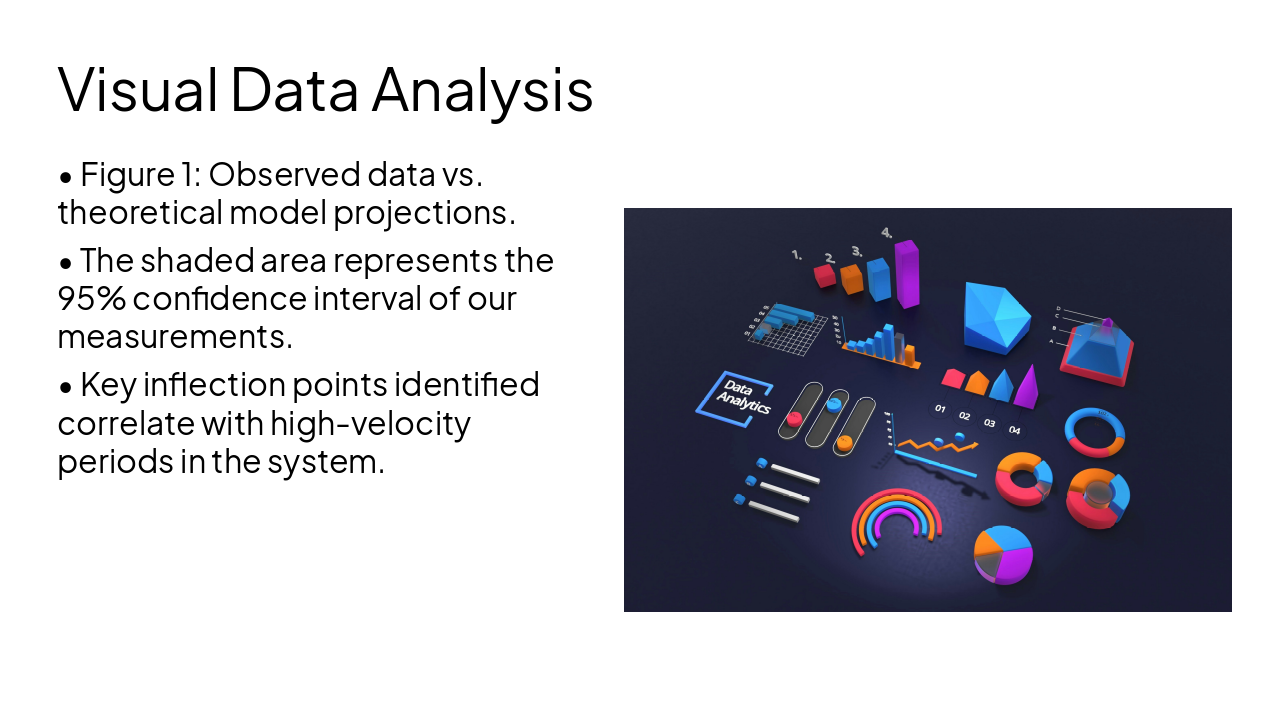
- Figure 1: Observed data vs. theoretical model projections.
- The shaded area represents the 95% confidence interval of our measurements.
- Key inflection points identified correlate with high-velocity periods in the system.
---
Photo by Deng Xiang on Unsplash
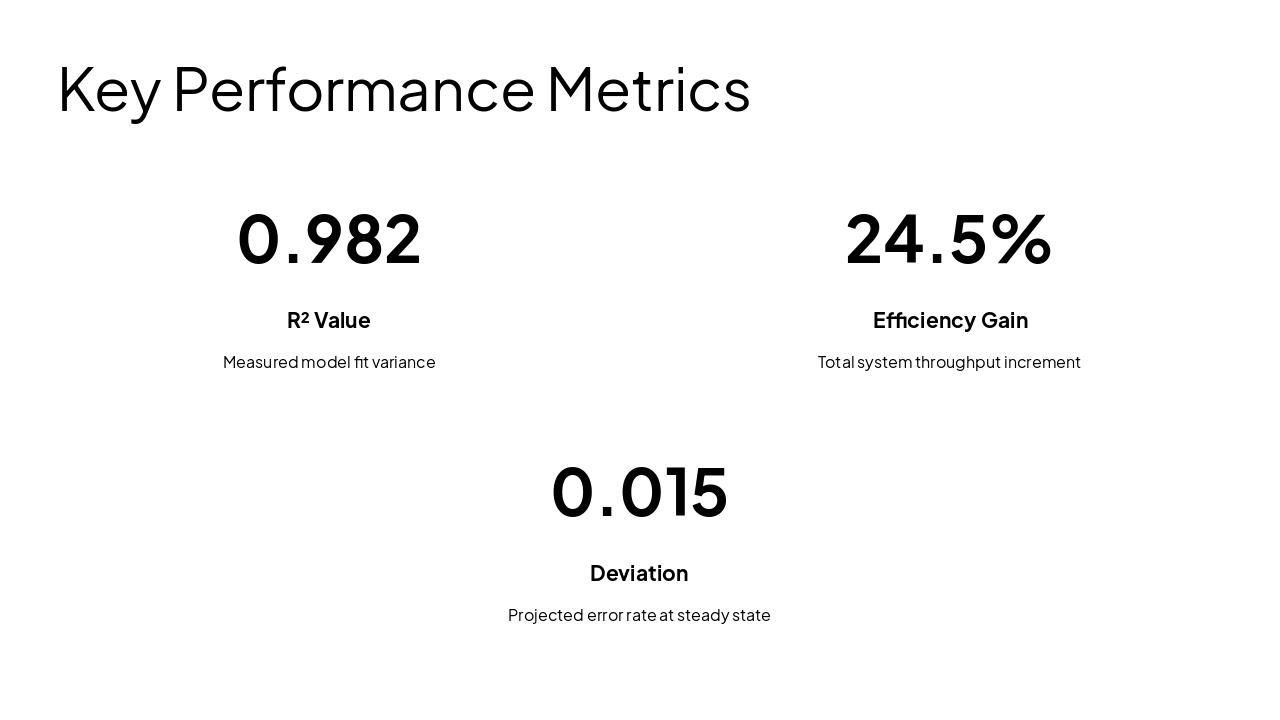
Slide 6 - Key Performance Metrics
- 0.982: R² Value
- 24.5%: Efficiency Gain
- 0.015: Deviation
Slide 7 - Summary
Analytical Report Conclusion
Bridging theoretical equations with empirical results for future optimization.
Discover More Presentations
Explore thousands of AI-generated presentations for inspiration
Create Your Own Presentation
Generate professional presentations in seconds with Karaf's AI. Customize this presentation or start from scratch.