Unit 1: Introduction to Education Management Essentials

Generated from prompt:

Create a detailed, visually engaging B.Ed level presentation for Unit 1: Introduction to Organization, Administration, and Management. Use simple but slightly advanced academic language suitable for teacher training students. Include clear definitions, examples from schools/educational institutions, comparison tables, and practical classroom applications. Slides: 1. Title Slide (B.Ed level) 2. Learning Objectives (professional outcomes) 3. Definition of Organization (educational example) 4. Concept of Organization (structure, types in education) 5. Definition of Administration (school-level example) 6. Definition of Management (classroom and institutional example) 7. Differences between Organization, Administration, Management (detailed table) 8. Importance of Effective Management in Education (with examples) 9. Impact of Good vs Poor Management in Schools 10. Elements of Management (Planning, Organizing, Staffing, Directing, Controlling) 11. Planning in Teaching (lesson planning example) 12. Organizing in School Context 13. Staffing in Education (teachers, roles) 14. Directing (leadership in classroom) 15. Controlling (assessment and evaluation) 16. Summary (key takeaways) 17. Activity/Discussion for B.Ed students Include suggestions for visuals/icons on each slide.

This deck introduces key concepts of organization, administration, and management in education for B.Ed candidates. It defines each pillar, highlights differences, roles, and practical applications in schools and classrooms to drive student success.

April 12, 20267 slides
Slide 1 of 7

Slide 1 - Unit 1: Introduction to Education Management

Unit 1: Introduction to Organization, Administration, and Management

Understanding the Core Pillars of Educational Success for B.Ed Candidates

---

Photo by National Cancer Institute on Unsplash

Slide 1 - Unit 1: Introduction to Education Management
Slide 2 of 7

Slide 2 - Learning Objectives

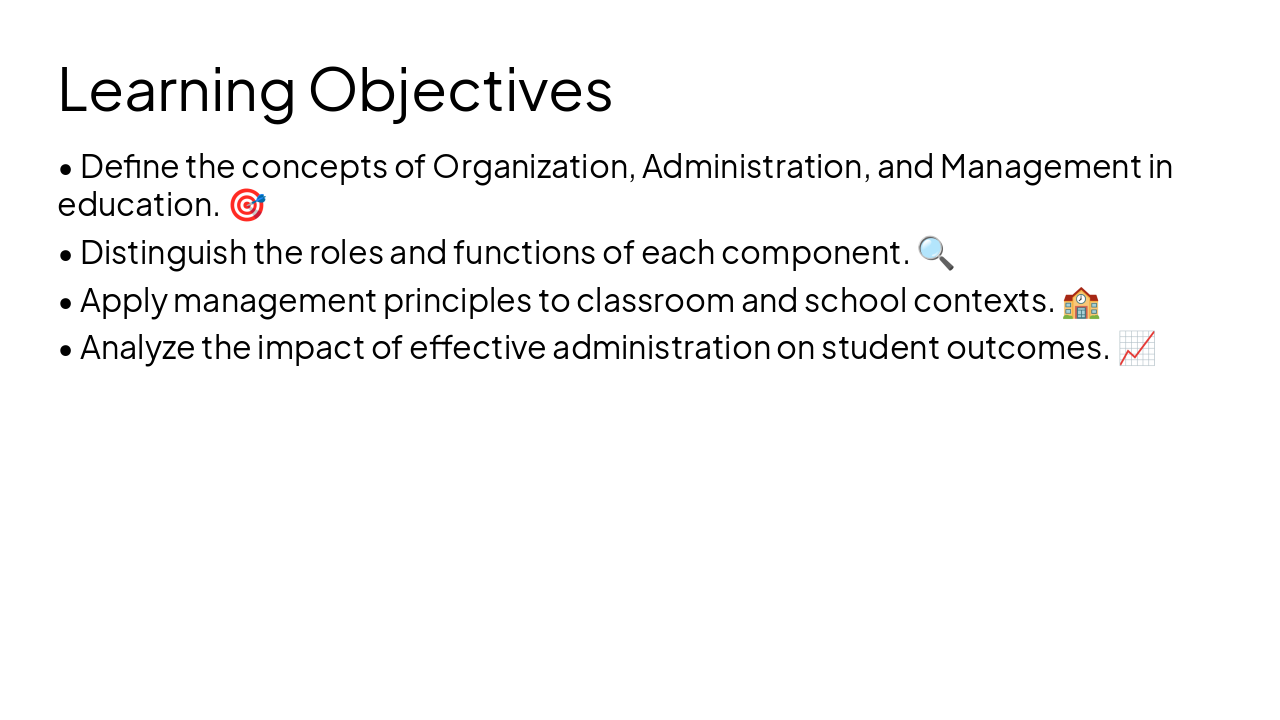
  • Define the concepts of Organization, Administration, and Management in education. šŸŽÆ
  • Distinguish the roles and functions of each component. šŸ”
  • Apply management principles to classroom and school contexts. šŸ«
  • Analyze the impact of effective administration on student outcomes. šŸ“ˆ
Slide 2 - Learning Objectives
Slide 3 of 7

Slide 3 - What is an Organization?

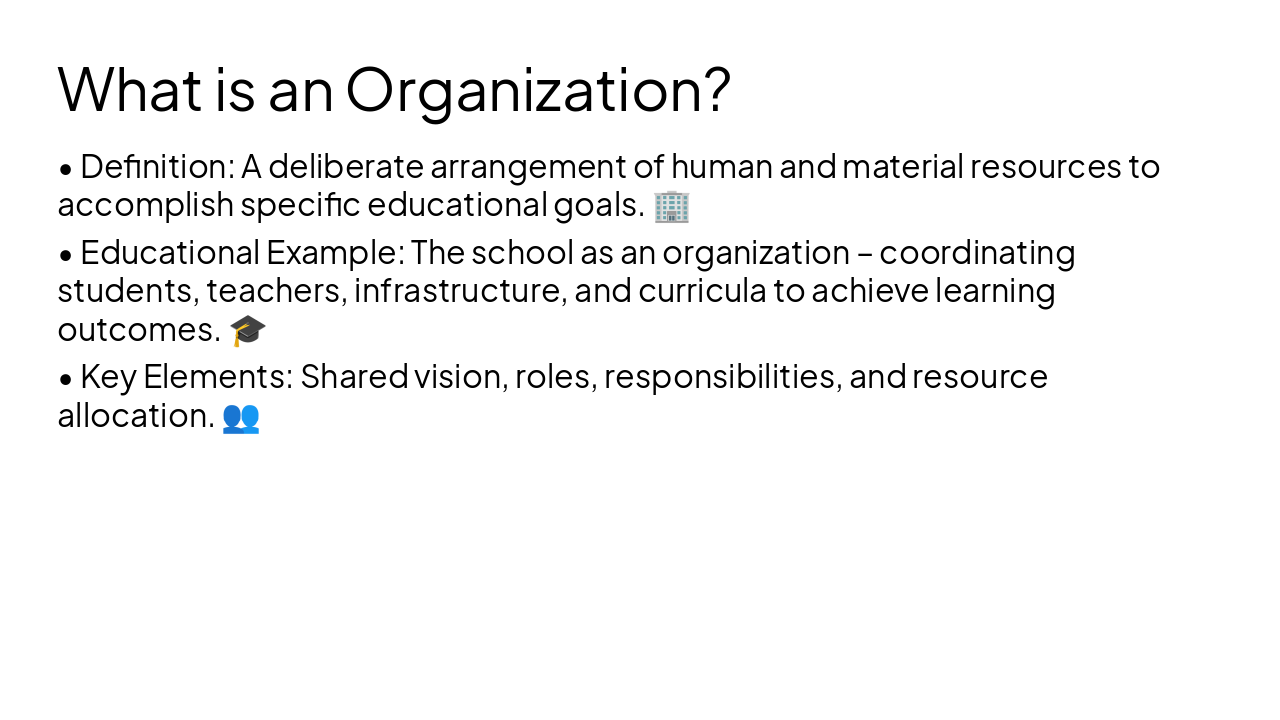
  • Definition: A deliberate arrangement of human and material resources to accomplish specific educational goals. šŸ¢
  • Educational Example: The school as an organization – coordinating students, teachers, infrastructure, and curricula to achieve learning outcomes. šŸŽ“
  • Key Elements: Shared vision, roles, responsibilities, and resource allocation. šŸ‘„
Slide 3 - What is an Organization?
Slide 4 of 7

Slide 4 - Concept of Organization in Education

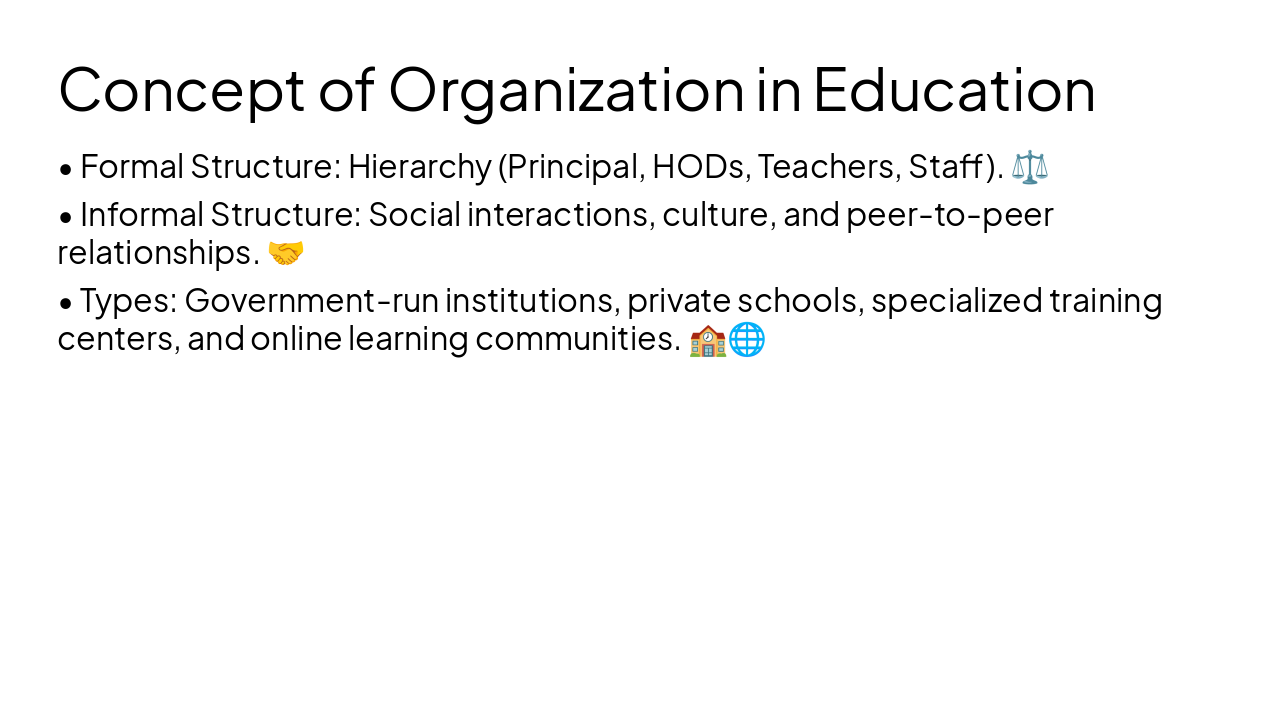
  • Formal Structure: Hierarchy (Principal, HODs, Teachers, Staff). āš–ļø
  • Informal Structure: Social interactions, culture, and peer-to-peer relationships. šŸ¤
  • Types: Government-run institutions, private schools, specialized training centers, and online learning communities. šŸ«šŸŒ
Slide 4 - Concept of Organization in Education
Slide 5 of 7

Slide 5 - Defining Administration

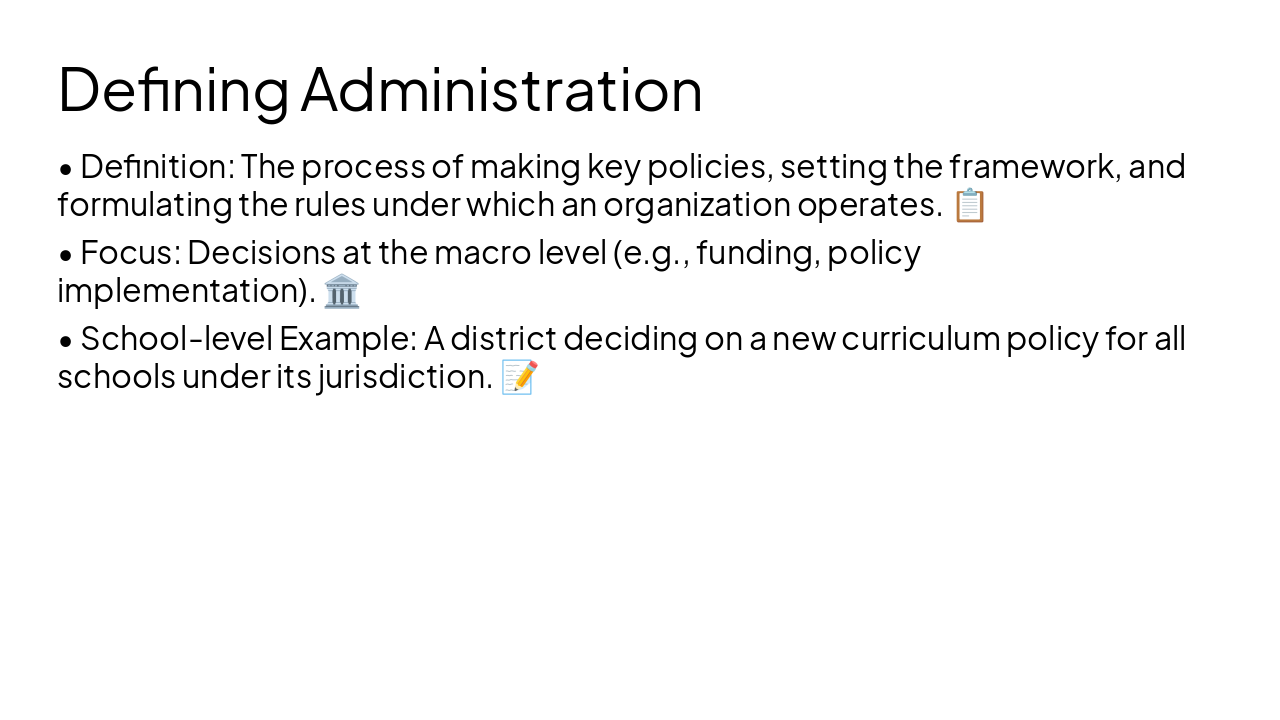
  • Definition: The process of making key policies, setting the framework, and formulating the rules under which an organization operates. šŸ“‹
  • Focus: Decisions at the macro level (e.g., funding, policy implementation). šŸ›ļø
  • School-level Example: A district deciding on a new curriculum policy for all schools under its jurisdiction. šŸ“
Slide 5 - Defining Administration
Slide 6 of 7

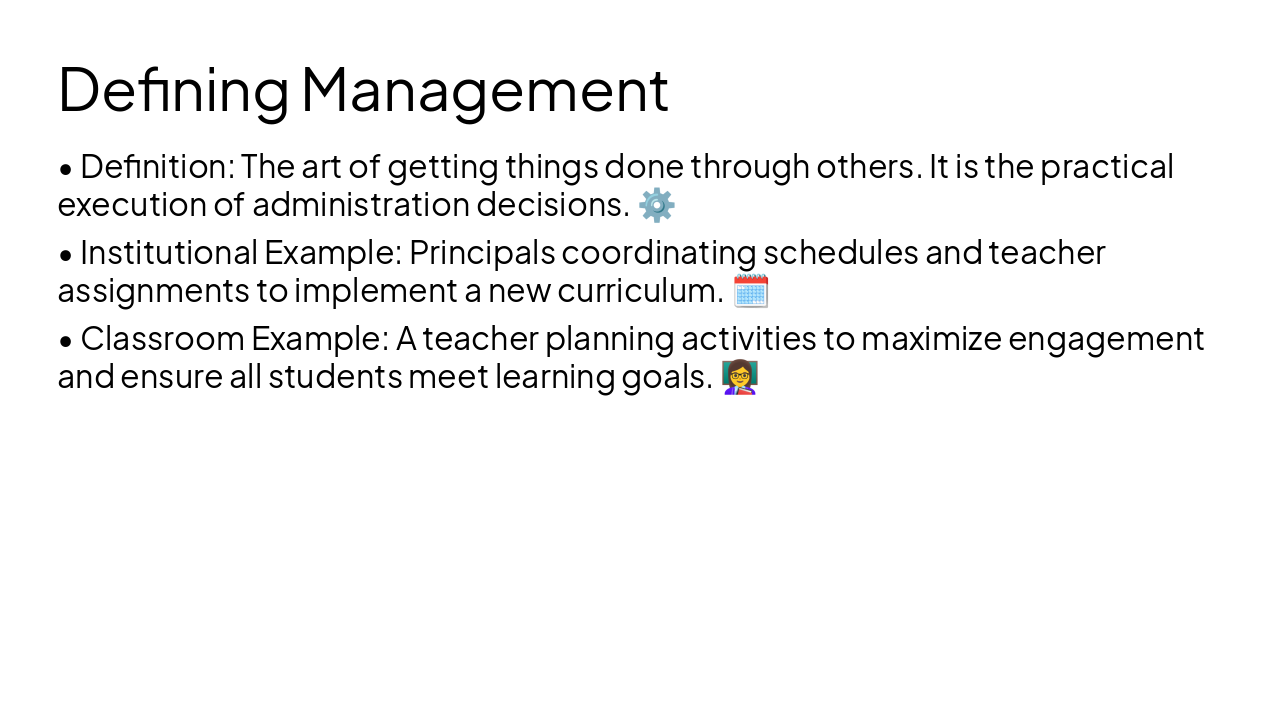
Slide 6 - Defining Management

  • Definition: The art of getting things done through others. It is the practical execution of administration decisions. āš™ļø
  • Institutional Example: Principals coordinating schedules and teacher assignments to implement a new curriculum. šŸ—“ļø
  • Classroom Example: A teacher planning activities to maximize engagement and ensure all students meet learning goals. šŸ‘©ā€šŸ«
Slide 6 - Defining Management
Slide 7 of 7

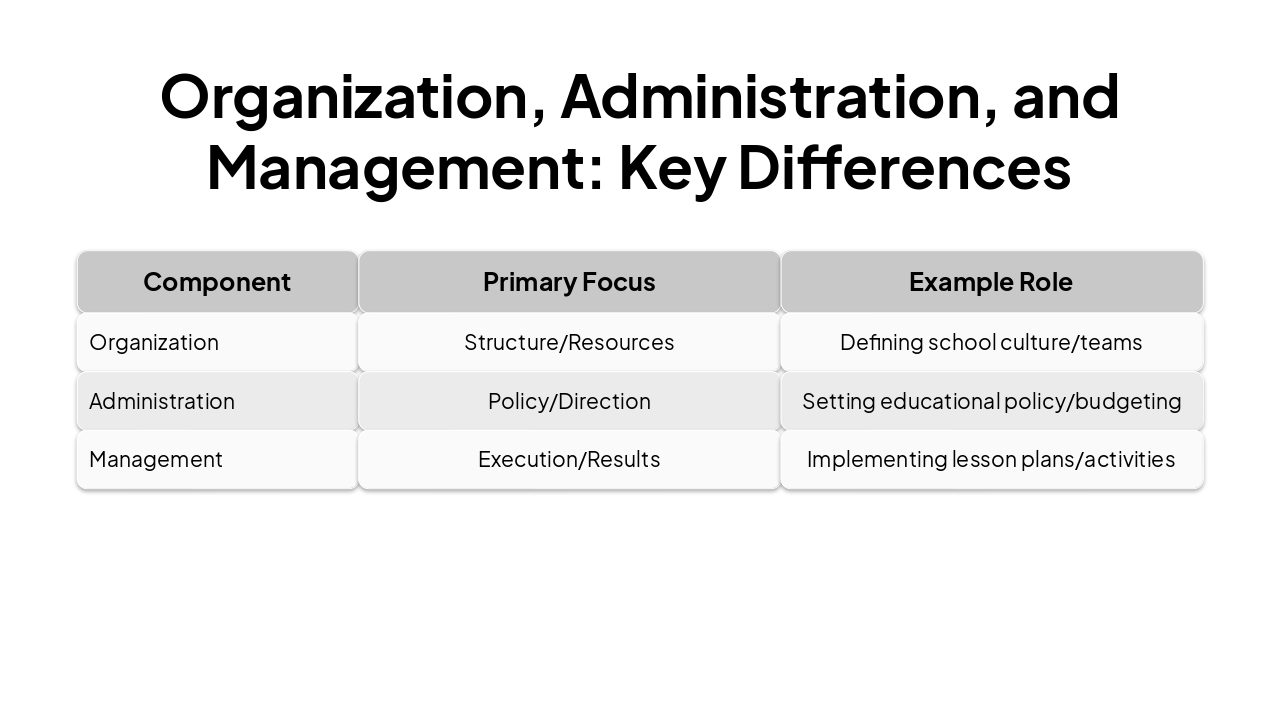
Slide 7 - Organization, Administration, and Management: Key Differences

ComponentPrimary FocusExample Role
OrganizationStructure/ResourcesDefining school culture/teams
AdministrationPolicy/DirectionSetting educational policy/budgeting
ManagementExecution/ResultsImplementing lesson plans/activities
Slide 7 - Organization, Administration, and Management: Key Differences

Discover More Presentations

Explore thousands of AI-generated presentations for inspiration

Browse Presentations
Powered by AI

Create Your Own Presentation

Generate professional presentations in seconds with Karaf's AI. Customize this presentation or start from scratch.

Create New Presentation

Powered by Karaf.ai — AI-Powered Presentation Generator