Cancer Research and the Future Job Market

Generated from prompt:

make a 50 slide presentation on cancer research and the future job market say it’s made by tulaa and tanya and make it like 11 graders

This presentation explores the fundamentals of cancer, recent advancements in cancer research, and key trends shaping the future job market. It also highlights how careers in cancer research connect with future opportunities, providing valuable insights for students considering their educational and professional paths.

May 16, 202620 slides
Slide 1 of 20

Slide 1 - Cancer Research & The Future Job Market

Cancer Research & The Future Job Market

A Presentation for 11th Graders by Tulaa and Tanya

---

Photo by Conny Schneider on Unsplash
Slide 1 - Cancer Research & The Future Job Market
Slide 2 of 20

Slide 2 - Presentation Agenda

  • Understanding Cancer
  • Advances in Cancer Research
  • Exploring the Future Job Market
  • Connecting Research & Careers
  • Key Takeaways
  • Q&A

---

Photo by Parrish Freeman on Unsplash
Slide 2 - Presentation Agenda
Slide 3 of 20

Slide 3 - Section 1

Understanding Cancer

What is Cancer and How Does it Affect Us?

---

Photo by Sangharsh Lohakare on Unsplash
Slide 3 - Section 1
Slide 4 of 20

Slide 4 - What is Cancer?

  • Cancer is a group of over 100 diseases
  • Characterized by uncontrolled cell growth
  • Typically forms tumors that can spread (malignant)
  • Benign tumors do not spread
  • Many genetic changes are usually required before cancer develops
  • Approximately 5-10% of cancers are due to inherited genetic defects

Source: https://en.wikipedia.org/wiki/Cancer
Slide 4 - What is Cancer?
Slide 5 of 20

Slide 5 - Causes & Risk Factors of Cancer

  • Environmental Factors: About 33% of deaths from cancer caused by tobacco, alcohol, obesity, poor diet, and lack of exercise.
  • Infectious Agents: Approximately 16-18% of cancers worldwide are caused by viruses, bacteria, and parasites (e.g., HPV, Hepatitis B).
  • Ionizing Radiation: Exposure to radiation can increase cancer risk.
  • Environmental Pollutants: Various pollutants contribute to cancer development.
  • Lifestyle Choices: Maintaining a healthy weight, limiting alcohol, eating fruits and vegetables, and regular exercise can reduce risk.

Source: https://en.wikipedia.org/wiki/Cancer
Slide 5 - Causes & Risk Factors of Cancer
Slide 6 of 20

Slide 6 - Spotlight: Breast Cancer

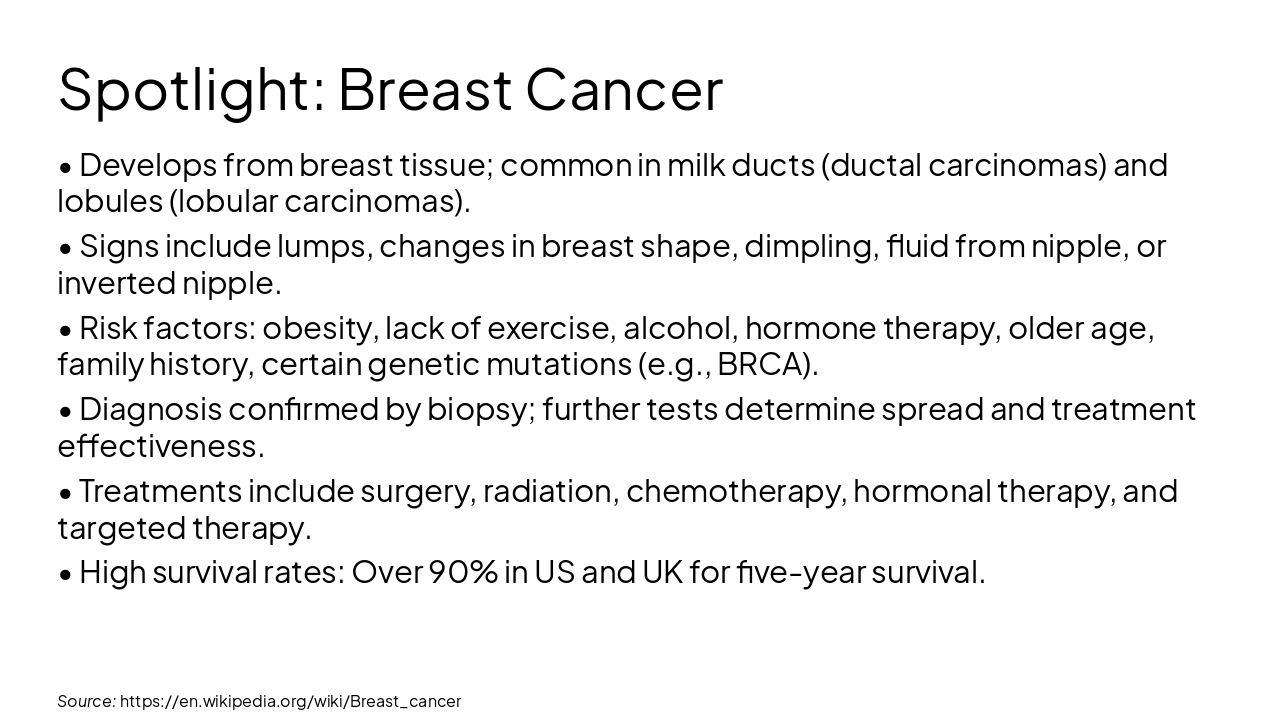
  • Develops from breast tissue; common in milk ducts (ductal carcinomas) and lobules (lobular carcinomas).
  • Signs include lumps, changes in breast shape, dimpling, fluid from nipple, or inverted nipple.
  • Risk factors: obesity, lack of exercise, alcohol, hormone therapy, older age, family history, certain genetic mutations (e.g., BRCA).
  • Diagnosis confirmed by biopsy; further tests determine spread and treatment effectiveness.
  • Treatments include surgery, radiation, chemotherapy, hormonal therapy, and targeted therapy.
  • High survival rates: Over 90% in US and UK for five-year survival.

Source: https://en.wikipedia.org/wiki/Breast_cancer
Slide 6 - Spotlight: Breast Cancer
Slide 7 of 20

Slide 7 - Cancer Statistics at a Glance

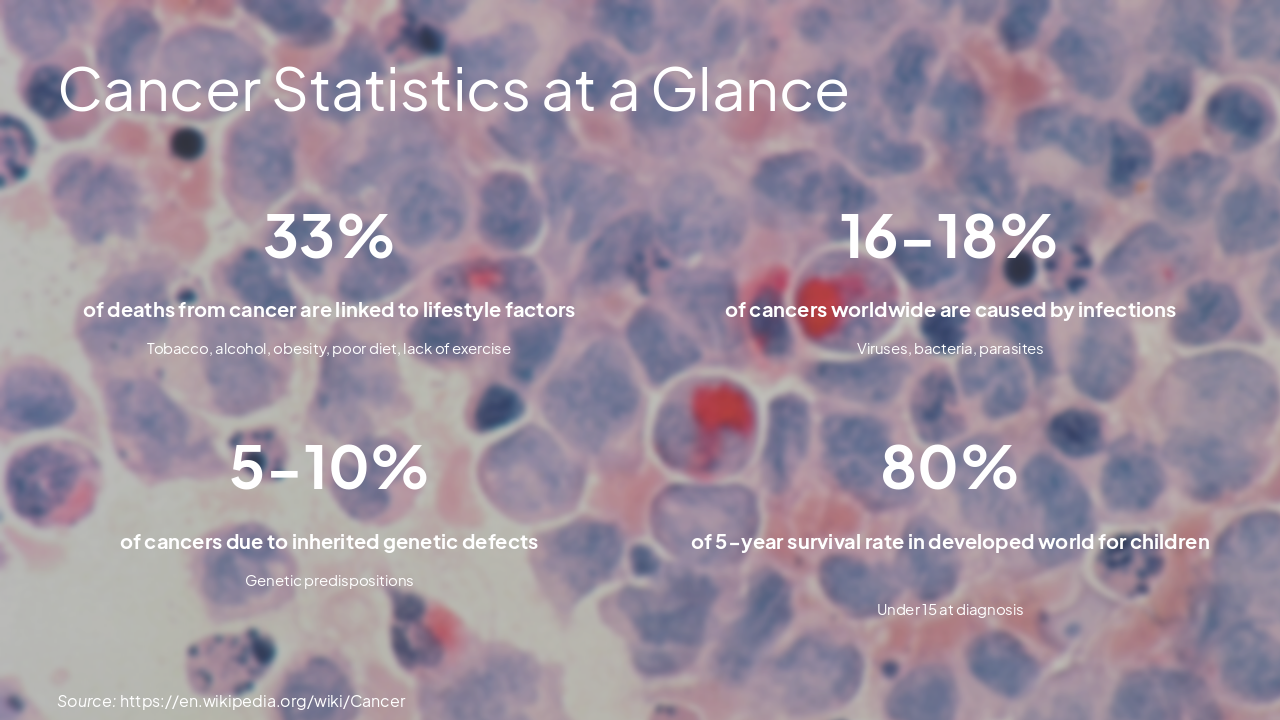
  • 33%: of deaths from cancer are linked to lifestyle factors
  • 16-18%: of cancers worldwide are caused by infections
  • 5-10%: of cancers due to inherited genetic defects
  • 80%: of 5-year survival rate in developed world for children

---

Photo by National Cancer Institute on Unsplash

Source: https://en.wikipedia.org/wiki/Cancer
Slide 7 - Cancer Statistics at a Glance
Slide 8 of 20

Slide 8 - Section 2

Advances in Cancer Research

Exploring New Frontiers in Prevention, Diagnosis, and Treatment

---

Photo by Trnava University on Unsplash
Slide 8 - Section 2
Slide 9 of 20

Slide 9 - Cancer Research: Goals & Methods

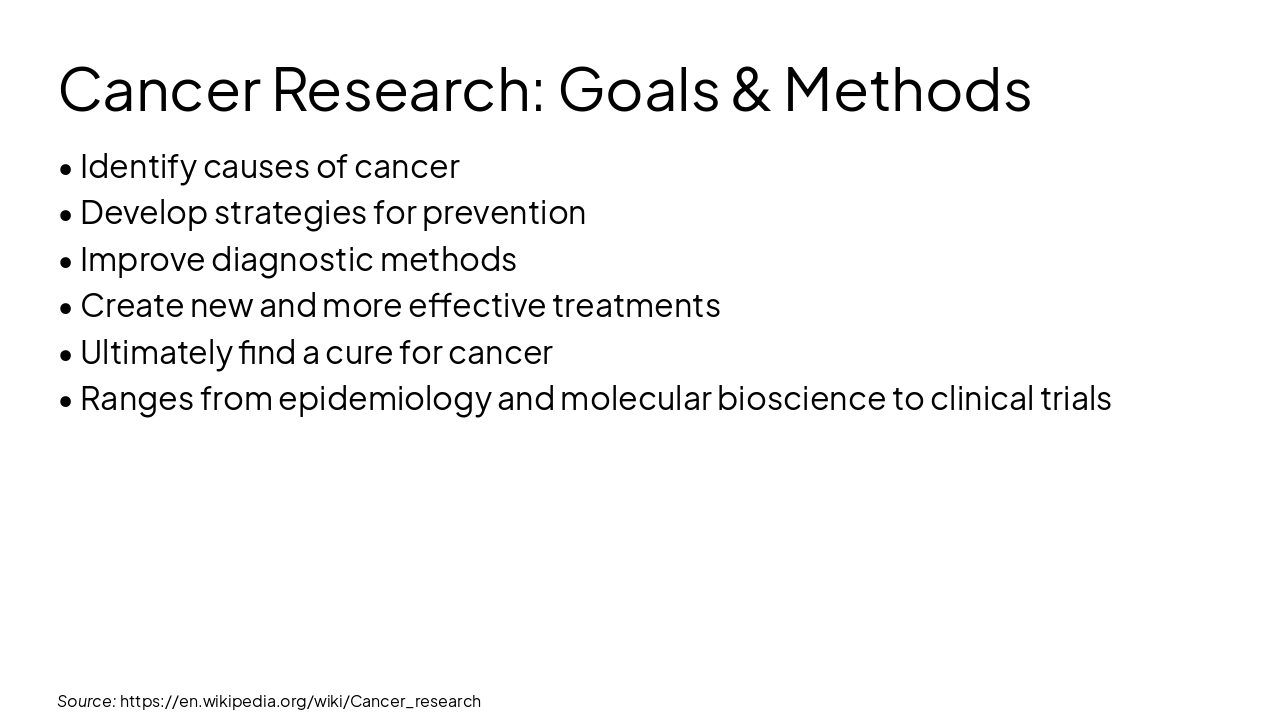
  • Identify causes of cancer
  • Develop strategies for prevention
  • Improve diagnostic methods
  • Create new and more effective treatments
  • Ultimately find a cure for cancer
  • Ranges from epidemiology and molecular bioscience to clinical trials

Source: https://en.wikipedia.org/wiki/Cancer_research
Slide 9 - Cancer Research: Goals & Methods
Slide 10 of 20

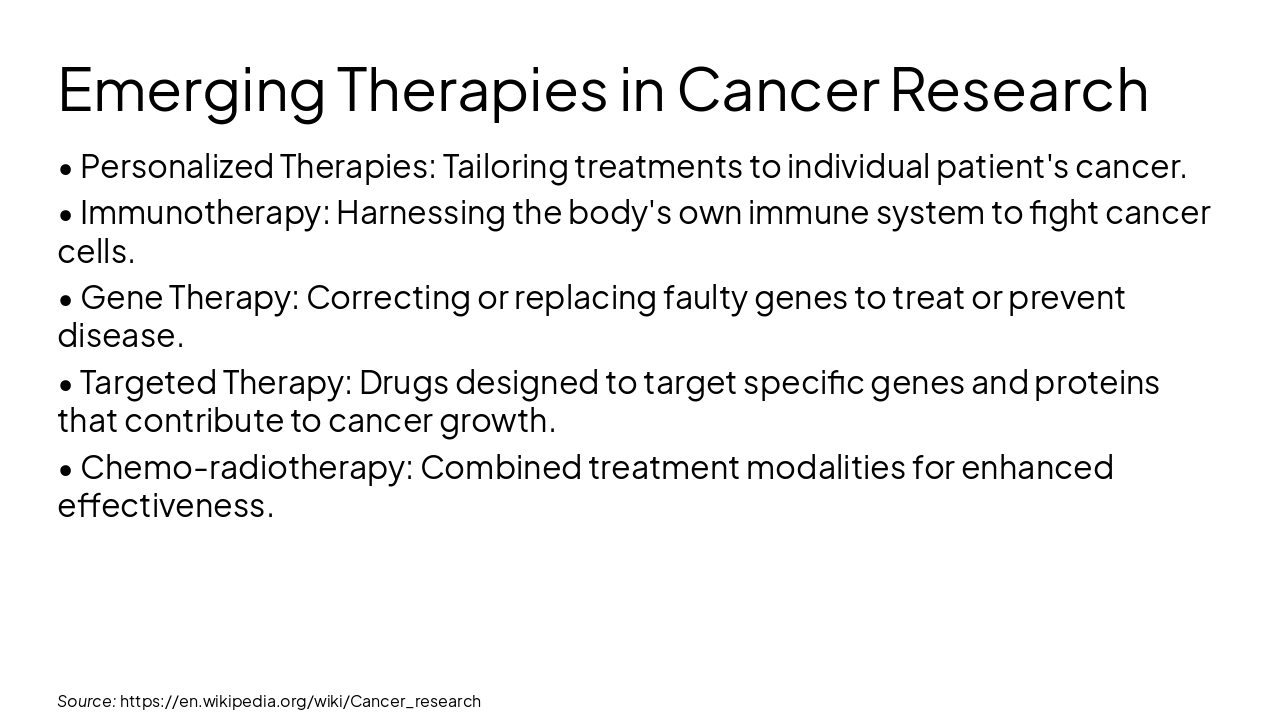
Slide 10 - Emerging Therapies in Cancer Research

  • Personalized Therapies: Tailoring treatments to individual patient's cancer.
  • Immunotherapy: Harnessing the body's own immune system to fight cancer cells.
  • Gene Therapy: Correcting or replacing faulty genes to treat or prevent disease.
  • Targeted Therapy: Drugs designed to target specific genes and proteins that contribute to cancer growth.
  • Chemo-radiotherapy: Combined treatment modalities for enhanced effectiveness.

Source: https://en.wikipedia.org/wiki/Cancer_research
Slide 10 - Emerging Therapies in Cancer Research
Slide 11 of 20

Slide 11 - Section 3

Exploring the Future Job Market

Understanding Trends and Preparing for Tomorrow's Careers

---

Photo by Conny Schneider on Unsplash
Slide 11 - Section 3
Slide 12 of 20

Slide 12 - Key Trends Shaping the Future Job Market

  • Technological Advancements: Automation, AI, and digital transformation changing job roles.
  • Globalization: Increased interconnectedness impacting global workforce dynamics.
  • Gig Economy & Flexible Work: Rise of remote work and contract-based employment.
  • Skills Gap: Demand for specialized skills outpaces traditional education.
  • Lifelong Learning: Continuous upskilling and reskilling crucial for career relevance.
  • Focus on STEM and vocational skills: Growing importance of science, technology, engineering, and math, alongside practical vocational training.
Slide 12 - Key Trends Shaping the Future Job Market
Slide 13 of 20

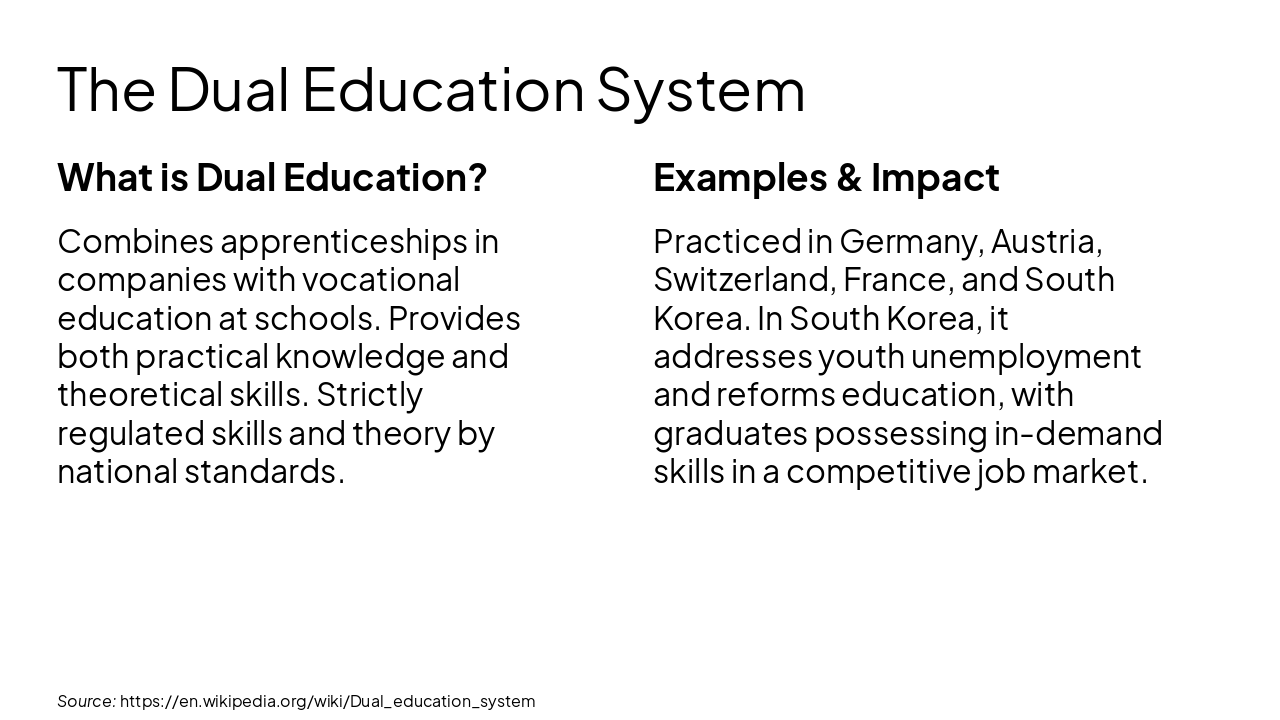
Slide 13 - The Dual Education System

What is Dual Education? Combines apprenticeships in companies with vocational education at schools. Provides both practical knowledge and theoretical skills. Strictly regulated skills and theory by national standards.

Examples & Impact Practiced in Germany, Austria, Switzerland, France, and South Korea. In South Korea, it addresses youth unemployment and reforms education, with graduates possessing in-demand skills in a competitive job market.

Source: https://en.wikipedia.org/wiki/Dual_education_system
Slide 13 - The Dual Education System
Slide 14 of 20

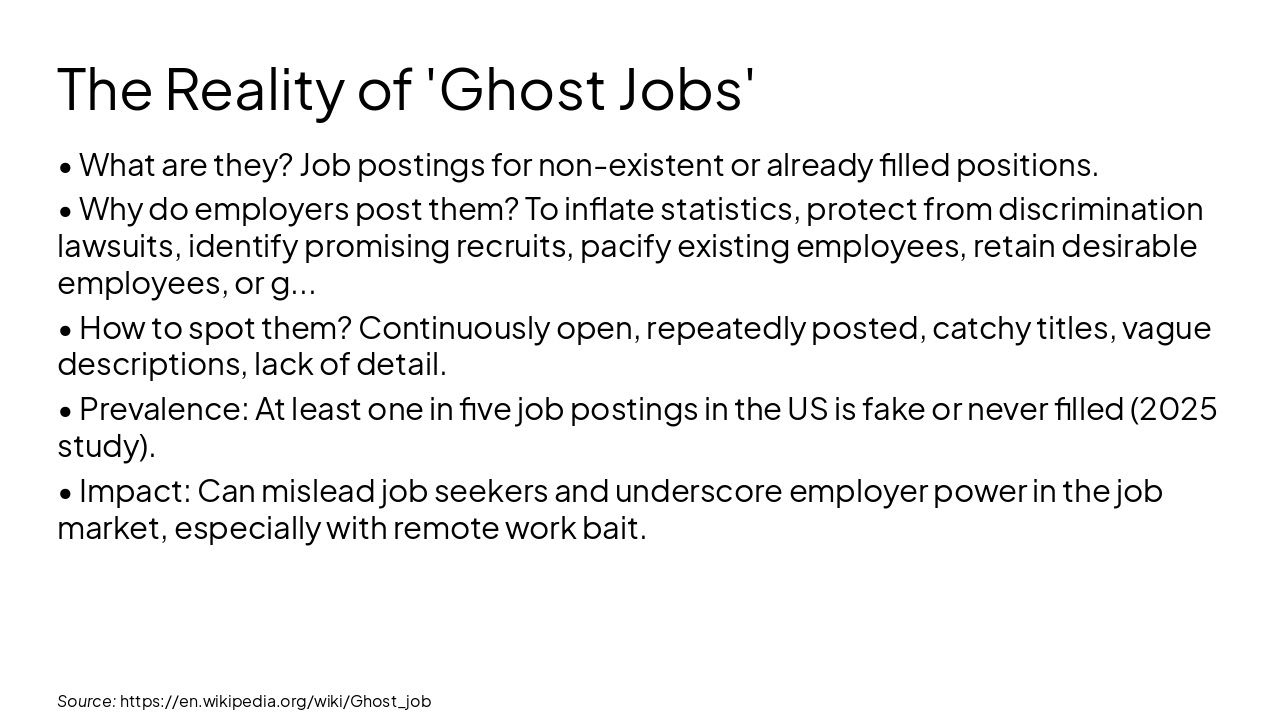
Slide 14 - The Reality of 'Ghost Jobs'

  • What are they? Job postings for non-existent or already filled positions.
  • Why do employers post them? To inflate statistics, protect from discrimination lawsuits, identify promising recruits, pacify existing employees, retain desirable employees, or gather competitor wage information.
  • How to spot them? Continuously open, repeatedly posted, catchy titles, vague descriptions, lack of detail.
  • Prevalence: At least one in five job postings in the US is fake or never filled (2025 study).
  • Impact: Can mislead job seekers and underscore employer power in the job market, especially with remote work bait.

Source: https://en.wikipedia.org/wiki/Ghost_job
Slide 14 - The Reality of 'Ghost Jobs'
Slide 15 of 20

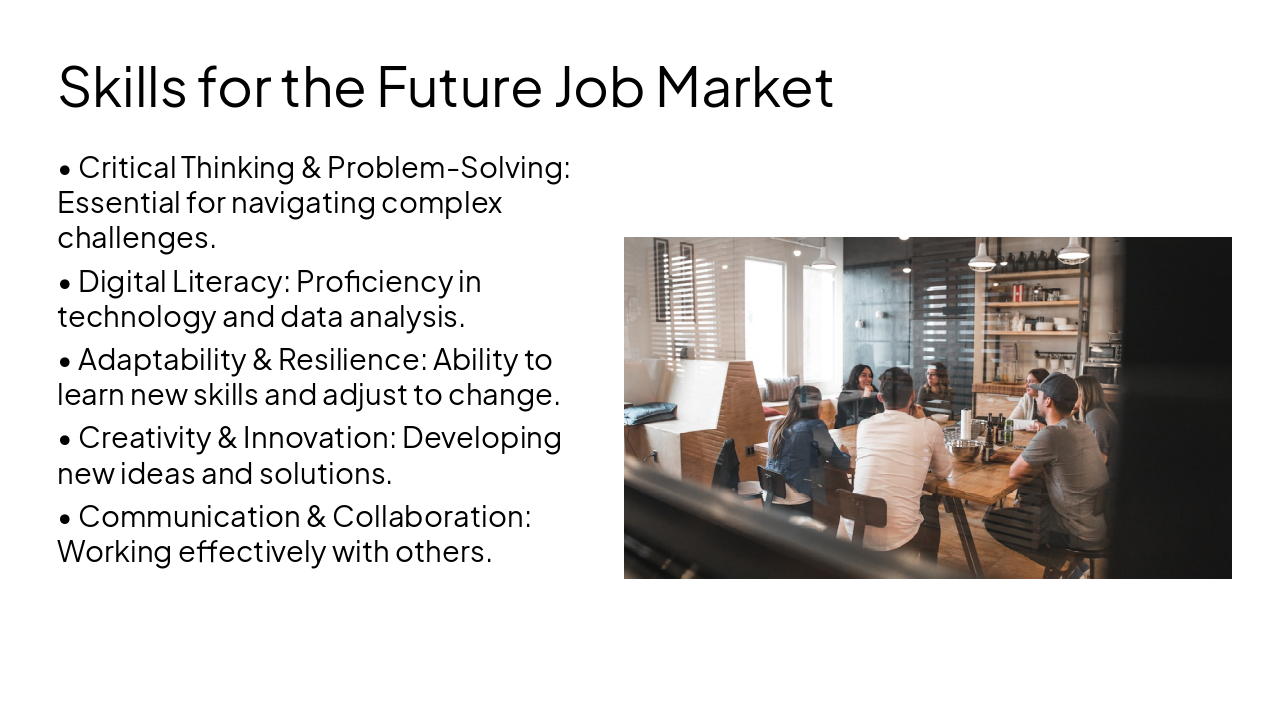
Slide 15 - Skills for the Future Job Market

  • Critical Thinking & Problem-Solving: Essential for navigating complex challenges.
  • Digital Literacy: Proficiency in technology and data analysis.
  • Adaptability & Resilience: Ability to learn new skills and adjust to change.
  • Creativity & Innovation: Developing new ideas and solutions.
  • Communication & Collaboration: Working effectively with others.

---

Photo by Redd Francisco on Unsplash
Slide 15 - Skills for the Future Job Market
Slide 16 of 20

Slide 16 - Inspiration for Innovation

> Innovation distinguishes between a leader and a follower.

— Steve Jobs

---

Photo by Kolby Milton on Unsplash

Source: https://en.wikipedia.org/wiki/Steve_Jobs
Slide 16 - Inspiration for Innovation
Slide 17 of 20

Slide 17 - Section 4

Connecting Research & Careers

Bridging Cancer Research with Future Career Opportunities

---

Photo by Jens Lelie on Unsplash
Slide 17 - Section 4
Slide 18 of 20

Slide 18 - Career Paths in Cancer Research

  • Research Scientist: Conducting experiments, analyzing data, and developing new treatments.
  • Biostatistician: Applying statistical methods to design and analyze clinical trials.
  • Bioinformatician: Using computational tools to manage and interpret biological data.
  • Clinical Trials Coordinator: Managing and organizing clinical studies.
  • Public Health Specialist: Focusing on cancer prevention and early detection in communities.
  • Medical Writer: Communicating complex scientific information to various audiences.
Slide 18 - Career Paths in Cancer Research
Slide 19 of 20

Slide 19 - Skills for Success in Cancer Research & Beyond

  • Scientific Literacy: Strong understanding of biology, chemistry, and genetics.
  • Critical Thinking: Analyzing complex data and research findings.
  • Problem-Solving: Developing innovative solutions for diagnostic and therapeutic challenges.
  • Collaboration: Working effectively in multidisciplinary teams (scientists, clinicians, statisticians).
  • Communication: Clearly presenting research findings to peers and the public.
  • Adaptability: Staying current with rapidly evolving scientific advancements and technologies.
Slide 19 - Skills for Success in Cancer Research & Beyond
Slide 20 of 20

Slide 20 - Key Takeaways

Cancer research offers profound challenges and rewarding career paths, while the future job market demands adaptability and continuous learning.

Be curious, stay informed, and embrace lifelong learning to shape your future!

---

Photo by Rocco Caruso on Unsplash
Slide 20 - Key Takeaways

Discover More Presentations

Explore thousands of AI-generated presentations for inspiration

Browse Presentations
Powered by AI

Create Your Own Presentation

Generate professional presentations in seconds with Karaf's AI. Customize this presentation or start from scratch.

Create New Presentation

Powered by Karaf.ai — AI-Powered Presentation Generator