Slide 1 of 12
Slide 1 - Mental Health & Substance Abuse in Law Enforcement
Mental Health & Substance Abuse in Law Enforcement
Addressing the Critical Challenges Facing Those Who Protect and Serve
Generated from prompt:
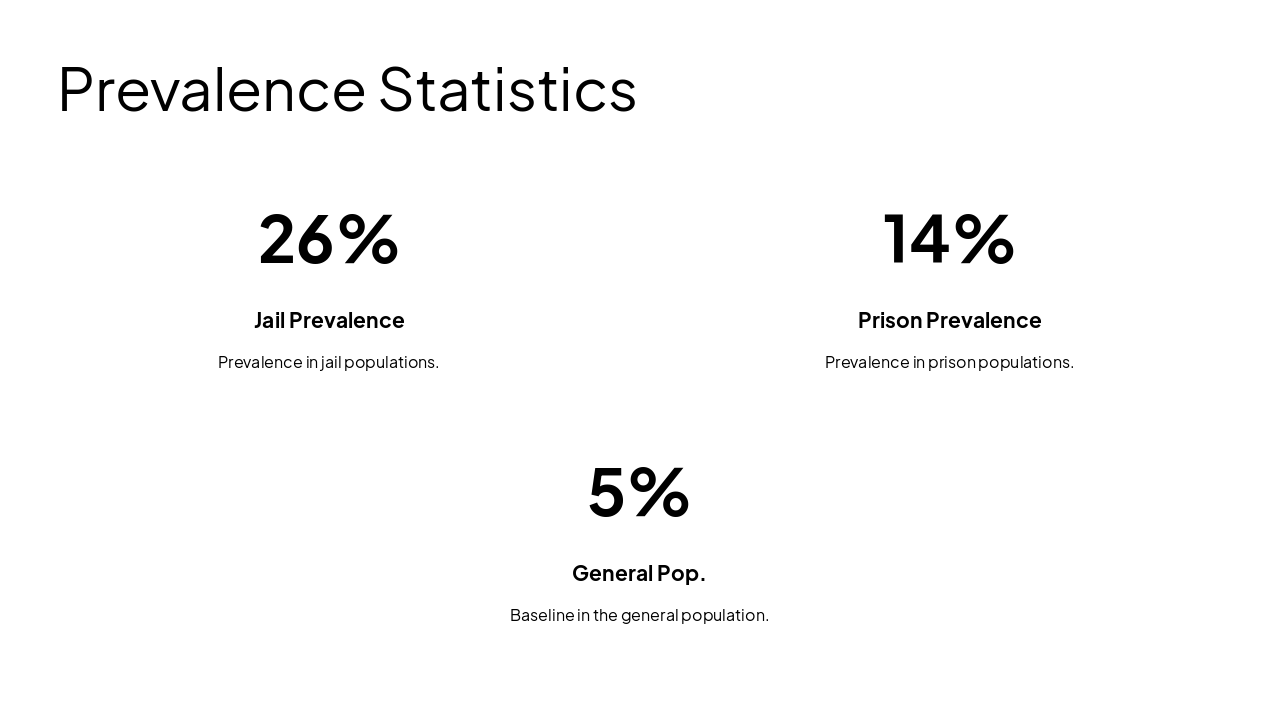
Final version: Highly polished 12-slide presentation titled 'Mental Health & Substance Abuse in Law Enforcement' with visuals, charts, icons, and tables. Include: bar chart (26% jail vs 14% prison vs 5% general), pie chart (59% substance use), table of disorder prevalence, icons (police, brain, warning), modern dark blue theme, minimal text, and speaker notes. Ensure export-ready PPTX and PDF.
This presentation addresses the mental health and substance abuse crisis among law enforcement officers, covering prevalence statistics, risk factors like operational trauma, and pathways to wellness through peer support, check-ins, and stigma-free训练
Mental Health & Substance Abuse in Law Enforcement
Addressing the Critical Challenges Facing Those Who Protect and Serve
1
Why focus on mental health now?
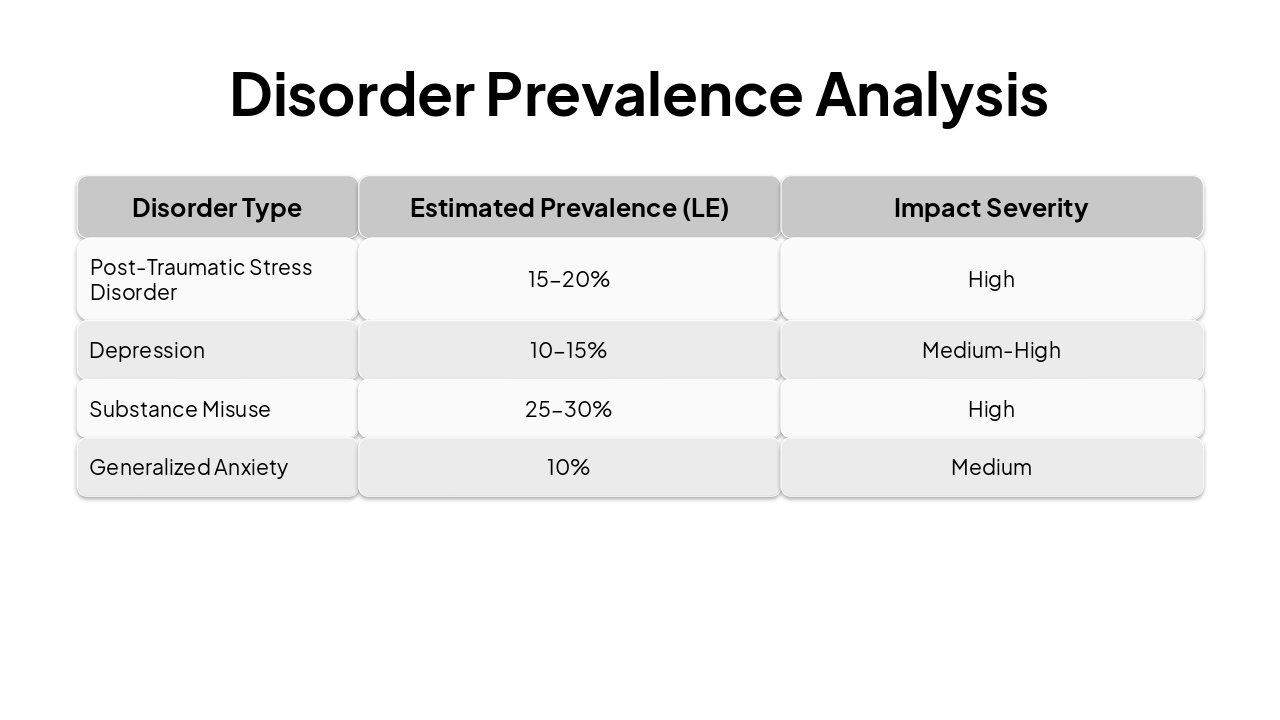
| Disorder Type | Estimated Prevalence (LE) | Impact Severity |
|---|---|---|
| Post-Traumatic Stress Disorder | 15-20% | High |
| Depression | 10-15% | Medium-High |
| Substance Misuse | 25-30% | High |
| Generalized Anxiety | 10% | Medium |
2
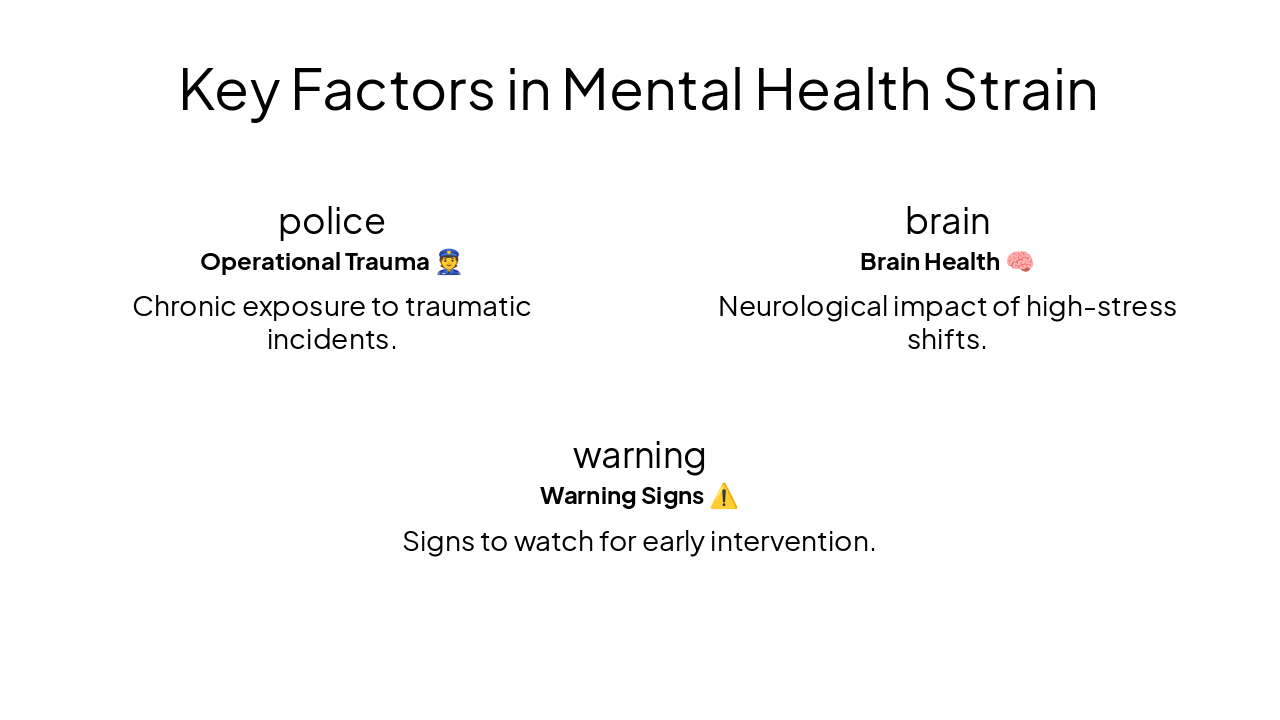
Understanding the professional environment.

police Operational Trauma 👮 Chronic exposure to traumatic incidents.
brain Brain Health 🧠 Neurological impact of high-stress shifts.
warning Warning Signs ⚠️ Signs to watch for early intervention.
3
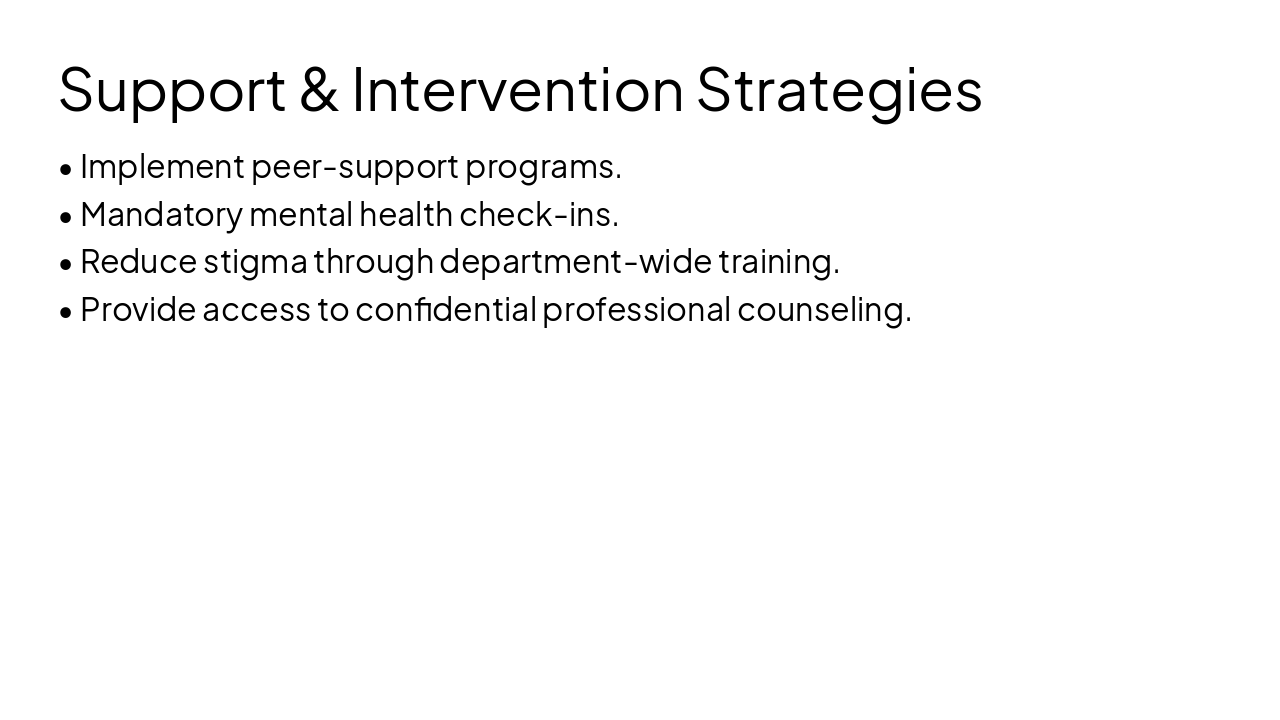
Support, Intervention, & Change.
> The greatest act of courage is seeking help when the weight of the badge becomes too heavy to carry alone.
— Mental Health Advocate for First Responders
Prioritizing Wellness is Essential to Public Safety
Together, we can build a healthier culture for those who protect us.
Explore thousands of AI-generated presentations for inspiration
Generate professional presentations in seconds with Karaf's AI. Customize this presentation or start from scratch.