The Shopping Cart: Hidden Engine of American Consumerism (

Generated from prompt:

Create a presentation titled "The Shopping Cart: The Hidden Engine of American Consumer Culture (1900–1960)". Slide 1: Title Slide - Title - Name: Dayleen Wadsworth - Course: American Popular Culture Slide 2: Hook – The Invisible Revolution - "What if one ordinary object reshaped American life?" - Brief teaser about hidden cultural power Slide 3: Shopping Before the Cart - Clerk-controlled stores - Handbaskets limited purchases - Social interaction and modest consumption (Berger) Slide 4: The Self-Service Revolution - Piggly Wiggly (1916) - Shift in consumer power (Paquet) - Still physical limits Slide 5: The Invention (1937) - Sylvan Goldman - Designed to increase sales and store capacity (Grandclément) - Removal of physical limits Slide 6: Engineering Desire - Store redesign (wide aisles, layout strategy) - Encouraging larger purchases - Abundance as cultural norm (Stillerman) Slide 7: Suburbs and Segregation - Post-WWII supermarket expansion - White middle-class suburban growth - Racial and class inequality in access Slide 8: Gender and Performance - 1950s housewife imagery - Television advertising - Shopping as domestic identity performance Slide 9: Surveillance and Cultural Meaning - Retail tracking and layout studies - Cart as symbol in art and homelessness (Banash) - Cultural duality: abundance vs inequality Slide 10: The Digital Cart - Big-box stores - Online "virtual carts" - Continuity of consumption identity Slide 11: Conclusion - Ordinary object, extraordinary impact - How everyday tools shape culture Slide 12: References - Berger (2004) - Grandclément (2009) - Paquet (2003) - Stillerman (2015) - Banash (2008) Design style: modern academic with subtle bold headers, clean layout, strong visuals of early grocery stores, suburban supermarkets, 1950s advertising, and modern online shopping carts.

This deck explores the shopping cart's transformative role in U.S. consumer culture (1900–1960), from pre-cart shopping and self-service revolution to its invention by Sylvan Goldman, impacts on store design, suburbs, gender roles, racial inequality,

February 28, 202612 slides
Slide 1 of 12

Slide 1 - The Shopping Cart: The Hidden Engine of American Consumer Culture (1900–1960)

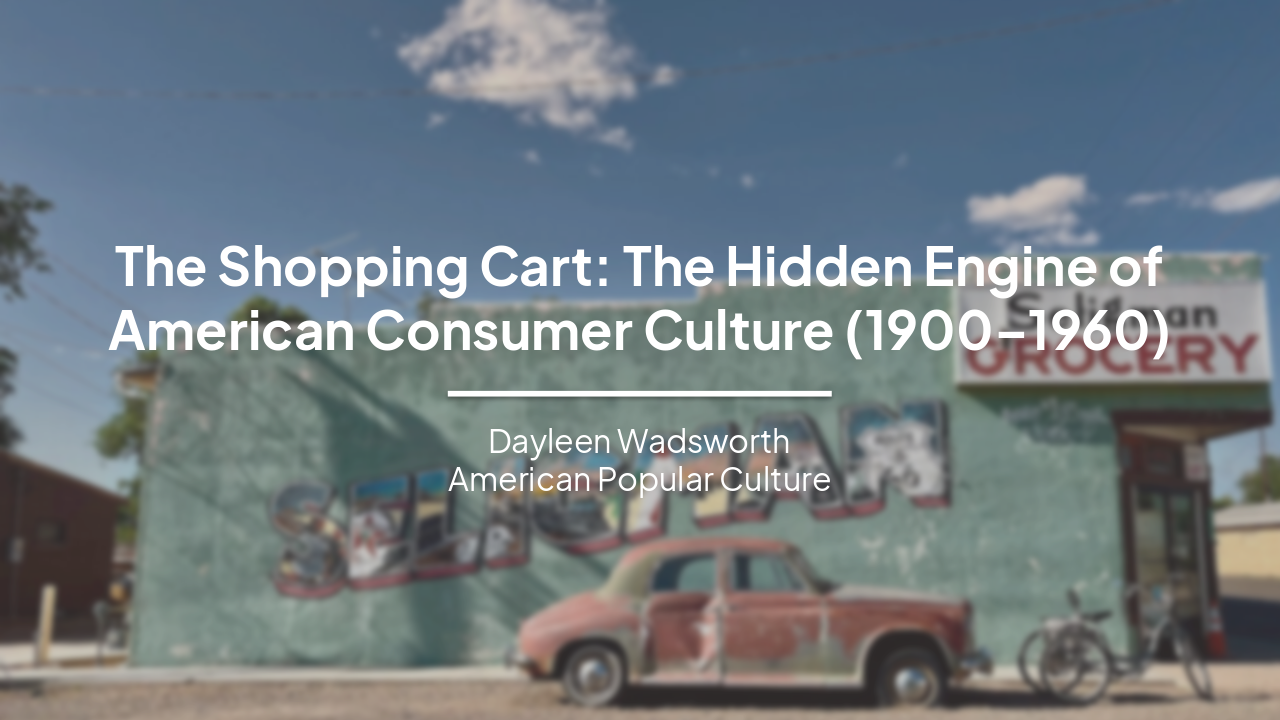
The Shopping Cart: The Hidden Engine of American Consumer Culture (1900–1960)

Dayleen Wadsworth American Popular Culture

---

Photo by Priyanka Thakran on Unsplash
Slide 1 - The Shopping Cart: The Hidden Engine of American Consumer Culture (1900–1960)
Slide 2 of 12

Slide 2 - The Invisible Revolution

> What if one ordinary object reshaped American life?

— Hook: The Hidden Cultural Power of the Shopping Cart

Slide 2 - The Invisible Revolution
Slide 3 of 12

Slide 3 - Shopping Before the Cart

  • Clerk-controlled stores
  • Handbaskets limited purchases
  • Social interaction and modest consumption (Berger)
Slide 3 - Shopping Before the Cart
Slide 4 of 12

Slide 4 - The Self-Service Revolution

  • Piggly Wiggly (1916): First self-service grocery store
  • Shift in consumer power (Paquet)
  • Still physical limits on purchases

Source: https://en.wikipedia.org/wiki/Supermarket

Slide 4 - The Self-Service Revolution
Slide 5 of 12

Slide 5 - The Invention (1937)

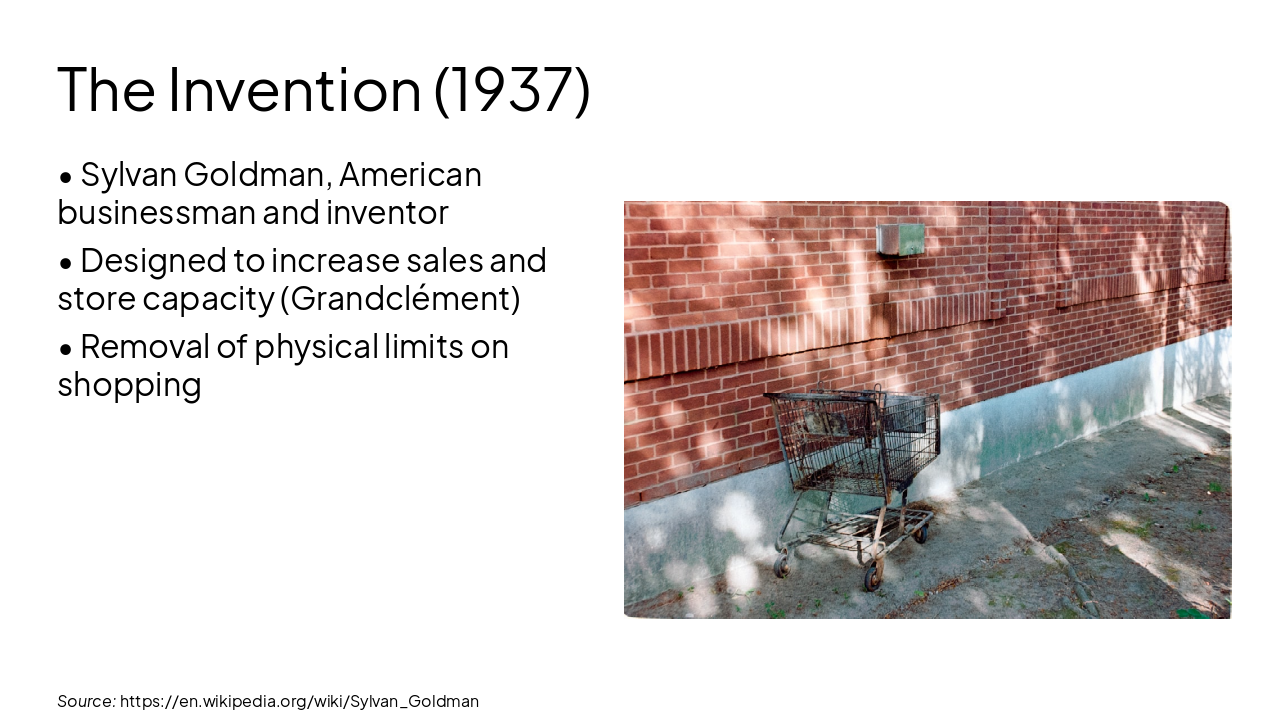
  • Sylvan Goldman, American businessman and inventor
  • Designed to increase sales and store capacity (Grandclément)
  • Removal of physical limits on shopping

---

Photo by Austin on Unsplash

Source: https://en.wikipedia.org/wiki/Sylvan_Goldman

Slide 5 - The Invention (1937)
Slide 6 of 12

Slide 6 - Engineering Desire

  • Store redesign: wide aisles, strategic layout
  • Encouraging larger purchases
  • Abundance as cultural norm (Stillerman)
Slide 6 - Engineering Desire
Slide 7 of 12

Slide 7 - Suburbs and Segregation

Post-WWII Supermarket Expansion Supermarket chains grew rapidly White middle-class suburban development

Racial and Class Inequality Limited access for non-white and lower-class communities Segregation in retail spaces

Slide 7 - Suburbs and Segregation
Slide 8 of 12

Slide 8 - Gender and Performance

  • 1950s housewife imagery in ads
  • Television advertising promoted cart use
  • Shopping as performance of domestic identity
Slide 8 - Gender and Performance
Slide 9 of 12

Slide 9 - Surveillance and Cultural Meaning

Retail Surveillance Tracking shopper paths Layout studies for maximum exposure

Cultural Symbolism Cart as symbol in art and homelessness (Banash) Duality: abundance vs. inequality

Slide 9 - Surveillance and Cultural Meaning
Slide 10 of 12

Slide 10 - The Digital Cart

  • Evolution to big-box stores
  • Online 'virtual carts'
  • Continuity of consumption identity
Slide 10 - The Digital Cart
Slide 11 of 12

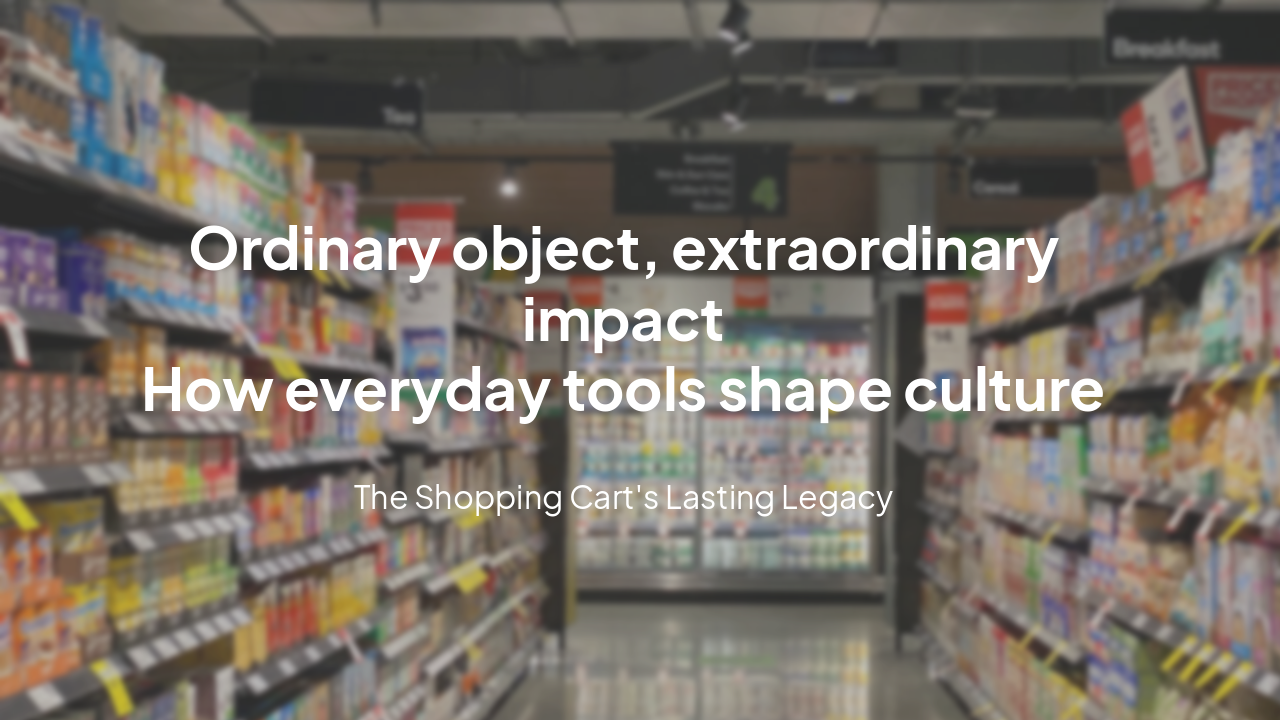
Slide 11 - Conclusion

Ordinary object, extraordinary impact How everyday tools shape culture

The Shopping Cart's Lasting Legacy

---

Photo by Franki Chamaki on Unsplash

Slide 11 - Conclusion
Slide 12 of 12

Slide 12 - References

  • Berger (2004)
  • Grandclément (2009)
  • Paquet (2003)
  • Stillerman (2015)
  • Banash (2008)
  • https://en.wikipedia.org/wiki/Supermarket
  • https://en.wikipedia.org/wiki/Sylvan_Goldman
Slide 12 - References

Discover More Presentations

Explore thousands of AI-generated presentations for inspiration

Browse Presentations
Powered by AI

Create Your Own Presentation

Generate professional presentations in seconds with Karaf's AI. Customize this presentation or start from scratch.

Create New Presentation

Powered by Karaf.ai — AI-Powered Presentation Generator