Slide 1 of 7
Slide 1 - Virtual Reality in Business
Virtual Reality in Business
Transforming Enterprise Operations through Immersive Technology
Generated from prompt:
Redesign and enhance the uploaded presentation on 'Virtual Reality in Business' with a modern, visually stunning style. Use a dark gradient theme (deep navy/purple), bold typography, clean icons, and high-impact layouts. Slide Outline: 1. Title Slide — Futuristic design, large title, subtle VR imagery 2. What is VR? — Minimal text + visual diagram (Hardware / Software / Content) 3. Market Growth — Emphasize stats with big numbers and charts 4. Business Case — Transform metrics into visually striking infographics 5. Key Applications — Use icons and clean 5-card layout 6. Implementation Roadmap — Timeline-style design (4 phases) 7. Solving Business Problems — Before vs After layout 8. Future of VR — Split: Barriers vs Outlook with icons 9. Conclusion & Call to Action — Bold, inspiring closing slide Enhancements: - Reduce text density by 30–40% - Use icons for each section - Add subtle animations (fade/slide) - Maintain academic credibility but make it visually engaging - Keep stats but present them as visual elements Tone: Professional, modern, engaging, executive-level
Explore how Virtual Reality is revolutionizing enterprise operations through immersive technology. Covering VR ecosystems, market growth stats, core applications like training and prototyping, implementation roadmap, and solutions to traditional pain
Virtual Reality in Business
Transforming Enterprise Operations through Immersive Technology
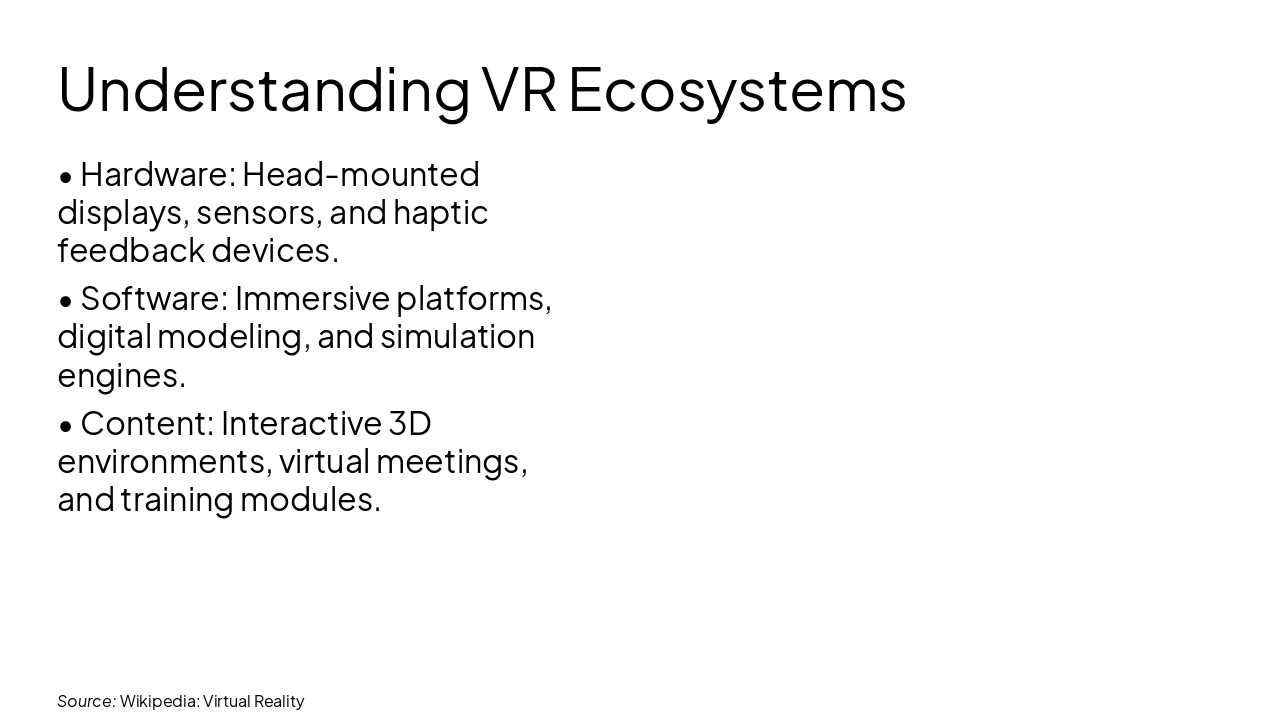
Source: Wikipedia: Virtual Reality
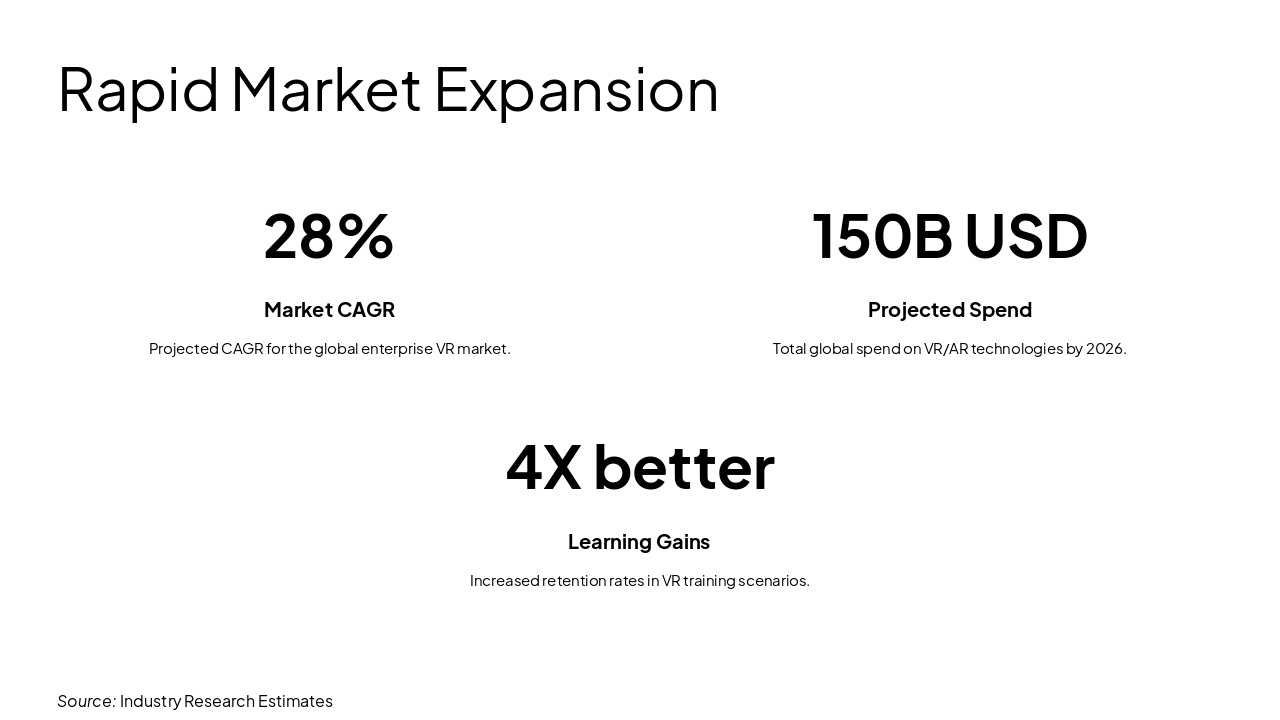
Source: Industry Research Estimates
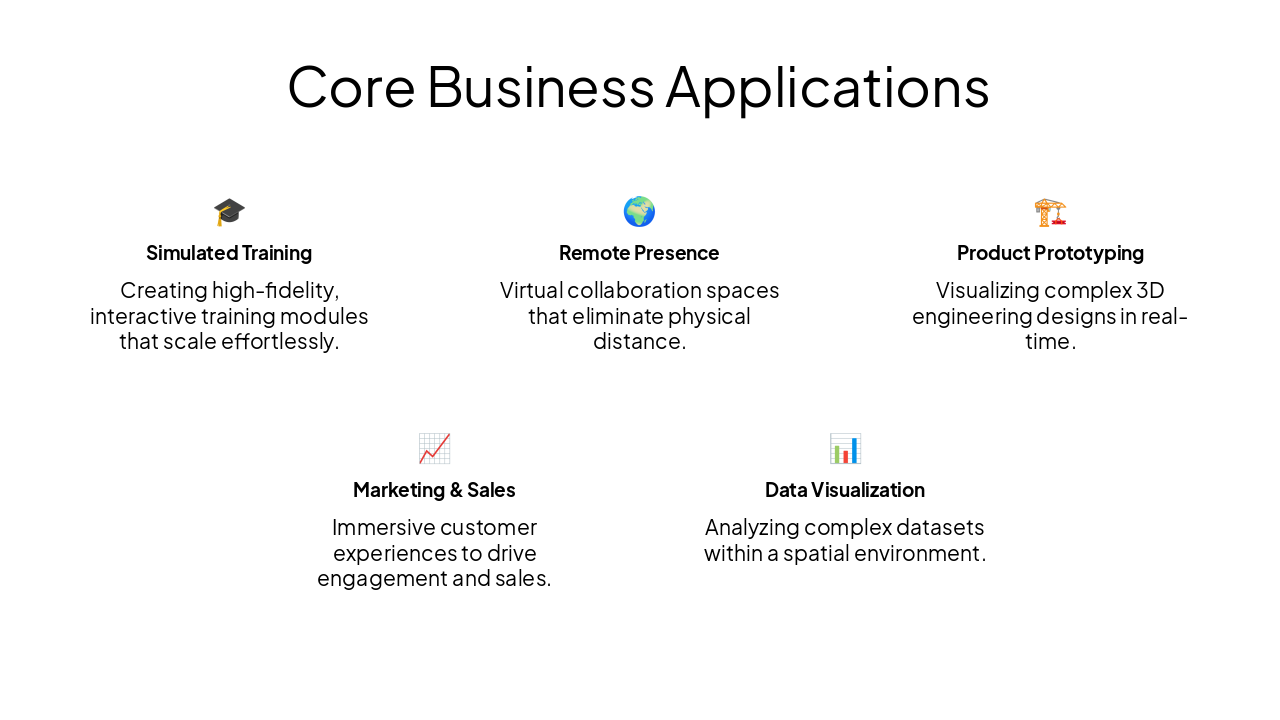
🎓 Simulated Training Creating high-fidelity, interactive training modules that scale effortlessly.
🌍 Remote Presence Virtual collaboration spaces that eliminate physical distance.
🏗️ Product Prototyping Visualizing complex 3D engineering designs in real-time.
📈 Marketing & Sales Immersive customer experiences to drive engagement and sales.
📊 Data Visualization Analyzing complex datasets within a spatial environment.
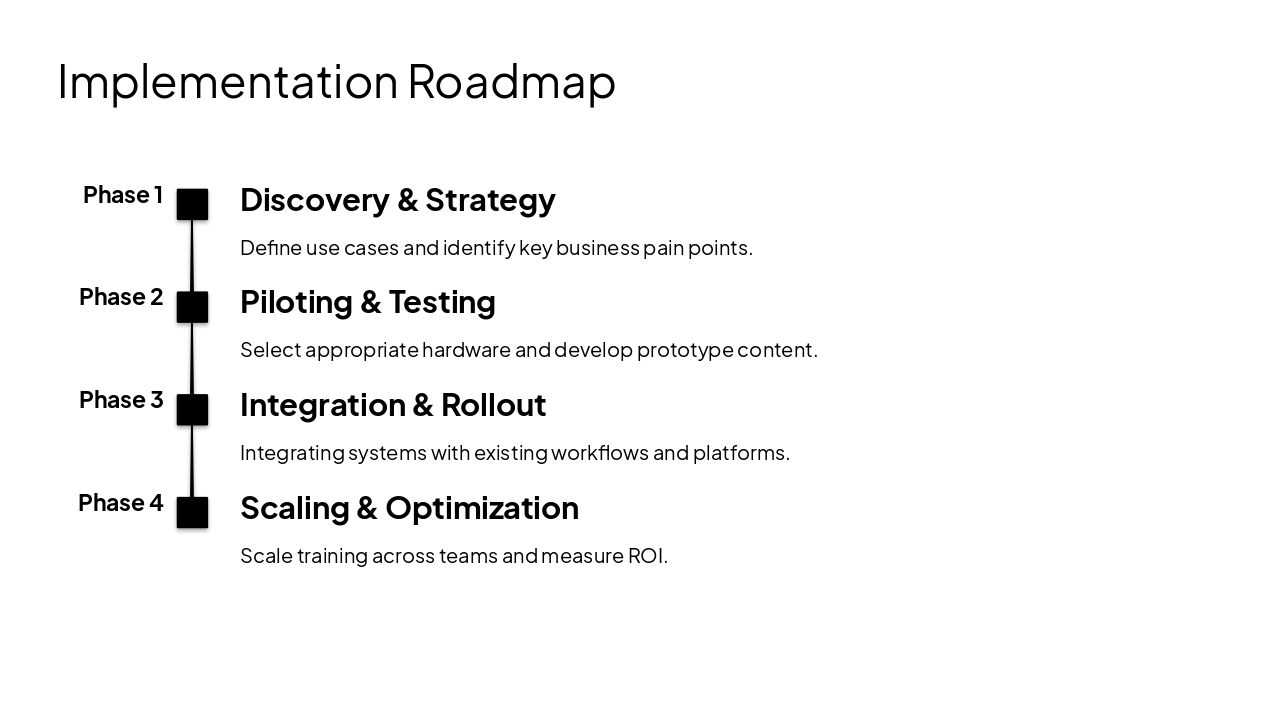
Phase 1: Discovery & Strategy Define use cases and identify key business pain points. Phase 2: Piloting & Testing Select appropriate hardware and develop prototype content. Phase 3: Integration & Rollout Integrating systems with existing workflows and platforms. Phase 4: Scaling & Optimization Scale training across teams and measure ROI.
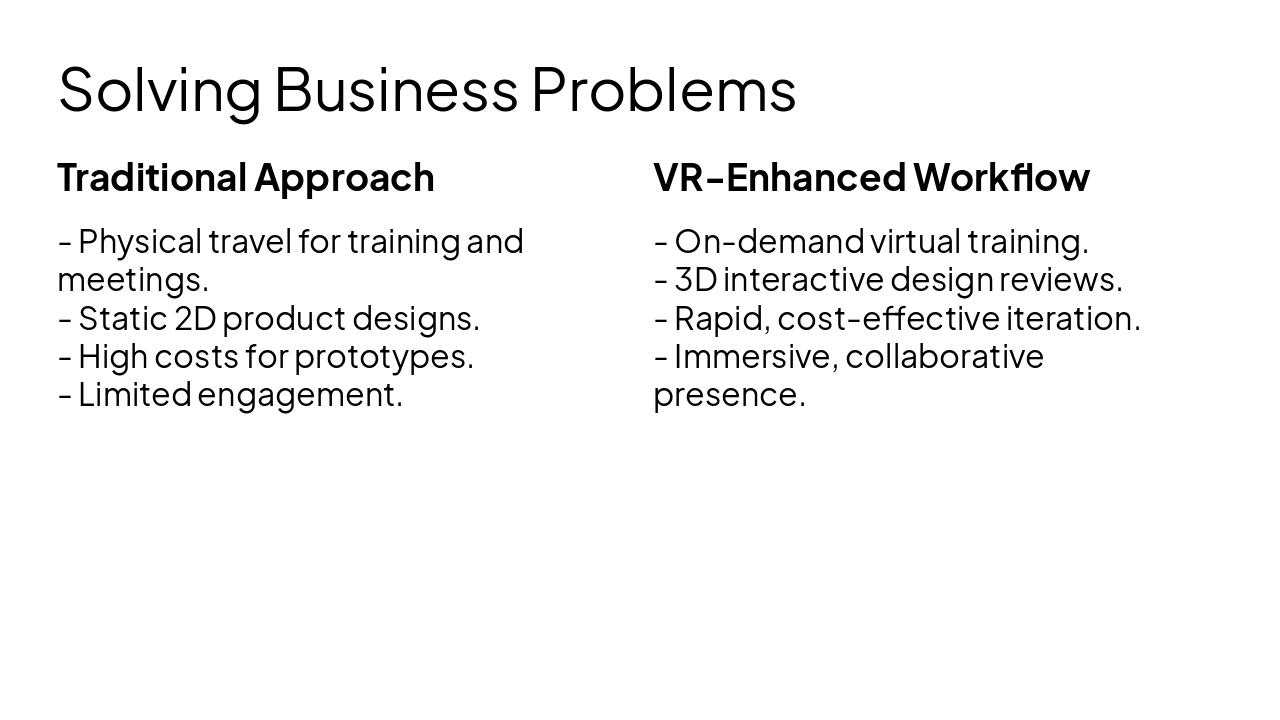
Traditional Approach
VR-Enhanced Workflow
Start Your VR Transformation Now
Embrace the immersive future of work. Contact us to start your integration strategy today.
---
Photo by Prateek Katyal on Unsplash
Explore thousands of AI-generated presentations for inspiration
Generate professional presentations in seconds with Karaf's AI. Customize this presentation or start from scratch.