Slide 1 of 9
Slide 1 - Lost Boy No More
Lost Boy No More: A Journey of Hope and Rebuilding
Analyzing resilience, growth, and survival in the memoir by Nhial Deng
---
Photo by Aleksei Zhivilov on Unsplash
Generated from prompt:
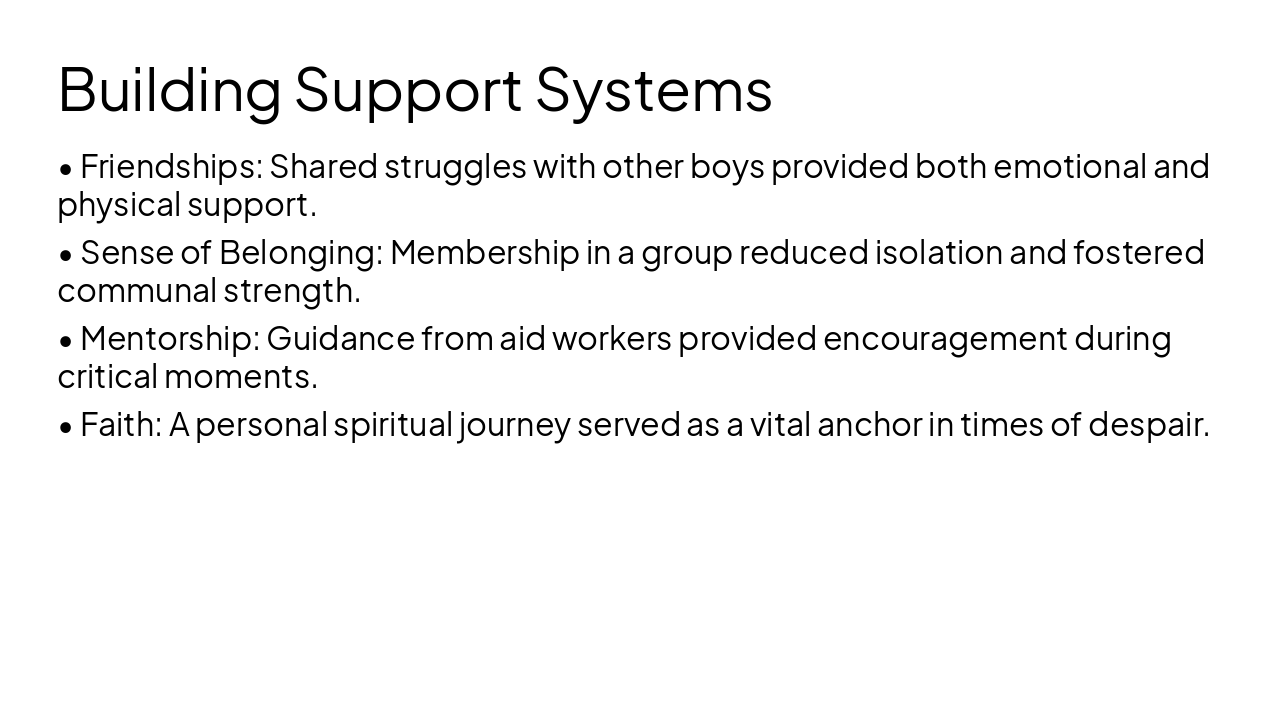
this is about the lost boy no more book, let me give you the essay and make it about this In Lost Boy No More, the author shows that even after experiencing extreme hardship, trauma, and loss, people still have the ability to find hope and rebuild their lives. Through the main character’s journey from a peaceful childhood to surviving war and displacement, the story highlights how he grows emotionally, mentally, and spiritually. His experiences prove that while the past can shape a person, it does not have to control their future, and with resilience, support from others, and inner strength, it is possible to overcome struggles and become stronger. The main character undergoes significant change throughout the novel, especially as his life shifts from peace to survival. At the beginning, Nhial describes a calm and stable childhood that is suddenly disrupted by the outbreak of War, forcing him to leave his home at a very young age.This abrupt transition highlights how quickly his world changes and sets the foundation for his growth. As he journeys through harsh conditions, he learns essential survival skills such as finding food and water and enduring long, exhausting walks. These experiences push him to become more independent and resilient. Over time, his mindset evolves from fear and uncertainty to determination and strength. As he reflects on his past, he begins to understand the importance of hope and perseverance, showing that even in the face of trauma, personal growth is possible. I. First part out of three that proves your thesis: The main character changes a lot throughout the book. A. Subcategory of your first point: His life before and during the war Nhial describes how his peaceful childhood was suddenly destroyed by war. He is forced to leave his home and survive on his own at a young age. These early experiences show how quickly his life changed and shaped who he became. B. Subcategory of your first point: Growth through survival He learns how to find food, water, and stay alive while walking long distances. He becomes stronger and more independent because he has no choice. His mindset shifts from fear to determination as he keeps going. C. Subcategory of your first point: Personal development over time As he gets older, he begins to reflect on his experiences differently. He starts to understand the importance of hope and not giving up. His growth shows that people can change even after trauma. “We walked for days without food or water…” (page Relationships play a crucial role in making the main characters develop throughout the story. During his journey, the friendships he forms with other boys provide both emotional and physical support, helping them endure the hardships they face together. Being part of a group gives him a sense of belonging and reduces the feelings of isolation. In addition, mentors such as Aid workers offer guidance, kindness, and encouragement during some of his most difficult moments. These individuals not only help him survive but also inspire him to believe in a better future. Furthermore, his faith becomes a strong source of comfort and motivation. By turning to God in times of struggle, he finds the strength to keep going. As stated, “We were boys, but we had to act like men to survive" (p. 73), emphasizing how these relationships and beliefs helped him mature quickly. II. Second part out of three that proves your thesis: Relationships play a big role in the main character’s growth. A. Subcategory of your second point: Friendships with other boys The boys rely on each other for support while traveling. These friendships help them survive emotionally and physically. Being part of a group gives him a sense of belonging. B. Subcategory of your second point: Influence of mentors
An analysis of Nhial Deng's memoir 'Lost Boy No More,' exploring central themes of resilience after trauma, personal transformation from peaceful childhood to war survival, the power of relationships and mentorship, faith as strength, and ultimate成長.
Lost Boy No More: A Journey of Hope and Rebuilding
Analyzing resilience, growth, and survival in the memoir by Nhial Deng
---
Photo by Aleksei Zhivilov on Unsplash
---
Photo by Ivan Frolov on Unsplash
1
From a peaceful childhood to surviving the chaos of war
---
Photo by Eric Barrett on Unsplash
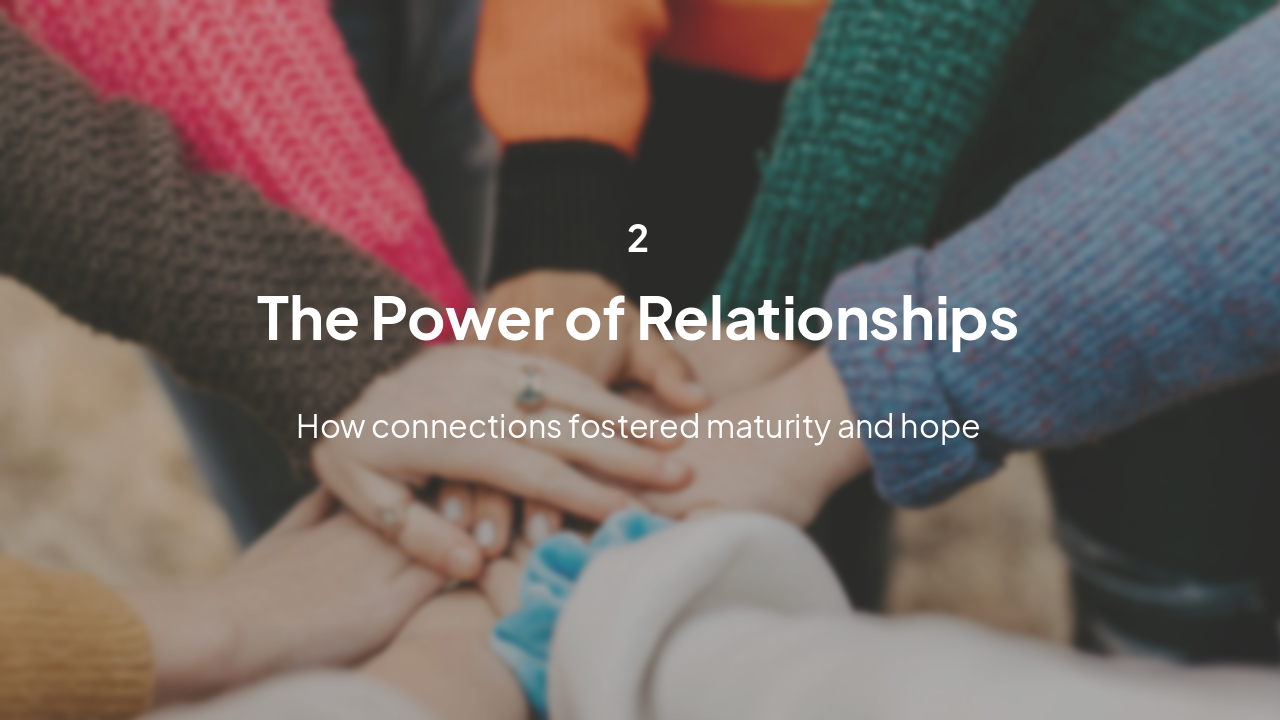
2
How connections fostered maturity and hope
---
Photo by Hannah Busing on Unsplash
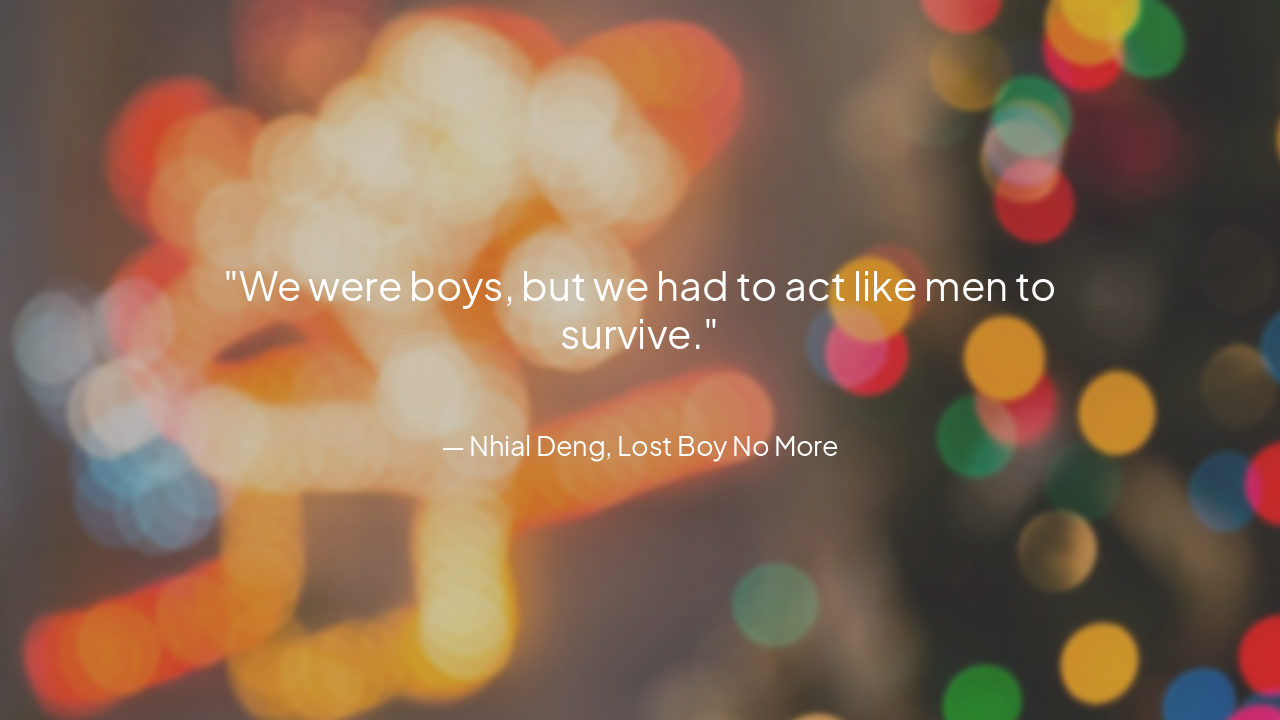
> We were boys, but we had to act like men to survive.
— Nhial Deng, Lost Boy No More
---
Photo by Toni Cuenca on Unsplash
Through hardship and support, trauma can lead to profound personal transformation and lasting hope.
Reflecting on the journey of resilience and growth
---
Photo by Dawid Zawiła on Unsplash
Explore thousands of AI-generated presentations for inspiration
Generate professional presentations in seconds with Karaf's AI. Customize this presentation or start from scratch.