Groundwater: Sources, Uses, and Challenges

Generated from prompt:

Slide 1 – Title Groundwater: Sources, Uses, and Challenges Biology Presentation Slide 2 – What is Groundwater? Water found beneath Earth’s surface Stored in soil and rock layers (aquifers) Part of the water cycle Can be fresh or slightly salty Slide 3 – Where Does Groundwater Come From? Rain and snow (precipitation) Water seeps into the ground (infiltration) Moves downward through soil and rocks (percolation) Collected in underground layers called aquifers

This biology presentation covers groundwater fundamentals: definition, sources via infiltration and aquifers, human uses in agriculture and households, extraction methods, key challenges like overuse, depletion, pollution from fertilizers, and land补贴

March 24, 202617 slides
Slide 1 of 17

Slide 1 - Groundwater Title

Groundwater: Sources, Uses, and Challenges

Biology Presentation
Slide 1 - Groundwater Title
Slide 2 of 17

Slide 2 - What is Groundwater?

  • Water found beneath Earth’s surface within pore spaces and fractures of rock formations.
  • Stored in geological units called aquifers consisting of permeable rock or unconsolidated materials like sand and gravel.
  • Essential component of the global water cycle.
  • Composition varies; can be fresh, or occasionally saline.
Slide 2 - What is Groundwater?
Slide 3 of 17

Slide 3 - Where Does Groundwater Come From?

  • Recharge begins with precipitation in the form of rain and snow.
  • Water seeps into the ground through a process called infiltration.
  • Moves downward through soil and rock layers via percolation, eventually reaching the water table.
  • Accumulates in underground reservoirs known as aquifers, which can hold vast quantities of water.
Slide 3 - Where Does Groundwater Come From?
Slide 4 of 17

Slide 4 - Types of Aquifers

  • Unconfined aquifers: closer to surface, easily replenished.
  • Confined aquifers: deeper, trapped between rock layers.
  • Recharge depends on rainfall and surface water.
Slide 4 - Types of Aquifers
Slide 5 of 17

Slide 5 - Who Uses Groundwater?

  • Agriculture (the largest user): Irrigation for crops.
  • Households: Drinking water, cooking, cleaning.
  • Industries: Manufacturing, cooling systems.
Slide 5 - Who Uses Groundwater?
Slide 6 of 17

Slide 6 - Importance of Groundwater

  • Supplies about half of global drinking water.
  • Supports food production.
  • Maintains rivers and ecosystems during dry periods.
Slide 6 - Importance of Groundwater
Slide 7 of 17

Slide 7 - Usage and Extraction

1

Human Usage and Extraction

How we access and utilize groundwater resources
Slide 7 - Usage and Extraction
Slide 8 of 17

Slide 8 - What is Overuse of Groundwater?

  • When water is extracted faster than it is replenished.
  • Also known as groundwater depletion.
Slide 8 - What is Overuse of Groundwater?
Slide 9 of 17

Slide 9 - Problems Caused by Overuse

  • Falling water levels.
  • Wells drying up.
  • Land subsidence (ground sinking).
  • Reduced water in rivers and wetlands.
Slide 9 - Problems Caused by Overuse
Slide 10 of 17

Slide 10 - Fertilizer Use and Groundwater

  • Fertilizers contain nitrates and phosphates.
  • Rain washes excess fertilizer into soil.
  • Chemicals seep into groundwater.
Slide 10 - Fertilizer Use and Groundwater
Slide 11 of 17

Slide 11 - Impacts of Fertilizer Pollution

  • Contaminates drinking water.
  • Causes health issues (e.g., “blue baby syndrome”).
  • Leads to eutrophication in nearby water bodies.
  • Hard and expensive to clean.
Slide 11 - Impacts of Fertilizer Pollution
Slide 12 of 17

Slide 12 - Link Between Overuse and Pollution

  • Over-pumping can draw pollutants deeper into aquifers.
  • Less water results in a higher concentration of contaminants.
  • Makes groundwater unsafe faster.
Slide 12 - Link Between Overuse and Pollution
Slide 13 of 17

Slide 13 - Solutions

  • Use water efficiently (drip irrigation).
  • Reduce fertilizer use / use organic alternatives.
  • Protect recharge areas.
  • Monitor groundwater levels.
  • Government regulation.
Slide 13 - Solutions
Slide 14 of 17

Slide 14 - How We Access and Use Groundwater

  • Wells are the primary structure created to access groundwater in aquifers.
  • Types include dug wells (traditional), driven wells (unconsolidated materials), and modern drilled wells.
  • Water is retrieved using pumps or manual methods like buckets.
  • Groundwater is widely used for: Agriculture (the largest consumer), Municipal drinking water, Industrial processes, and Renewable energy sources.
Slide 14 - How We Access and Use Groundwater
Slide 15 of 17

Slide 15 - Challenges Overview

2

Environmental Challenges

The risks of over-extraction and pollution
Slide 15 - Challenges Overview
Slide 16 of 17

Slide 16 - Key Environmental Challenges

  • Overdrafting: Extracting water faster than the aquifer can replenish.
  • Land Subsidence: Sinking land and loss of elevation due to withdrawal.
  • Pollution: Harder to remediate than surface water, caused by chemicals, fertilizers, landfills, and waste from mining.
  • Saltwater Intrusion: Coastal issues where over-pumping draws saltwater into freshwater aquifers.
Slide 16 - Key Environmental Challenges
Slide 17 of 17

Slide 17 - Summary and Conclusions

Groundwater represents a critical yet vulnerable global resource.

Sustainable management of aquifers is essential for the future.
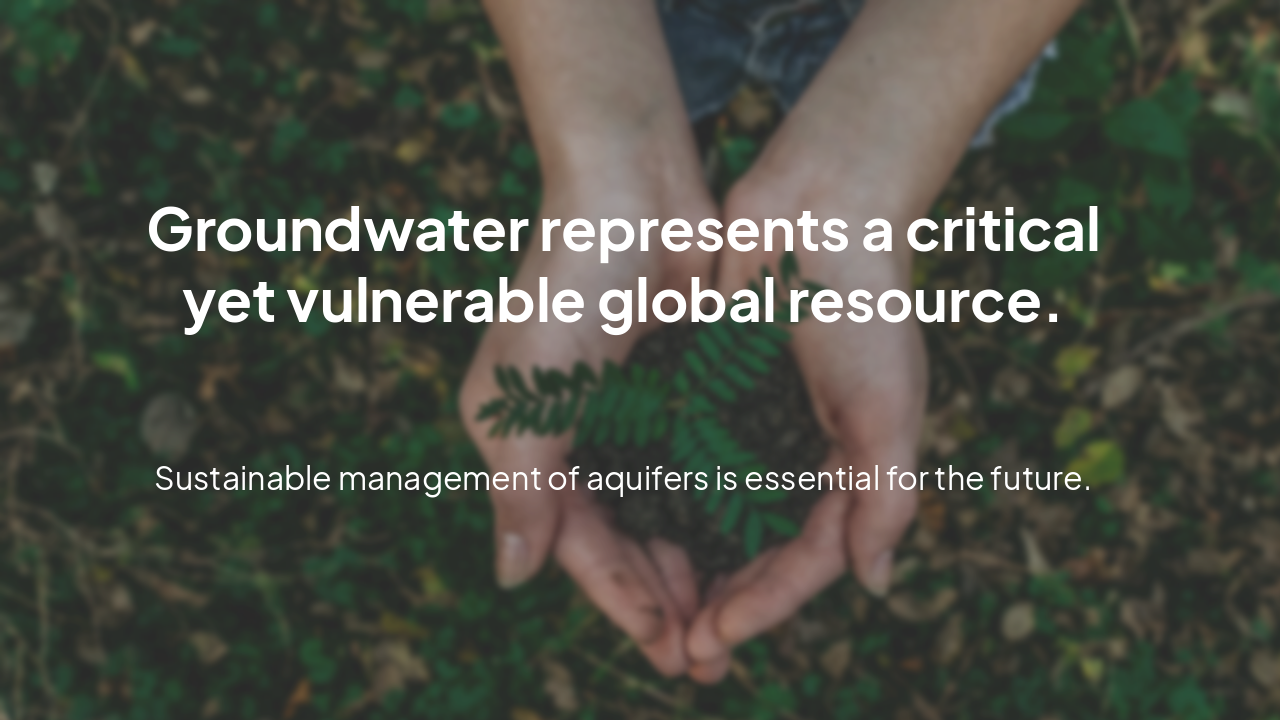
Slide 17 - Summary and Conclusions

Discover More Presentations

Explore thousands of AI-generated presentations for inspiration

Browse Presentations
Powered by AI

Create Your Own Presentation

Generate professional presentations in seconds with Karaf's AI. Customize this presentation or start from scratch.

Create New Presentation

Powered by Karaf.ai — AI-Powered Presentation Generator