Slide 1 of 15
Slide 1 - The Balancing Act: Free Speech & Online Moderation
The Balancing Act: Free Speech & Online Moderation
Navigating the First Amendment in the Digital Age
---
Photo by Danielle Rice on Unsplash
Generated from prompt:
Category Exceeds Expectations (4) Meets Expectations (3) Approaching Expectations (2) Below Expectations (1) Content & Argument Presents a sophisticated argument regarding the balance of free speech and moderation. Includes clear definitions of the First Amendment vs. Private Policy. Presents a clear argument about free speech online. Correctly identifies the difference between government and private censorship. Argument is present but lacks depth. Some confusion between First Amendment rights and platform rules. Argument is unclear or missing. Minimal understanding of the legal/ethical concepts shown. Evidence & Research Includes at least 3 high-quality sources. Uses specific examples of recent social media controversies or court cases to support claims. Includes 2-3 sources. Uses general examples of social media moderation to support the argument. Includes 1-2 sources. Examples provided are vague or not directly relevant to the topic. Little to no evidence or research provided. Relies solely on personal opinion. Connection to Unit Themes Explicitly connects the topic to the Tinker Test. Discusses the cost of staying silent vs. the danger of harmful speech. Makes a clear connection to the unit theme of Free Speech. Mentions the unit theme briefly but doesn't connect it deeply to the social media debate. No connection made to concepts or the unit themes. Organization & Flow Information is organized logically with a clear introduction, body, and conclusion. Transitions between slides are seamless. Information is organized. Presentation follows a logical sequence. Some slides feel out of order. Transitions are clunky or missing. Presentation lacks a clear structure; information appears random. Visual Design Slides are professional and clean. High-quality images/graphics enhance the message. Text is minimal and easy to read. Slides are neat and legible. Graphics are relevant. Text-to-image ratio is balanced. Some slides are cluttered with too much text. Graphics are distracting or low quality. Text is difficult to read. Design is messy or uses default templates with no customization. Assignment Requirements Checklist: [ ] Title Slide: Clear title, name, and date. [ ] Definition Slide: Must define "First Amendment". [ ] The Debate: Must present at least two sides of the moderation argument. [ ] The Tinker Test: One slide dedicated to how schools may only prohibit speech that "materially and substantially" interferes with school operations or infringes on others' rights. [ ] Citations Slide: List of all sources used in MLA
This presentation explores the complex intersection of free speech principles and online content moderation. It defines First Amendment protections, contrasts public and private speech regulation, examines the ongoing debate between pro-speech and pro-moderation stances, and analyzes key legal precedents such as the Tinker Test, Section 230, and relevant Supreme Court cases, ultimately discussing the challenges of balancing expression and harm reduction in the digital age.
The Balancing Act: Free Speech & Online Moderation
Navigating the First Amendment in the Digital Age
---
Photo by Danielle Rice on Unsplash
---
Photo by Sanjeev Saroy on Unsplash
Defining the Foundations of Expression
---
Photo by EB Communications on Unsplash
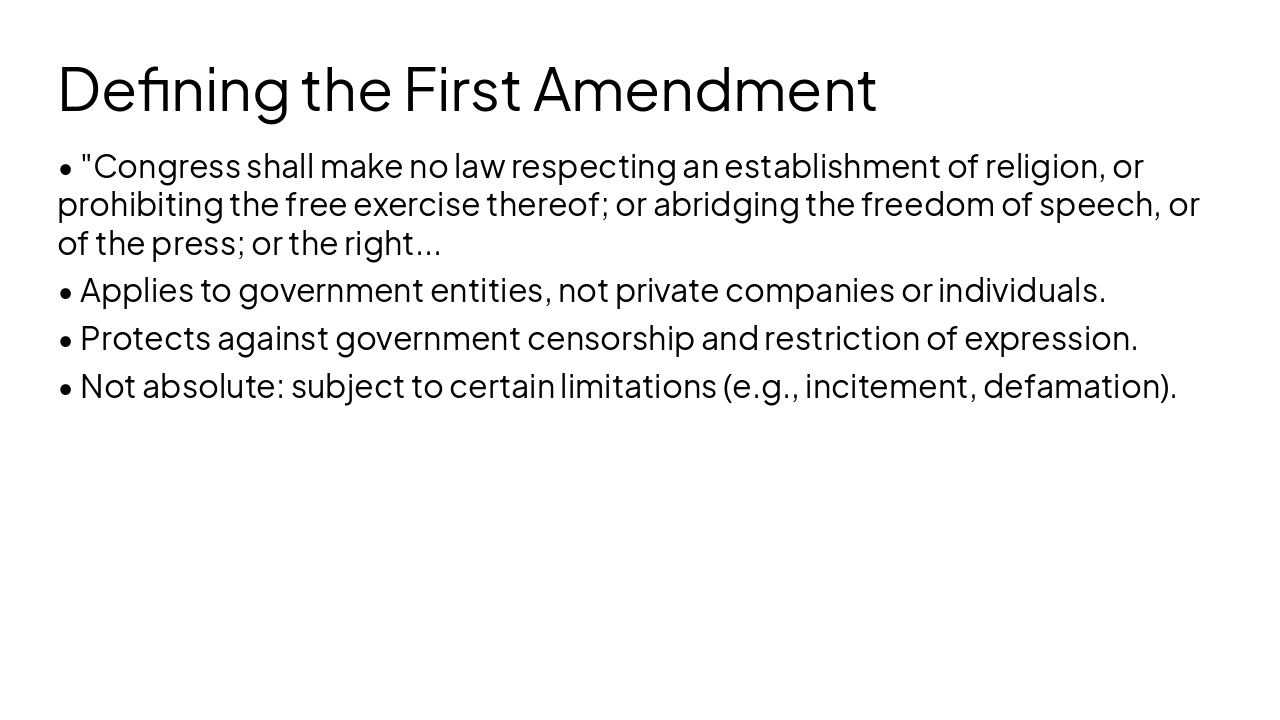
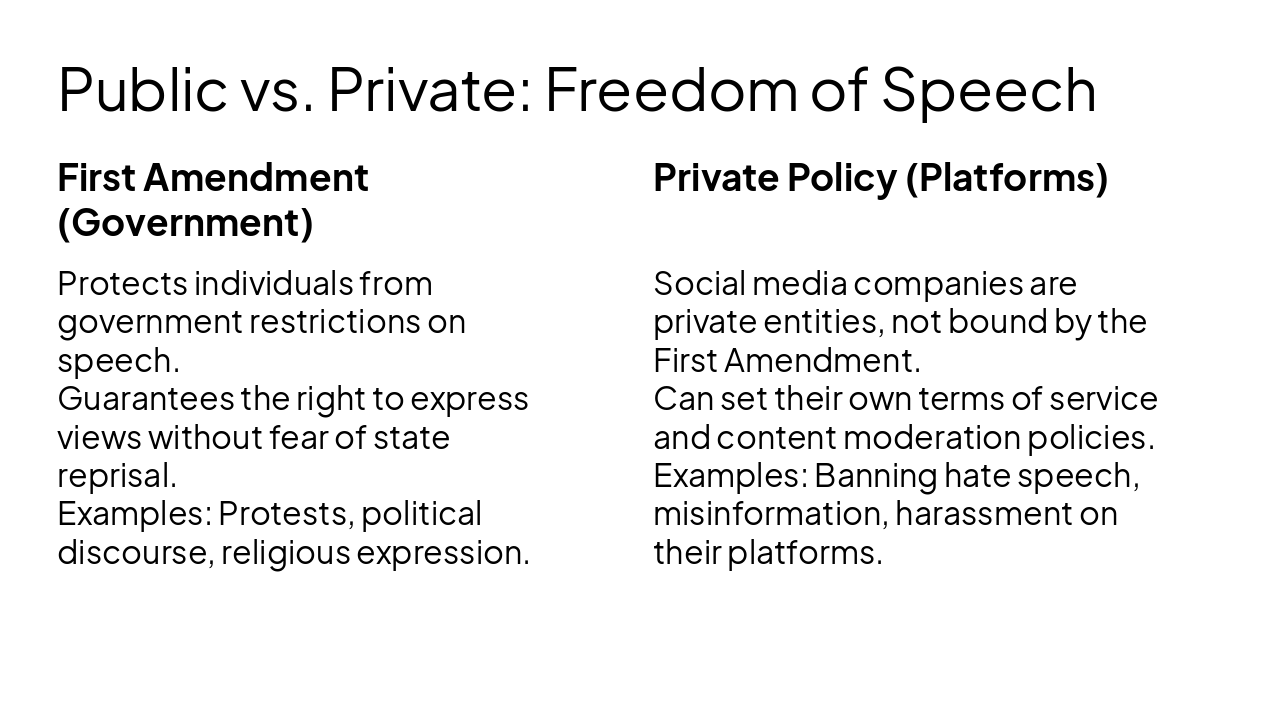
First Amendment (Government) Protects individuals from government restrictions on speech. Guarantees the right to express views without fear of state reprisal. Examples: Protests, political discourse, religious expression.
Private Policy (Platforms) Social media companies are private entities, not bound by the First Amendment. Can set their own terms of service and content moderation policies. Examples: Banning hate speech, misinformation, harassment on their platforms.
Balancing Free Expression and Platform Responsibility
---
Photo by Jens Lelie on Unsplash
How Courts Have Shaped Free Speech Boundaries
---
Photo by Tingey Injury Law Firm on Unsplash
---
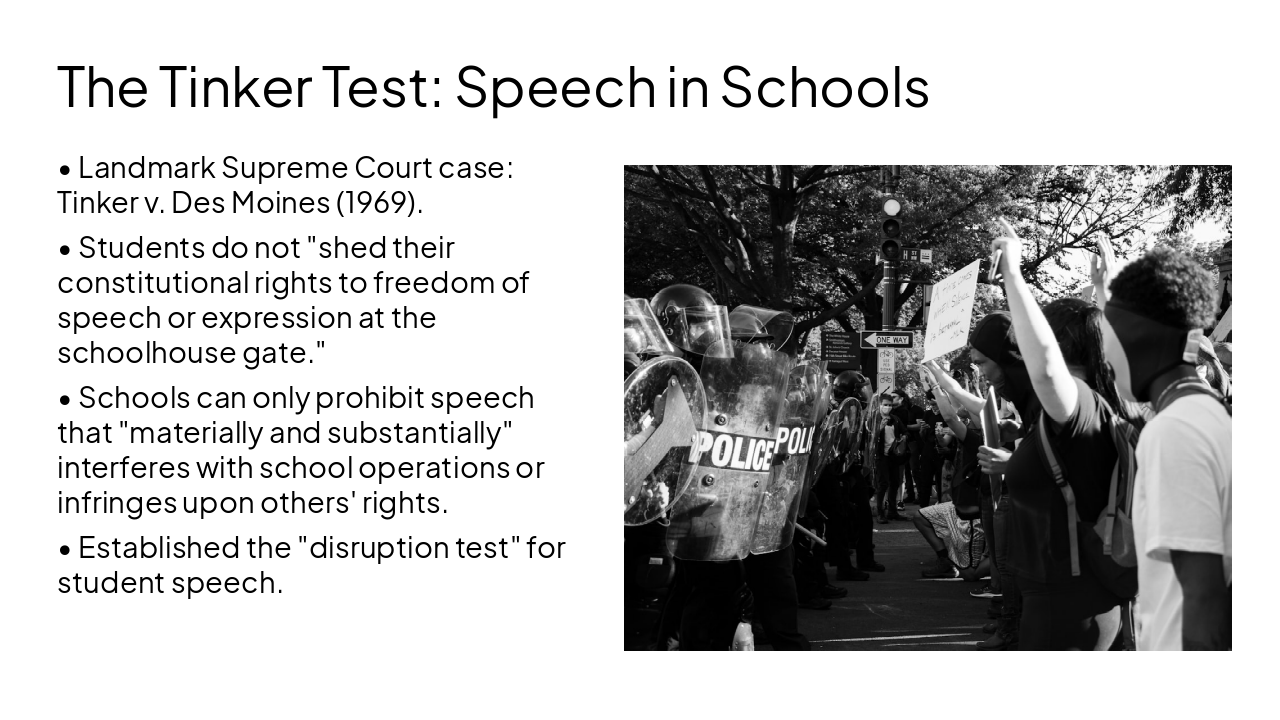
Photo by Koshu Kunii on Unsplash
---
Photo by Karsten Würth on Unsplash
Explore thousands of AI-generated presentations for inspiration
Generate professional presentations in seconds with Karaf's AI. Customize this presentation or start from scratch.