Slide 1 of 32
Slide 1 - Thesis Presentation
Investigating the Chemical Space Coverage of Liquid Chromatographic Techniques
MSc Chemistry Thesis - Analytical Sciences | Dec 2025
---
Photo by Ryan Zazueta on Unsplash
Generated from prompt:
Create a presenation about my thesis
MSc Chemistry thesis investigating chemical space coverage of 236 LC-HRMS methods from RepoRT repository. Analyzes selectivity-measurability bias in NTA for exposome, using PCA/clustering to reveal RPLC dominance, limited polar/hydrophobic coverage,
Investigating the Chemical Space Coverage of Liquid Chromatographic Techniques
MSc Chemistry Thesis - Analytical Sciences | Dec 2025
---
Photo by Ryan Zazueta on Unsplash
Thesis Presentation: Chemical Space Coverage in LC-HRMS
Investigating the chemical space coverage of liquid chromatographic techniques: how selectivity drives measurability
---
Photo by Nastuh Abootalebi on Unsplash
Literature Thesis Presentation
Investigating the chemical space coverage of liquid chromatographic techniques: how selectivity drives measurability
---
Photo by Nastuh Abootalebi on Unsplash
---
Photo by Nastuh Abootalebi on Unsplash
---
Photo by Bench Accounting on Unsplash
---
Photo by Tom Parkes on Unsplash
1
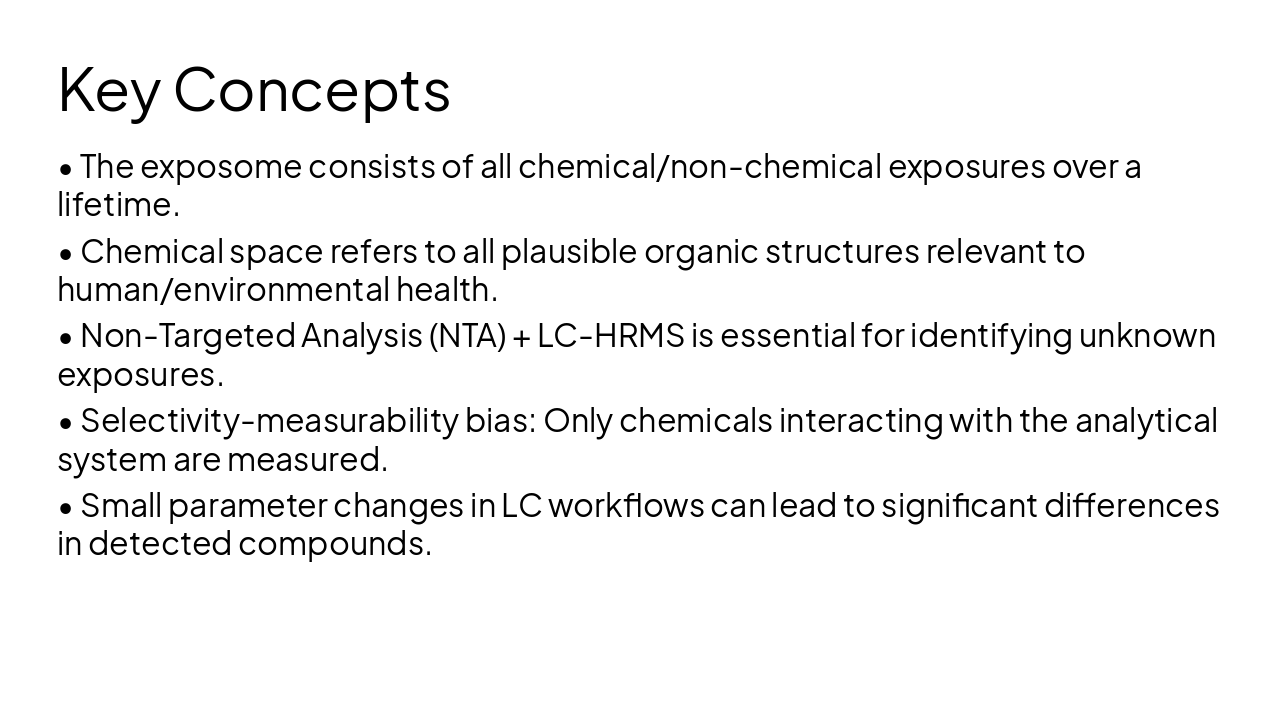
Understanding the chemical space of the exposome and the role of LC-HRMS in non-targeted analysis (NTA).
---
Photo by Tom Parkes on Unsplash
1
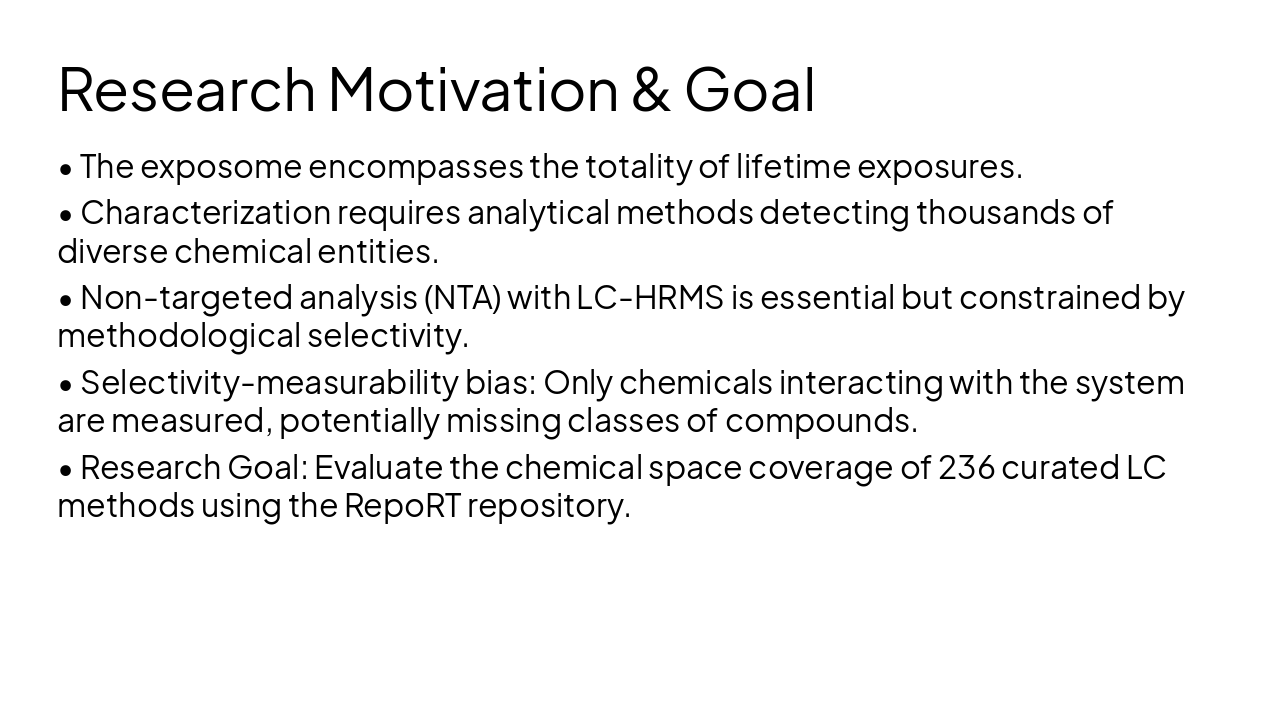
Understanding the Exposome and Selectivity-Measurability Bias
---
Photo by Vedrana Filipović on Unsplash

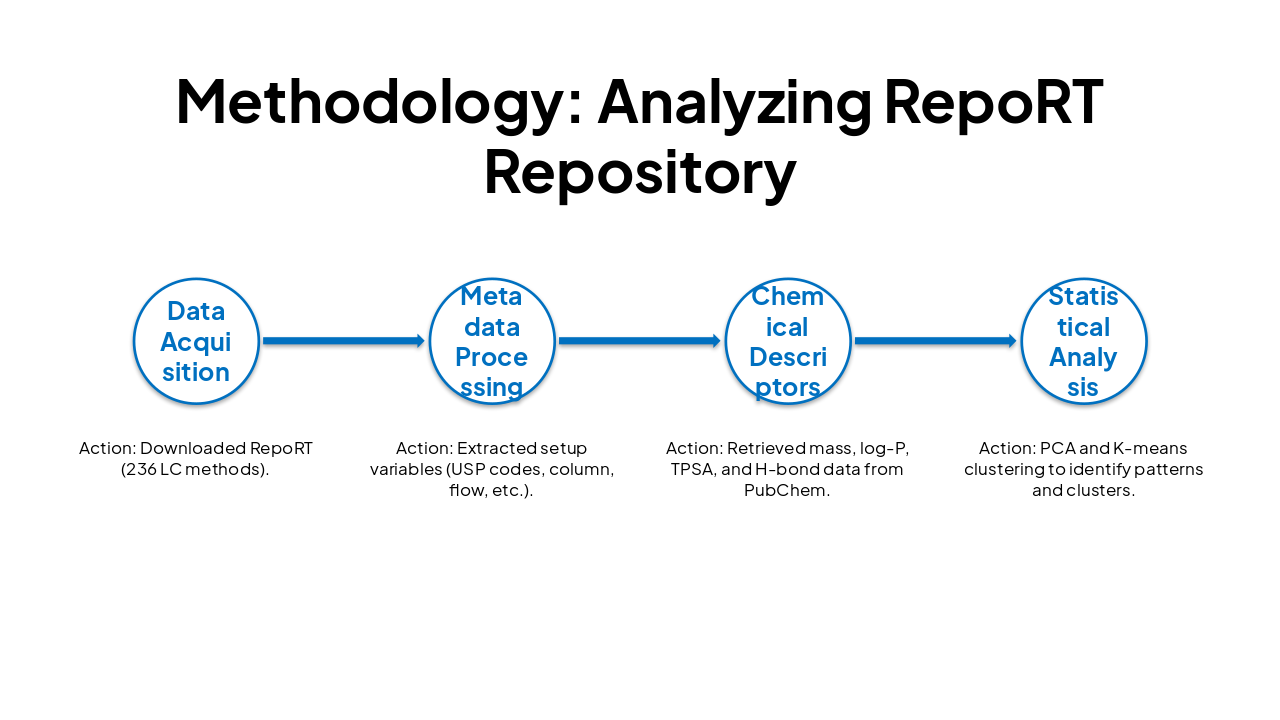
| Step | Action |
|---|---|
| Data Acquisition | Downloaded RepoRT (236 LC methods). |
| Metadata Processing | Extracted setup variables (USP codes, column, flow, etc.). |
| Chemical Descriptors | Retrieved mass, log-P, TPSA, and H-bond data from PubChem. |
| Statistical Analysis | PCA and K-means clustering to identify patterns and clusters. |

2
Data acquisition from the RepoRT repository and experimental setup.
---
Photo by Tom Parkes on Unsplash

3
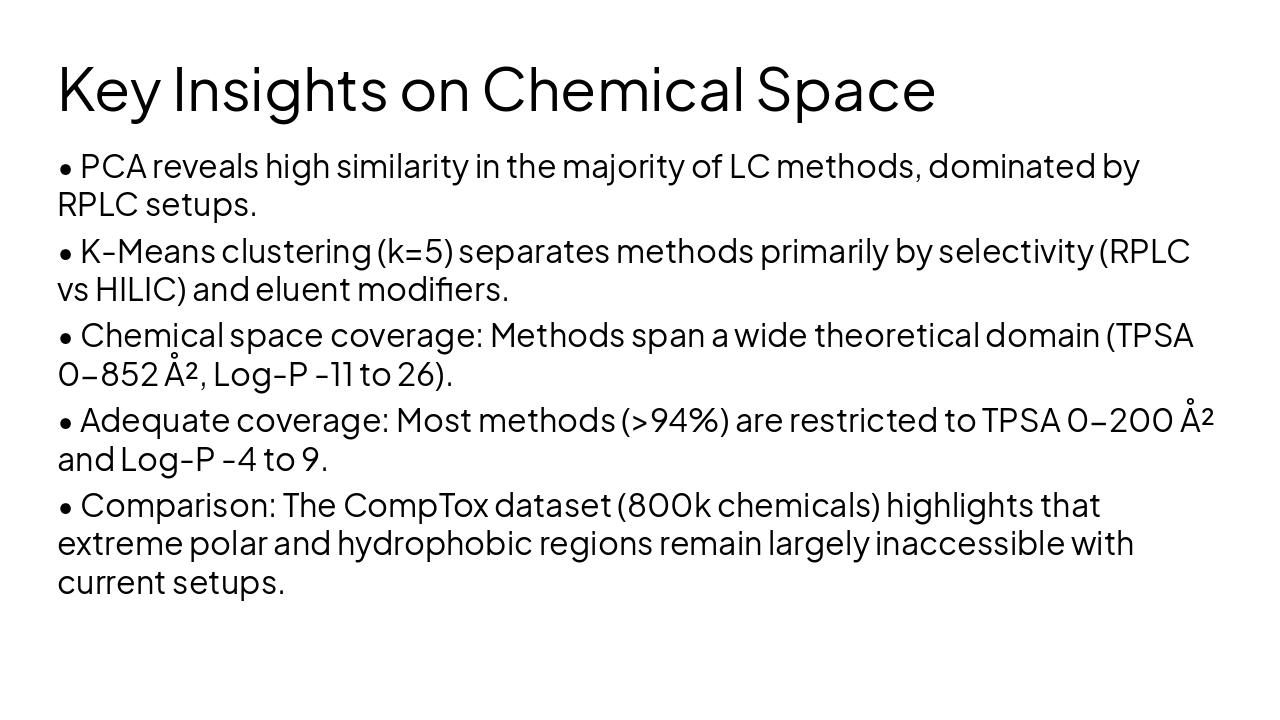
PCA and K-Means clustering results
---
Photo by Deng Xiang on Unsplash
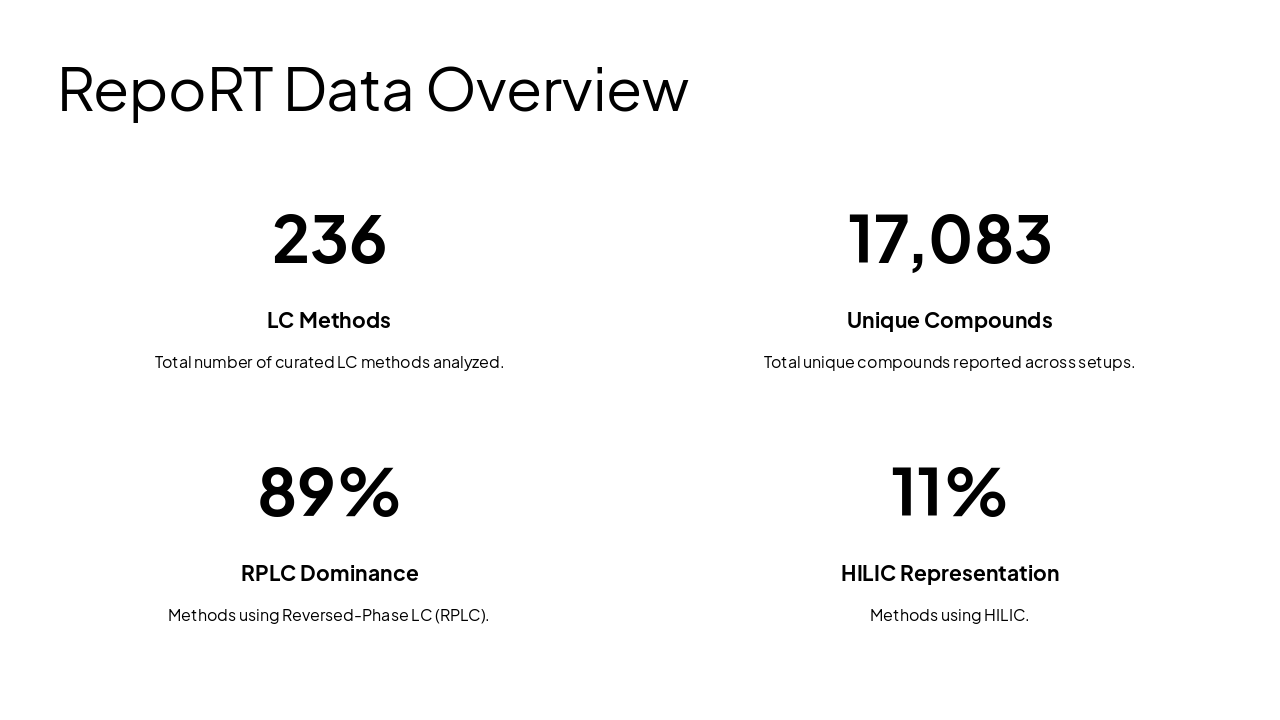
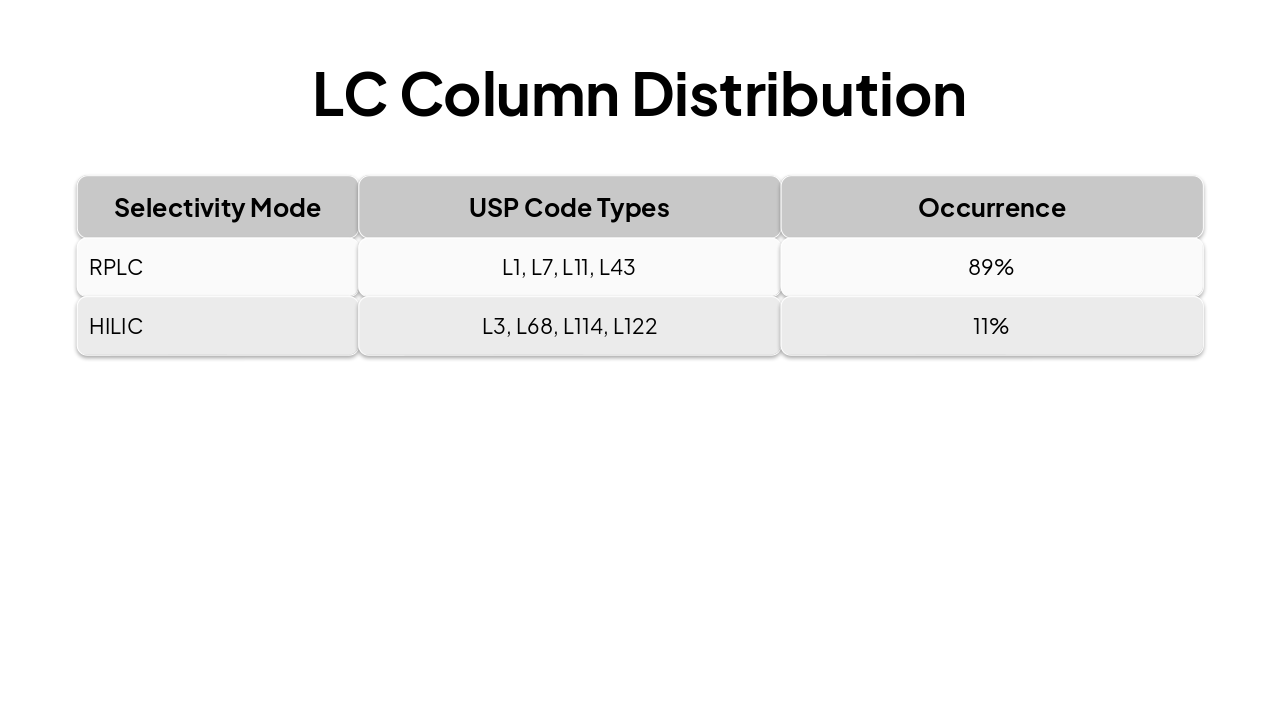
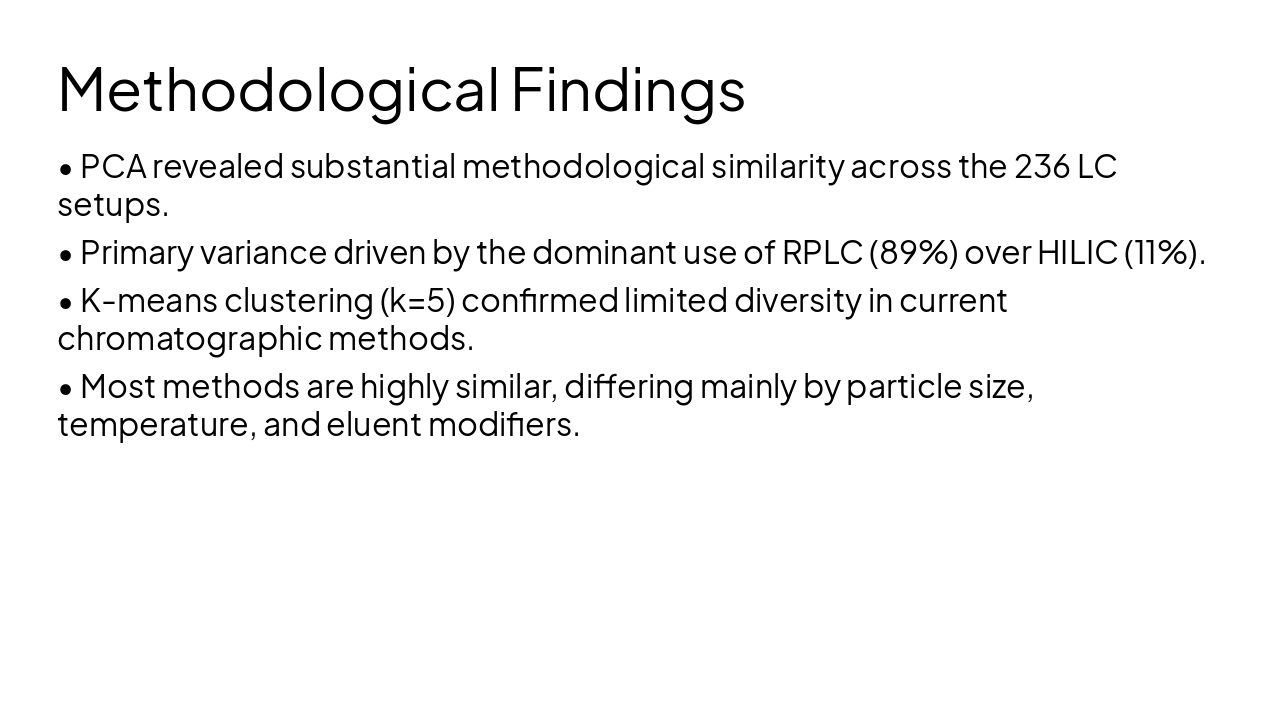
| Selectivity Mode | USP Code Types | Occurrence |
|---|---|---|
| RPLC | L1, L7, L11, L43 | 89% |
| HILIC | L3, L68, L114, L122 | 11% |
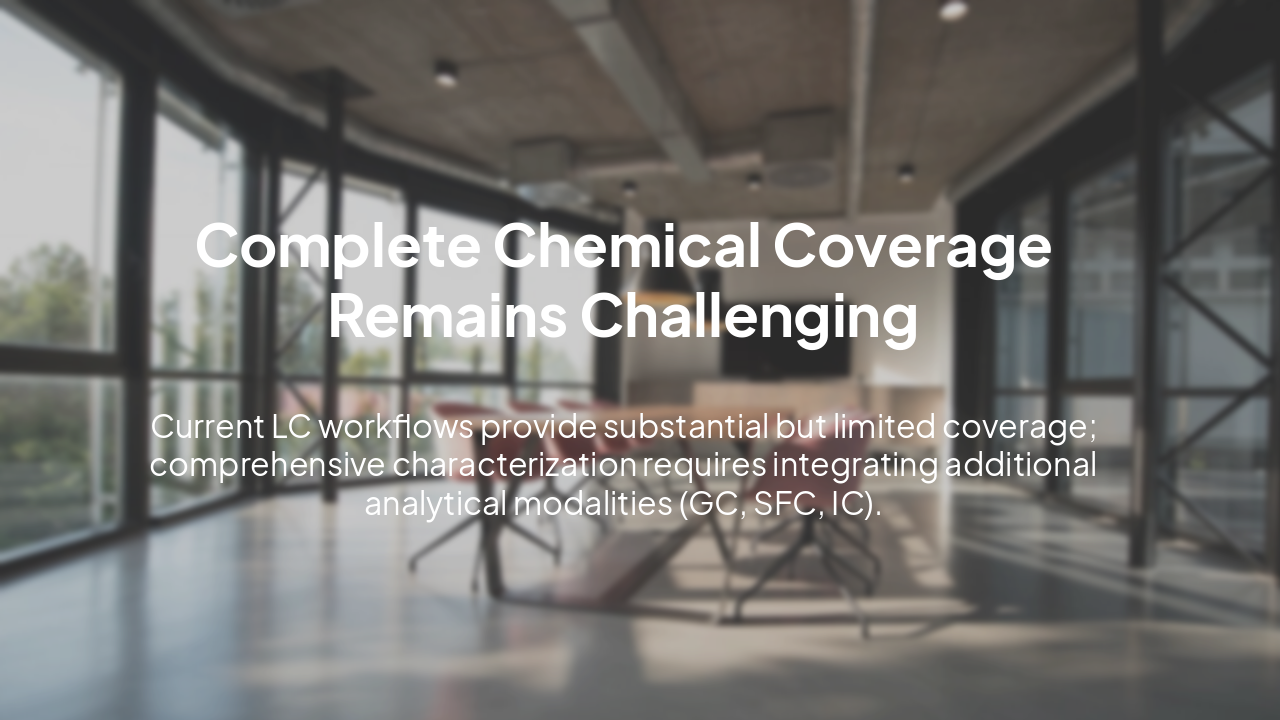
Complete Chemical Coverage Remains Challenging
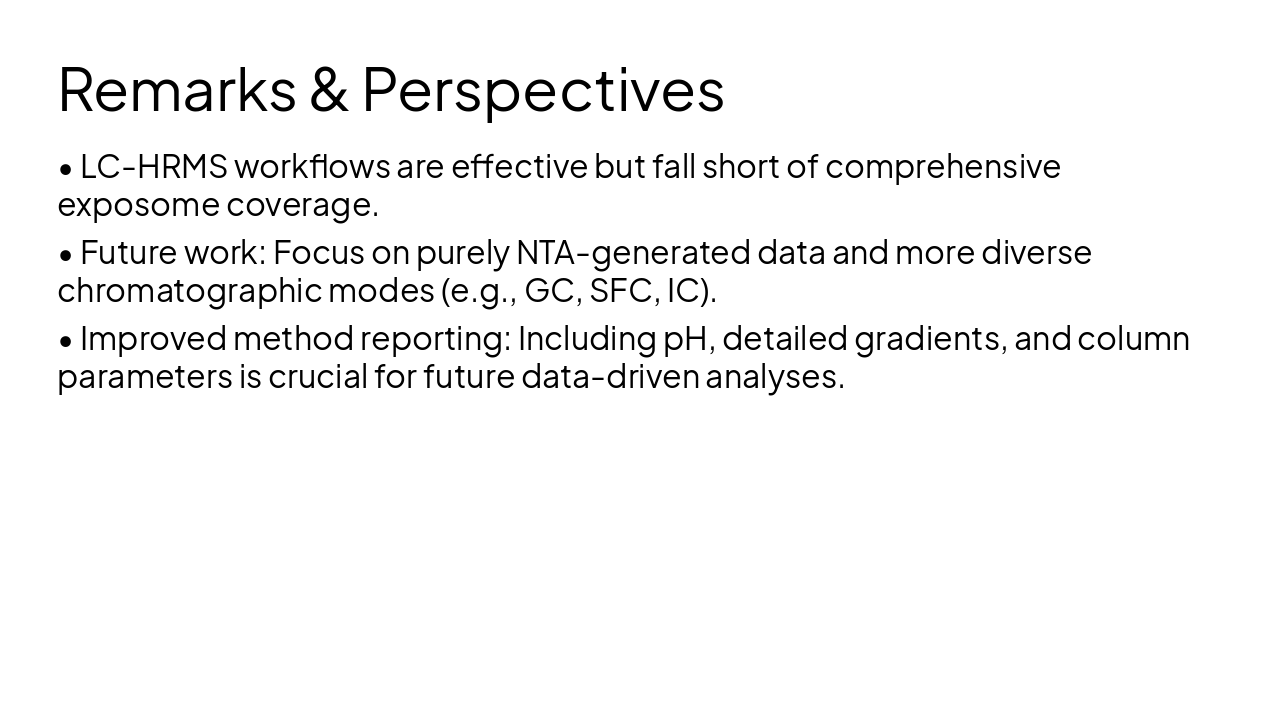
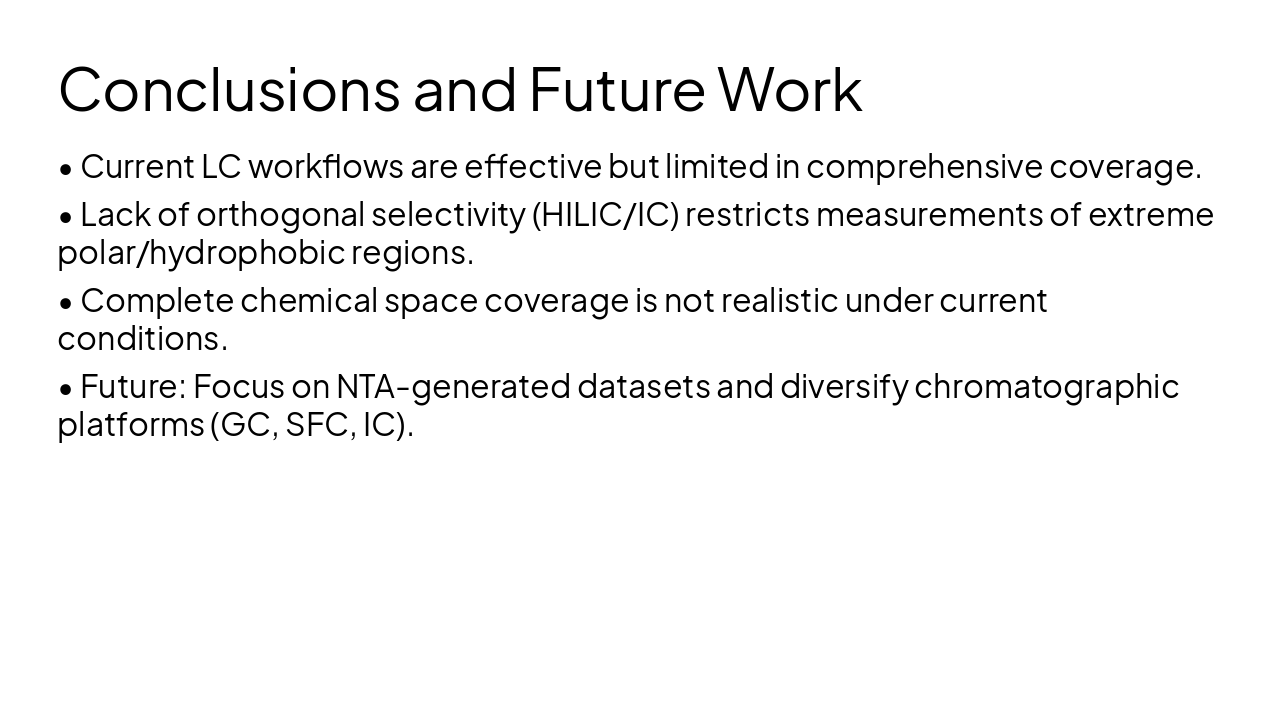
Current LC workflows provide substantial but limited coverage; comprehensive characterization requires integrating additional analytical modalities (GC, SFC, IC).
---
Photo by Nastuh Abootalebi on Unsplash
3
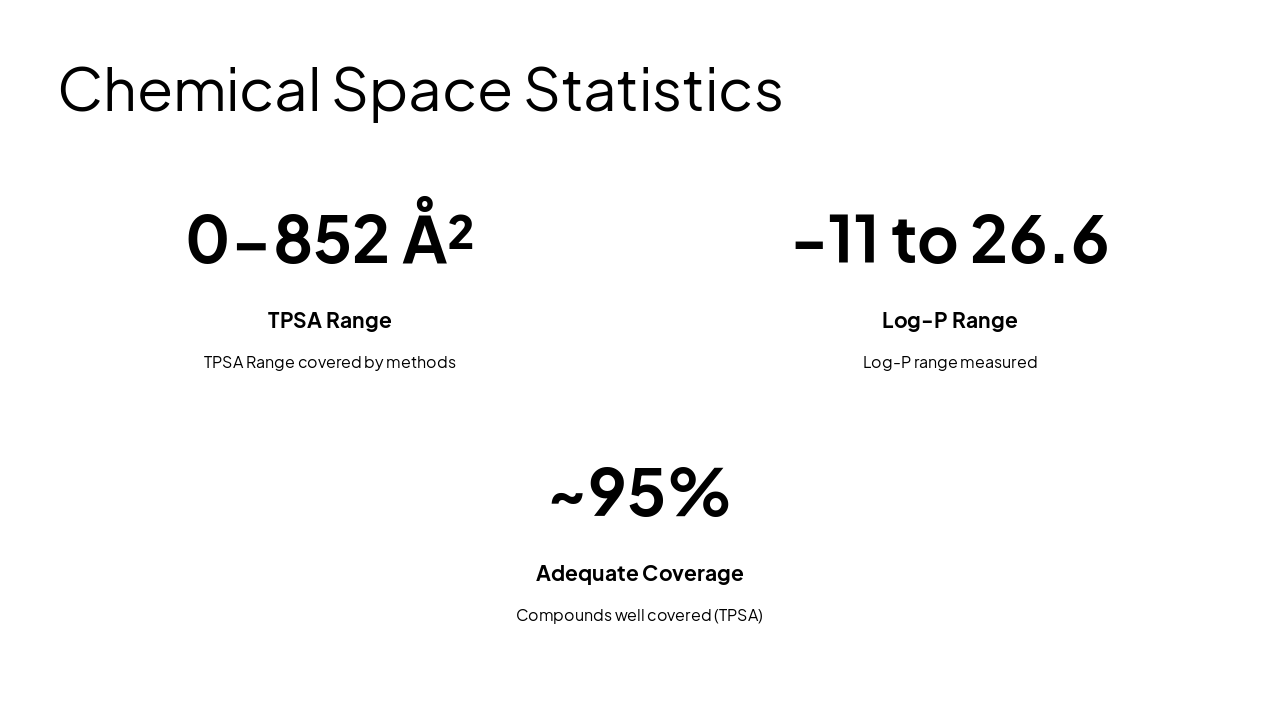
Visualizing methodological similarity and chemical space coverage.
---
Photo by Tom Parkes on Unsplash
Comprehensive chemical space coverage requires orthogonal selectivity and wider methodological scope.
Advancing Exposome Monitoring
---
Photo by Jakub Żerdzicki on Unsplash
> Current LC workflows, although effective within a broad region, remain far from achieving comprehensive characterization of chemical space.
— Jens Heemskerk (Thesis Conclusions)
---
Photo by Logan Voss on Unsplash
4
Final assessment and roadmap for future exposome research.
---
Photo by Tom Parkes on Unsplash
Questions?
Thank you for your attention
---
Photo by Trnava University on Unsplash
Thesis Work Completed: Dec 2025
Thank you for your attention.
---
Photo by Nastuh Abootalebi on Unsplash

Explore thousands of AI-generated presentations for inspiration
Generate professional presentations in seconds with Karaf's AI. Customize this presentation or start from scratch.