Slide 1 of 6
Slide 1 - Title Slide
Kuwait University Code of Ethics & Future Engineering Responsibility
Preparing Future Engineers for Ethical Practice at Kuwait University | [Student Name]

Generated from prompt:
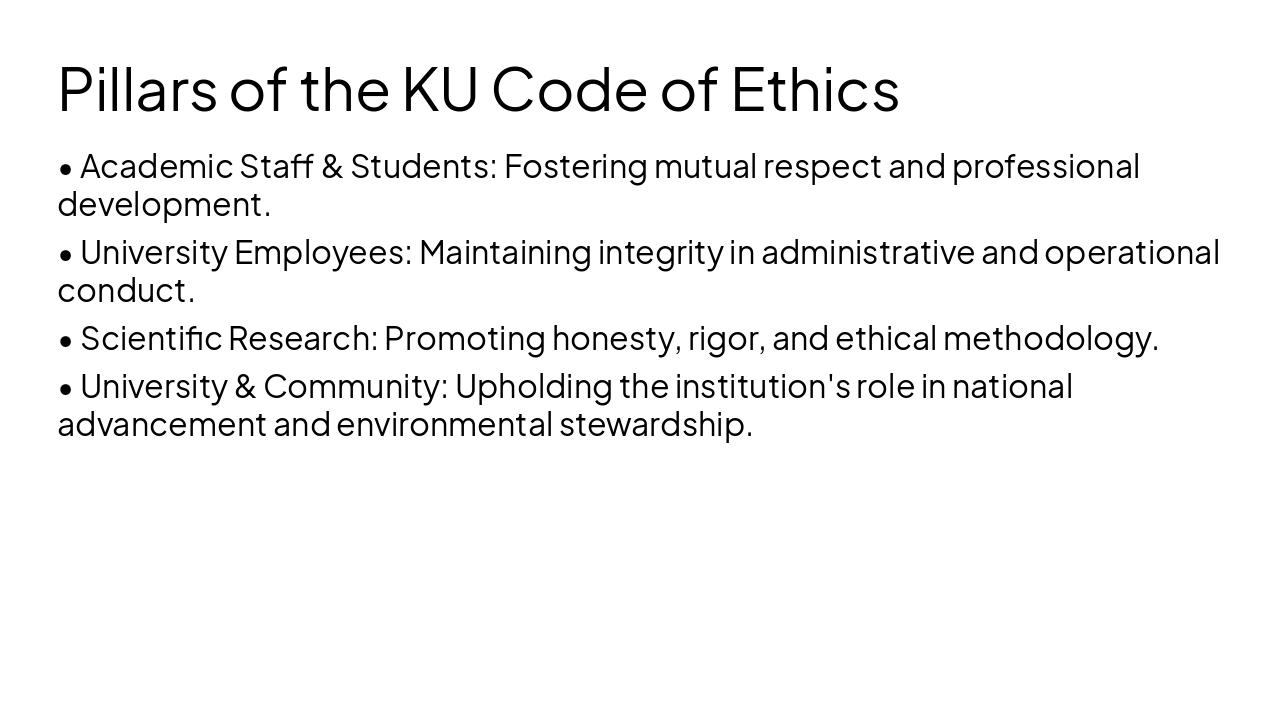
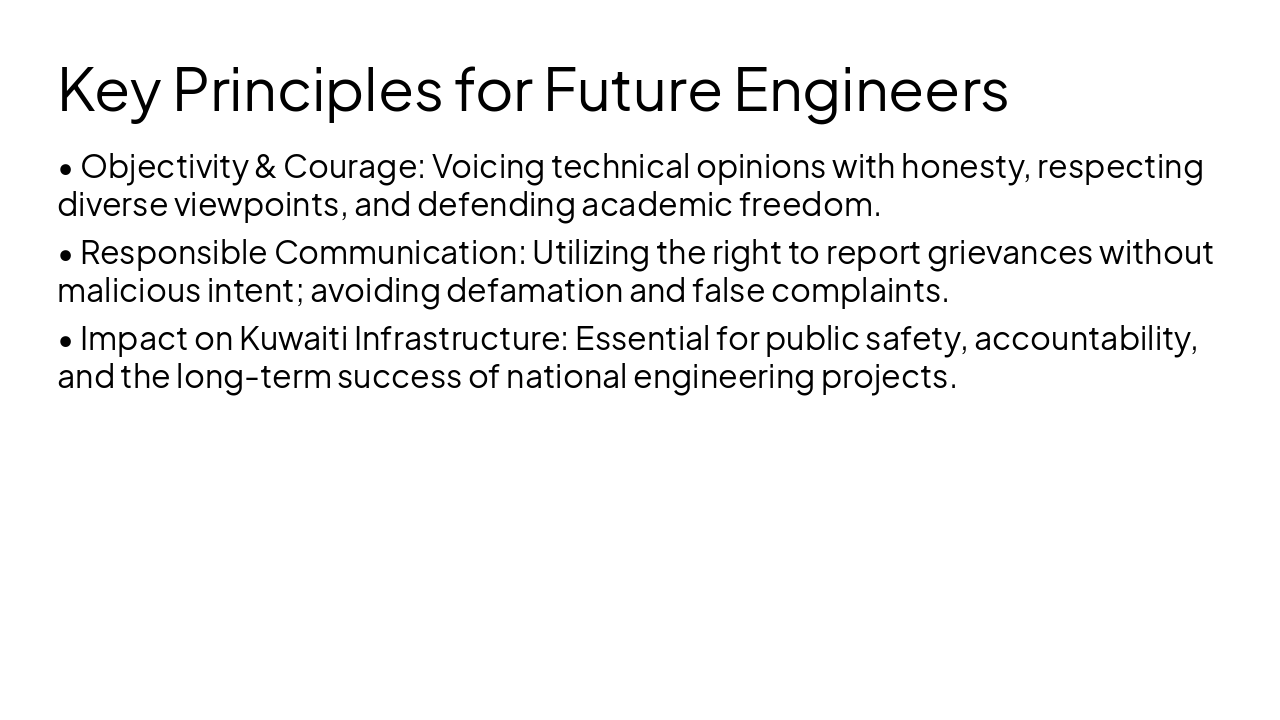
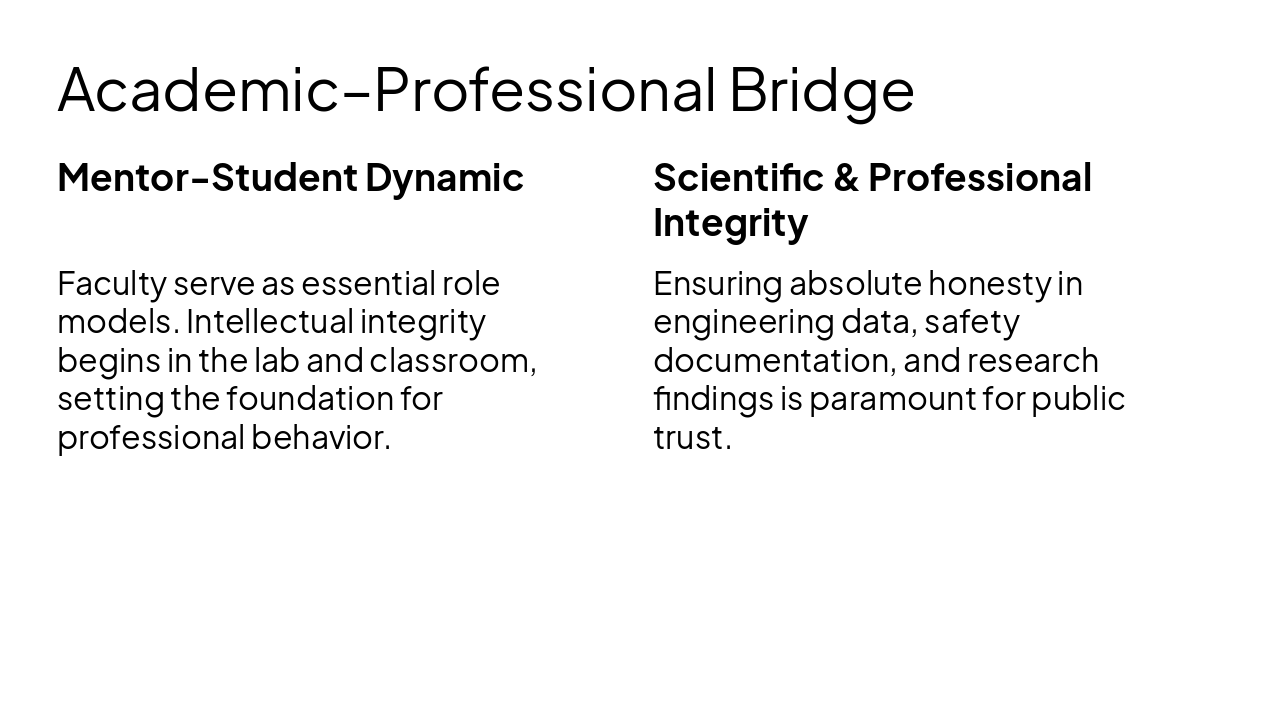
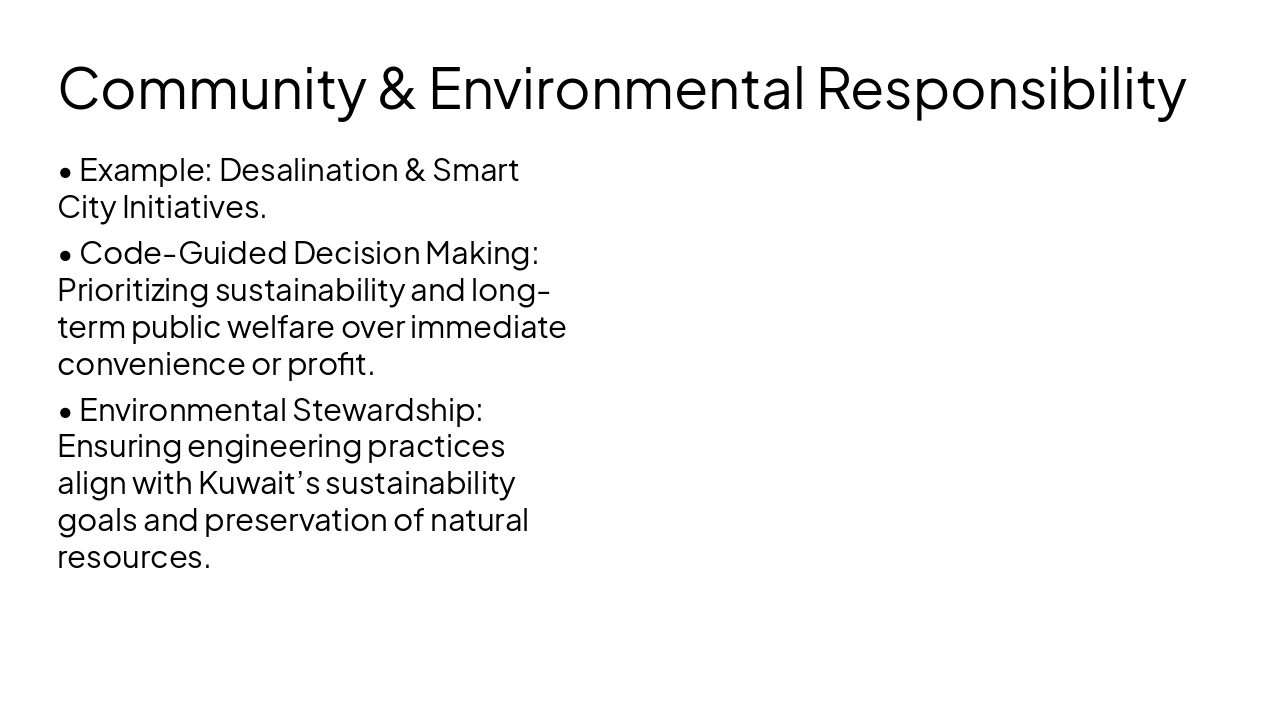
Create a 5‑minute presentation (maximum 6 slides) titled 'Kuwait University Code of Ethics and Engineering Responsibility'. Use the Kuwait University Code of Ethics PDF as the source. Slides: 1. Title Slide – KU Code of Ethics & Future Engineers (student name placeholder). 2. Pillars of the KU Code of Ethics – relationships: academic staff, students, employees, research, university, and community. 3. Key Principles for Engineers – (1) Courage in expressing opinions with objectivity and respect for others' opinions and academic freedom; (2) Using the right to complain without maliciousness and avoiding false complaints. Explain why these are critical for engineers working on public infrastructure in Kuwait. 4. Academic–Professional Bridge – mentor‑student dynamic (faculty as role models) and intellectual integrity in scientific research, data honesty, engineering documentation and safety reports. 5. Community & Environmental Responsibility – example project such as a desalination plant or smart city initiative and how the KU Code guides ethical decisions and environmental responsibility. 6. Administrative Hierarchy vs Public Interest – Article 14 hierarchy principle and a whistleblowing scenario where an engineer reports a safety concern while respecting hierarchy. Keep bullets concise for a 5‑minute talk and include speaker notes.
This presentation outlines Kuwait University's Code of Ethics, its key pillars for students and staff, and essential principles for future engineers. It bridges academic integrity with professional duties in infrastructure, sustainability, and public
Kuwait University Code of Ethics & Future Engineering Responsibility
Preparing Future Engineers for Ethical Practice at Kuwait University | [Student Name]
Mentor-Student Dynamic Faculty serve as essential role models. Intellectual integrity begins in the lab and classroom, setting the foundation for professional behavior.
Scientific & Professional Integrity Ensuring absolute honesty in engineering data, safety documentation, and research findings is paramount for public trust.
Explore thousands of AI-generated presentations for inspiration
Generate professional presentations in seconds with Karaf's AI. Customize this presentation or start from scratch.