Slide 1 of 8
Slide 1 - Psychology of Color
Psychology of Color
How Color Affects Emotion, Culture, Advertising, and Theatre By: Jacoby
---
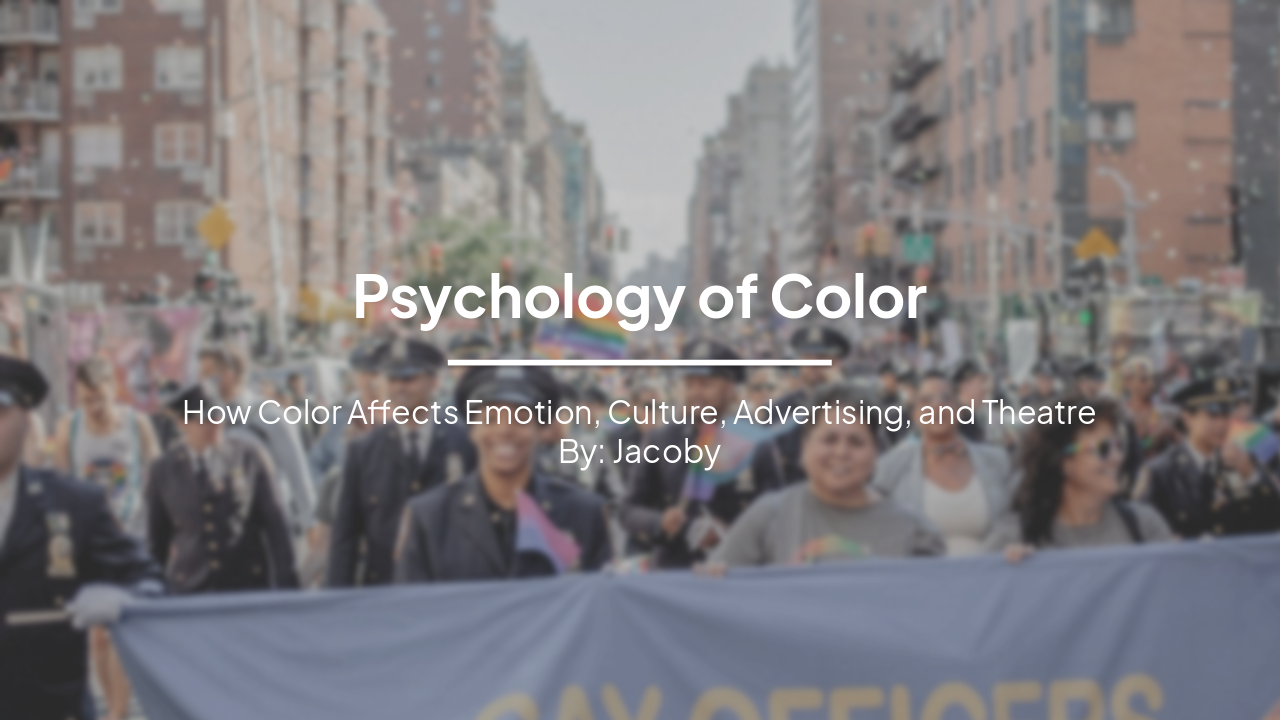
Photo by Brian Kyed on Unsplash
Generated from prompt:
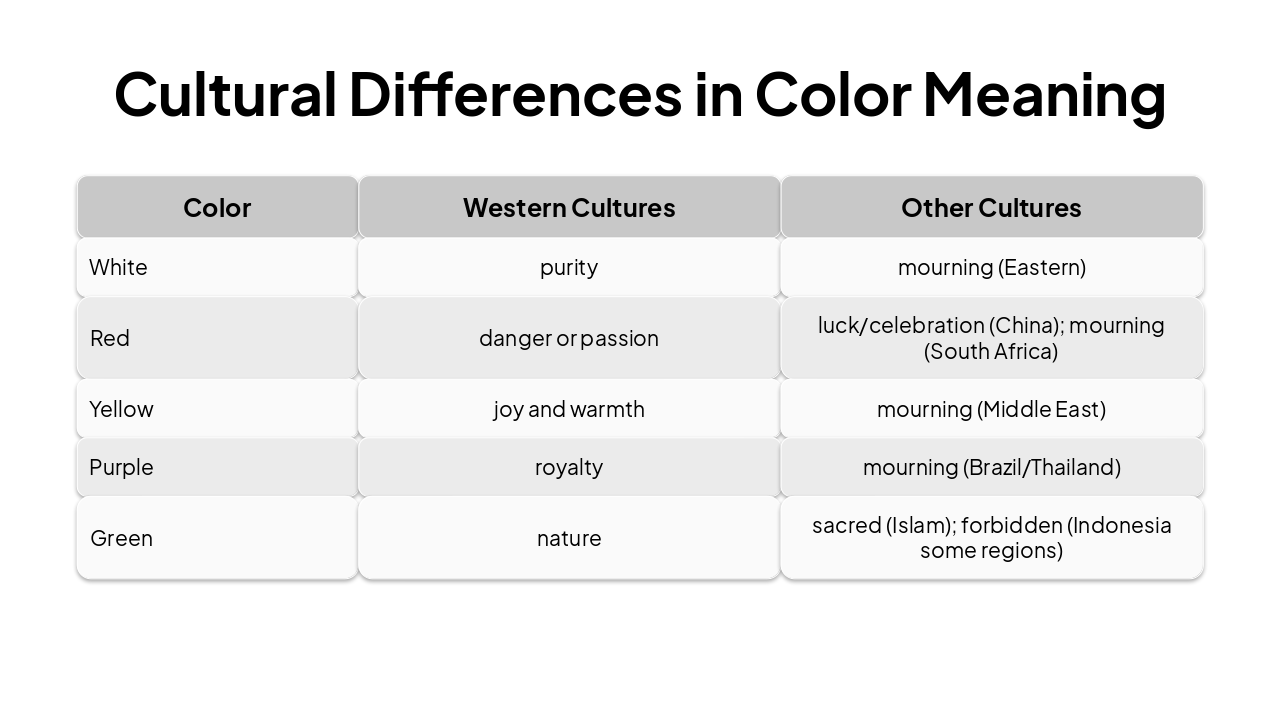
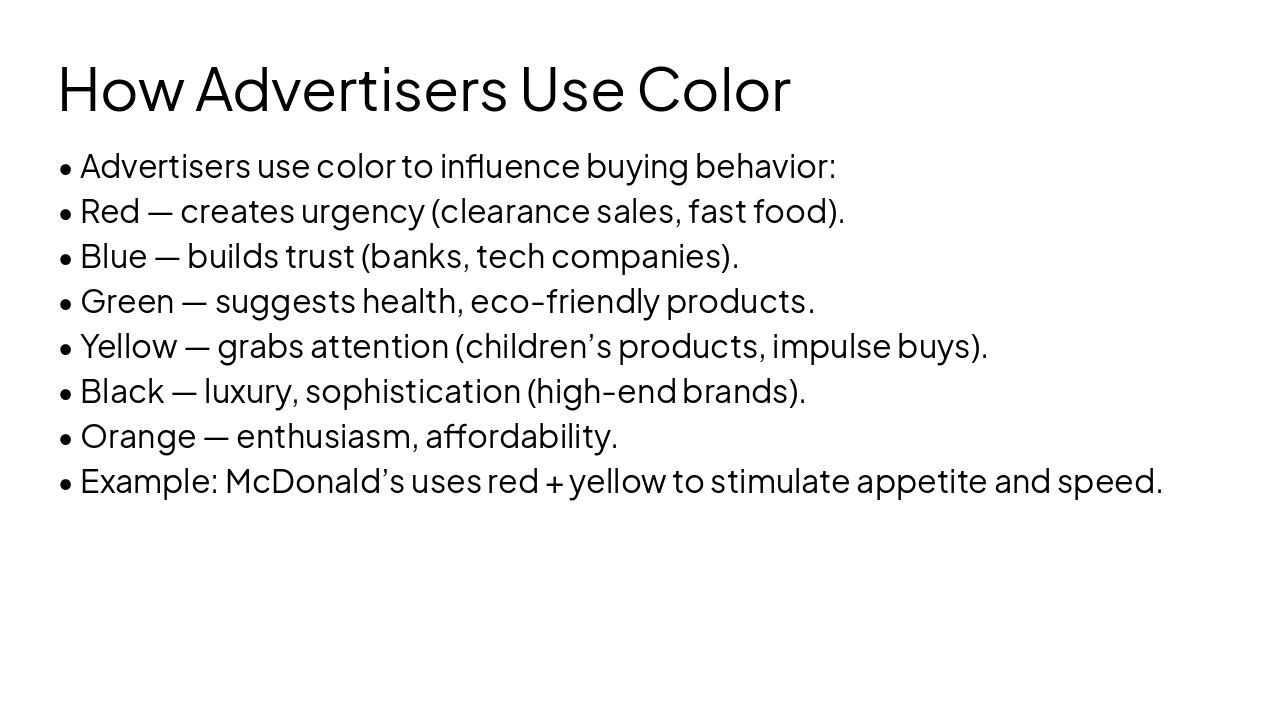
Psychology of Color – Slide Deck Content Slide 1 — Title Slide Psychology of ColorHow Color Affects Emotion, Culture, Advertising, and TheatreBy: Jacoby Slide 2 — How Color Affects Us Emotionally Colors trigger emotional and physiological responses. Red — energy, urgency, passion. Blue — calm, trust, stability. Yellow — happiness, alertness. Green — balance, nature, renewal. Purple — creativity, luxury. Black — power, seriousness. White — purity, simplicity. Key idea: Color influences mood, attention, and decision‑making. Slide 3 — Cultural Differences in Color Meaning Color meanings are NOT universal. Examples: White: Western cultures = purity; Eastern cultures = mourning. Red: China = luck and celebration; South Africa = mourning; U.S. = danger or passion. Yellow: Middle East = mourning; Western cultures = joy and warmth. Purple: Europe = royalty; Brazil/Thailand = mourning. Green: Islam = sacred; Western cultures = nature; Indonesia = forbidden in some regions. Takeaway: Designers must consider cultural context. Slide 4 — How Advertisers Use Color Advertisers use color to influence buying behavior: Red — creates urgency (clearance sales, fast food). Blue — builds trust (banks, tech companies). Green — suggests health, eco‑friendly products. Yellow — grabs attention (children’s products, impulse buys). Black — luxury, sophistication (high‑end brands). Orange — enthusiasm, affordability. Example: McDonald’s uses red + yellow to stimulate appetite and speed. Slide 5 — Advertising Examples Coca‑Cola (Red): excitement, energy, boldness. Tiffany & Co. (Blue): elegance, trust, exclusivity. Whole Foods (Green): natural, organic, healthy. IKEA (Blue + Yellow): friendliness, reliability, affordability. Color = brand identity. Slide 6 — Color in Theatrical Design Theatre designers use color to shape audience emotion: Lighting: warm colors = comfort or passion; cool colors = sadness or mystery. Costumes: color shows personality, status, or emotional state. Sets: color establishes mood, time period, or theme. Example: A villain in dark purples/greens; a hero in bright warm tones. Slide 7 — Theatrical Examples Blue lighting for a sorrowful or reflective scene. Red lighting for danger, violence, or intense emotion. Green lighting for supernatural or eerie moments. White light for clarity, truth, or revelation. Color guides the audience’s emotional journey. Slide 8 — Conclusion Color affects emotion, behavior, and decision‑making. Cultural differences change how colors are interpreted. Advertisers use color strategically to influence buying. Theatre designers use color to shape mood, meaning, and storytelling. Color is one of the most powerful tools in communication.
This presentation delves into the psychology of color, examining its emotional impacts (e.g., red for passion, blue for trust), cultural variations (e.g., white for purity in the West but mourning in the East), strategic use in advertising to drive consumer behavior (e.g., McDonald's red and yellow), and applications in theatrical design to evoke moods through lighting, costumes, and sets. It concludes that color is a powerful tool in communication, behavior, and storytelling.
Psychology of Color
How Color Affects Emotion, Culture, Advertising, and Theatre By: Jacoby
---
Photo by Brian Kyed on Unsplash
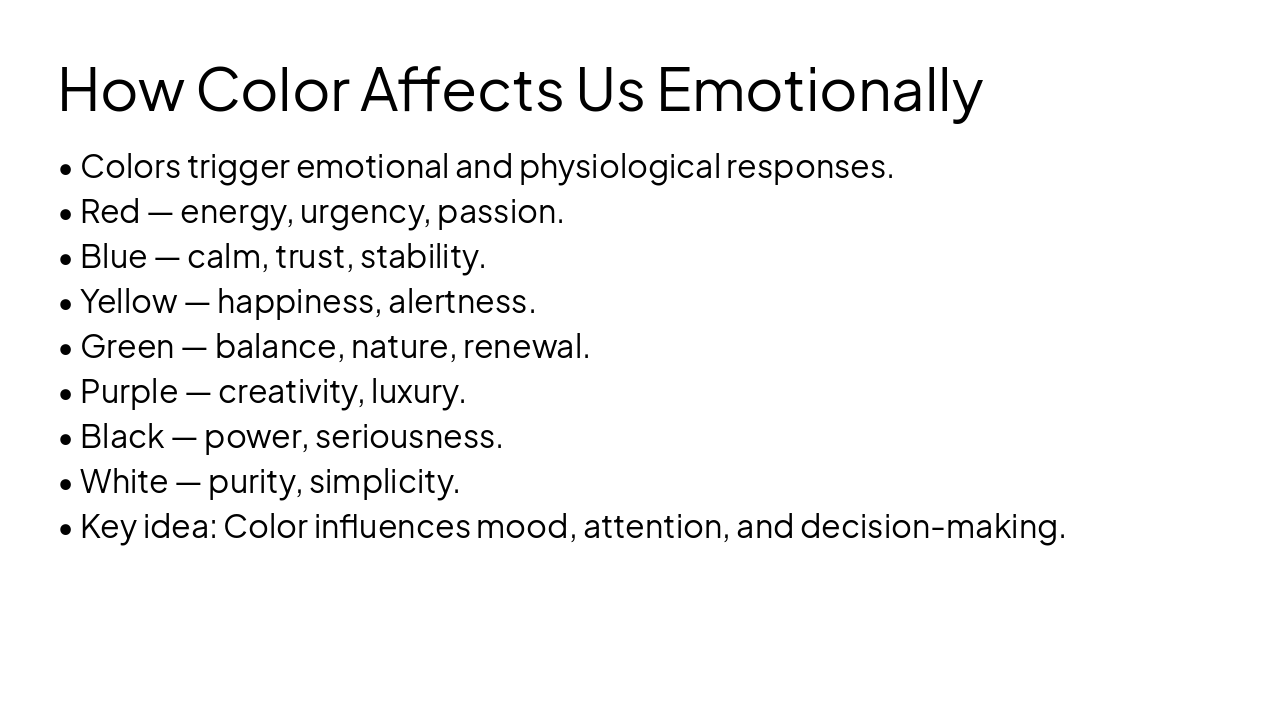
| Color | Western Cultures | Other Cultures |
|---|---|---|
| White | purity | mourning (Eastern) |
| Red | danger or passion | luck/celebration (China); mourning (South Africa) |
| Yellow | joy and warmth | mourning (Middle East) |
| Purple | royalty | mourning (Brazil/Thailand) |
| Green | nature | sacred (Islam); forbidden (Indonesia some regions) |
---
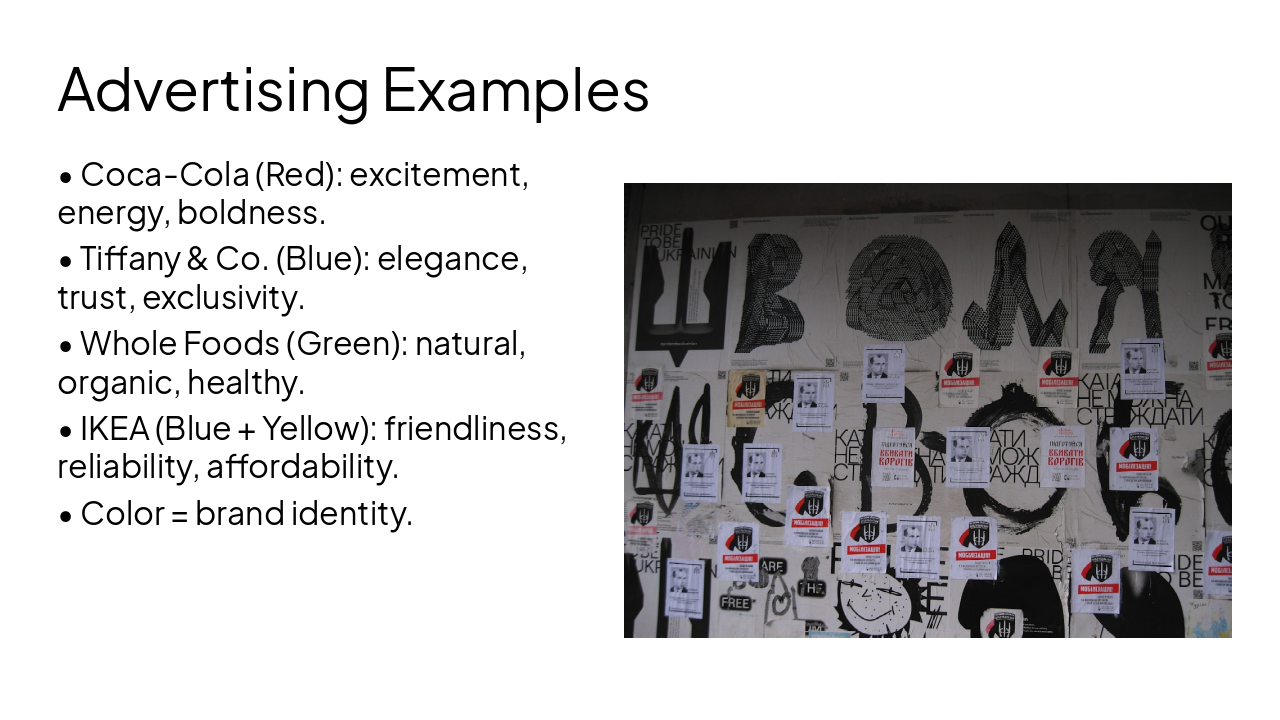
Photo by Mariia Pravedna on Unsplash
---
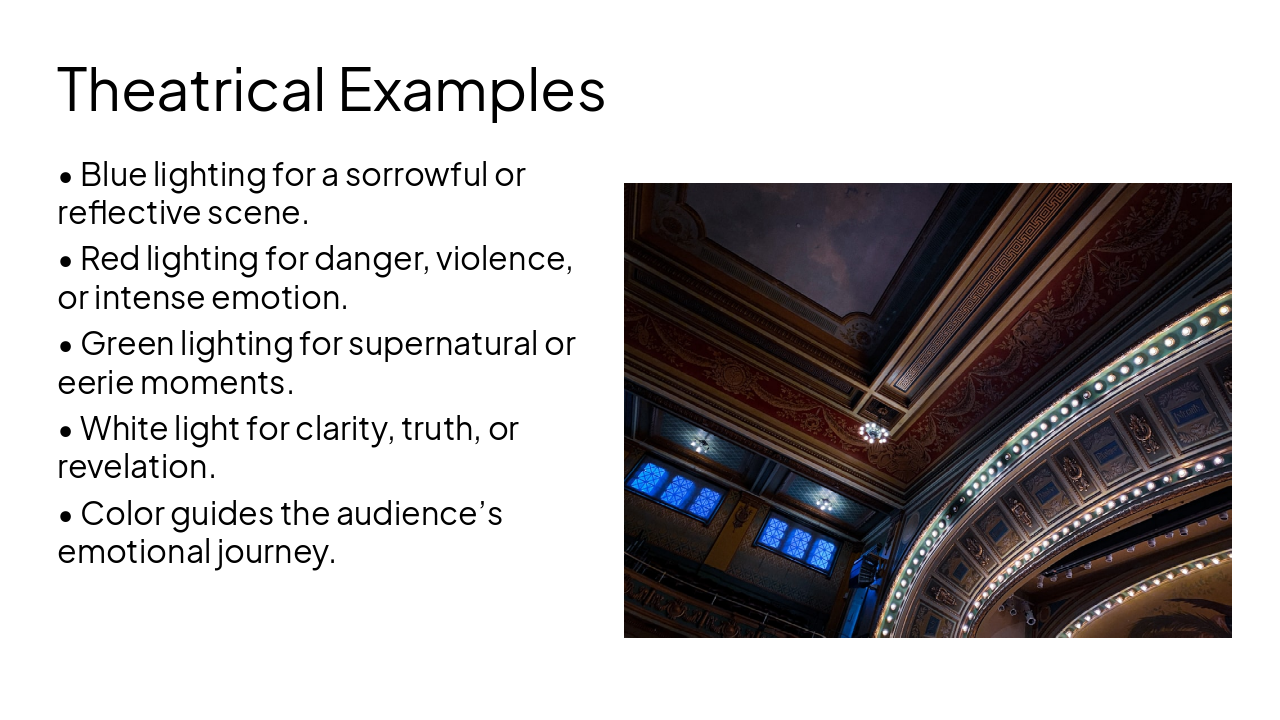
Photo by Brian Erickson on Unsplash
Color is one of the most powerful tools in communication.
---
Photo by Samir Vanegas on Unsplash
Explore thousands of AI-generated presentations for inspiration
Generate professional presentations in seconds with Karaf's AI. Customize this presentation or start from scratch.