Understanding Social Anxiety Disorder: Symptoms, Prevalence, and Treatment Strategies

Generated from prompt:

Can you create an social Anxiety disorder where you just describe it well and aware about the symptoms and telling how to treat a person with that!

This presentation offers a comprehensive guide to Social Anxiety Disorder (SAD), covering its definition and core characteristics, prevalence statistics worldwide, key physical and psychological symptoms, DSM-5 diagnostic criteria, and proven treatment pathways including Cognitive Behavioral Therapy (CBT), medications like SSRIs, exposure therapy, and practical self-help strategies such as mindfulness and gradual social exposure. It concludes with encouragement for early intervention and recovery.

May 11, 202613 slides
Slide 1 of 13

Slide 1 - Understanding Social Anxiety Disorder

Understanding Social Anxiety Disorder

Symptoms, Awareness, and Effective Treatment Strategies

---

Photo by Peter Neumann on Unsplash
Slide 1 - Understanding Social Anxiety Disorder
Slide 2 of 13

Slide 2 - Presentation Agenda

  • What is Social Anxiety Disorder?
  • Key Symptoms
  • Prevalence Statistics
  • Diagnosis Criteria
  • Treatment Approaches
  • Self-Help Strategies
  • Conclusion & Next Steps

---

Photo by Joonas Sild on Unsplash

Slide 2 - Presentation Agenda
Slide 3 of 13

Slide 3 - Defining Social Anxiety

1

What is Social Anxiety Disorder?

An intense fear of social situations where scrutiny is possible

---

Photo by Logan Voss on Unsplash
Slide 3 - Defining Social Anxiety
Slide 4 of 13

Slide 4 - Core Characteristics of SAD

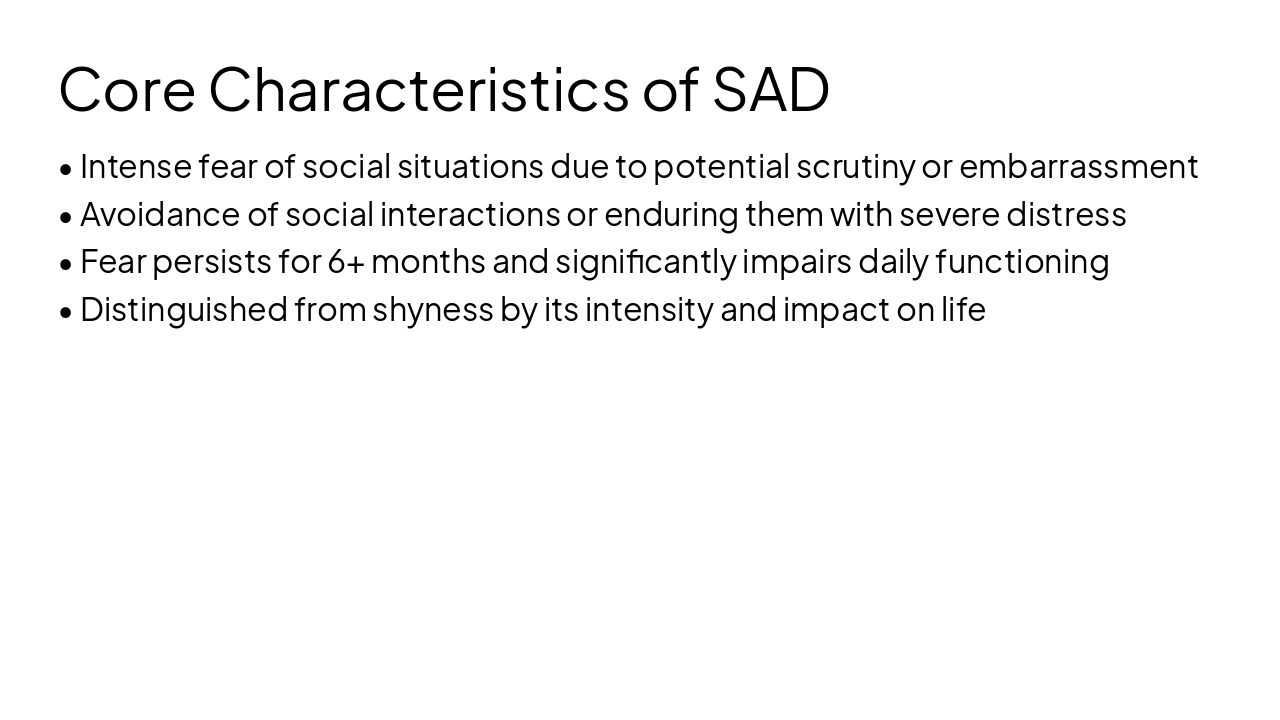
  • Intense fear of social situations due to potential scrutiny or embarrassment
  • Avoidance of social interactions or enduring them with severe distress
  • Fear persists for 6+ months and significantly impairs daily functioning
  • Distinguished from shyness by its intensity and impact on life
Slide 4 - Core Characteristics of SAD
Slide 5 of 13

Slide 5 - Prevalence of Social Anxiety

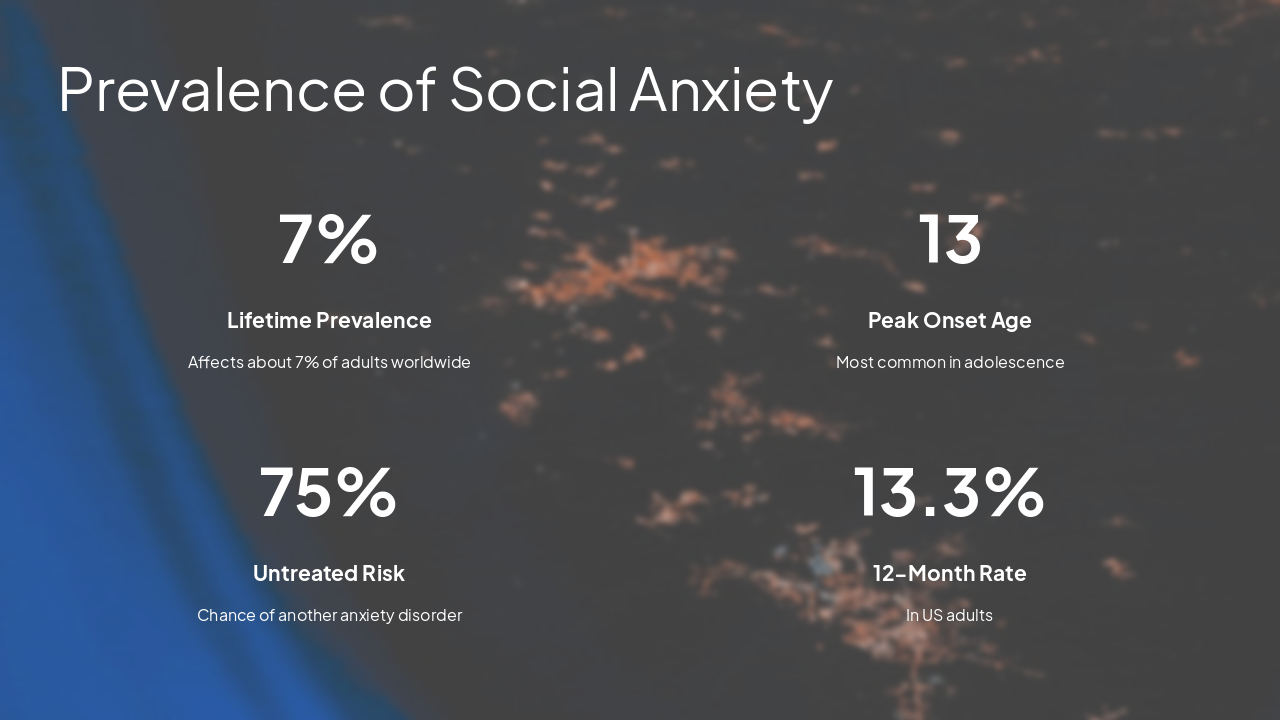
  • 7%: Lifetime Prevalence
  • 13: Peak Onset Age
  • 75%: Untreated Risk
  • 13.3%: 12-Month Rate

---

Photo by Nastya Dulhiier on Unsplash
Slide 5 - Prevalence of Social Anxiety
Slide 6 of 13

Slide 6 - Recognizing Symptoms

2

Symptoms of Social Anxiety Disorder

Physical, cognitive, and behavioral manifestations

---

Photo by Chris Linnett on Unsplash
Slide 6 - Recognizing Symptoms
Slide 7 of 13

Slide 7 - Physical vs Psychological Symptoms

Physical Symptoms Blushing Sweating Trembling Rapid heartbeat Nausea Shortness of breath Dizziness

Psychological Symptoms Fear of embarrassment Intense self-consciousness Negative self-talk Anticipatory anxiety Avoidance of eye contact Mind going blank
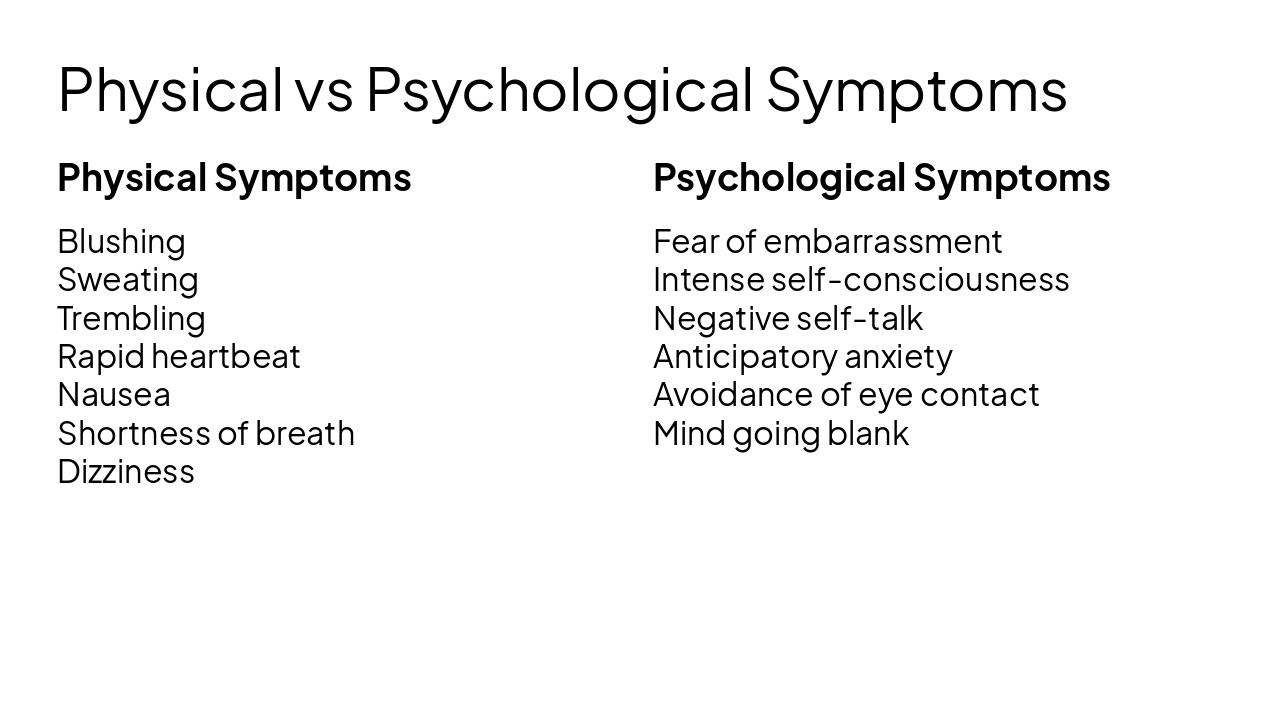
Slide 7 - Physical vs Psychological Symptoms
Slide 8 of 13

Slide 8 - Visualizing Social Anxiety Symptoms

  • Common physical reactions in social settings
  • Cognitive fears dominate thoughts
  • Leads to avoidance and isolation

---

Photo by Arctic Qu on Unsplash

Slide 8 - Visualizing Social Anxiety Symptoms
Slide 9 of 13

Slide 9 - From the DSM-5

> Marked fear or anxiety about social situations in which the individual is exposed to possible scrutiny by others.

— DSM-5 Diagnostic Criteria

---

Photo by Saira on Unsplash
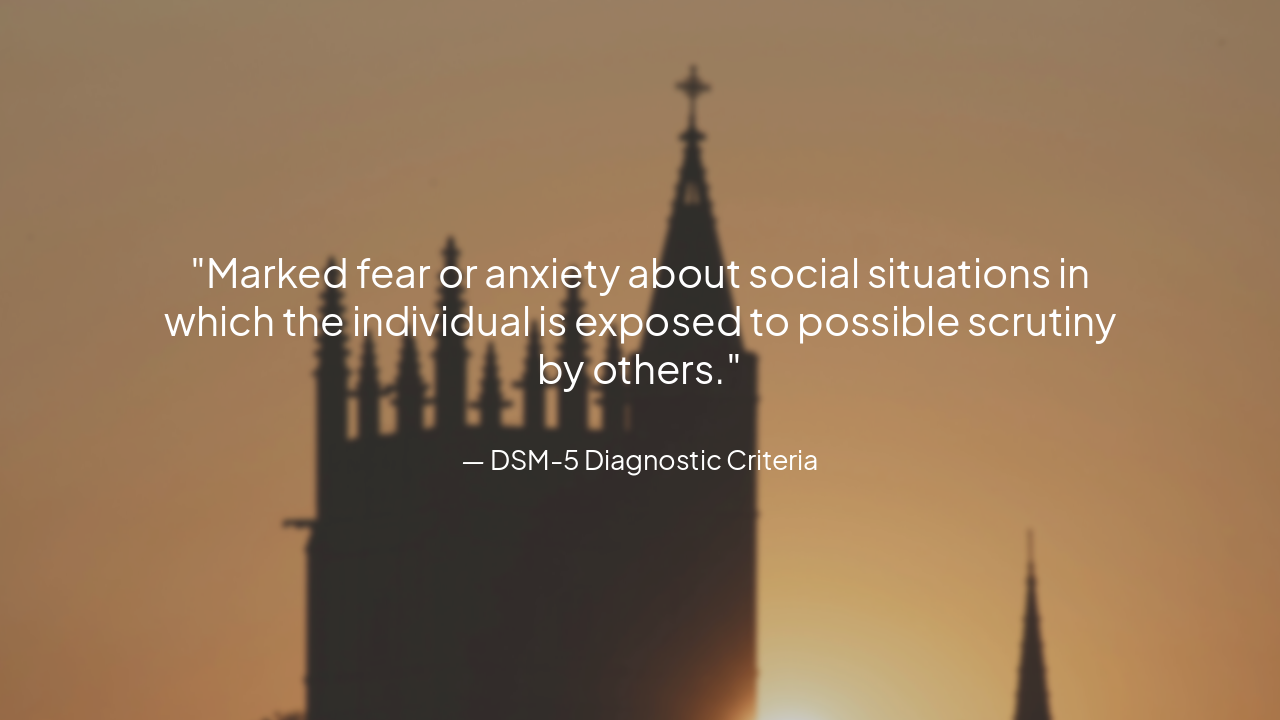
Slide 9 - From the DSM-5
Slide 10 of 13

Slide 10 - Pathways to Treatment

3

Treatment for Social Anxiety Disorder

Professional therapies, medications, and self-help

---

Photo by Konstantin Dyadyun on Unsplash
Slide 10 - Pathways to Treatment
Slide 11 of 13

Slide 11 - Treatment Workflow

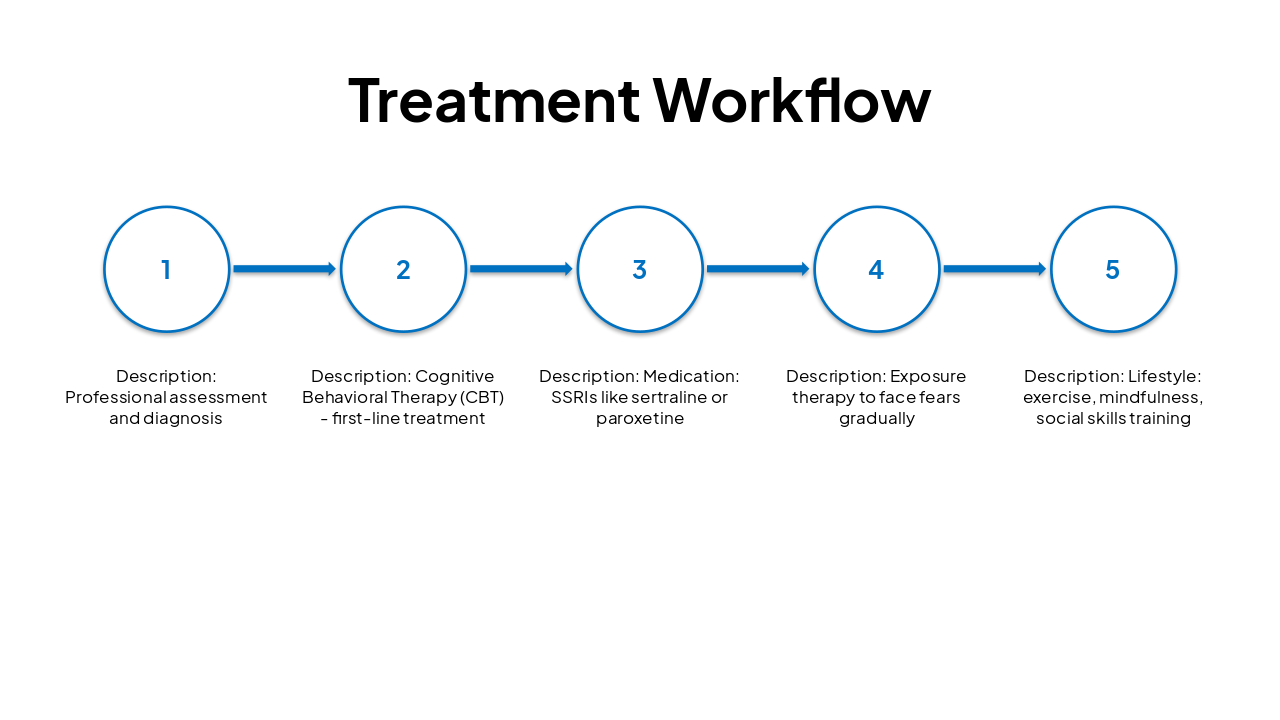
StepDescription
1Professional assessment and diagnosis
2Cognitive Behavioral Therapy (CBT) - first-line treatment
3Medication: SSRIs like sertraline or paroxetine
4Exposure therapy to face fears gradually
5Lifestyle: exercise, mindfulness, social skills training
Slide 11 - Treatment Workflow
Slide 12 of 13

Slide 12 - Self-Help and Lifestyle Tips

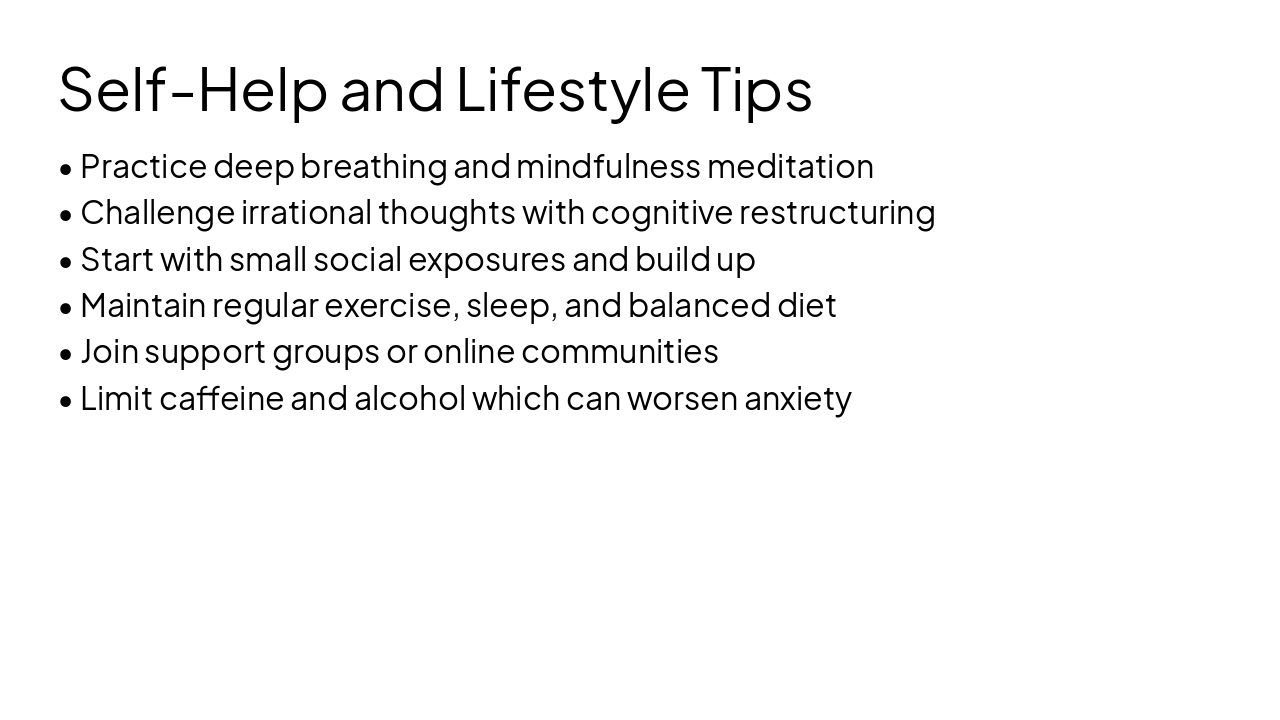
  • Practice deep breathing and mindfulness meditation
  • Challenge irrational thoughts with cognitive restructuring
  • Start with small social exposures and build up
  • Maintain regular exercise, sleep, and balanced diet
  • Join support groups or online communities
  • Limit caffeine and alcohol which can worsen anxiety
Slide 12 - Self-Help and Lifestyle Tips
Slide 13 of 13

Slide 13 - Overcoming Social Anxiety

Social Anxiety Disorder is highly treatable

  • CBT and exposure therapy are gold standards
  • Early intervention leads to full recovery

Seek professional help today

You are not alone - support and strategies exist for lasting relief

---

Photo by Christoph Theisinger on Unsplash
Slide 13 - Overcoming Social Anxiety

Discover More Presentations

Explore thousands of AI-generated presentations for inspiration

Browse Presentations
Powered by AI

Create Your Own Presentation

Generate professional presentations in seconds with Karaf's AI. Customize this presentation or start from scratch.

Create New Presentation

Powered by Karaf.ai — AI-Powered Presentation Generator