Slide 1 of 14
Slide 1 - Effect of Glucose as an Inhibitor of Crystallization in Baking
Effect of Glucose as an Inhibitor of Crystallization in Baking
Project Draft Presentation
---
Photo by Олег Мороз on Unsplash
Generated from prompt:
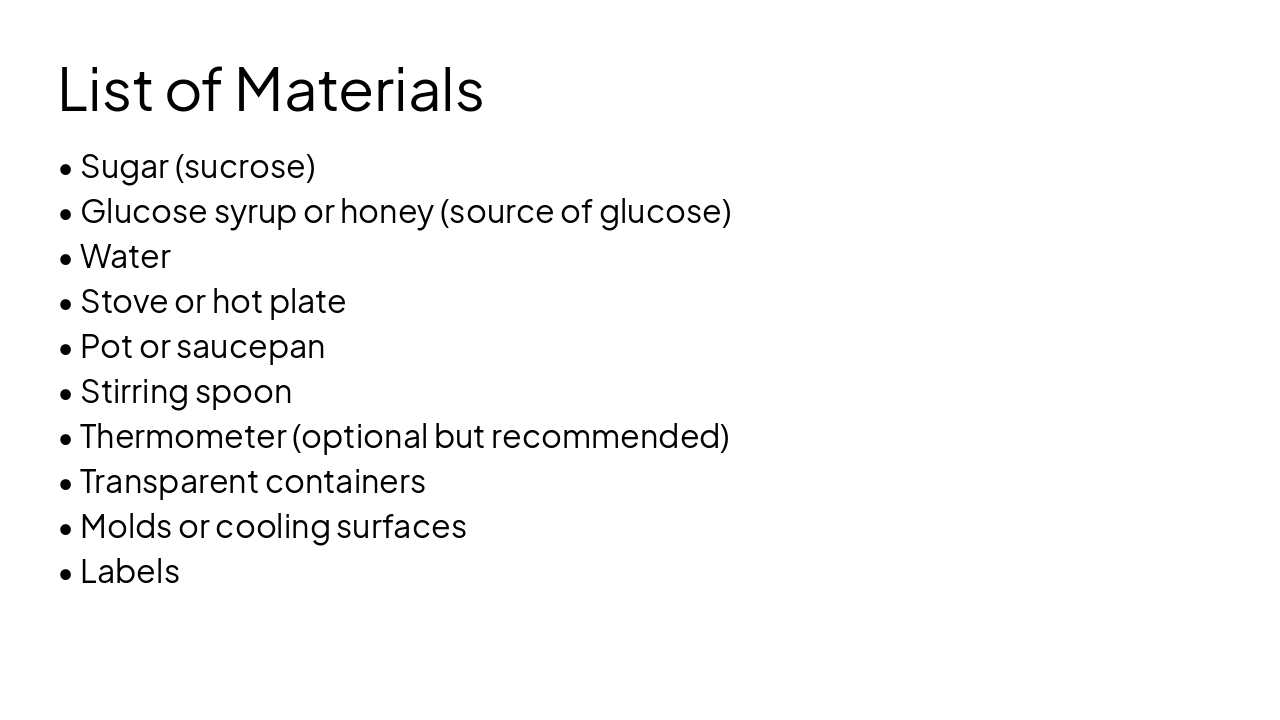
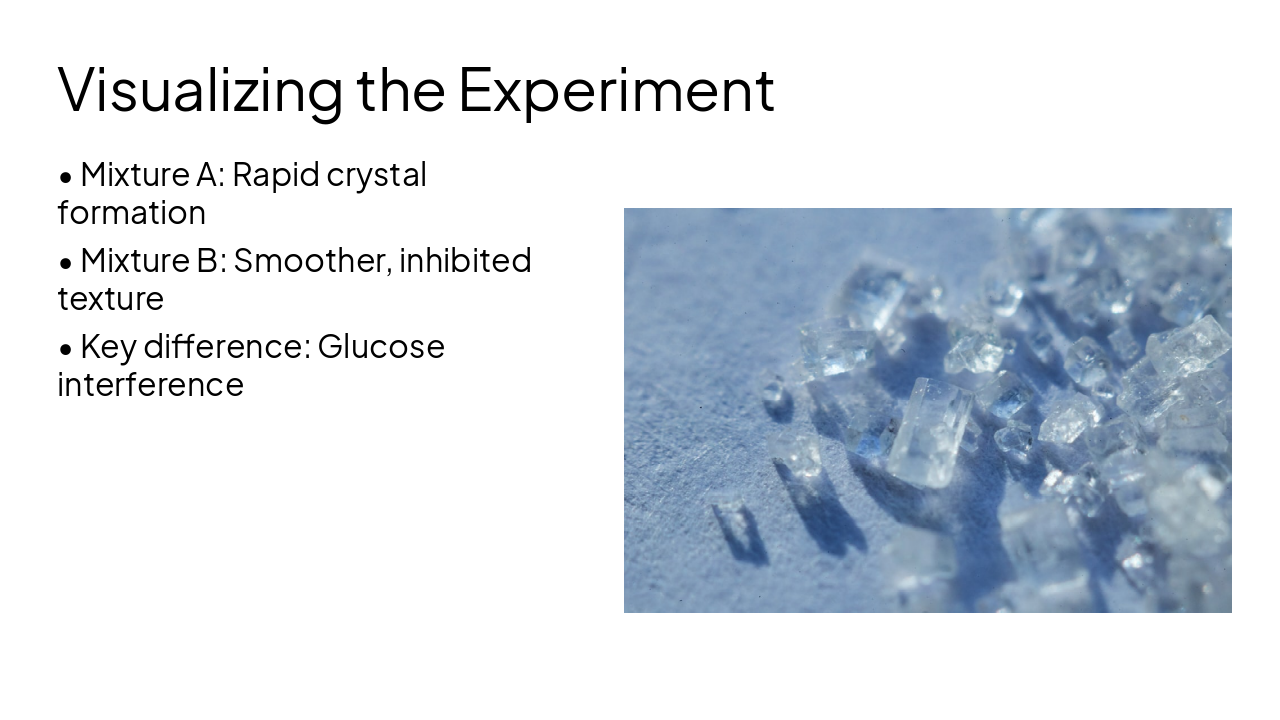
Do a presentation with this information and points Claro, aquí tienes tu avance traducido y bien redactado en inglés (listo para entregar o poner en cartel): ⸻ Science Fair Project – Draft Topic: Effect of Glucose as an Inhibitor of Crystallization in Baking ⸻ 1. Theoretical Framework (Main Concept) Crystallization is a physical process in which a substance changes from a dissolved state into solid crystals. In baking, this mainly occurs with sucrose (table sugar), affecting the texture of products such as candies, syrups, and caramel. Glucose is a simple sugar that, when added to sucrose mixtures, acts as a crystallization inhibitor. This happens because glucose molecules interfere with the organization of sucrose molecules, preventing them from arranging in an orderly structure to form crystals. Additionally, glucose acts as a plasticizer, meaning it helps the mixture become more flexible, smooth, and less brittle, improving the final texture of the product. This is considered a physical change, since the chemical composition of the substances does not change, only their structure and behavior. ⸻ 2. Hypothesis If glucose is added to a sucrose solution, then crystal formation will decrease or be delayed, because glucose interferes with the molecular organization of sucrose, preventing its recrystallization and modifying the final texture. ⸻ 3. Materials * Sugar (sucrose) * Glucose syrup or honey (source of glucose) * Water * Stove or hot plate * Pot or saucepan * Stirring spoon * Thermometer (optional but recommended) * Transparent containers * Molds or cooling surfaces * Labels ⸻ 4. Procedure 1. Preparation of solutions: * Prepare two mixtures: * Mixture A: water + sucrose * Mixture B: water + sucrose + glucose 2. Heating: * Heat both mixtures over medium heat, stirring until the sugar completely dissolves. 3. Cooking: * Continue heating until both mixtures reach a syrup-like consistency. 4. Cooling: * Pour each mixture into separate containers. * Let them cool at room temperature without stirring. 5. Observation: * Analyze crystal formation in each sample. * Compare texture, appearance, and consistency. 6. Recording results: * Write down differences (time of crystallization, crystal size, texture). ⸻ 5. Expected Results It is expected that: * The mixture without glucose will form crystals more quickly. * The mixture with glucose will have a smoother, less crystalline texture. * Glucose will inhibit the recrystallization of sucrose. ⸻
This presentation outlines a science project exploring the effect of glucose on inhibiting sucrose crystallization in baking applications. It covers the theoretical framework of crystallization and inhibition, the project hypothesis, required materials, detailed step-by-step procedure for comparing mixtures with and without glucose, and expected results showing smoother textures due to glucose interference. Ideal for science fairs or educational demos.
Effect of Glucose as an Inhibitor of Crystallization in Baking
Project Draft Presentation
---
Photo by Олег Мороз on Unsplash
---
Photo by Vitaly Gariev on Unsplash

1
Main Concept: Crystallization Inhibition
---
Photo by julien Tromeur on Unsplash

> If glucose is added to a sucrose solution, then crystal formation will decrease or be delayed, because glucose interferes with the molecular organization of sucrose, preventing its recrystallization and modifying the final texture.
— Science Fair Project Hypothesis
---
Photo by Centre for Ageing Better on Unsplash
4
Experimental Steps
---
Photo by Ryan Zazueta on Unsplash
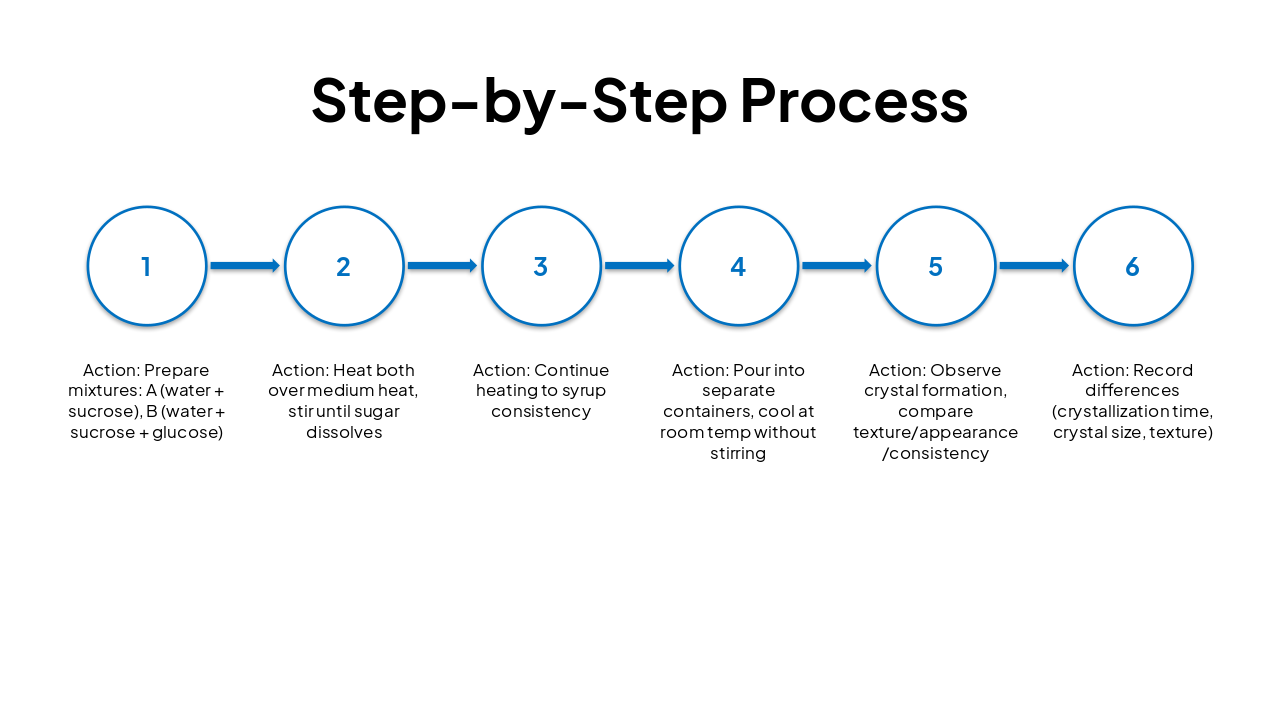
| Step | Action |
|---|---|
| 1 | Prepare mixtures: A (water + sucrose), B (water + sucrose + glucose) |
| 2 | Heat both over medium heat, stir until sugar dissolves |
| 3 | Continue heating to syrup consistency |
| 4 | Pour into separate containers, cool at room temp without stirring |
| 5 | Observe crystal formation, compare texture/appearance/consistency |
| 6 | Record differences (crystallization time, crystal size, texture) |
---
Photo by Олег Мороз on Unsplash

Glucose effectively inhibits sucrose crystallization in baking, leading to improved textures.
Thank you for your attention! Questions?
---
Photo by DIANA HAUAN on Unsplash
Explore thousands of AI-generated presentations for inspiration
Generate professional presentations in seconds with Karaf's AI. Customize this presentation or start from scratch.