The Fascinating World of Turtles
Generated from prompt:
Create a visually engaging Google Slides presentation about Turtles. Include the following slides: 1. Title Slide – "The Fascinating World of Turtles" with a subtitle and turtle-themed visuals. 2. Introduction – Overview of turtles and their significance in ecosystems. 3. Types of Turtles – Sea turtles, freshwater turtles, and tortoises with key differences. 4. Anatomy and Physical Characteristics – Shell structure, lifespan, and adaptations. 5. Habitat and Distribution – Where turtles live around the world. 6. Diet and Behavior – Feeding habits and survival strategies. 7. Life Cycle of Turtles – From eggs to adulthood. 8. Importance in Ecosystems – Their role in maintaining ecological balance. 9. Threats to Turtles – Pollution, climate change, habitat loss, and poaching. 10. Conservation Efforts – Global initiatives and how people can help. 11. Fun Facts About Turtles – Interesting and surprising facts. 12. Conclusion – Summary and call to action. 13. References – Credible sources and image credits. Design Guidelines: - Use a nature-inspired color palette (ocean blues, sandy browns, and greens). - Include high-quality images and simple icons. - Use clean, modern fonts with minimal text per slide. - Add subtle animations and infographics for engagement. - Ensure the slides are suitable for students and educational presentations.
This educational presentation dives into the ancient world of turtles, exploring their evolution, types, anatomy, habitats, diet, life cycle, ecological roles, threats, and conservation efforts. Discover fun facts and the importance of protecting这些这些
Slide 2 - Introduction to Turtles
- Turtles belong to the order Testudines, a group of reptiles evolved over 200 million years.
- They are distinguished by their iconic protective shell.
- Turtles play vital roles in maintaining diverse global ecosystems.
- Species range from small pond terrapins to massive leatherback sea turtles.
Slide 3 - Types of Turtles
Key Groups
- Sea Turtles: Spend their lives in the ocean, returning to land only to nest.
- Freshwater Turtles: Inhabit ponds, lakes, and rivers.
- Tortoises: Strictly land-dwelling reptiles.
Major Differences
- Shell shape often reflects habitat (domed for land, flattened for water).
- Foot adaptations: flippers vs. webbed feet vs. sturdy elephant-like limbs.
Slide 4 - Anatomy and Physical Characteristics
- Shell Structure: Composed of a domed upper carapace and a flat lower plastron.
- Material: Bones derived from ribs covered in keratin scales.
- Retraction: Two major groups defined by how the head retracts: Pleurodira (side-necked) and Cryptodira (hidden-necked).
- Lifespan: Varies greatly by species, with some living to 90+ years.
Slide 5 - Habitat and Distribution
- Turtles are found on most continents and islands globally.
- Sea turtles occupy vast expanses of tropical and subtropical oceans.
- Freshwater turtles and tortoises inhabit diverse environments ranging from lagoons to arid lands.
---
Photo by Tim Johnson on Unsplash
Slide 6 - Diet and Behavior
- Diet: Most turtles are opportunistic omnivores.
- Specialization: Green sea turtles are famously herbivorous, primarily consuming seagrass.
- Behavior: Many species migrate seasonally; sea turtles traverse vast distances between feeding grounds and nesting beaches.
- Survival: Ectothermic nature allows them to thrive by regulating body temperature via the environment.
Slide 7 - Life Cycle of Turtles
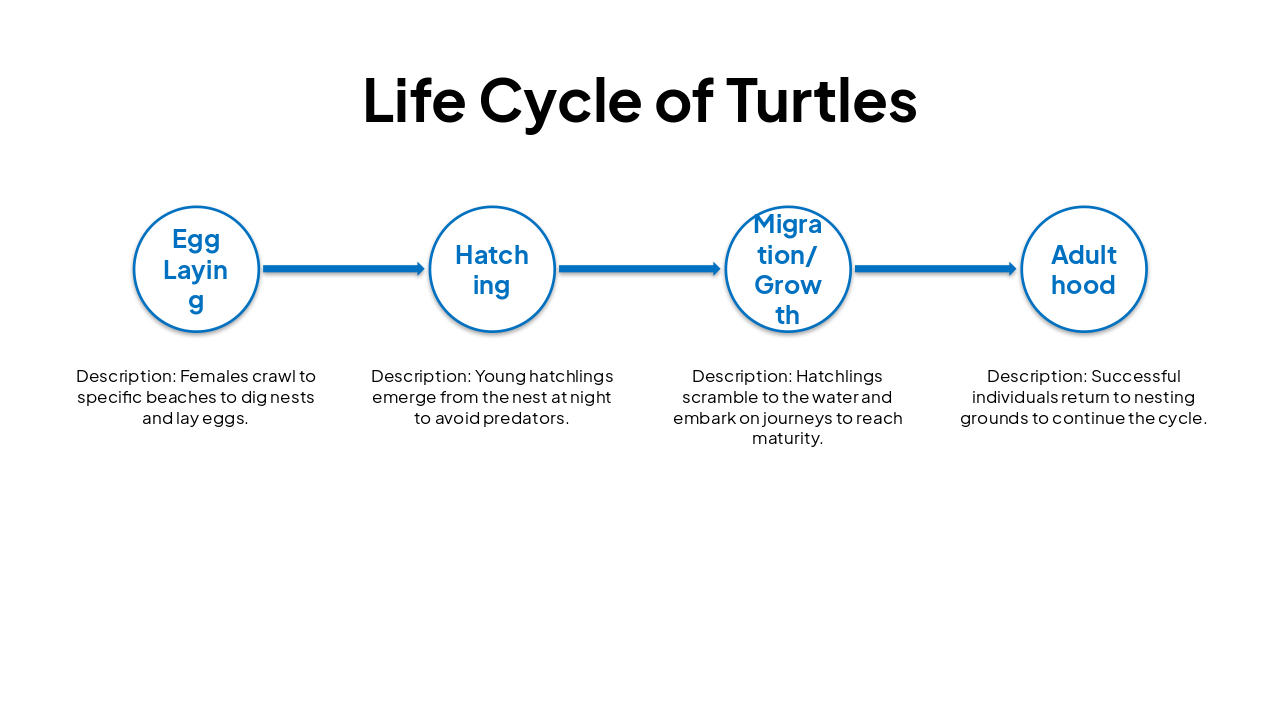
| Stage | Description |
|---|---|
| Egg Laying | Females crawl to specific beaches to dig nests and lay eggs. |
| Hatching | Young hatchlings emerge from the nest at night to avoid predators. |
| Migration/Growth | Hatchlings scramble to the water and embark on journeys to reach maturity. |
| Adulthood | Successful individuals return to nesting grounds to continue the cycle. |
Slide 8 - Importance in Ecosystems
- They maintain healthy seagrass beds by grazing, which supports other marine life.
- They control populations of prey species.
- Nesting beaches benefit from nutrient cycling from eggs and shells.
Slide 9 - Threats to Turtles
- Pollution: Plastic debris and chemical runoff pose severe threats.
- Habitat Loss: Coastal development destroys critical nesting beaches.
- Fishing: Accidental capture as bycatch in commercial nets.
- Poaching: Illegal hunting for meat, traditional medicine, and shells.
Slide 10 - Conservation Efforts
- Protected status: Many species are protected by international law (CITES).
- Nesting protections: Countries enforce laws to safeguard vulnerable beach habitats.
- Sustainable practices: Reducing plastic use and supporting responsible fishing industries.
- Public awareness: Education and supporting conservation research initiatives.
Slide 11 - Fun Facts About Turtles
- 360: Species Count
- 90+: Lifespan (Years)
Slide 12 - Conclusion
Protect Our Turtles Today
Turtles are essential to our planet's health—let's work together to ensure their survival for generations to come.
Slide 13 - References
- Wikipedia: Turtle (https://en.wikipedia.org/wiki/Turtle)
- Wikipedia: Sea turtle (https://en.wikipedia.org/wiki/Seaturtle)
- Wikipedia: Green sea turtle (https://en.wikipedia.org/wiki/Greensea_turtle)
- All images sourced from educational databases and creative commons resources.
Discover More Presentations
Explore thousands of AI-generated presentations for inspiration
Create Your Own Presentation
Generate professional presentations in seconds with Karaf's AI. Customize this presentation or start from scratch.