Tackling Plastic: Biomaterials Revolution

Generated from prompt:

Update the previous presentation (ch_SKCvbUulKTnv) by adding visually fitting high-quality images and simple, clear infographics to each slide. Style: clean, modern, eco-friendly visuals (green, blue, white tones), with smooth animations and minimalistic icons. Slides: 1. **The Plastic Problem** - Image: photo of ocean plastic pollution. - Graphic: timeline of plastic decomposition (400–500 years). - Icons: microplastics, marine life, pollution. 2. **Why New Materials Matter** - Image: medical implant dissolving, plant-based packaging. - Graphic: split comparison – oil-based vs. bio-based materials. 3. **Biomaterials – The Sustainable Solution** - Image: corn, sugarcane, and plant fibers. - Graphic: circular lifecycle diagram showing renewable sources and biodegradability. - Icons: renewable, biodegradable, human-safe. 4. **From Bio Bags to Business Opportunities** - Image: compostable packaging and eco-products. - Graphic: bar chart of global biomaterials market growth. - Icons: sustainability, business growth, consumer demand. Maintain 2–4 bullet points per slide and smooth transitions throughout.

This updated presentation explores the ocean plastic crisis, the need for sustainable alternatives, and biomaterials from plants like corn and sugarcane. It highlights their biodegradability, lifecycl

November 28, 20254 slides
Slide 1 of 4

Slide 1 - The Plastic Problem

Each year, 8 million tons of plastic pollute the oceans, where microplastics are ingested by marine life, causing health issues, death, and long-term ecosystem harm due to decomposition taking 400–500 years. Additionally, plastic entanglement and habitat destruction threaten biodiversity, while toxins from contaminated seafood pose risks to human health.

The Plastic Problem

  • 8 million tons of plastic pollute oceans each year.
  • Microplastics ingested by marine life cause health issues and death.
  • Plastic decomposition takes 400–500 years, harming ecosystems long-term.
  • Entanglement and habitat destruction threaten biodiversity.
  • Human health risks from seafood contaminated by toxins.

Source: ch_SKCvbUulKTnv

Speaker Notes
Include ocean plastic pollution photo, 400–500 year decomposition timeline infographic, icons for microplastics, marine life, pollution. Use clean, modern, eco-friendly visuals (green, blue, white tones), smooth animations, minimalistic icons.
Slide 1 - The Plastic Problem
Slide 2 of 4

Slide 2 - Why New Materials Matter

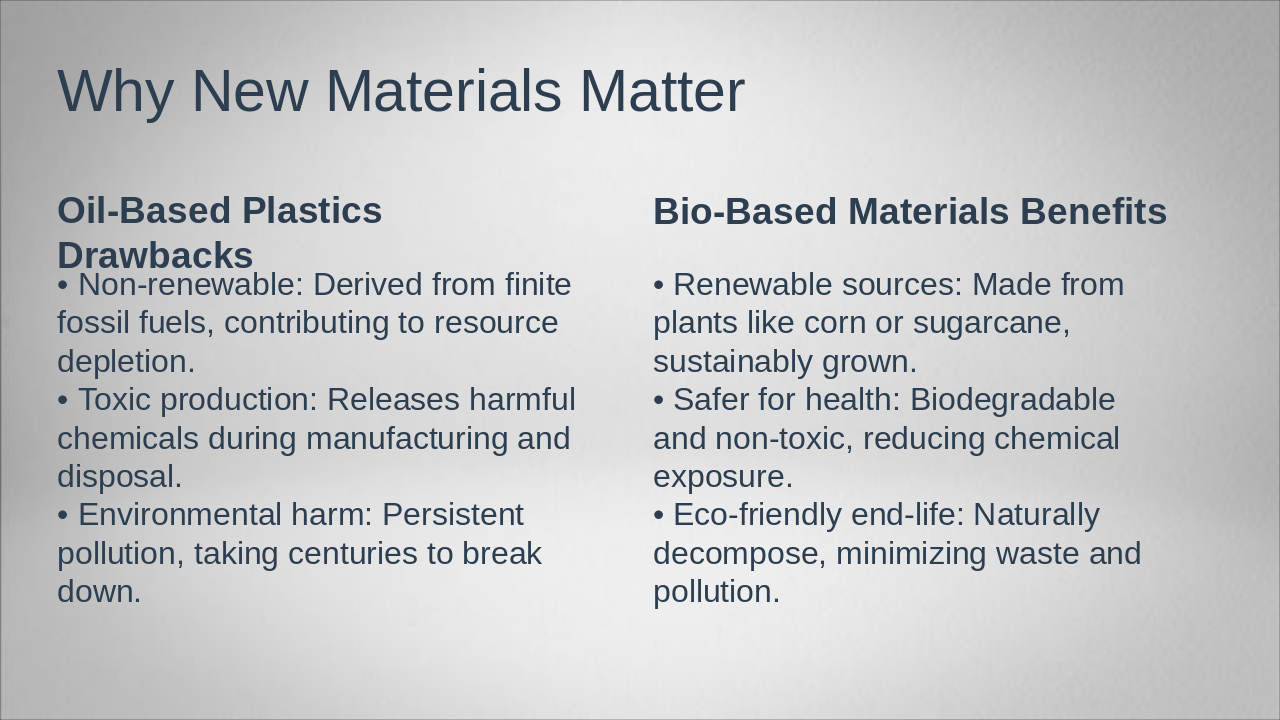
Oil-based plastics suffer from being non-renewable, derived from finite fossil fuels, while their production and disposal release toxic chemicals and cause long-lasting environmental pollution that takes centuries to degrade. In contrast, bio-based materials offer benefits as renewable options from plants like corn or sugarcane, providing safer, non-toxic, biodegradable alternatives that naturally decompose and reduce waste and pollution.

Why New Materials Matter

Oil-Based Plastics DrawbacksBio-Based Materials Benefits

| • Non-renewable: Derived from finite fossil fuels, contributing to resource depletion.

  • Toxic production: Releases harmful chemicals during manufacturing and disposal.
  • Environmental harm: Persistent pollution, taking centuries to break down. | • Renewable sources: Made from plants like corn or sugarcane, sustainably grown.
  • Safer for health: Biodegradable and non-toxic, reducing chemical exposure.
  • Eco-friendly end-life: Naturally decompose, minimizing waste and pollution. |
Slide 2 - Why New Materials Matter
Slide 3 of 4

Slide 3 - Biomaterials – The Sustainable Solution

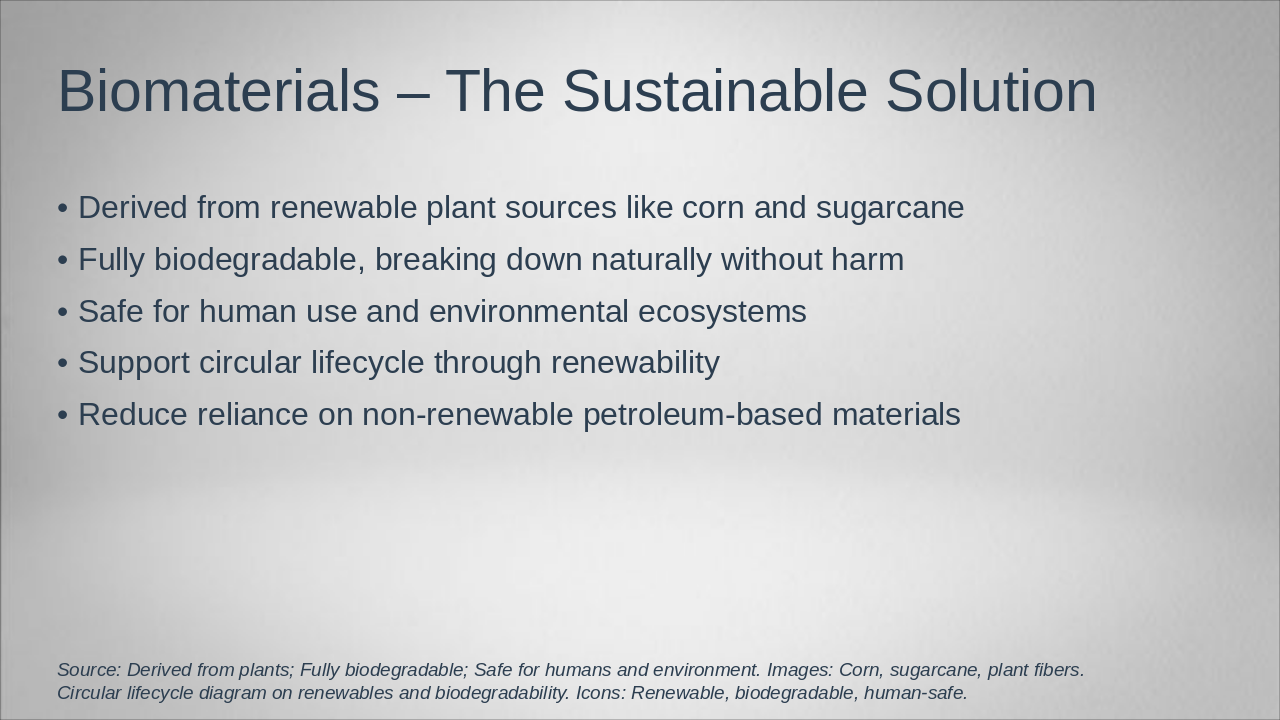
Biomaterials offer a sustainable alternative derived from renewable plant sources like corn and sugarcane, fully biodegradable to break down naturally without harming humans or ecosystems. They promote a circular lifecycle by reducing dependence on non-renewable petroleum-based materials.

Biomaterials – The Sustainable Solution

  • Derived from renewable plant sources like corn and sugarcane
  • Fully biodegradable, breaking down naturally without harm
  • Safe for human use and environmental ecosystems
  • Support circular lifecycle through renewability
  • Reduce reliance on non-renewable petroleum-based materials

Source: Derived from plants; Fully biodegradable; Safe for humans and environment. Images: Corn, sugarcane, plant fibers. Circular lifecycle diagram on renewables and biodegradability. Icons: Renewable, biodegradable, human-safe.

Slide 3 - Biomaterials – The Sustainable Solution
Slide 4 of 4

Slide 4 - From Bio Bags to Business Opportunities

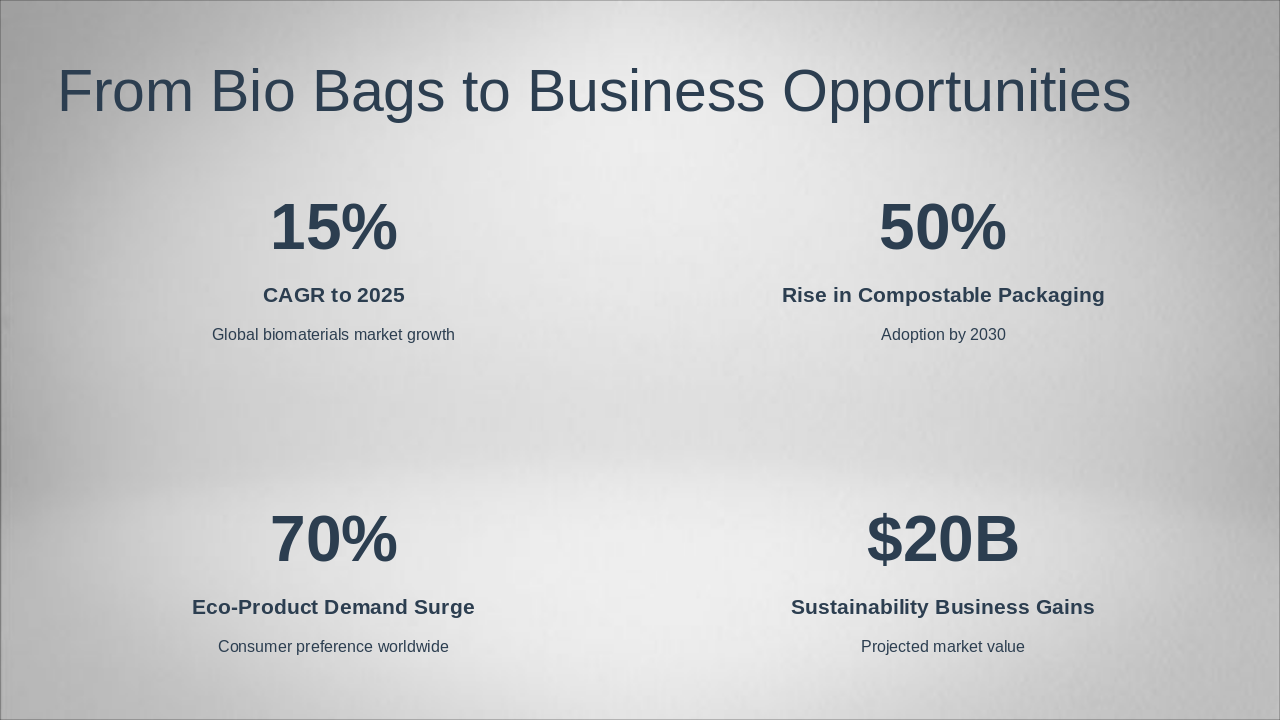
The slide highlights the booming biomaterials sector, projecting a 15% CAGR for the global market through 2025 and a $20 billion rise in sustainability-driven business value. It also notes strong consumer trends, including a 50% increase in compostable packaging adoption by 2030 and a 70% surge in worldwide demand for eco-products.

From Bio Bags to Business Opportunities

  • 15%: CAGR to 2025
  • Global biomaterials market growth

  • 50%: Rise in Compostable Packaging
  • Adoption by 2030

  • 70%: Eco-Product Demand Surge
  • Consumer preference worldwide

  • $20B: Sustainability Business Gains
  • Projected market value

Slide 4 - From Bio Bags to Business Opportunities

Discover More Presentations

Explore thousands of AI-generated presentations for inspiration

Browse Presentations
Powered by AI

Create Your Own Presentation

Generate professional presentations in seconds with Karaf's AI. Customize this presentation or start from scratch.

Create New Presentation

Powered by Karaf.ai — AI-Powered Presentation Generator