The Fascinating World of Turtles
Generated from prompt:
Create a Google Slides presentation about turtles. Include 10-12 slides with engaging visuals and concise content. Slides should cover: title slide, what turtles are, types of turtles (sea, freshwater, tortoises), anatomy and shell, habitat, diet, life cycle, behavior, threats (pollution, climate change), conservation efforts, interesting facts, and conclusion. Use a clean, nature-inspired design with greens and blues, and include image suggestions for each slide.
This presentation dives into the world of turtles, exploring their definition, classification, anatomy, habitats, diets, life cycles, behaviors, conservation challenges, efforts, and intriguing facts to highlight the importance of protecting these古古.
Slide 2 - Agenda
- What are Turtles?
- Classifying Turtles
- Anatomy and the Shell
- Habitat and Diet
- Life Cycle and Behavior
- Conservation Challenges
- Interesting Facts
---
Photo by James Lo on Unsplash
Slide 3 - What are Turtles?
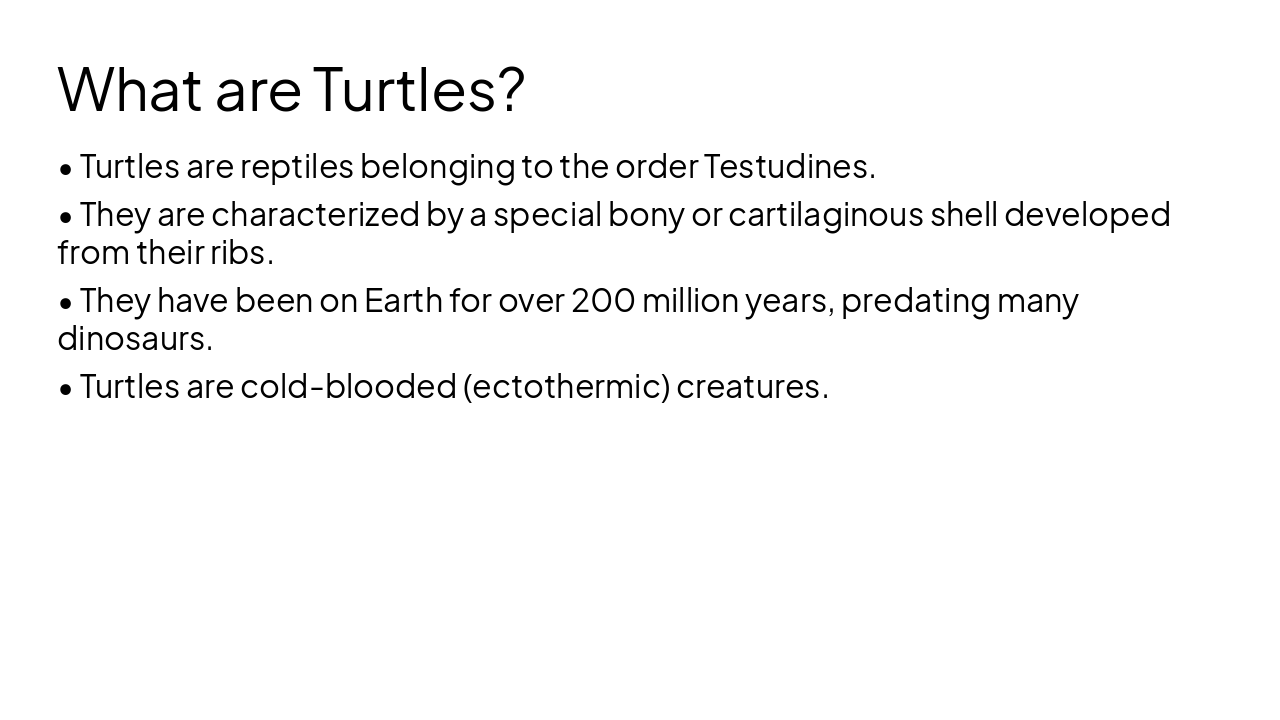
- Turtles are reptiles belonging to the order Testudines.
- They are characterized by a special bony or cartilaginous shell developed from their ribs.
- They have been on Earth for over 200 million years, predating many dinosaurs.
- Turtles are cold-blooded (ectothermic) creatures.
Slide 4 - Types of Turtles
- Sea Turtles: Adapted for life in the ocean with flippers.
- Freshwater Turtles: Often found in ponds, lakes, and marshes.
- Tortoises: Strictly land-dwelling with sturdy, stumpy feet.
---
Photo by Serge Le Strat on Unsplash
Slide 5 - Anatomy and the Shell
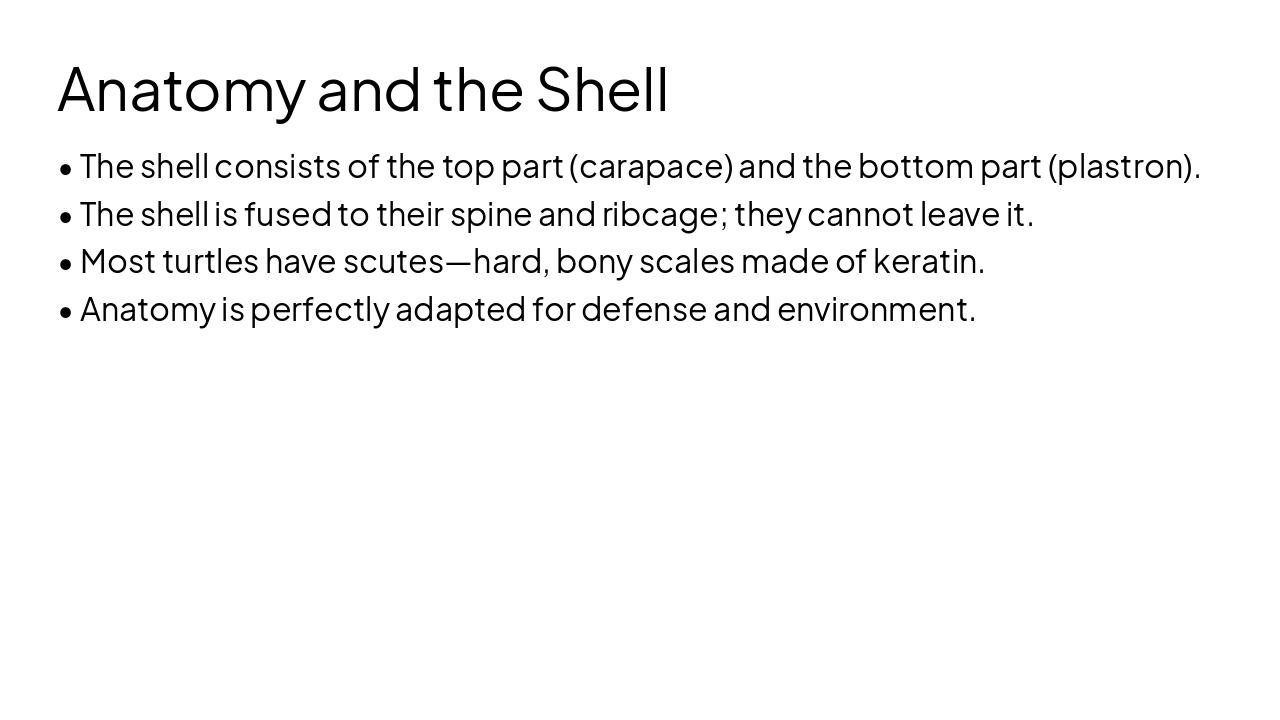
- The shell consists of the top part (carapace) and the bottom part (plastron).
- The shell is fused to their spine and ribcage; they cannot leave it.
- Most turtles have scutes—hard, bony scales made of keratin.
- Anatomy is perfectly adapted for defense and environment.
Slide 6 - Habitat and Diet
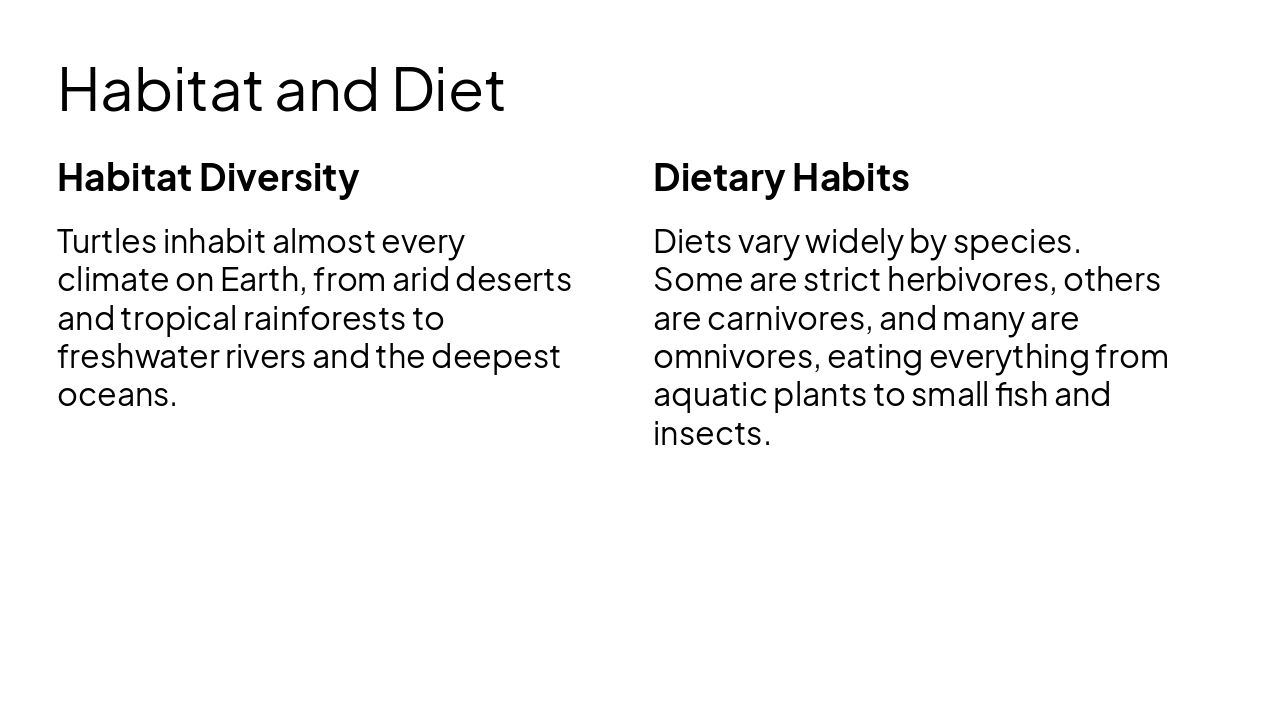
Habitat Diversity Turtles inhabit almost every climate on Earth, from arid deserts and tropical rainforests to freshwater rivers and the deepest oceans.
Dietary Habits Diets vary widely by species. Some are strict herbivores, others are carnivores, and many are omnivores, eating everything from aquatic plants to small fish and insects.
Slide 7 - Life Cycle
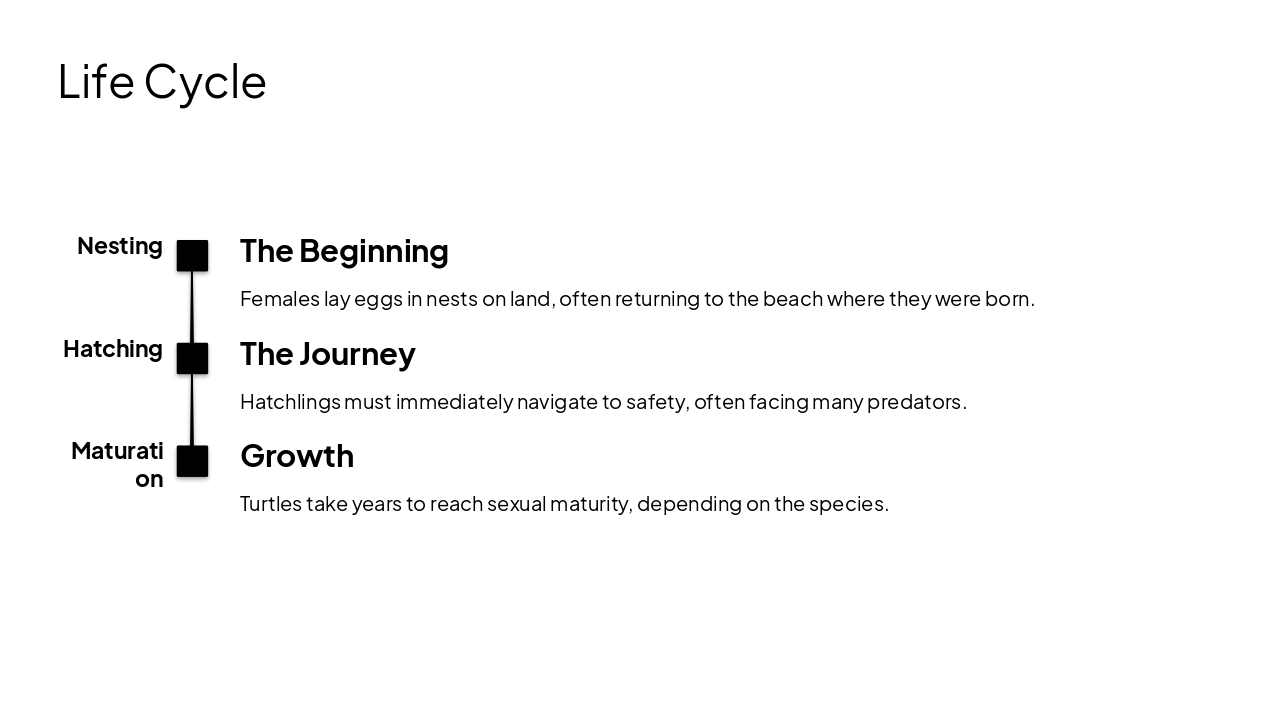
Nesting: The Beginning Females lay eggs in nests on land, often returning to the beach where they were born. Hatching: The Journey Hatchlings must immediately navigate to safety, often facing many predators. Maturation: Growth Turtles take years to reach sexual maturity, depending on the species.
Slide 8 - Behavior
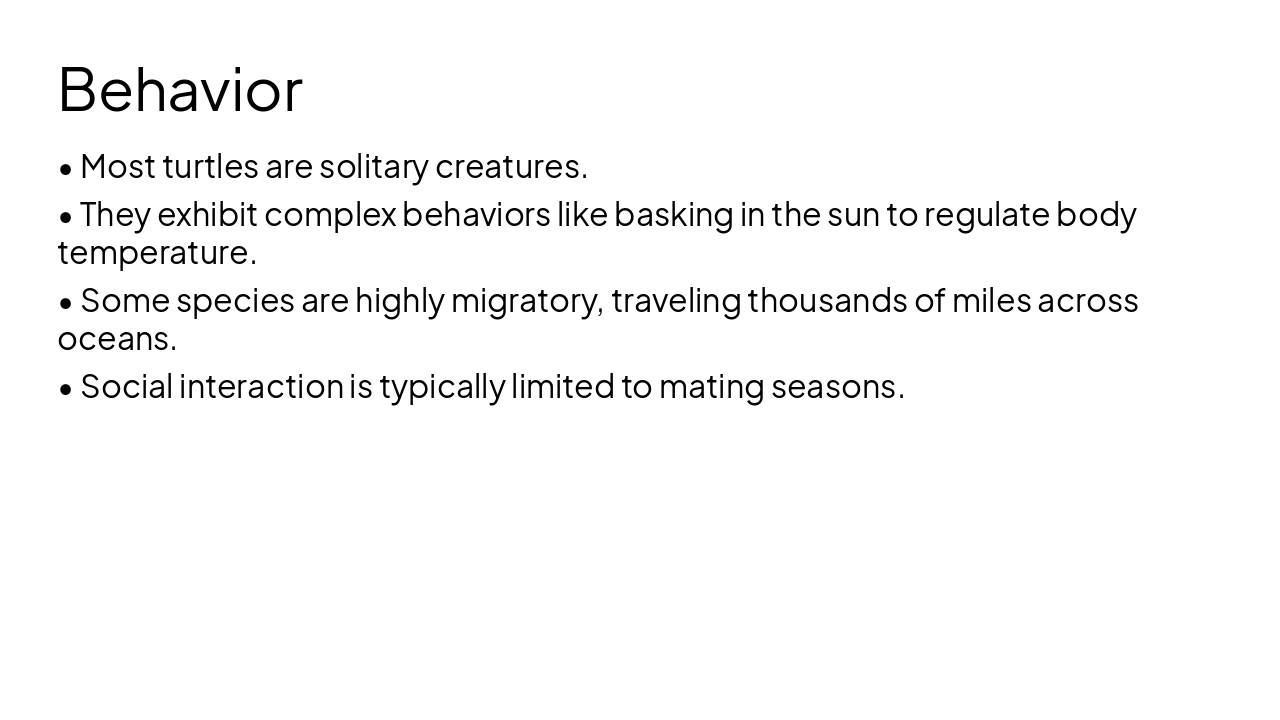
- Most turtles are solitary creatures.
- They exhibit complex behaviors like basking in the sun to regulate body temperature.
- Some species are highly migratory, traveling thousands of miles across oceans.
- Social interaction is typically limited to mating seasons.
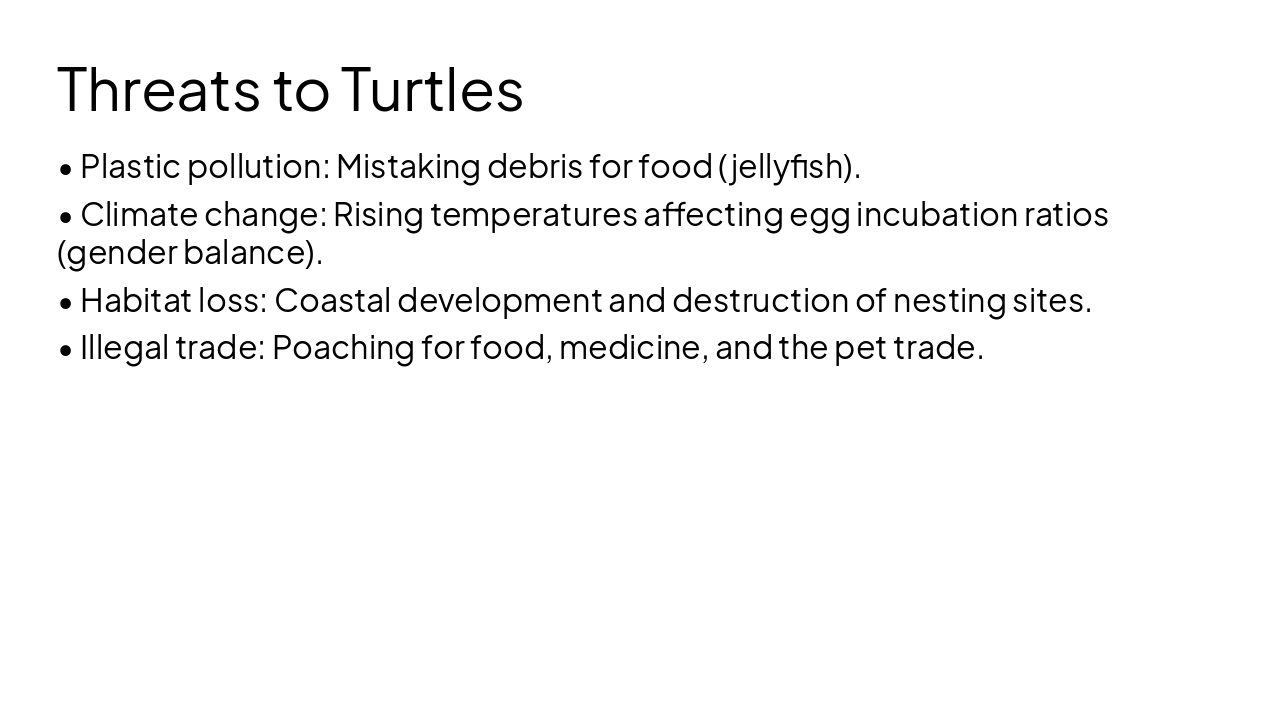
Slide 9 - Threats to Turtles
- Plastic pollution: Mistaking debris for food (jellyfish).
- Climate change: Rising temperatures affecting egg incubation ratios (gender balance).
- Habitat loss: Coastal development and destruction of nesting sites.
- Illegal trade: Poaching for food, medicine, and the pet trade.
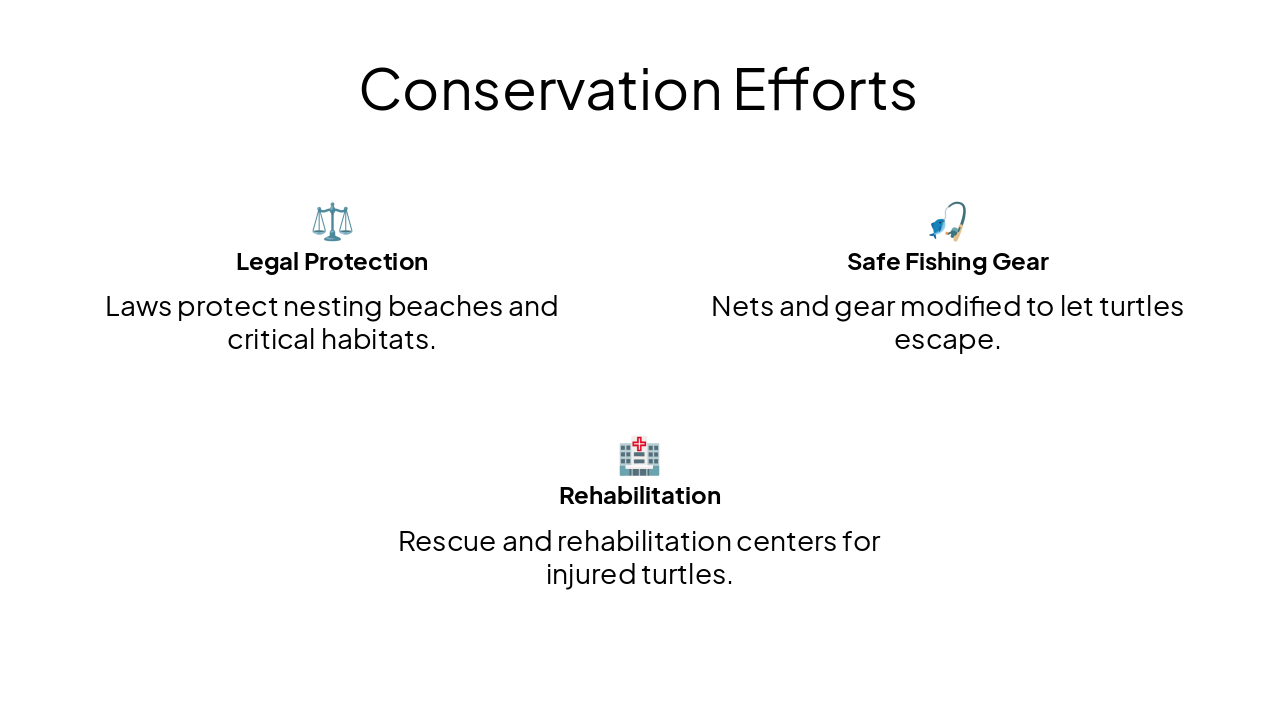
Slide 10 - Conservation Efforts
⚖️ Legal Protection Laws protect nesting beaches and critical habitats.
🎣 Safe Fishing Gear Nets and gear modified to let turtles escape.
🏥 Rehabilitation Rescue and rehabilitation centers for injured turtles.
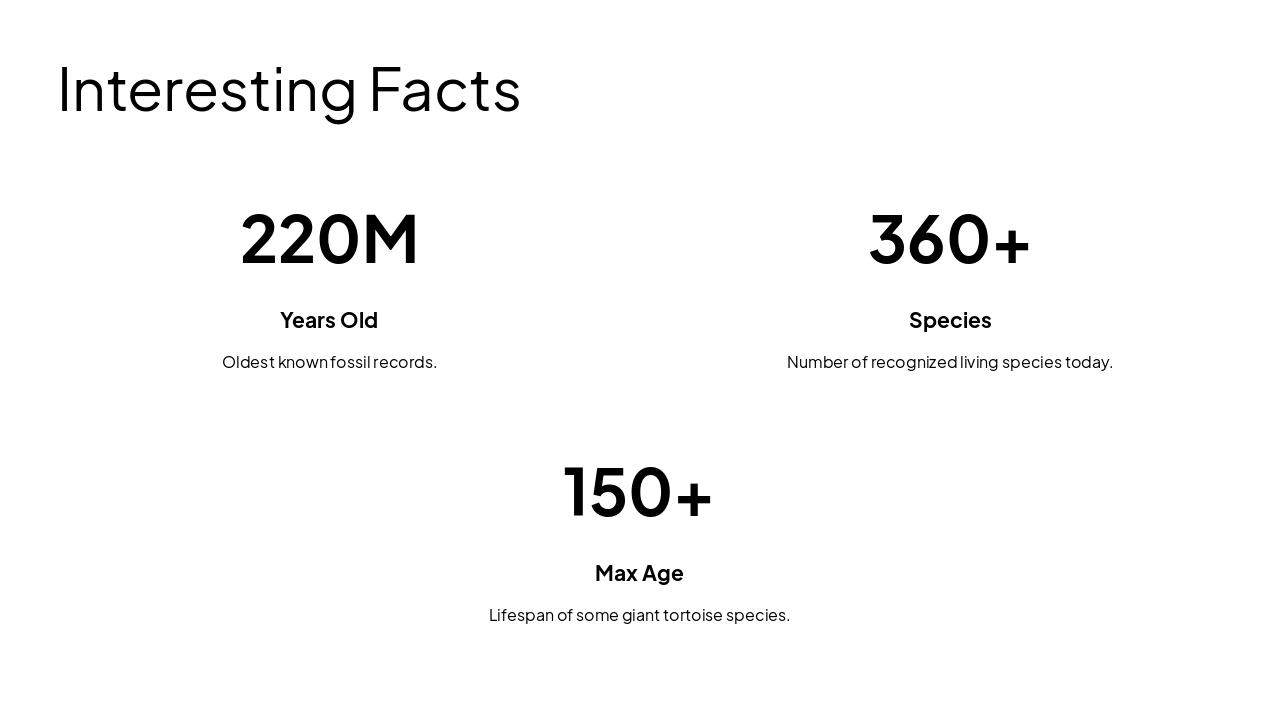
Slide 11 - Interesting Facts
- 220M: Years Old
- 360+: Species
- 150+: Max Age
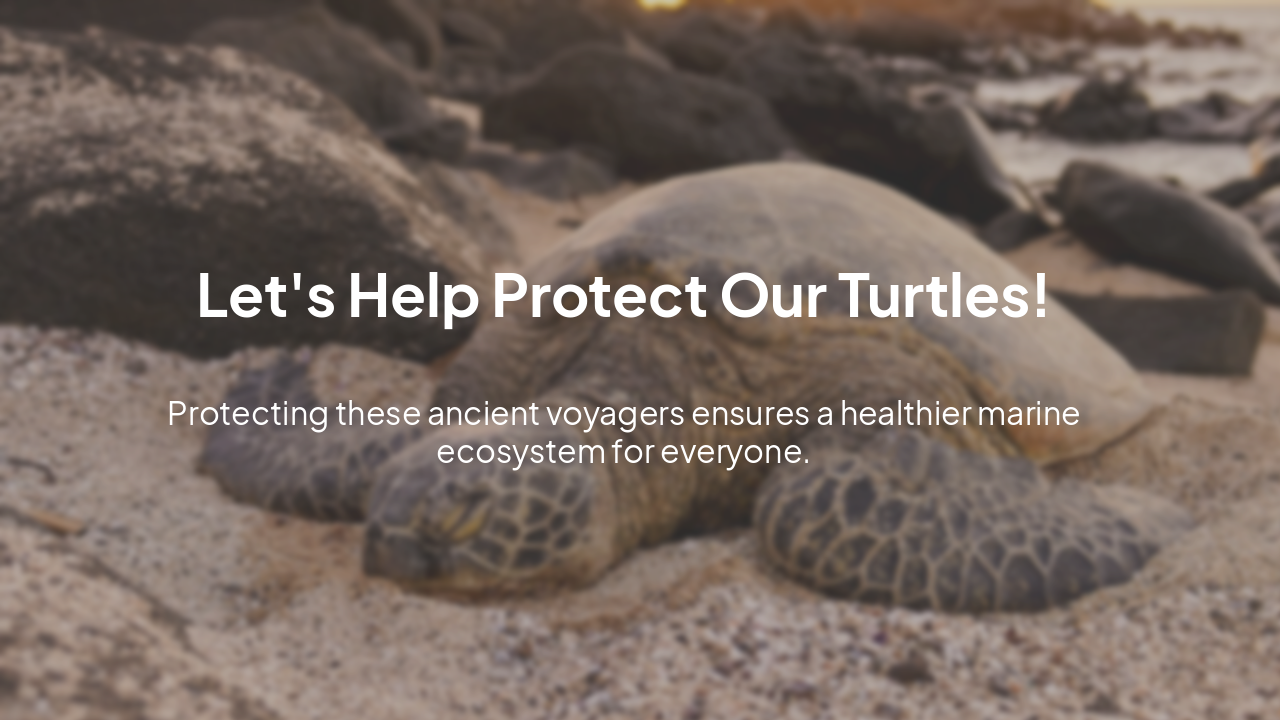
Slide 12 - Conclusion
Let's Help Protect Our Turtles!
Protecting these ancient voyagers ensures a healthier marine ecosystem for everyone.
---
Photo by Jessica Wong on Unsplash
Discover More Presentations
Explore thousands of AI-generated presentations for inspiration
Create Your Own Presentation
Generate professional presentations in seconds with Karaf's AI. Customize this presentation or start from scratch.