Eliminating Sealer Bubbles: Automotive Hemming Optimization

Generated from prompt:

Improve and redesign the uploaded presentation on 'Reduction of Sealer Bubble'. Make it professional, visually clean, and structured for a corporate audience. Include: Title slide, Problem statement, What is Sealer Bubble (with visuals), Root Cause Analysis (Man, Machine, Method, Material), Process explanation (hemming gap, air entrapment), Data & Observations, Countermeasures (Hemming gap improvement, Oven ramp optimization), Before vs After comparison, Results & Impact, Future actions (sealer composition trials), and Conclusion. Use minimal text, strong visuals, icons, and consistent formatting.

This presentation details the systematic reduction of sealer bubble defects in automotive hemming, covering problem analysis, 4M root cause identification, process countermeasures, data-driven results (from 8.5% to <0.5% defects), and future actions,

April 2, 202612 slides
Slide 1 of 12

Slide 1 - Reduction of Sealer Bubble in Automotive Hemming

Reduction of Sealer Bubble in Automotive Hemming

Engineering Excellence: Enhancing Manufacturing Quality Through Process Optimization
Slide 1 - Reduction of Sealer Bubble in Automotive Hemming
Slide 2 of 12

Slide 2 - Presentation Agenda

  • Problem Statement & Context
  • Understanding Sealer Bubbles
  • Root Cause Analysis (4Ms)
  • Process Dynamics: Hemming & Entrapment
  • Data, Observations & Countermeasures
  • Before vs. After Comparison
  • Results & Impact Assessment
  • Conclusion & Future Outlook

---

Photo by Nastuh Abootalebi on Unsplash
Slide 2 - Presentation Agenda
Slide 3 of 12

Slide 3 - Problem Statement

  • Persistent sealer bubble defects identified during final inspection.
  • Defects lead to rework, increased production costs, and potential quality concerns.
  • Objective: Achieve zero-defect status through systematic process improvements and root cause elimination.
Slide 3 - Problem Statement
Slide 4 of 12

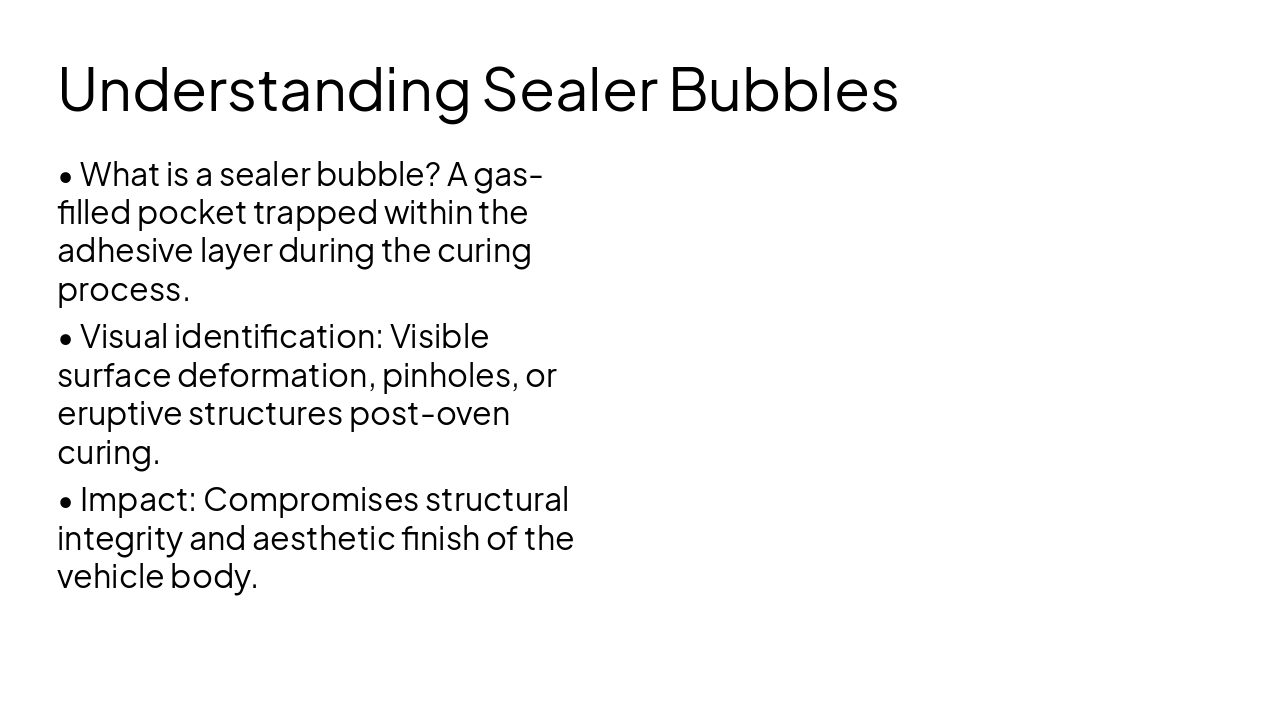
Slide 4 - Understanding Sealer Bubbles

  • What is a sealer bubble? A gas-filled pocket trapped within the adhesive layer during the curing process.
  • Visual identification: Visible surface deformation, pinholes, or eruptive structures post-oven curing.
  • Impact: Compromises structural integrity and aesthetic finish of the vehicle body.
Slide 4 - Understanding Sealer Bubbles
Slide 5 of 12

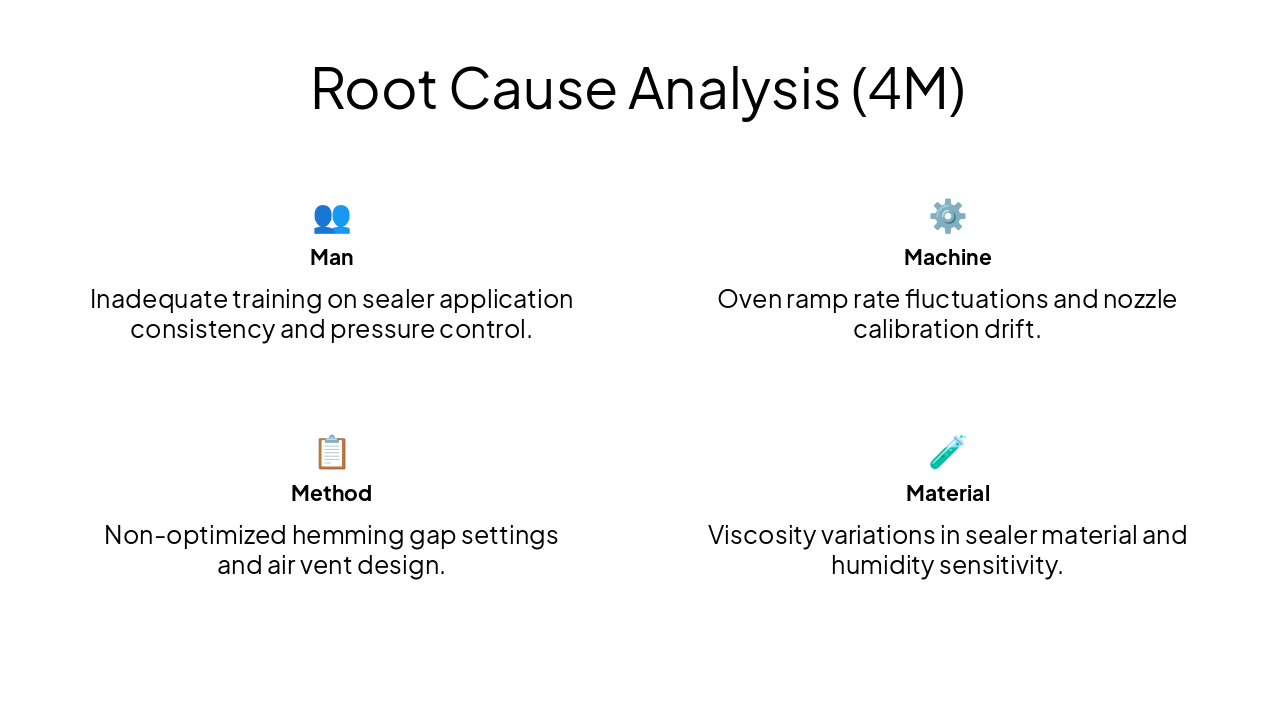
Slide 5 - Root Cause Analysis (4M)

👥 Man Inadequate training on sealer application consistency and pressure control.

⚙️ Machine Oven ramp rate fluctuations and nozzle calibration drift.

📋 Method Non-optimized hemming gap settings and air vent design.

🧪 Material Viscosity variations in sealer material and humidity sensitivity.

Slide 5 - Root Cause Analysis (4M)
Slide 6 of 12

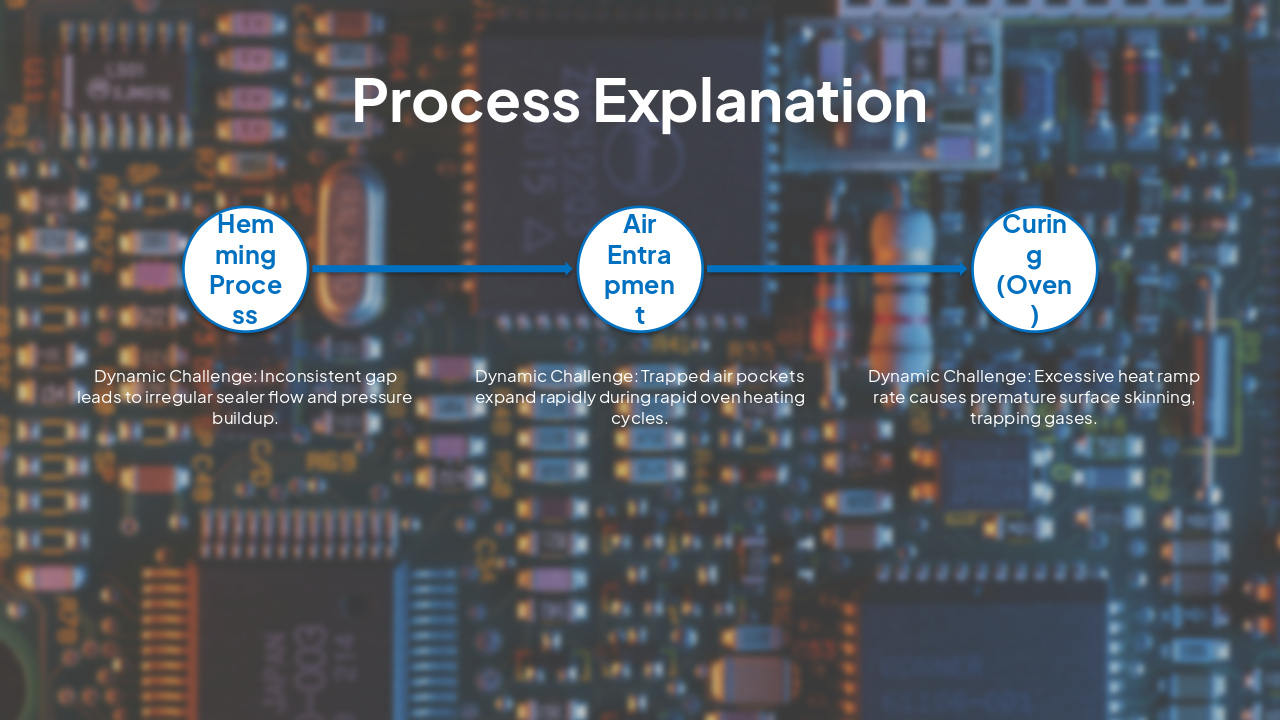
Slide 6 - Process Explanation

Process StepDynamic Challenge
Hemming ProcessInconsistent gap leads to irregular sealer flow and pressure buildup.
Air EntrapmentTrapped air pockets expand rapidly during rapid oven heating cycles.
Curing (Oven)Excessive heat ramp rate causes premature surface skinning, trapping gases.

---

Photo by Umberto on Unsplash

Slide 6 - Process Explanation
Slide 7 of 12

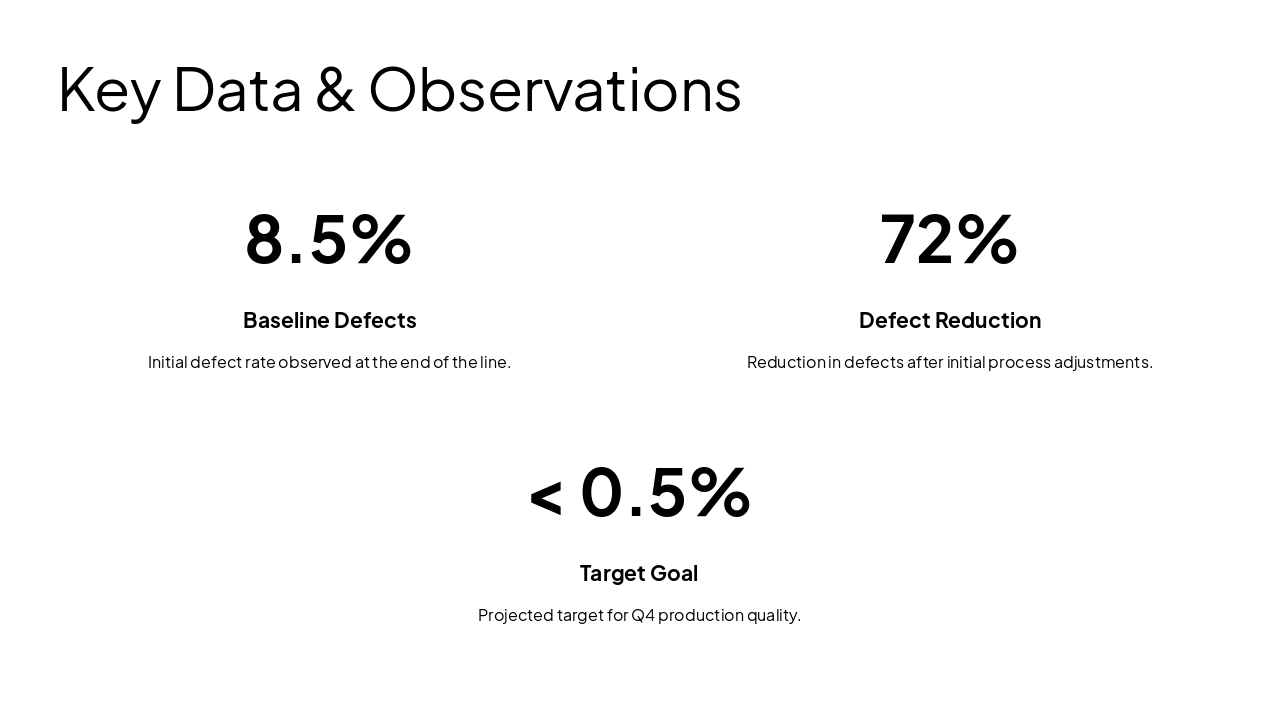
Slide 7 - Key Data & Observations

  • 8.5%: Baseline Defects
  • 72%: Defect Reduction
  • < 0.5%: Target Goal
Slide 7 - Key Data & Observations
Slide 8 of 12

Slide 8 - Implemented Countermeasures

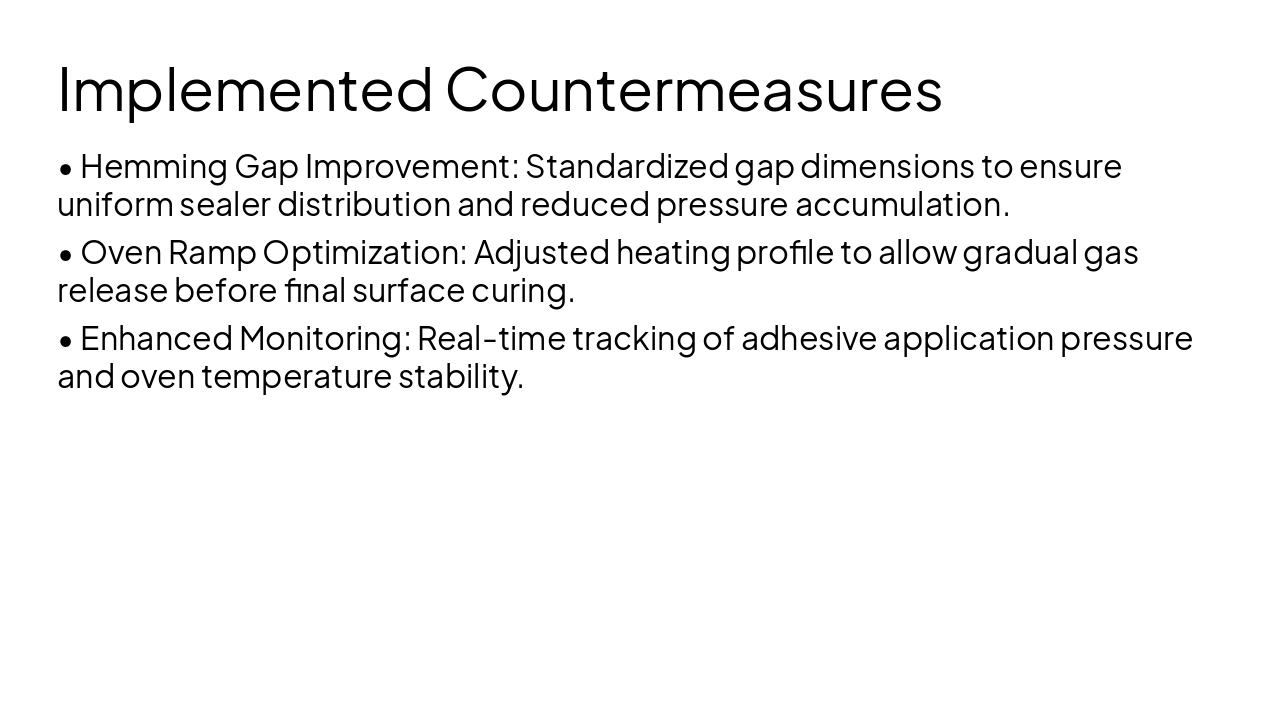
  • Hemming Gap Improvement: Standardized gap dimensions to ensure uniform sealer distribution and reduced pressure accumulation.
  • Oven Ramp Optimization: Adjusted heating profile to allow gradual gas release before final surface curing.
  • Enhanced Monitoring: Real-time tracking of adhesive application pressure and oven temperature stability.
Slide 8 - Implemented Countermeasures
Slide 9 of 12

Slide 9 - Before vs. After Comparison

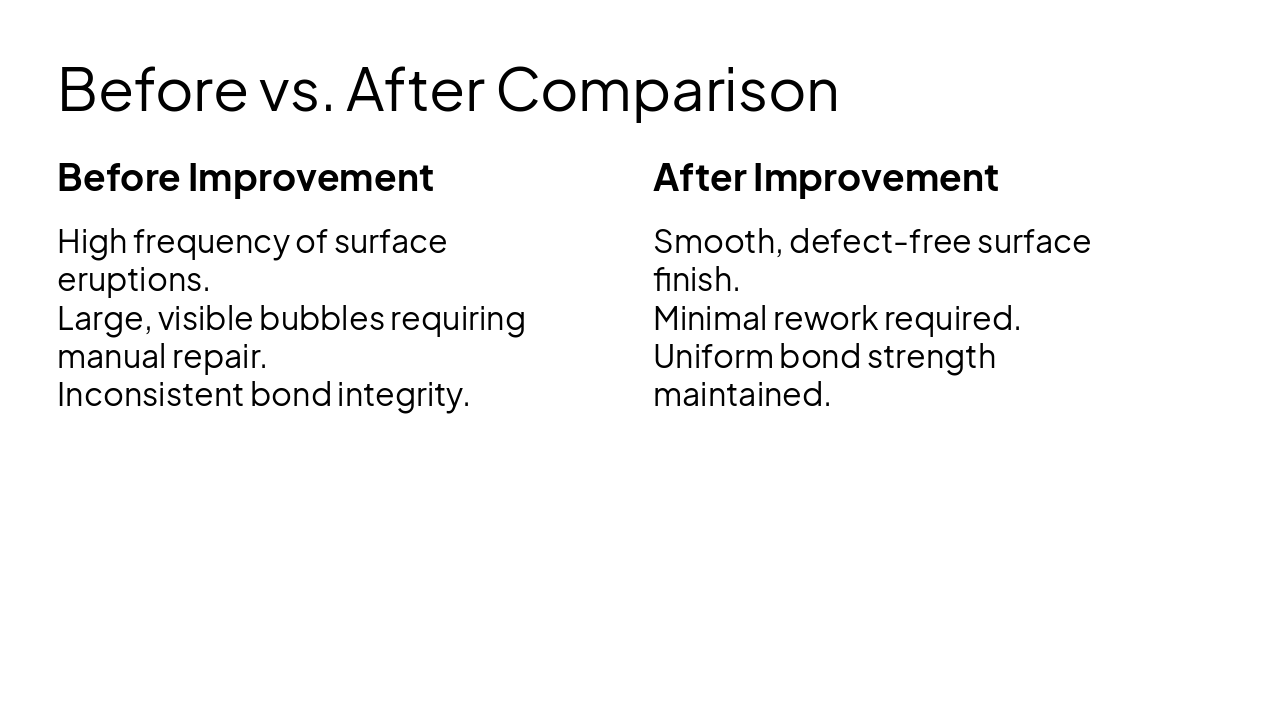
Before Improvement High frequency of surface eruptions. Large, visible bubbles requiring manual repair. Inconsistent bond integrity.

After Improvement Smooth, defect-free surface finish. Minimal rework required. Uniform bond strength maintained.

Slide 9 - Before vs. After Comparison
Slide 10 of 12

Slide 10 - Results & Impact Assessment

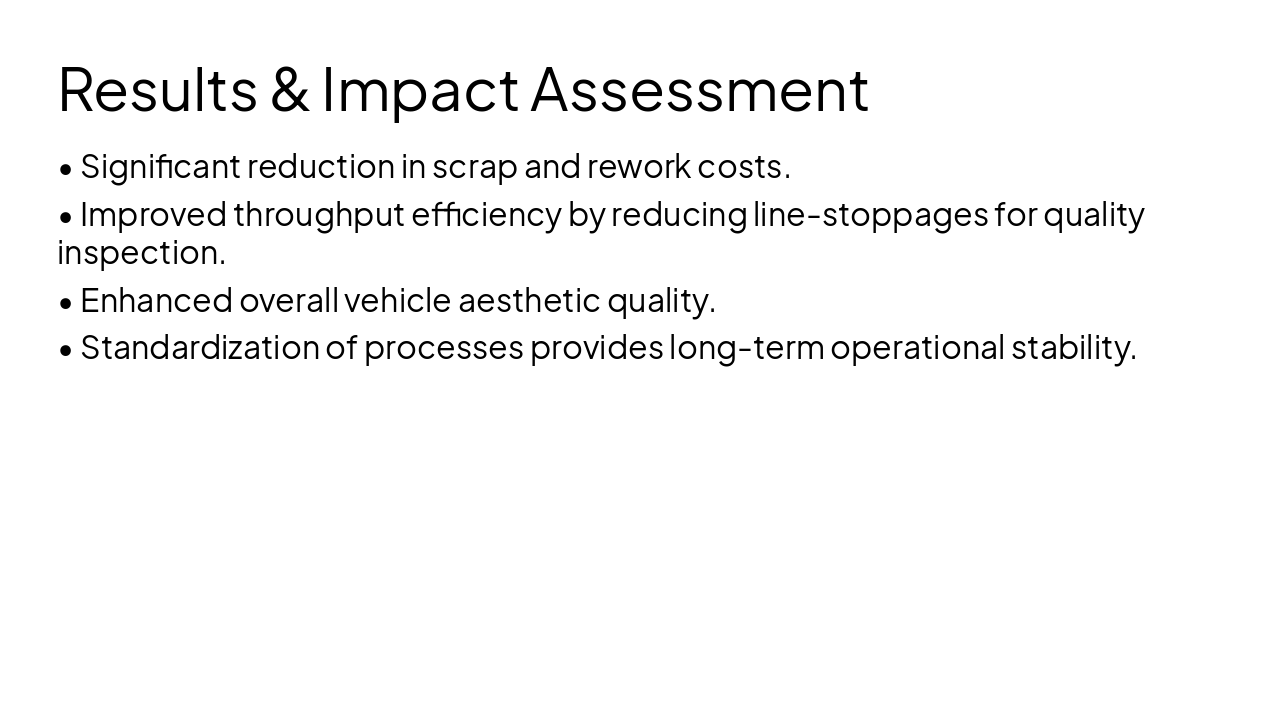
  • Significant reduction in scrap and rework costs.
  • Improved throughput efficiency by reducing line-stoppages for quality inspection.
  • Enhanced overall vehicle aesthetic quality.
  • Standardization of processes provides long-term operational stability.
Slide 10 - Results & Impact Assessment
Slide 11 of 12

Slide 11 - Future Actions

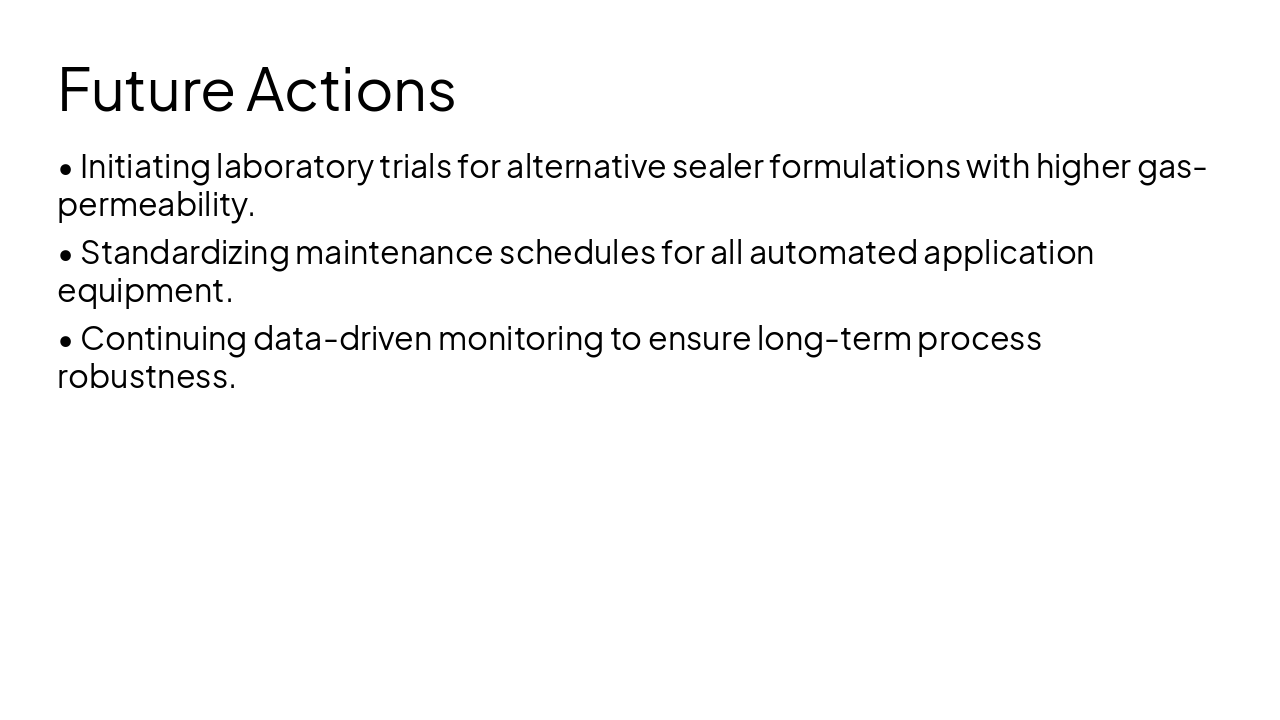
  • Initiating laboratory trials for alternative sealer formulations with higher gas-permeability.
  • Standardizing maintenance schedules for all automated application equipment.
  • Continuing data-driven monitoring to ensure long-term process robustness.
Slide 11 - Future Actions
Slide 12 of 12

Slide 12 - Conclusion

Successfully stabilized the process, significantly reduced defects, and established a sustainable foundation for future production.

Committed to Continuous Improvement and Quality Excellence.

---

Photo by Nastuh Abootalebi on Unsplash
Slide 12 - Conclusion

Discover More Presentations

Explore thousands of AI-generated presentations for inspiration

Browse Presentations
Powered by AI

Create Your Own Presentation

Generate professional presentations in seconds with Karaf's AI. Customize this presentation or start from scratch.

Create New Presentation

Powered by Karaf.ai — AI-Powered Presentation Generator