Slide 1 of 15
Slide 1 - Green Architecture
Designing Buildings for a Sustainable Future
Protecting the Environment, Saving Energy, and Enhancing Human Health
Generated from prompt:
🟢 Introduction (المقدمة) Today, the world is facing serious environmental problems such as climate change, pollution, and energy shortage. Buildings consume a large amount of energy and natural resources. Because of this, a new concept appeared called Green Architecture. Green architecture is a way of designing buildings that protect the environment and reduce negative impacts on nature. It focuses on saving energy, using renewable resources, and creating healthy spaces for people. --- 🏗️ What is Green Architecture? Green architecture (also called sustainable architecture) is designing buildings that: Use less energy Save water Reduce waste Use eco-friendly materials --- ✅ Advantages of Green Architecture 1. 🌍 Protects the Environment Reduces carbon emissions Uses renewable energy (solar panels, wind energy) Reduces pollution 2. 💰 Saves Money (Long Term) Lower electricity and water bills Less maintenance cost Higher property value 3. 💨 Improves Health Better air quality More natural light Comfortable temperature 4. 🔋 Energy Efficiency Good insulation Smart energy systems --- ❌ Disadvantages of Green Architecture 1. 💸 High Initial Cost Eco-friendly materials are expensive Solar systems cost more at the beginning 2. 🛠️ Needs Special Skills Requires trained architects and engineers More planning time 3. 🌦️ Climate Dependence Solar energy depends on sunlight Some systems do not work everywhere --- 🌎 Conclusion In conclusion, green architecture is an important solution to environmental problems. Although it has some disadvantages like high cost, its long-term benefits are much greater. It helps protect our planet and creates a better future for the next generations.
This presentation introduces environmental challenges, defines green architecture as eco-friendly building design, highlights advantages like energy savings, health improvements, and environmental protection, discusses disadvantages such as high初始成本,
Designing Buildings for a Sustainable Future
Protecting the Environment, Saving Energy, and Enhancing Human Health
1
Buildings Consume Energy and Resources Leading to a New Concept: Green Architecture
2
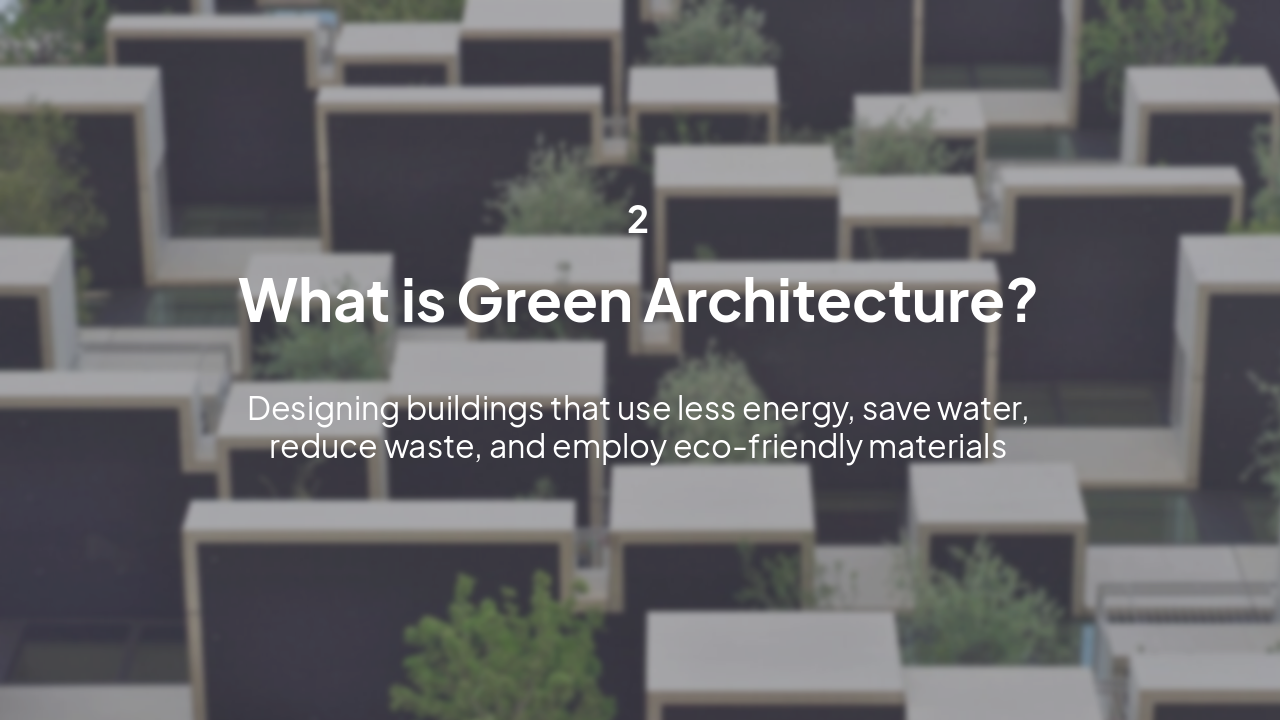
Designing buildings that use less energy, save water, reduce waste, and employ eco-friendly materials
---
Photo by George Diama on Unsplash
> Green building refers to both a structure and the application of processes that are environmentally responsible and resource-efficient throughout a building's life-cycle: from planning to design, construction, operation, maintenance, renovation, and demolition.
— Wikipedia - Green Building
Source: Wikipedia: Green Building
Source: Wikipedia: Green Roof, Zero-energy Building
3
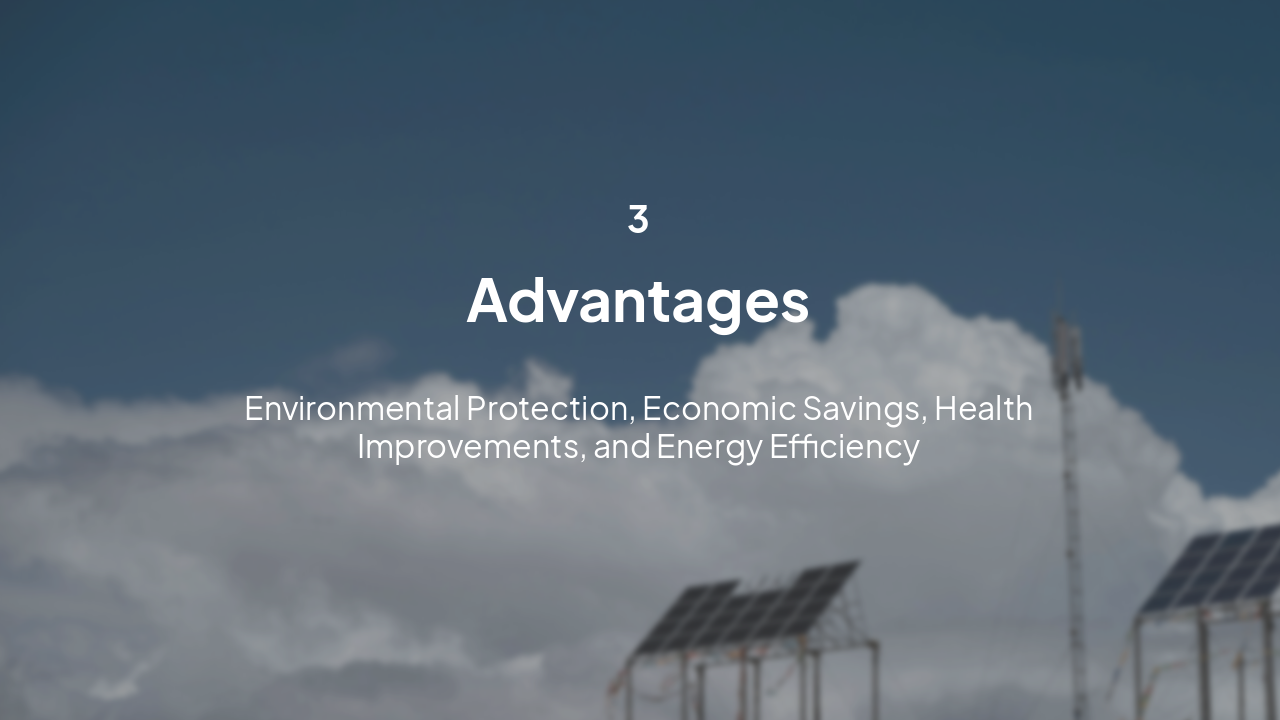
Environmental Protection, Economic Savings, Health Improvements, and Energy Efficiency
---
Photo by ran liwen on Unsplash
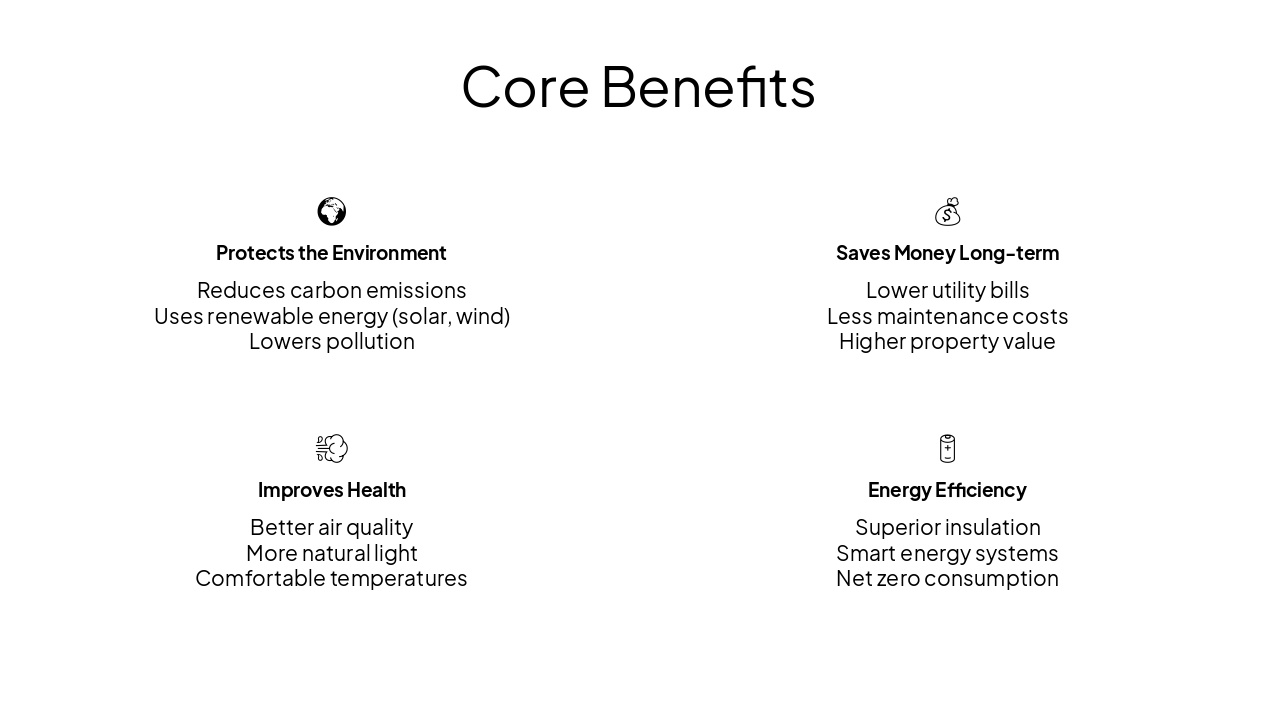
🌍 Protects the Environment Reduces carbon emissions Uses renewable energy (solar, wind) Lowers pollution
💰 Saves Money Long-term Lower utility bills Less maintenance costs Higher property value
💨 Improves Health Better air quality More natural light Comfortable temperatures
🔋 Energy Efficiency Superior insulation Smart energy systems Net zero consumption
4
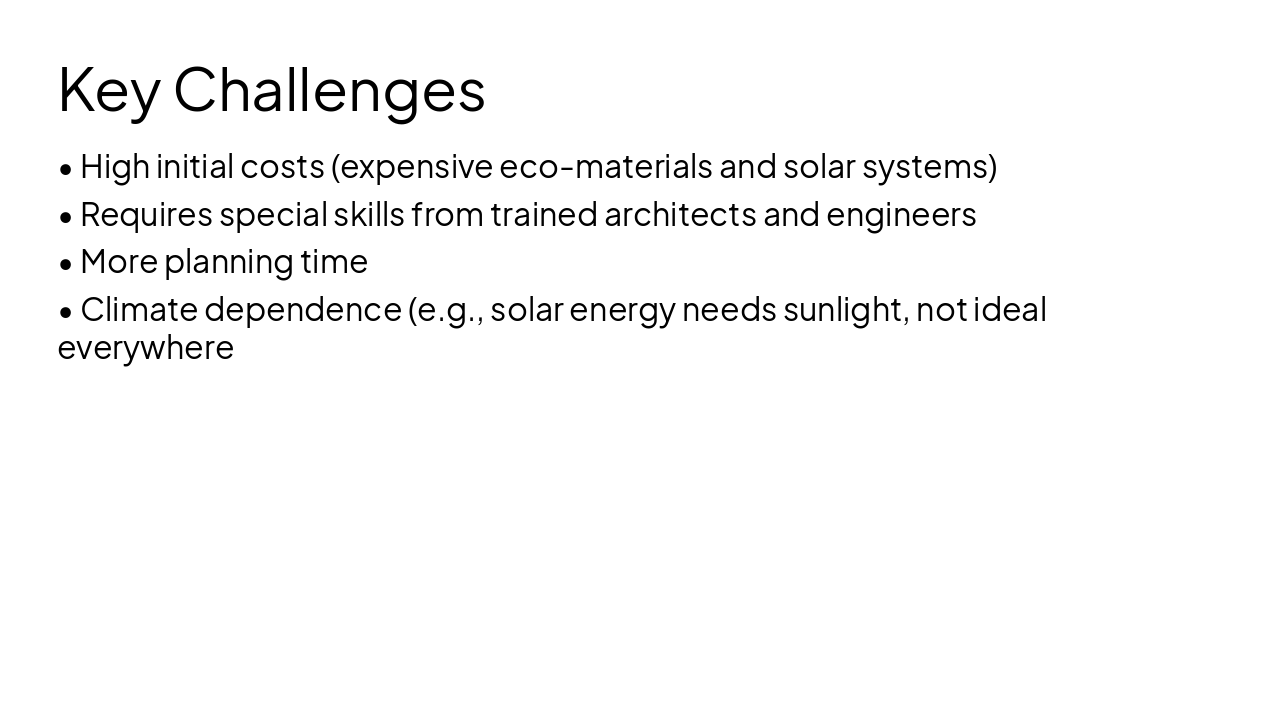
Initial Costs, Specialized Skills, and Climate Limitations
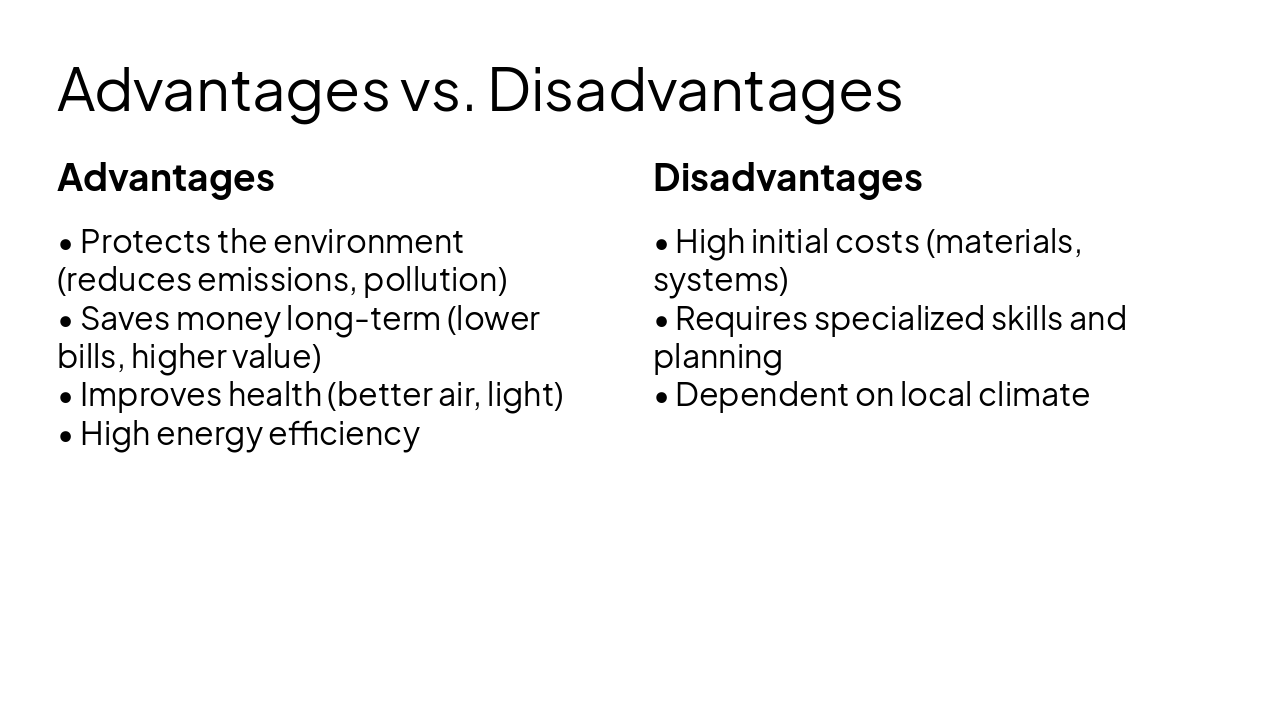
Advantages
Disadvantages
5
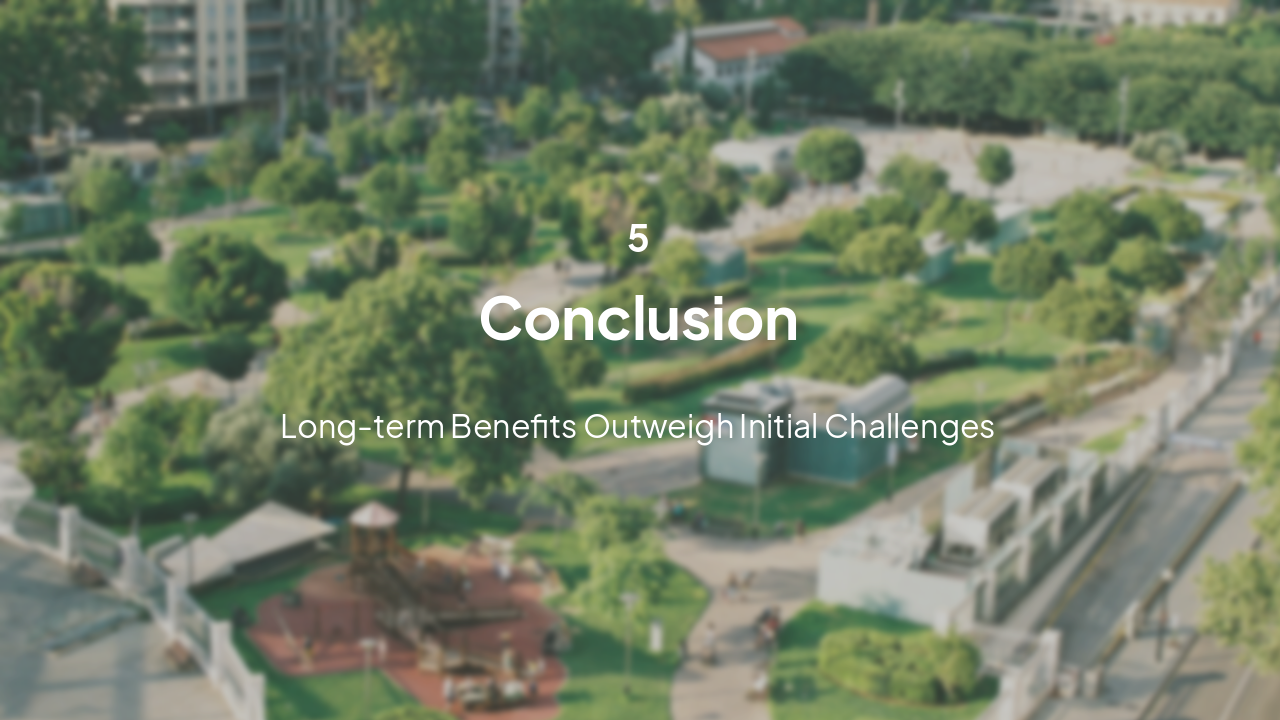
Long-term Benefits Outweigh Initial Challenges
---
Photo by Nerea Martí Sesarino on Unsplash
Green architecture offers a vital solution to environmental problems like climate change and resource depletion. Though it involves high initial costs and specialized skills, its long-term benefits for the planet, economy, and health far outweigh the disadvantages.
Let's build a sustainable future for next generations.
Explore thousands of AI-generated presentations for inspiration
Generate professional presentations in seconds with Karaf's AI. Customize this presentation or start from scratch.