Lawn Care Plan: Step-by-Step Guide to a Healthy and Sustainable Yard

Generated from prompt:

Lawn plan

This presentation outlines a comprehensive lawn care strategy, starting with understanding lawns, their history, and uses. It covers assessment of soil, grass types, and issues; soil preparation through aeration and amendments; planting options like seeding or sodding; maintenance practices including mowing, watering, fertilizing, pest control, and seasonal timelines. Emphasizes organic methods, environmental impacts, biodiversity promotion, essential tools, and professional resources for an eco-friendly, lush lawn.

May 8, 202623 slides
Slide 1 of 23

Slide 1 - Lawn Care Plan
Lawn Care Plan

Step-by-Step Guide to a Healthy Lawn

---

Photo by Mahina Gelderloos on Unsplash

Slide 1 - Lawn Care Plan
Slide 2 of 23

Slide 2 - Lawn Care Plan

Lawn Care Plan

Strategies for Healthy and Sustainable Lawns

---

Photo by Mahina Gelderloos on Unsplash

Slide 2 - Lawn Care Plan
Slide 3 of 23

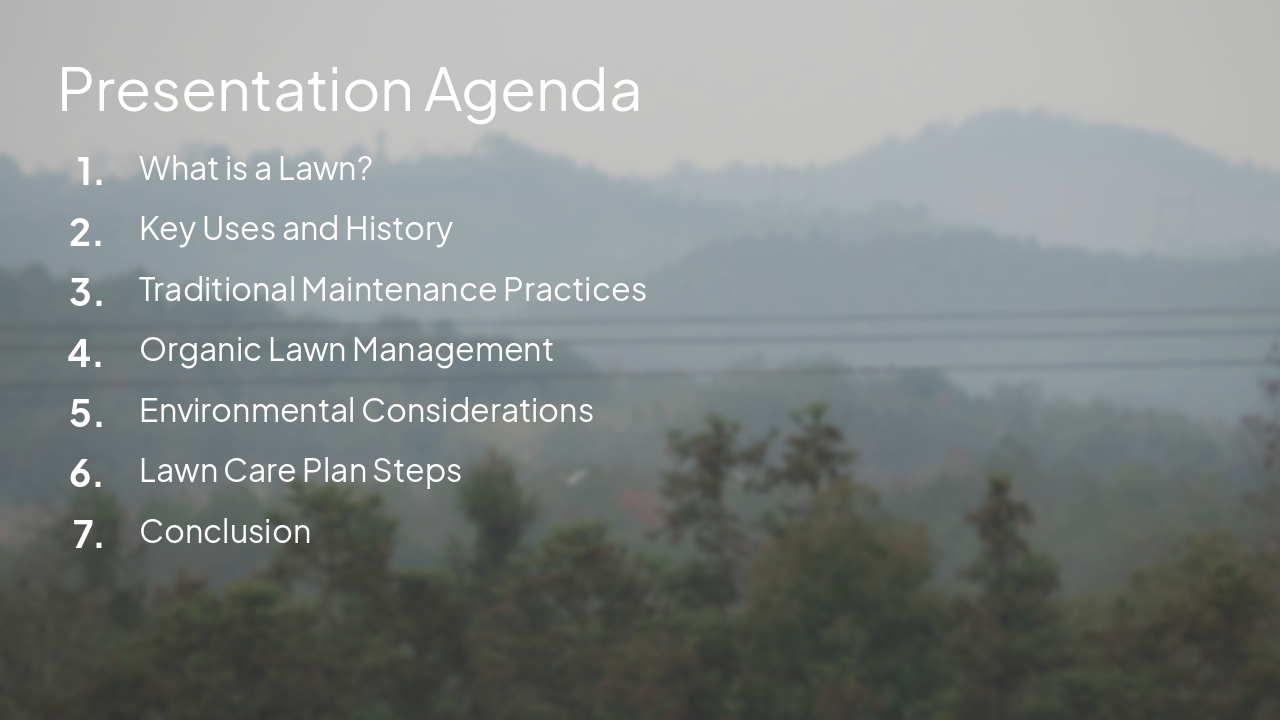
Slide 3 - Presentation Agenda

  • What is a Lawn?
  • Key Uses and History
  • Traditional Maintenance Practices
  • Organic Lawn Management
  • Environmental Considerations
  • Lawn Care Plan Steps
  • Conclusion

---

Photo by Wenzy Wong on Unsplash

Slide 3 - Presentation Agenda
Slide 4 of 23

Slide 4 - Presentation Agenda

  • Assess Current Lawn
  • Soil Preparation
  • Planting Options
  • Watering and Fertilizing
  • Mowing Best Practices
  • Pest and Weed Control
  • Seasonal Maintenance
  • Key Takeaways

---

Photo by otfot on Unsplash

Slide 4 - Presentation Agenda
Slide 5 of 23

Slide 5 - Section 1

1

Assess Current Lawn

Evaluate soil, grass type, sunlight, and existing issues

---

Photo by Vince Veras on Unsplash
Slide 5 - Section 1
Slide 6 of 23

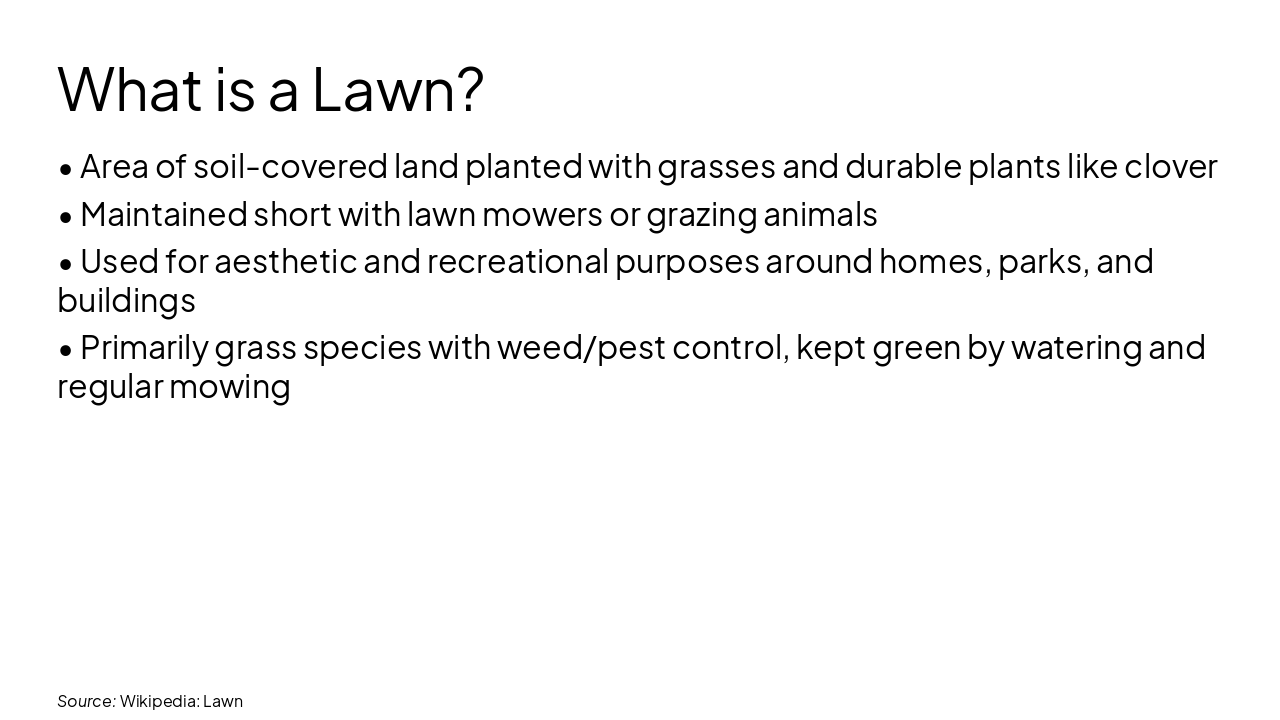
Slide 6 - What is a Lawn?

  • Area of soil-covered land planted with grasses and durable plants like clover
  • Maintained short with lawn mowers or grazing animals
  • Used for aesthetic and recreational purposes around homes, parks, and buildings
  • Primarily grass species with weed/pest control, kept green by watering and regular mowing

Source: Wikipedia: Lawn

Slide 6 - What is a Lawn?
Slide 7 of 23

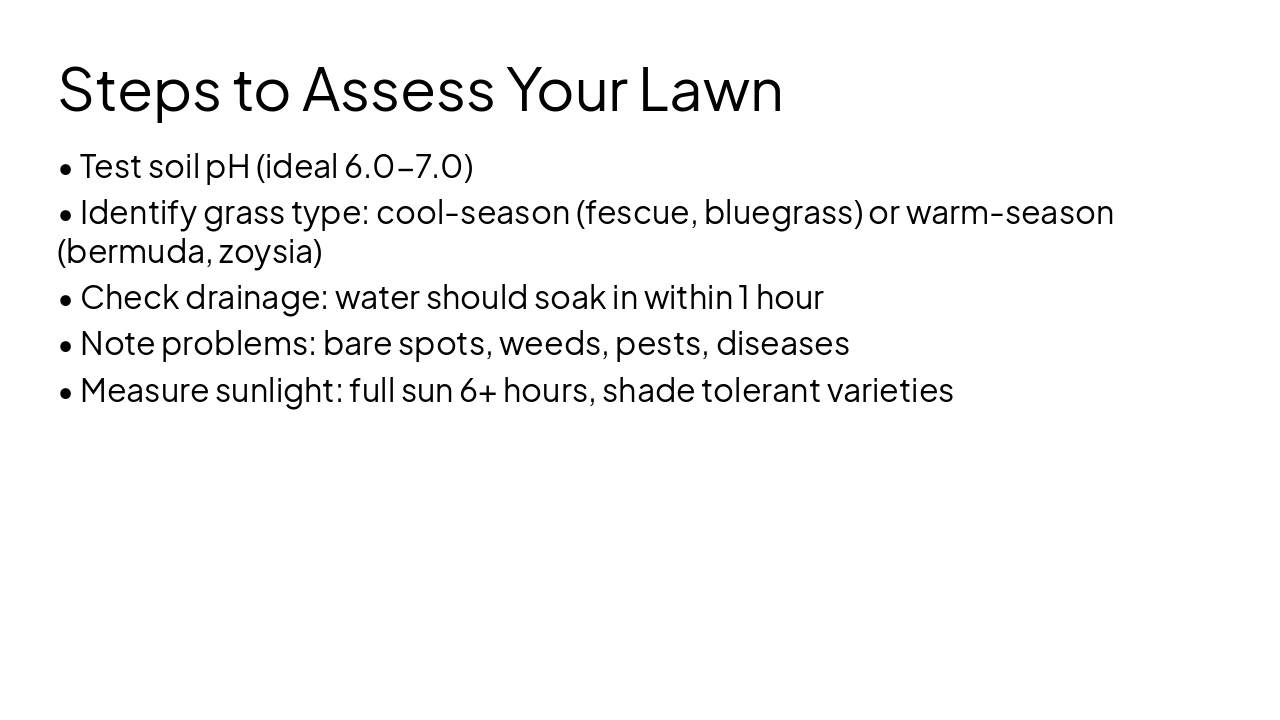
Slide 7 - Steps to Assess Your Lawn

  • Test soil pH (ideal 6.0-7.0)
  • Identify grass type: cool-season (fescue, bluegrass) or warm-season (bermuda, zoysia)
  • Check drainage: water should soak in within 1 hour
  • Note problems: bare spots, weeds, pests, diseases
  • Measure sunlight: full sun 6+ hours, shade tolerant varieties
Slide 7 - Steps to Assess Your Lawn
Slide 8 of 23

Slide 8 - Uses and History of Lawns

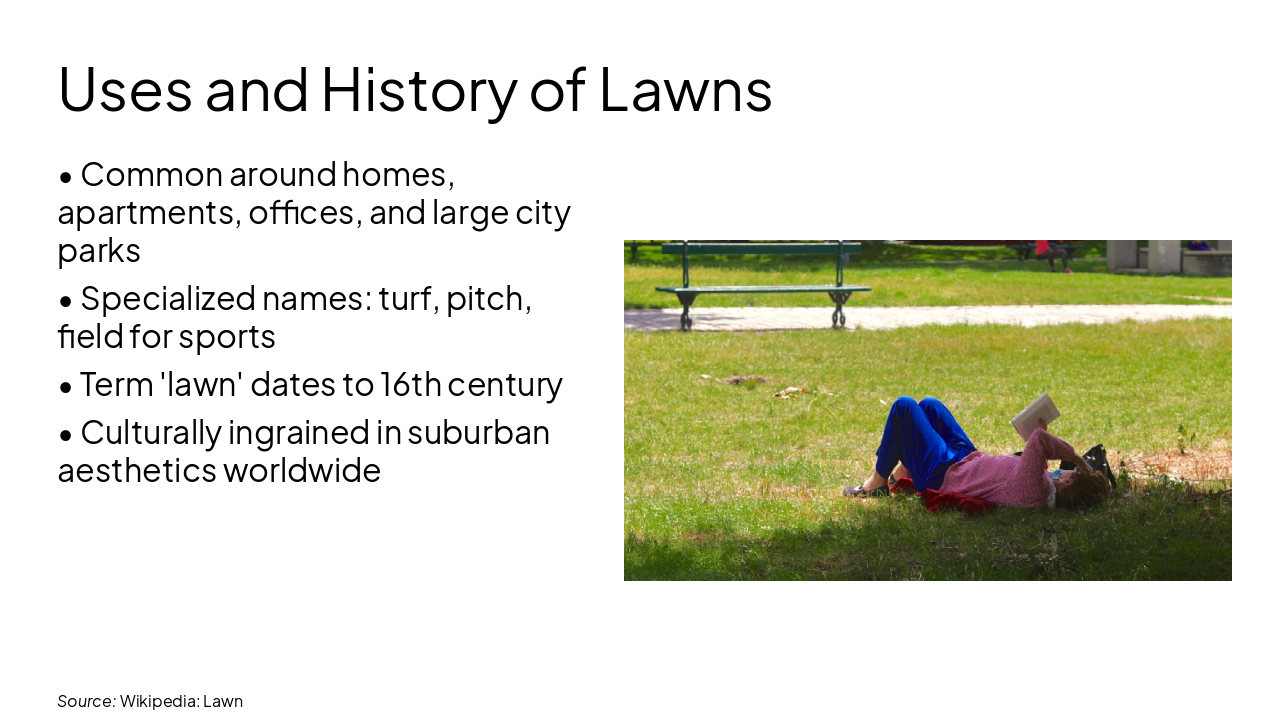
  • Common around homes, apartments, offices, and large city parks
  • Specialized names: turf, pitch, field for sports
  • Term 'lawn' dates to 16th century
  • Culturally ingrained in suburban aesthetics worldwide

---

Photo by HAN Mengqi on Unsplash

Source: Wikipedia: Lawn
Slide 8 - Uses and History of Lawns
Slide 9 of 23

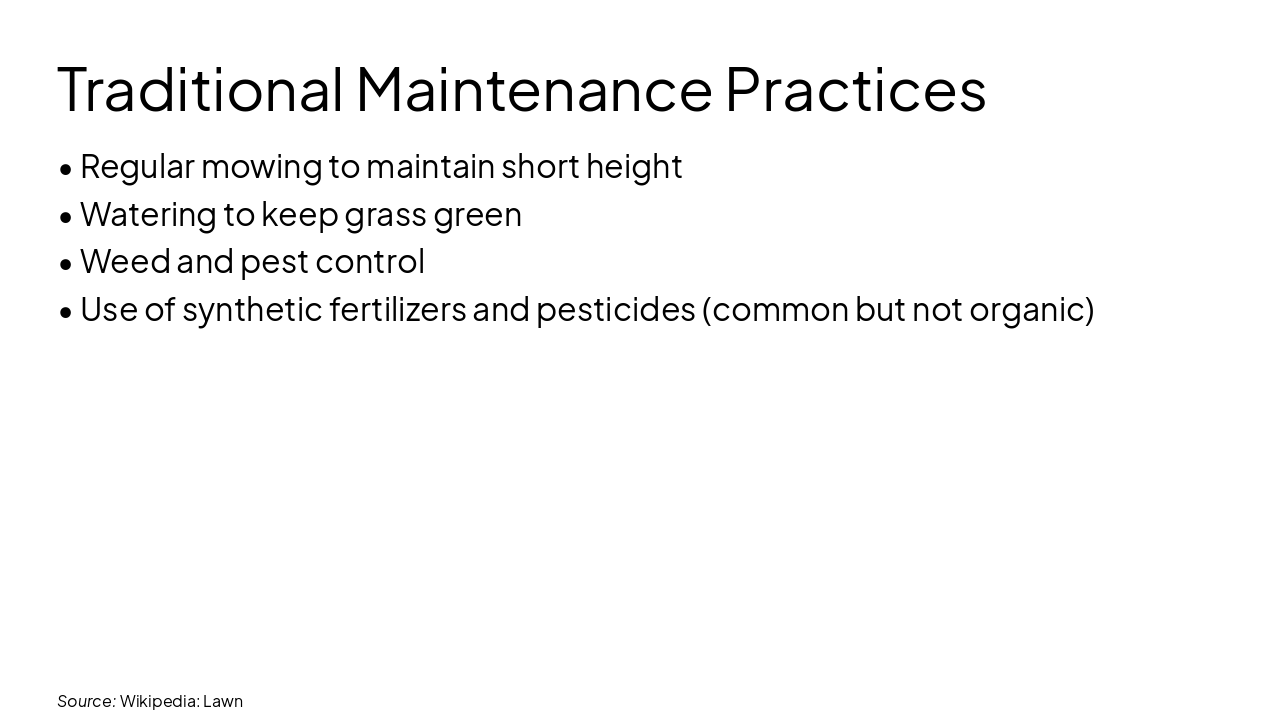
Slide 9 - Traditional Maintenance Practices

  • Regular mowing to maintain short height
  • Watering to keep grass green
  • Weed and pest control
  • Use of synthetic fertilizers and pesticides (common but not organic)

Source: Wikipedia: Lawn

Slide 9 - Traditional Maintenance Practices
Slide 10 of 23

Slide 10 - Soil Testing Importance

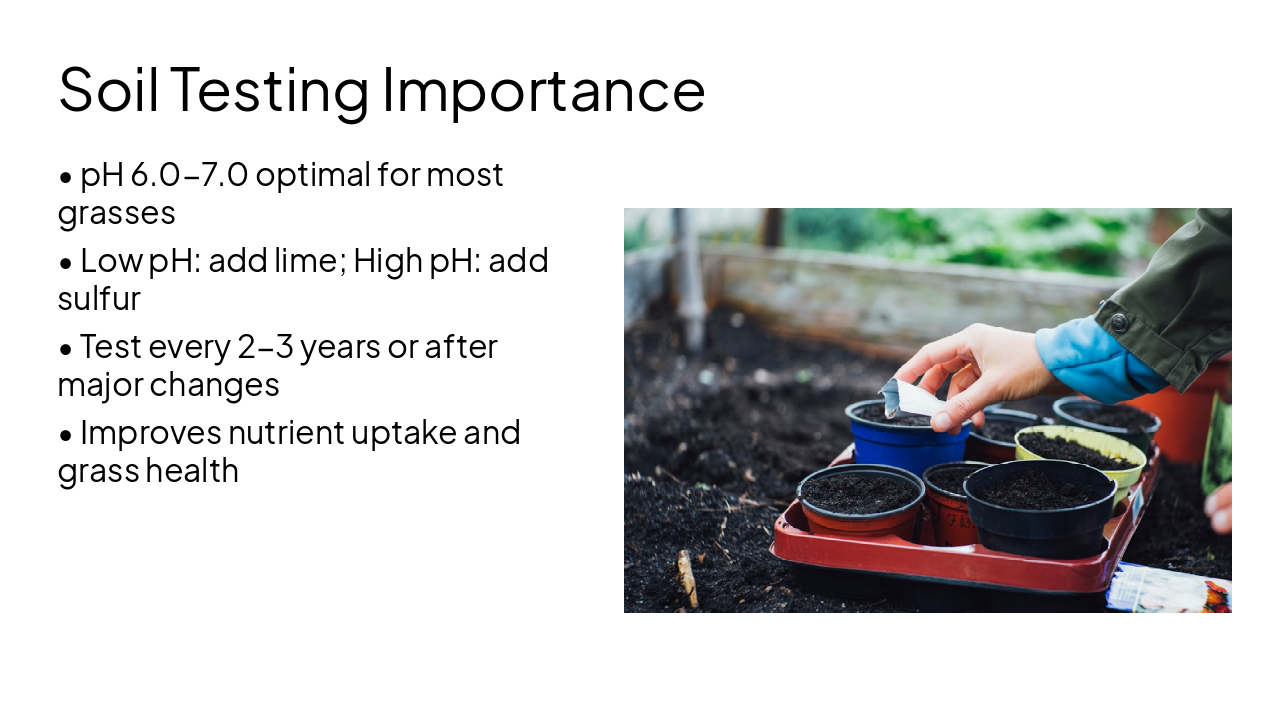
  • pH 6.0-7.0 optimal for most grasses
  • Low pH: add lime; High pH: add sulfur
  • Test every 2-3 years or after major changes
  • Improves nutrient uptake and grass health

---

Photo by Markus Spiske on Unsplash
Slide 10 - Soil Testing Importance
Slide 11 of 23

Slide 11 - Organic Lawn Management

  • Cares for lawns using organic horticulture, no synthetic pesticides or artificial fertilizers
  • Adapts sustainable gardening and organic farming methods
  • Required or encouraged in some municipalities and large properties
  • Promotes biodiversity, e.g., tapestry lawns for pollinators

Source: Wikipedia: Organic lawn management
Slide 11 - Organic Lawn Management
Slide 12 of 23

Slide 12 - Section 2

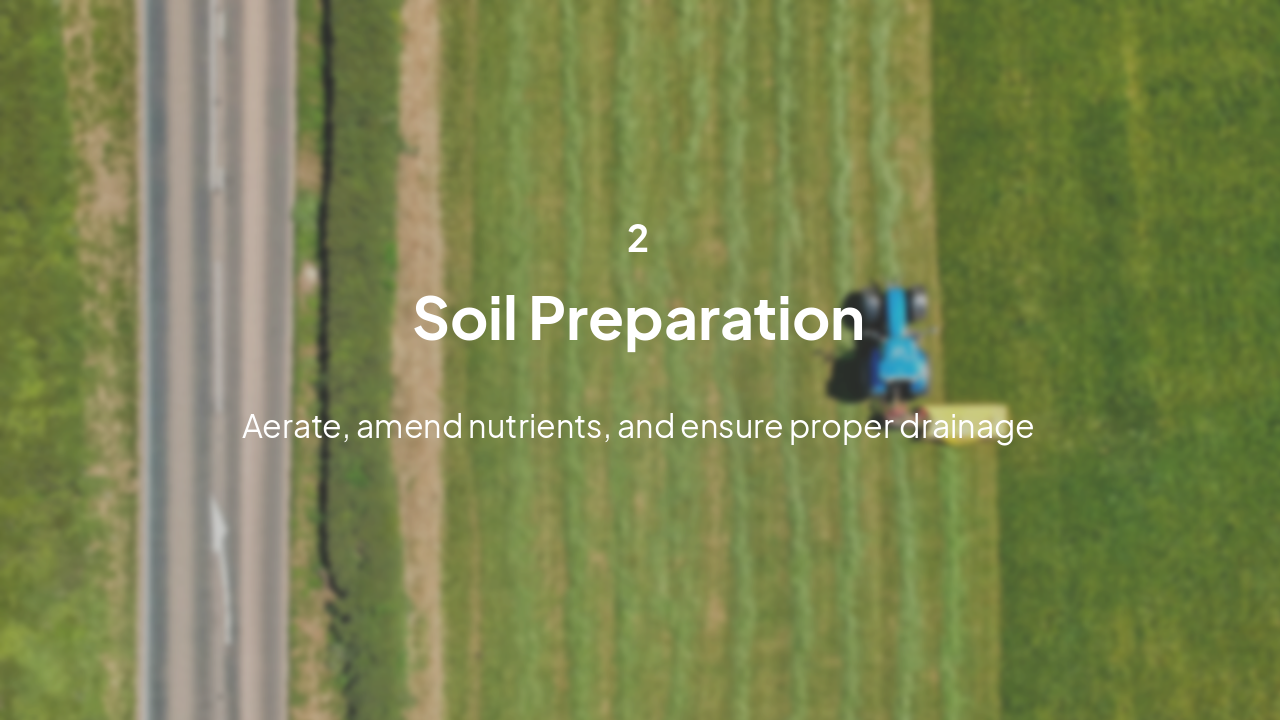
2

Soil Preparation

Aerate, amend nutrients, and ensure proper drainage

---

Photo by Red Zeppelin on Unsplash
Slide 12 - Section 2
Slide 13 of 23

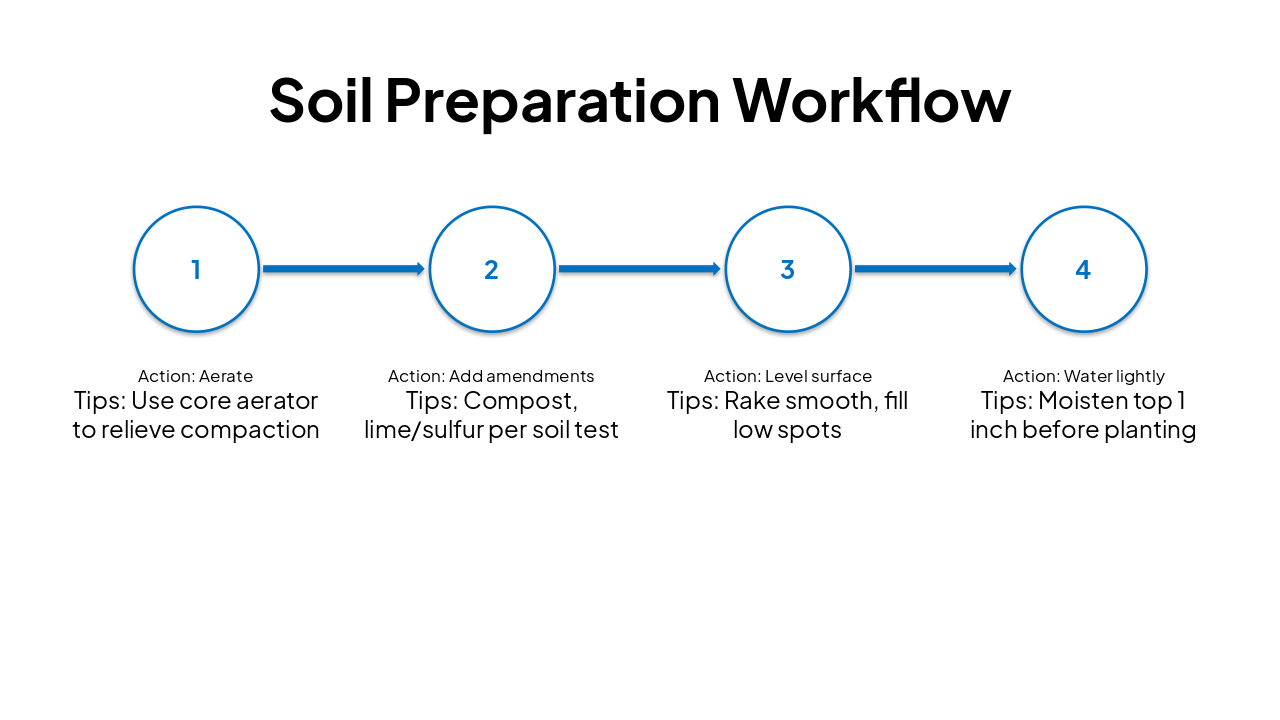
Slide 13 - Soil Preparation Workflow

StepActionTips
1AerateUse core aerator to relieve compaction
2Add amendmentsCompost, lime/sulfur per soil test
3Level surfaceRake smooth, fill low spots
4Water lightlyMoisten top 1 inch before planting
Slide 13 - Soil Preparation Workflow
Slide 14 of 23

Slide 14 - Environmental Impact

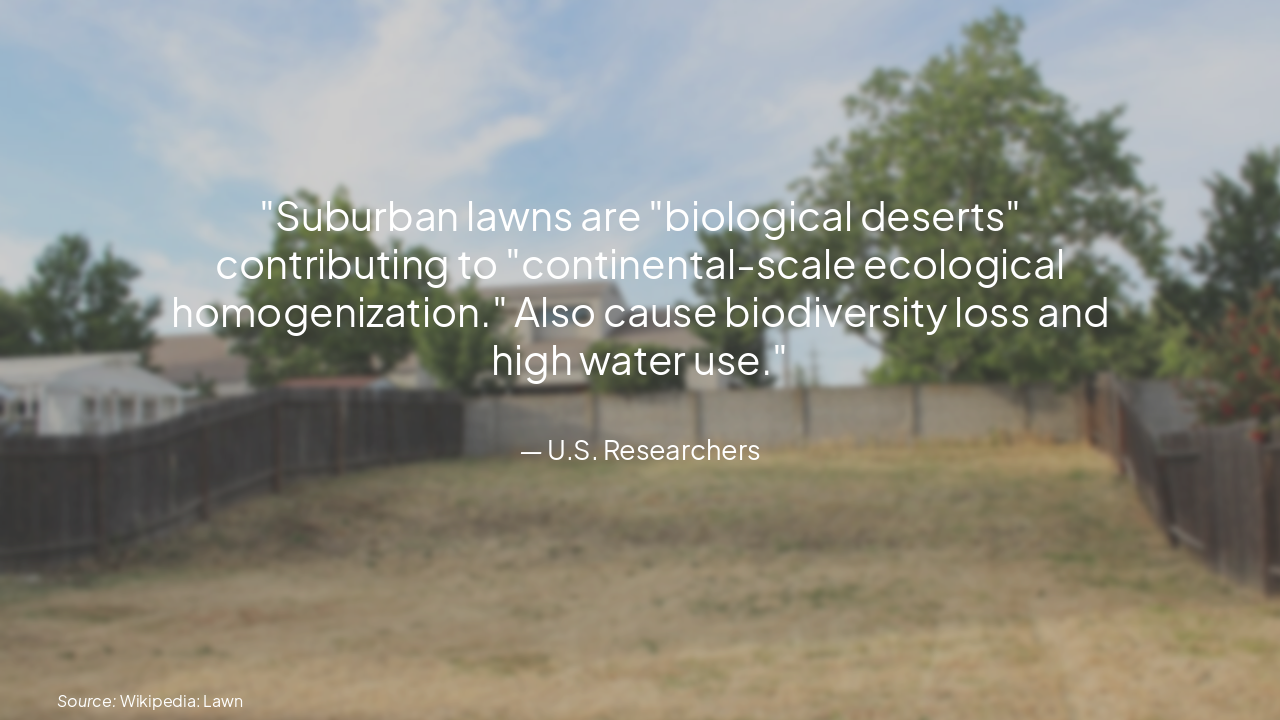
> Suburban lawns are "biological deserts" contributing to "continental-scale ecological homogenization." Also cause biodiversity loss and high water use.

— U.S. Researchers

---

Photo by Giorgio Trovato on Unsplash

Source: Wikipedia: Lawn
Slide 14 - Environmental Impact
Slide 15 of 23

Slide 15 - Section 3

3

Planting Options

Seed, sod, or plugs for new or renovated lawns

---

Photo by the iop on Unsplash

Slide 15 - Section 3
Slide 16 of 23

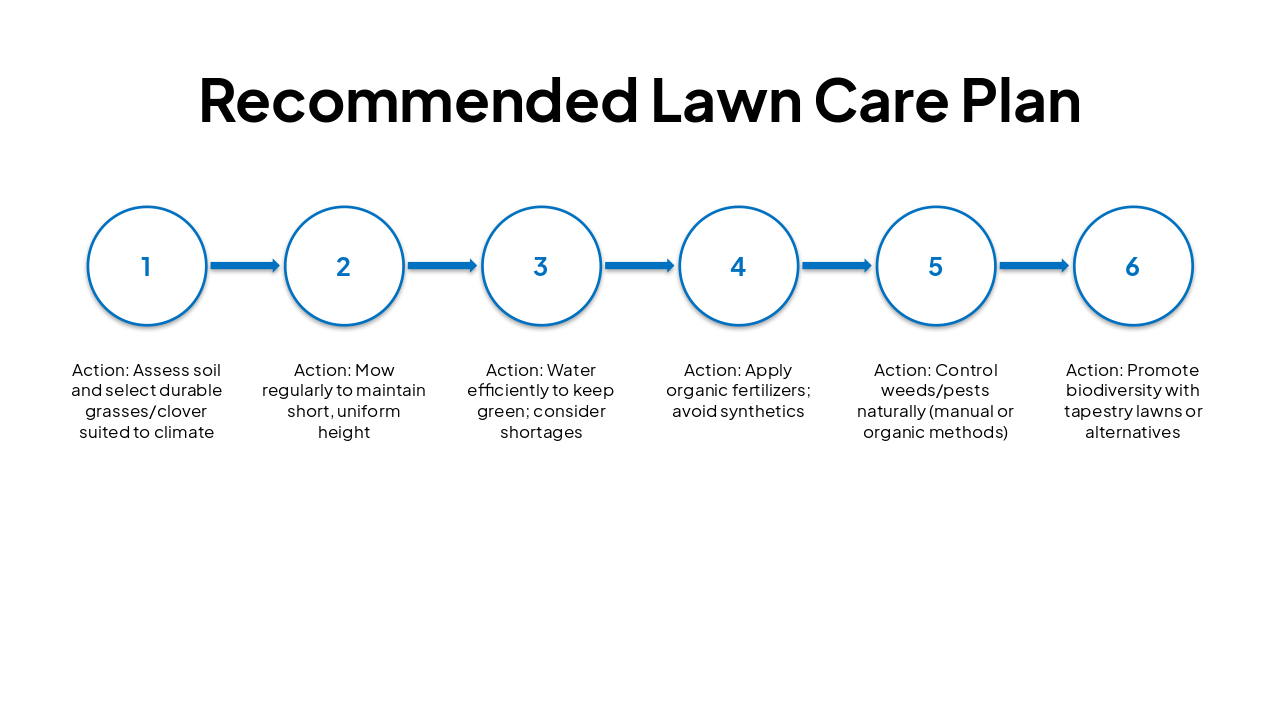
Slide 16 - Recommended Lawn Care Plan

StepAction
1Assess soil and select durable grasses/clover suited to climate
2Mow regularly to maintain short, uniform height
3Water efficiently to keep green; consider shortages
4Apply organic fertilizers; avoid synthetics
5Control weeds/pests naturally (manual or organic methods)
6Promote biodiversity with tapestry lawns or alternatives
Slide 16 - Recommended Lawn Care Plan
Slide 17 of 23

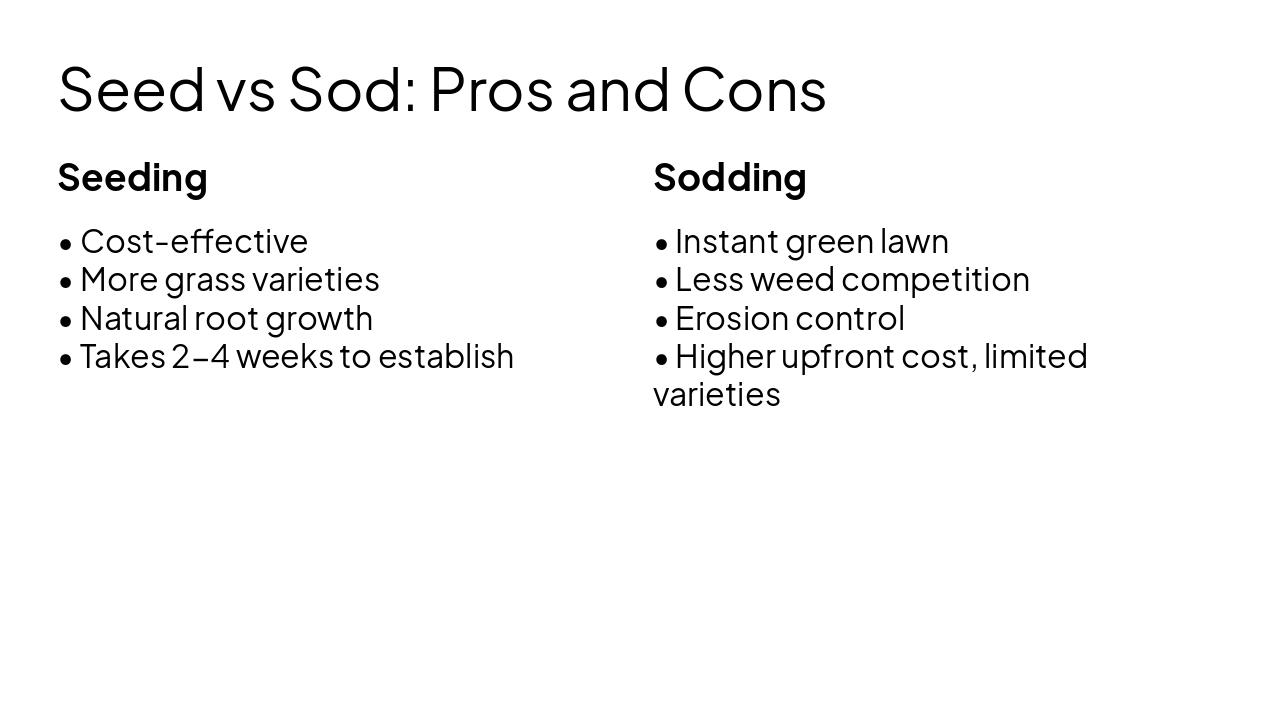
Slide 17 - Seed vs Sod: Pros and Cons

Seeding

  • Cost-effective
  • More grass varieties
  • Natural root growth
  • Takes 2-4 weeks to establish

Sodding

  • Instant green lawn
  • Less weed competition
  • Erosion control
  • Higher upfront cost, limited varieties
Slide 17 - Seed vs Sod: Pros and Cons
Slide 18 of 23

Slide 18 - Professional Resources

  • National Association of Landscape Professionals (NALP)
  • Represents over 100,000 professionals in lawn care, landscape management, design/installation
  • Formerly Professional Landcare Network (PLANET)
  • Key organization for industry standards and support

Source: Wikipedia: National Association of Landscape Professionals
Slide 18 - Professional Resources
Slide 19 of 23

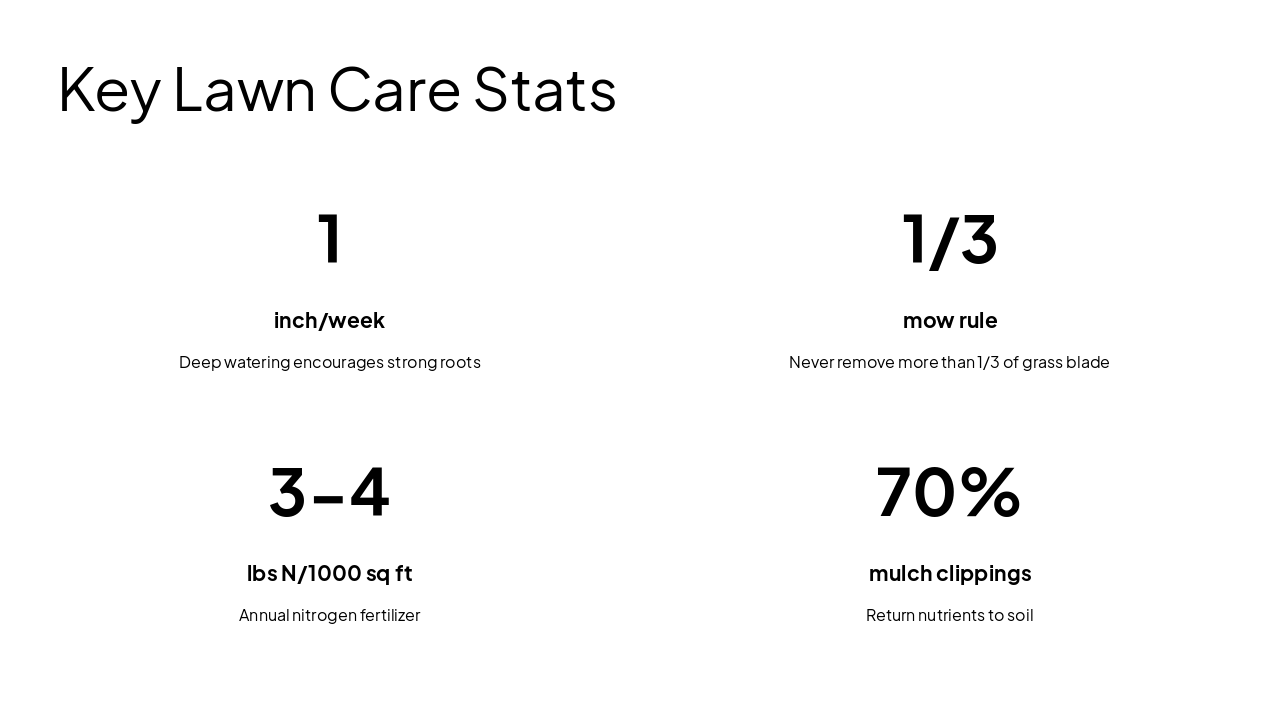
Slide 19 - Key Lawn Care Stats

  • 1: inch/week
  • 1/3: mow rule
  • 3-4: lbs N/1000 sq ft
  • 70%: mulch clippings
Slide 19 - Key Lawn Care Stats
Slide 20 of 23

Slide 20 - Conclusion

Adopt a sustainable lawn plan: Use organic methods, mow regularly, water wisely, and promote biodiversity to create a healthy, eco-friendly lawn.

Consult professionals like NALP for tailored advice. Thank you!

---

Photo by benjamin lehman on Unsplash
Slide 20 - Conclusion
Slide 21 of 23

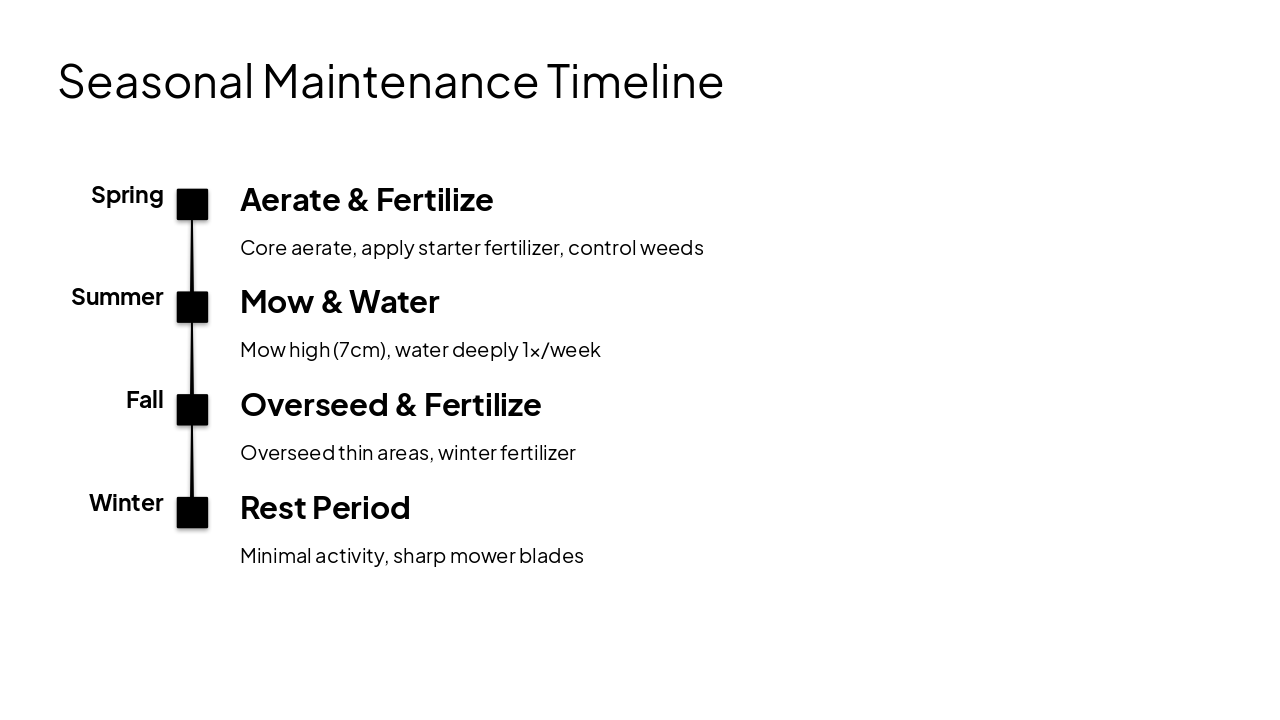
Slide 21 - Seasonal Maintenance Timeline

Spring: Aerate & Fertilize Core aerate, apply starter fertilizer, control weeds Summer: Mow & Water Mow high (7cm), water deeply 1x/week Fall: Overseed & Fertilize Overseed thin areas, winter fertilizer Winter: Rest Period Minimal activity, sharp mower blades
Slide 21 - Seasonal Maintenance Timeline
Slide 22 of 23

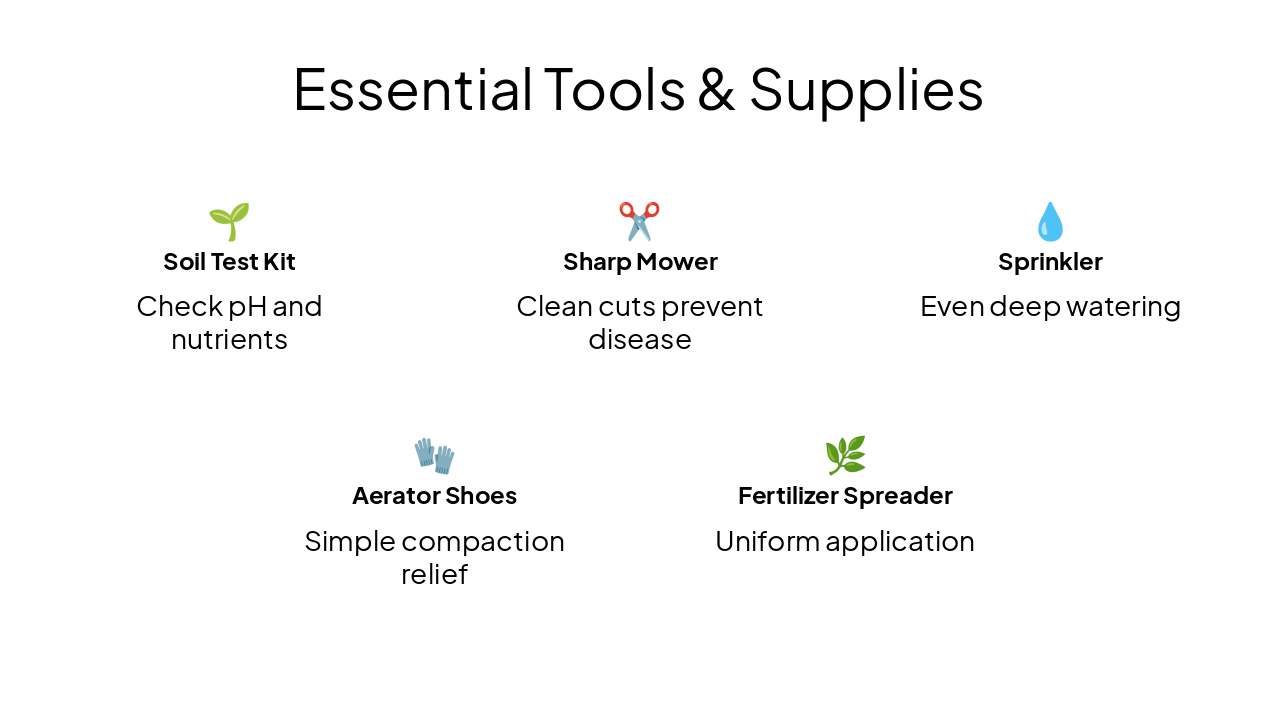
Slide 22 - Essential Tools & Supplies

🌱 Soil Test Kit Check pH and nutrients

✂️ Sharp Mower Clean cuts prevent disease

💧 Sprinkler Even deep watering

🧤 Aerator Shoes Simple compaction relief

🌿 Fertilizer Spreader Uniform application
Slide 22 - Essential Tools & Supplies
Slide 23 of 23

Slide 23 - Thank You!

Implement this Lawn Care Plan for a lush, healthy yard all year!

Key: Assess, Prepare, Plant, Maintain

Questions? Start with a soil test today.

---

Photo by Kier in Sight Archives on Unsplash
Slide 23 - Thank You!

Discover More Presentations

Explore thousands of AI-generated presentations for inspiration

Browse Presentations
Powered by AI

Create Your Own Presentation

Generate professional presentations in seconds with Karaf's AI. Customize this presentation or start from scratch.

Create New Presentation

Powered by Karaf.ai — AI-Powered Presentation Generator