Renewables: Powering a Sustainable Future

Generated from prompt:

Create a comprehensive 5-slide presentation about renewable energy

This 5-slide presentation explores renewable energy fundamentals, including definitions, types like solar and wind, thermal energy storage, benefits, global impact, and a call to embrace renewables fo

November 19, 202510 slides
Slide 1 of 10

Slide 1 - Renewable Energy Overview

The slide, titled "Renewable Energy Overview," serves as a title page for an introduction to the topic. Its subtitle welcomes viewers to the concept of clean, sustainable power that harnesses nature's resources without causing depletion.

Renewable Energy Overview

Welcome to clean, sustainable power harnessing nature's gifts without depletion.
Slide 1
Slide 2 of 10

Slide 2 - Renewable Energy Overview

The slide features the title "Renewable Energy Overview," serving as an introductory title slide. Its subtitle, "Exploring Sources and Their Role in Sustainability," highlights the focus on renewable energy sources and their contributions to sustainable practices.

Renewable Energy Overview

Exploring Sources and Their Role in Sustainability

--- Speaker Notes: Welcome slide introducing the topic of renewable energy sources and their role in sustainability. (45 chars)

Slide 2
Slide 3 of 10

Slide 3 - What is Renewable Energy?

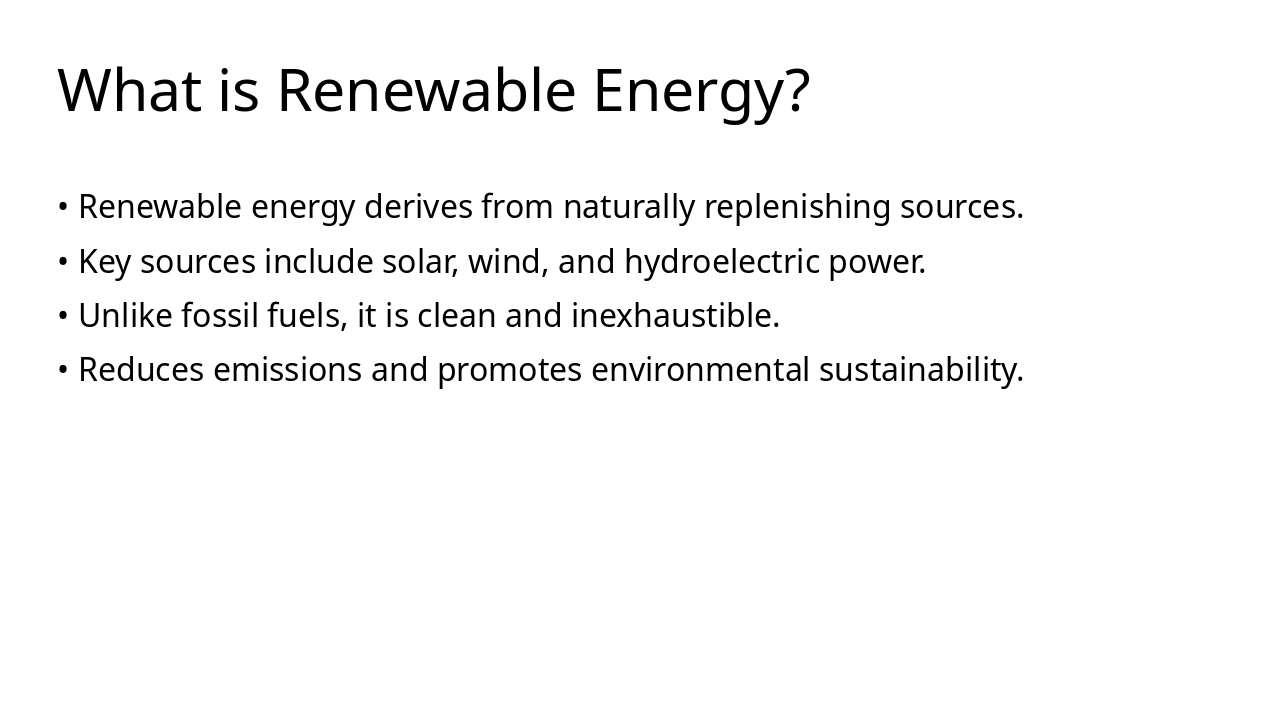
Renewable energy comes from naturally replenishing sources like solar, wind, and hydroelectric power, making it a clean and inexhaustible alternative to fossil fuels. It significantly reduces emissions and supports environmental sustainability.

What is Renewable Energy?

  • Renewable energy derives from naturally replenishing sources.
  • Key sources include solar, wind, and hydroelectric power.
  • Unlike fossil fuels, it is clean and inexhaustible.
  • Reduces emissions and promotes environmental sustainability.
Slide 3
Slide 4 of 10

Slide 4 - Presentation Agenda

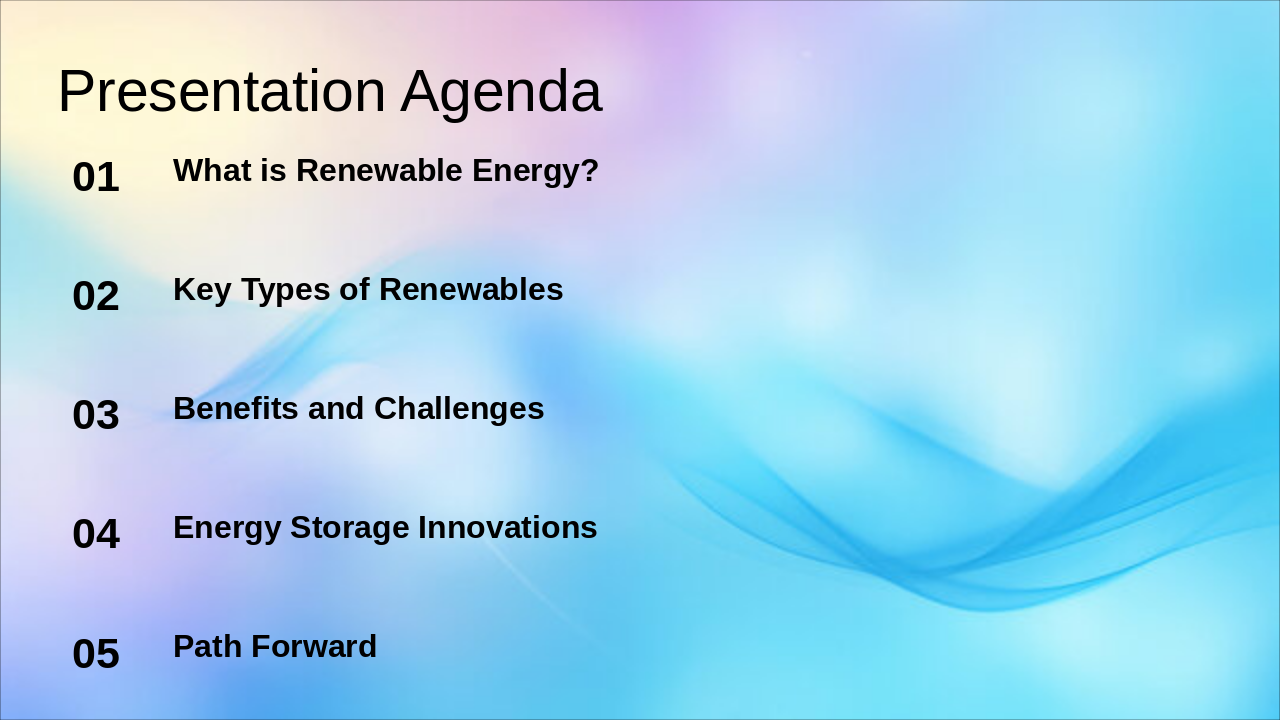
The presentation agenda outlines a structured discussion on renewable energy, beginning with a definition of what renewable energy is. It then covers key types of renewables, their benefits and challenges, innovations in energy storage, and concludes with a path forward.

Presentation Agenda

  1. What is Renewable Energy?
  1. Key Types of Renewables
  1. Benefits and Challenges
  1. Energy Storage Innovations
  1. Path Forward
Slide 4
Slide 5 of 10

Slide 5 - Types of Renewable Energy

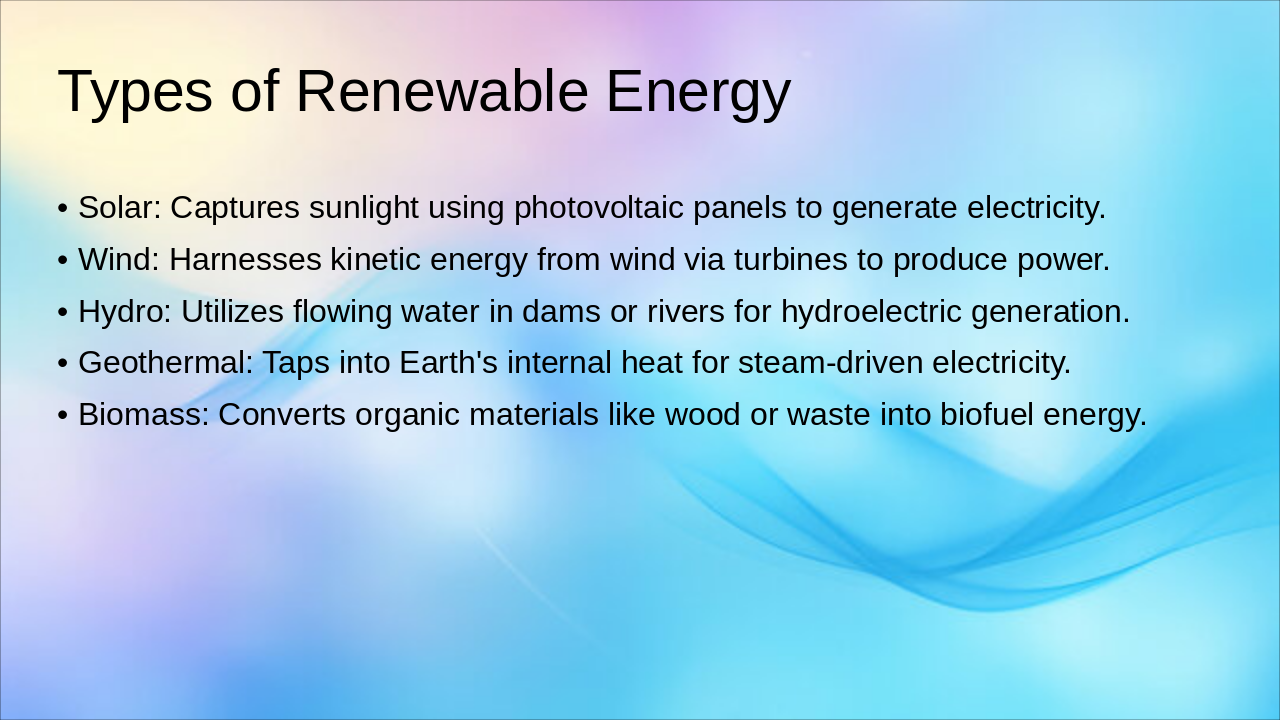
Renewable energy sources harness natural, replenishable resources to generate power sustainably. The slide outlines key types: solar via photovoltaic panels capturing sunlight; wind through turbines harnessing kinetic energy; hydro using flowing water in dams or rivers; geothermal tapping Earth's internal heat for steam; and biomass converting organic materials like wood or waste into biofuel.

Types of Renewable Energy

  • Solar: Captures sunlight using photovoltaic panels to generate electricity.
  • Wind: Harnesses kinetic energy from wind via turbines to produce power.
  • Hydro: Utilizes flowing water in dams or rivers for hydroelectric generation.
  • Geothermal: Taps into Earth's internal heat for steam-driven electricity.
  • Biomass: Converts organic materials like wood or waste into biofuel energy.
Slide 5
Slide 6 of 10

Slide 6 - Types of Renewable Energy

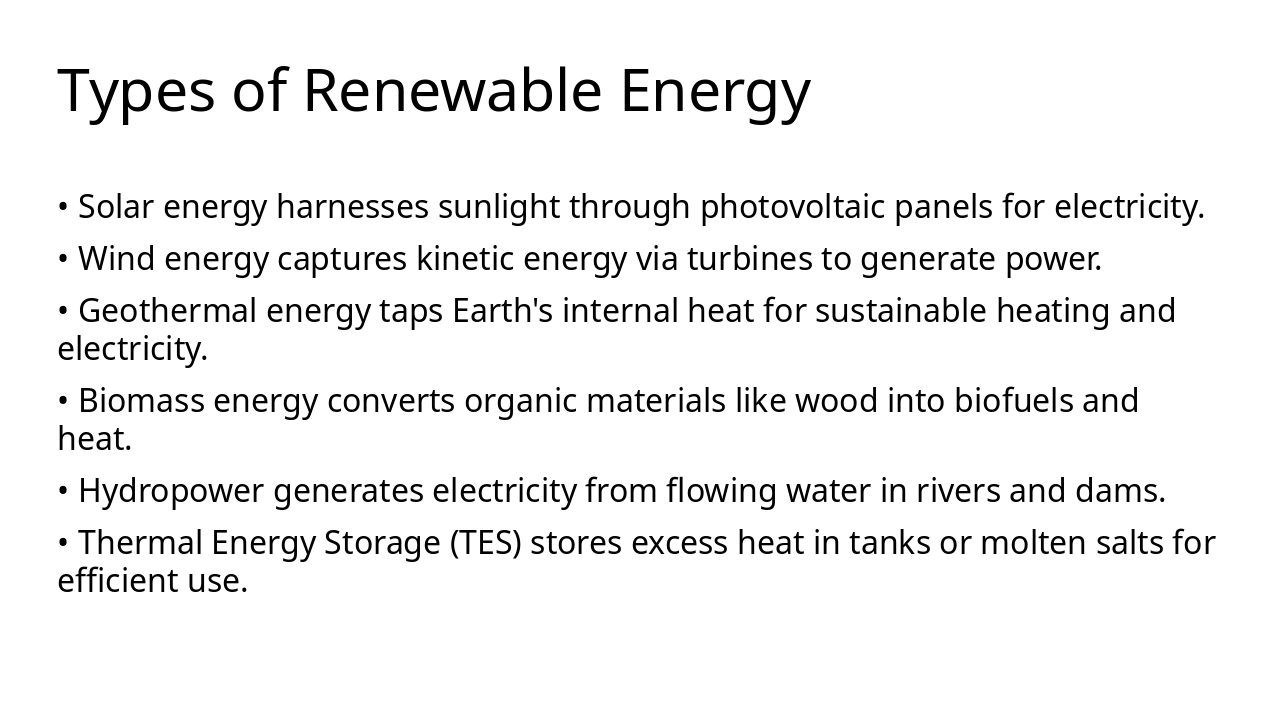
Renewable energy sources include solar, which uses photovoltaic panels to convert sunlight into electricity; wind, harnessing turbine-captured kinetic energy; geothermal, tapping Earth's internal heat for power and heating; biomass, converting organic materials into biofuels and heat; and hydropower, generating electricity from flowing water in rivers and dams. The slide also covers thermal energy storage (TES), which efficiently stores excess heat in tanks or molten salts for later use.

Types of Renewable Energy

  • Solar energy harnesses sunlight through photovoltaic panels for electricity.
  • Wind energy captures kinetic energy via turbines to generate power.
  • Geothermal energy taps Earth's internal heat for sustainable heating and electricity.
  • Biomass energy converts organic materials like wood into biofuels and heat.
  • Hydropower generates electricity from flowing water in rivers and dams.
  • Thermal Energy Storage (TES) stores excess heat in tanks or molten salts for efficient use.
Slide 6
Slide 7 of 10

Slide 7 - Thermal Energy Storage (TES)

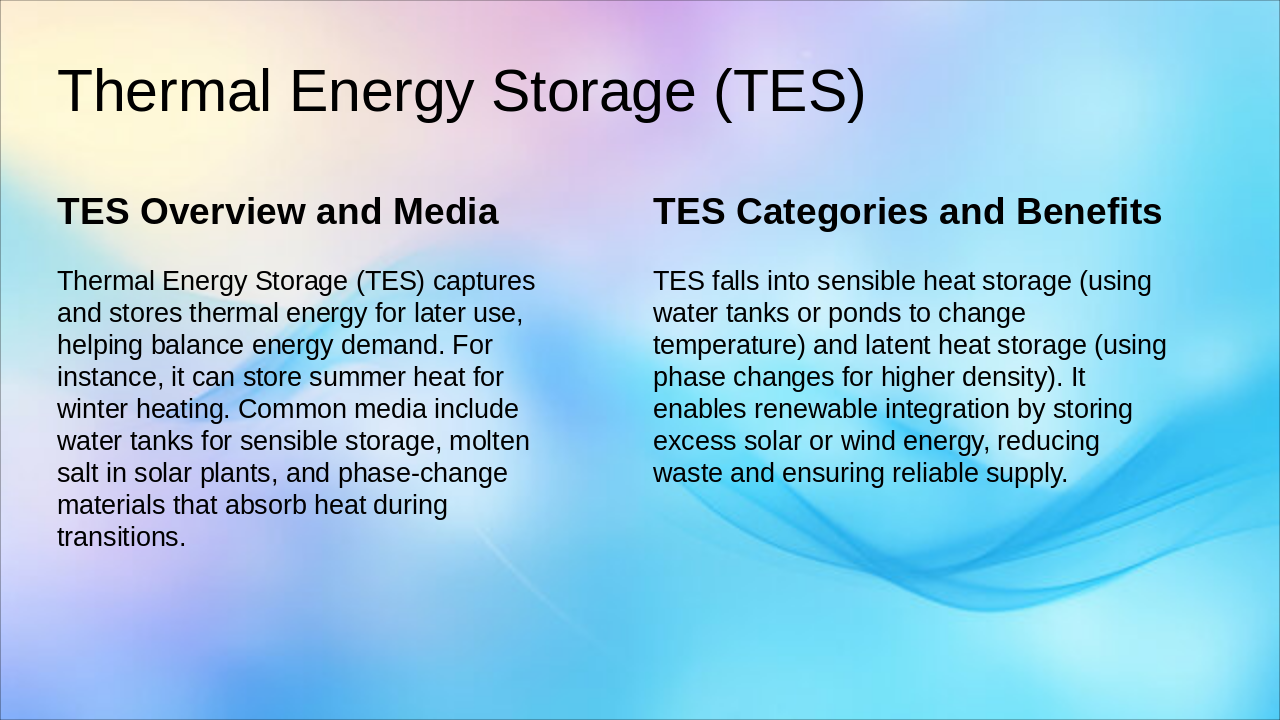
Thermal Energy Storage (TES) captures and stores thermal energy for later use to balance demand, such as saving summer heat for winter, using media like water tanks for sensible storage, molten salt in solar plants, and phase-change materials for latent storage. TES categories include sensible heat (via temperature changes in tanks or ponds) and latent heat (via phase transitions for denser storage), offering benefits like integrating renewables by storing excess solar or wind energy to minimize waste and ensure reliable supply.

Thermal Energy Storage (TES)

TES Overview and MediaTES Categories and Benefits
Thermal Energy Storage (TES) captures and stores thermal energy for later use, helping balance energy demand. For instance, it can store summer heat for winter heating. Common media include water tanks for sensible storage, molten salt in solar plants, and phase-change materials that absorb heat during transitions.TES falls into sensible heat storage (using water tanks or ponds to change temperature) and latent heat storage (using phase changes for higher density). It enables renewable integration by storing excess solar or wind energy, reducing waste and ensuring reliable supply.

--- Speaker Notes: Explain how TES helps balance renewable energy supply and demand, with examples of storage media.

Slide 7
Slide 8 of 10

Slide 8 - Benefits and Global Impact

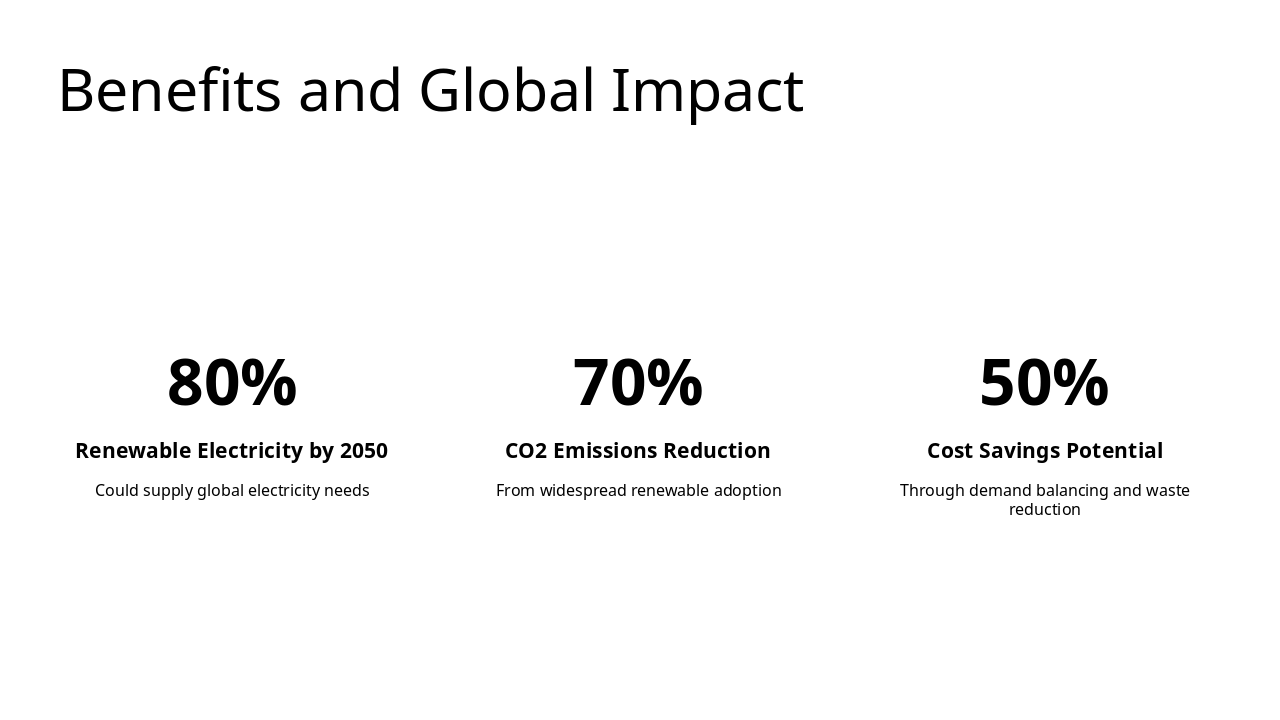
By 2050, renewable sources could supply 80% of global electricity needs, while widespread adoption might reduce CO2 emissions by 70%. Additionally, these efforts offer a 50% potential in cost savings through better demand balancing and waste reduction.

Benefits and Global Impact

  • 80%: Renewable Electricity by 2050

Could supply global electricity needs

  • 70%: CO2 Emissions Reduction

From widespread renewable adoption

  • 50%: Cost Savings Potential

Through demand balancing and waste reduction

Slide 8
Slide 9 of 10

Slide 9 - Embracing Renewables

The slide "Embracing Renewables" highlights how renewable energy cuts emissions, boosts energy security, and sparks innovation, while Thermal Energy Storage (TES) addresses intermittency challenges. It urges immediate action to join the renewable revolution for a sustainable future.

Embracing Renewables

Renewable energy reduces emissions, ensures energy security, and drives innovation. With TES, we overcome intermittency. Act now for a greener planet!

Join the renewable revolution today for a sustainable tomorrow.

Slide 9
Slide 10 of 10

Slide 10 - Conclusion: Towards a Green Future

The conclusion slide emphasizes that renewables and thermal energy storage (TES) are essential for achieving energy security, under the subtitle "A Green Future Awaits." It delivers a closing message to "Embrace Sustainability Today" and urges viewers to adopt sustainable practices now for a greener future.

Conclusion: Towards a Green Future

Renewables and TES are vital for energy security.

Closing Message: Embrace Sustainability Today (3 words)

Call to Action: Adopt sustainable practices now for a greener future. (8 words)

A Green Future Awaits

Slide 10
Powered by AI

Create Your Own Presentation

Generate professional presentations in seconds with Karaf's AI. Customize this presentation or start from scratch.

Create New Presentation

Powered by Karaf.ai — AI-Powered Presentation Generator