Slide 1 of 13
Slide 1 - Real-Time Big Data Processing for AI Systems
Real-Time Big Data Processing for AI Systems
Enabling Intelligent, Responsive, and Scalable AI Systems
---
Photo by Tom Parkes on Unsplash
Generated from prompt:
Create a professional presentation about "Real-Time Big Data Processing for AI Systems". The presentation should contain 10–12 slides and be suitable for a technical audience (students or professionals in computer science). Include the following sections: Introduction to Big Data and AI What is Real-Time Data Processing Importance of Real-Time Processing in AI Systems Key Technologies (e.g., Apache Kafka, Apache Spark, Flink) Architecture of Real-Time Data Pipelines Use Cases (e.g., recommendation systems, fraud detection, autonomous systems) Challenges (latency, scalability, data consistency) Advantages and Limitations Future Trends Conclusion Use clear bullet points, simple explanations, and include diagrams or visuals where possible. Keep the design modern and professional.
This presentation dives into real-time big data processing for AI systems, covering fundamentals, key technologies like Kafka, Spark, and Flink, pipeline architectures, real-world use cases such as fraud detection and recommendations, challenges like
Real-Time Big Data Processing for AI Systems
Enabling Intelligent, Responsive, and Scalable AI Systems
---
Photo by Tom Parkes on Unsplash
1
Transforming static data into dynamic intelligence
---
Photo by Paul Hanaoka on Unsplash

2
The core technologies powering the ecosystem
---
Photo by Conny Schneider on Unsplash
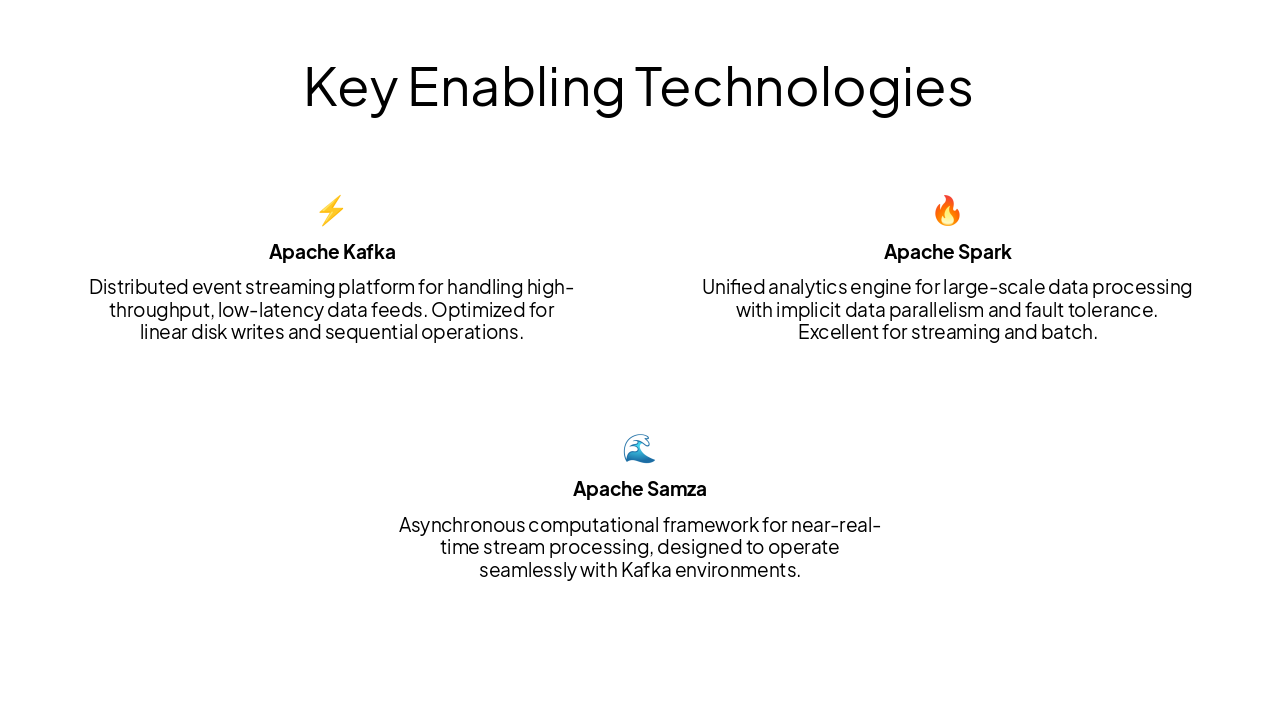
⚡ Apache Kafka Distributed event streaming platform for handling high-throughput, low-latency data feeds. Optimized for linear disk writes and sequential operations.
🔥 Apache Spark Unified analytics engine for large-scale data processing with implicit data parallelism and fault tolerance. Excellent for streaming and batch.
🌊 Apache Samza Asynchronous computational framework for near-real-time stream processing, designed to operate seamlessly with Kafka environments.
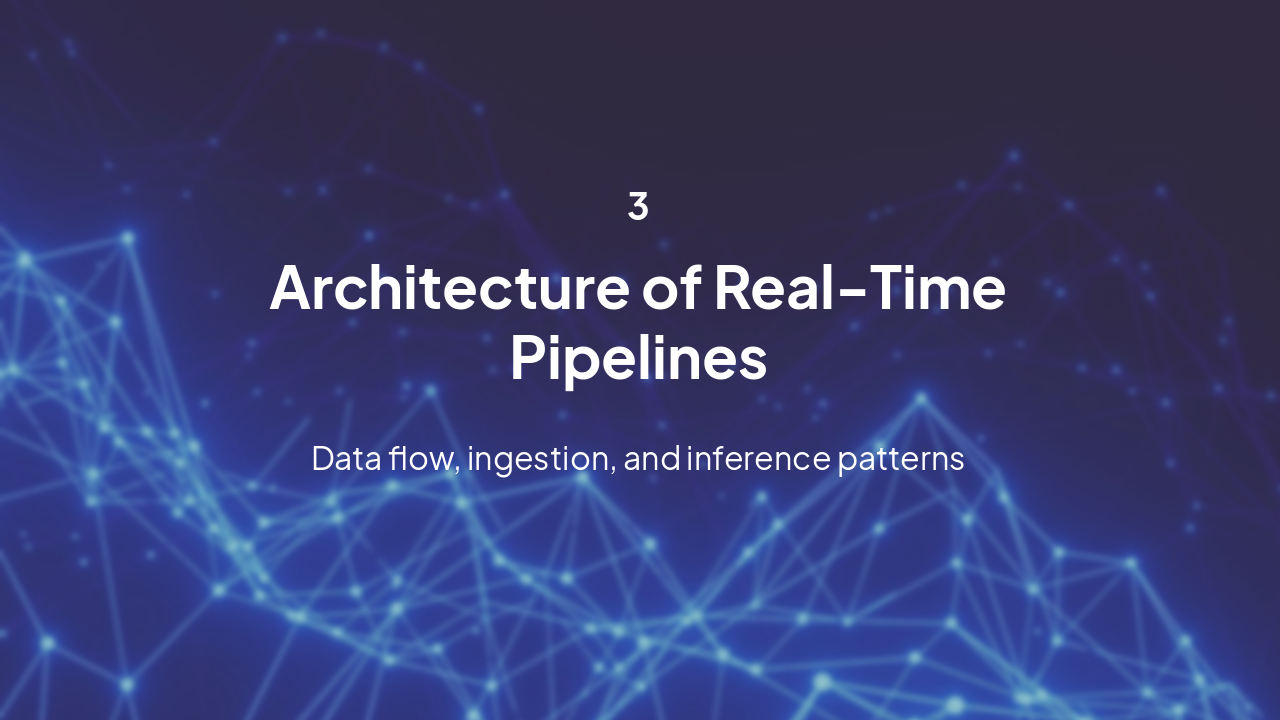
3
Data flow, ingestion, and inference patterns
---
Photo by Conny Schneider on Unsplash
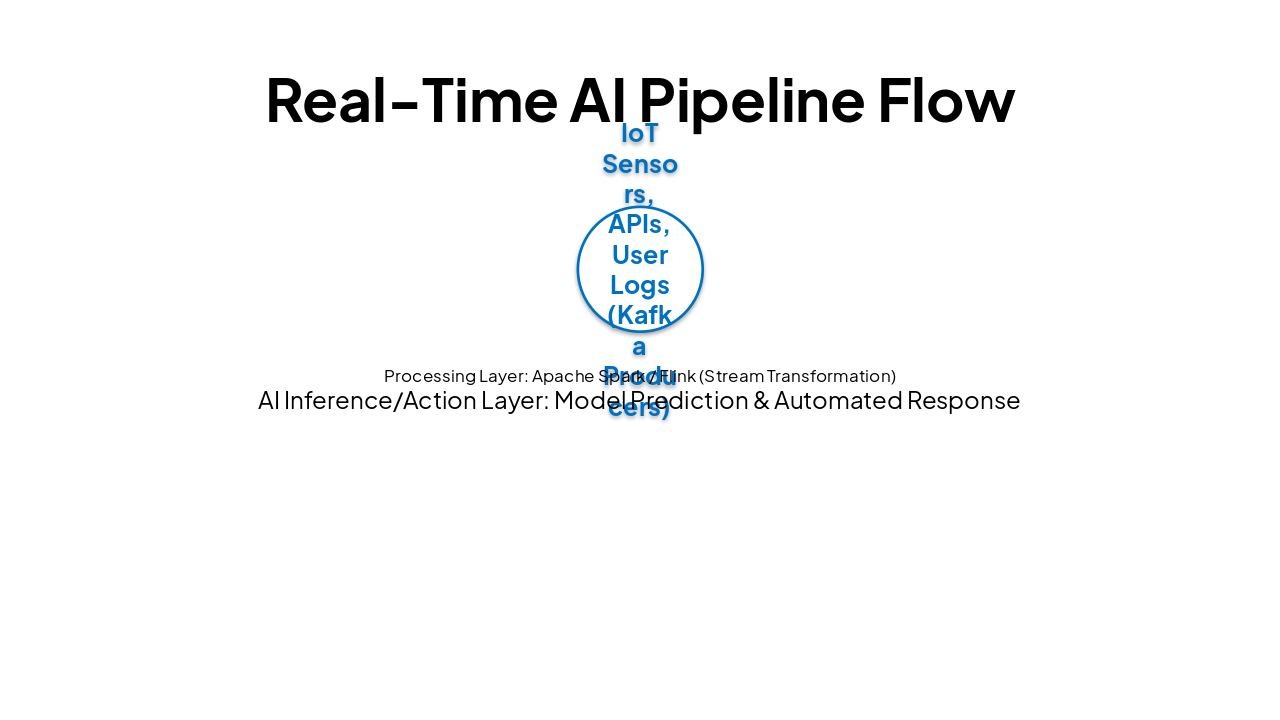
| Ingestion Layer | Processing Layer | AI Inference/Action Layer |
|---|---|---|
| IoT Sensors, APIs, User Logs (Kafka Producers) | Apache Spark / Flink (Stream Transformation) | Model Prediction & Automated Response |
4
Practical implementations and technical constraints
---
Photo by Timon Studler on Unsplash
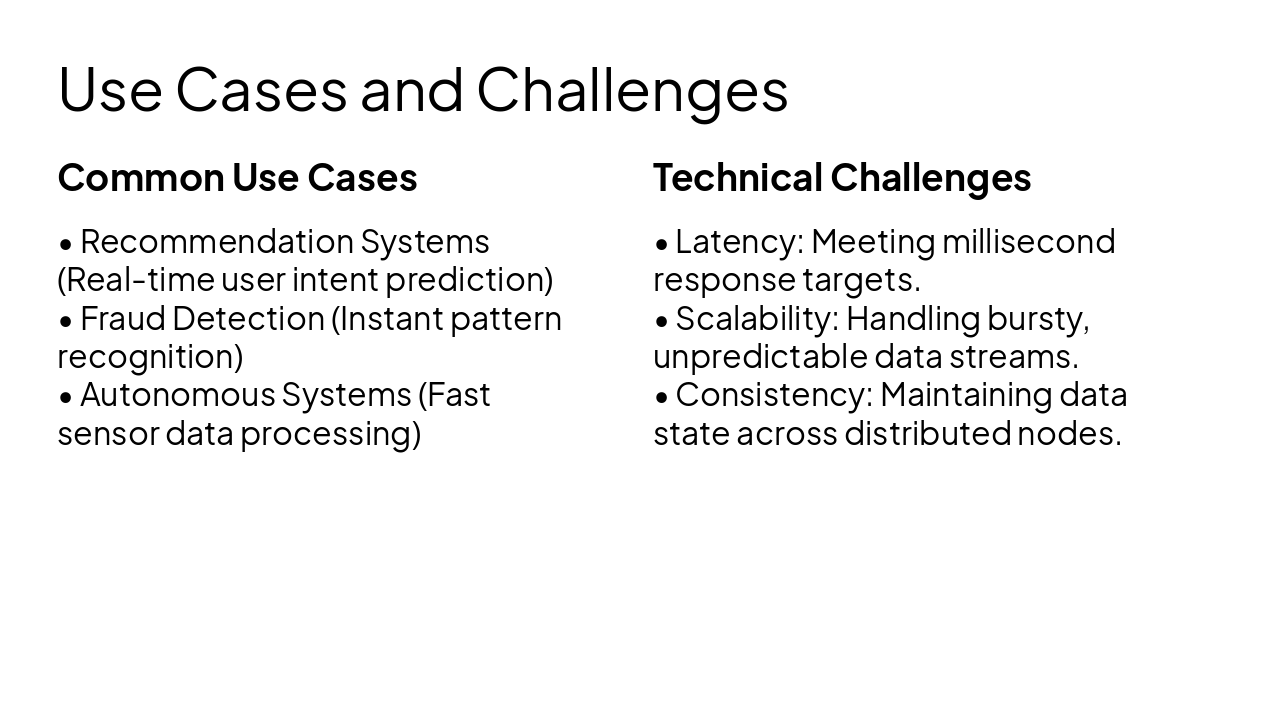
Common Use Cases
Technical Challenges
5
The path forward for real-time AI systems
Generating slide...
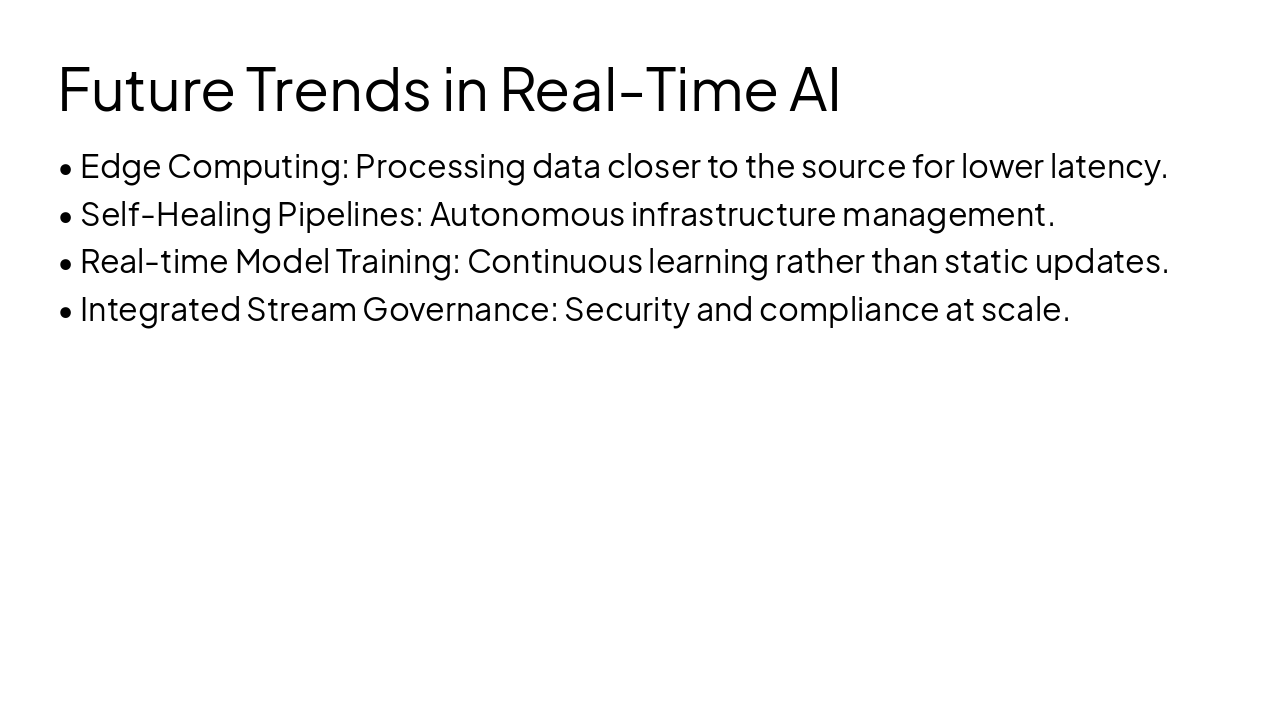
Building Intelligent Systems for the Real-Time Era
Real-time processing is the foundational pillar for the next generation of intelligent, reactive AI applications. Designing for velocity, scalability, and consistency remains the core engineering objective.
---
Photo by Rodeo Project Management Software on Unsplash
Explore thousands of AI-generated presentations for inspiration
Generate professional presentations in seconds with Karaf's AI. Customize this presentation or start from scratch.