Turtles: Guardians of Earth and Ocean

Generated from prompt:

Create a Google Slides presentation about turtles. Include 10-12 slides with engaging titles, concise bullet points, and suggested visuals. Cover: introduction to turtles, types of turtles (sea, freshwater, tortoises), anatomy, habitats, diet, life cycle, behavior, role in ecosystems, threats (pollution, climate change, poaching), conservation efforts, fun facts, and conclusion. Use a clean, nature-inspired theme with greens and blues, and include image suggestions for each slide.

This presentation delves into the fascinating world of turtles (Order Testudines), covering their evolutionary history, types (sea, freshwater, tortoises), anatomy and shell structure, life cycle, behavior, ecosystems, threats like pollution and poa

April 7, 202611 slides
Slide 1 of 11

Slide 1 - Turtles Presentation

Turtles: Guardians of the Earth and Ocean

An Exploration of the Ancient Reptilian Order Testudines
Slide 1 - Turtles Presentation
Slide 2 of 11

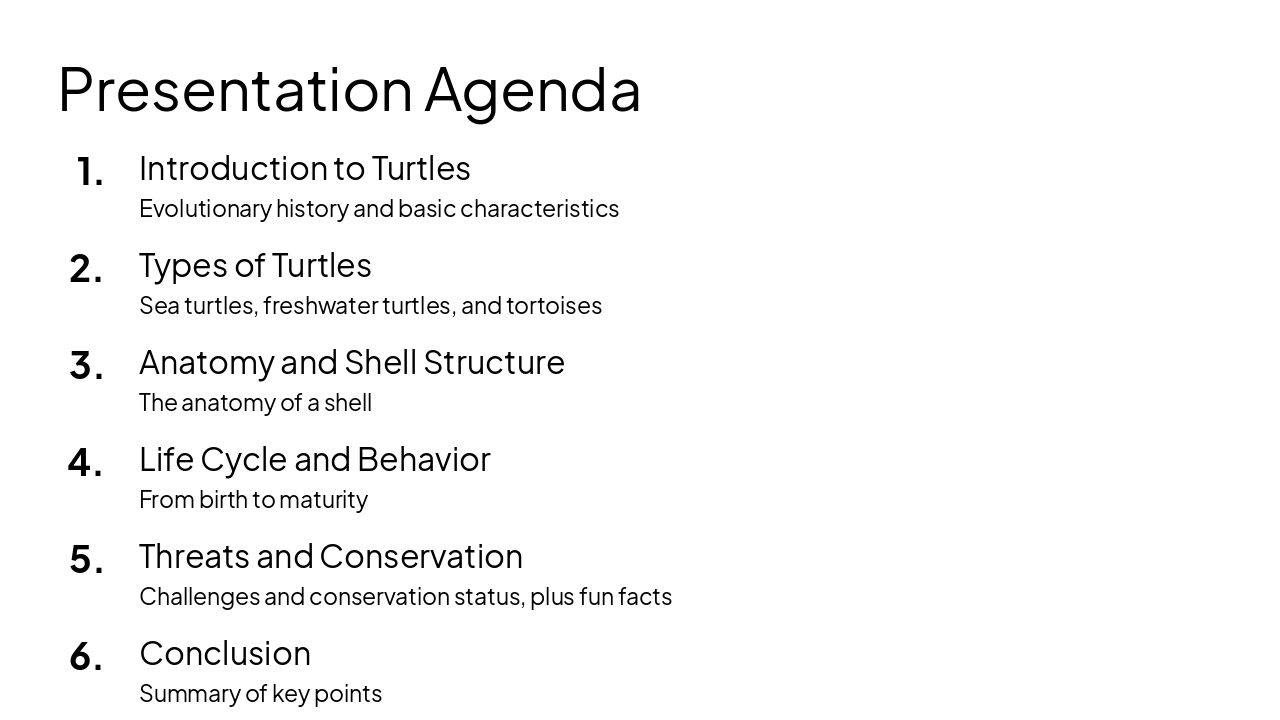
Slide 2 - Presentation Agenda

  • Introduction to Turtles: Evolutionary history and basic characteristics
  • Types of Turtles: Sea turtles, freshwater turtles, and tortoises
  • Anatomy and Shell Structure: The anatomy of a shell
  • Life Cycle and Behavior: From birth to maturity
  • Threats and Conservation: Challenges and conservation status, plus fun facts
  • Conclusion: Summary of key points
Slide 2 - Presentation Agenda
Slide 3 of 11

Slide 3 - Introduction to Turtles

  • Order: Testudines, consisting of 360 living and extinct species.
  • Amniotes that breathe air, though many live in water.
  • Ectotherms: body temperature varies with the environment.
  • Opportunistic omnivores feeding on plants and slow-moving animals.
  • Found on most continents, islands, and in all major oceans.
Slide 3 - Introduction to Turtles
Slide 4 of 11

Slide 4 - Major Types of Turtles

  • Sea Turtles: Marine experts with flippers, like the Leatherback or Green Turtle.
  • Freshwater Turtles: Often called terrapins, inhabiting lagoons and rivers.
  • Tortoises: Land-dwelling giants with sturdy, thick legs and domed shells.
Slide 4 - Major Types of Turtles
Slide 5 of 11

Slide 5 - Anatomy and Shell Structure

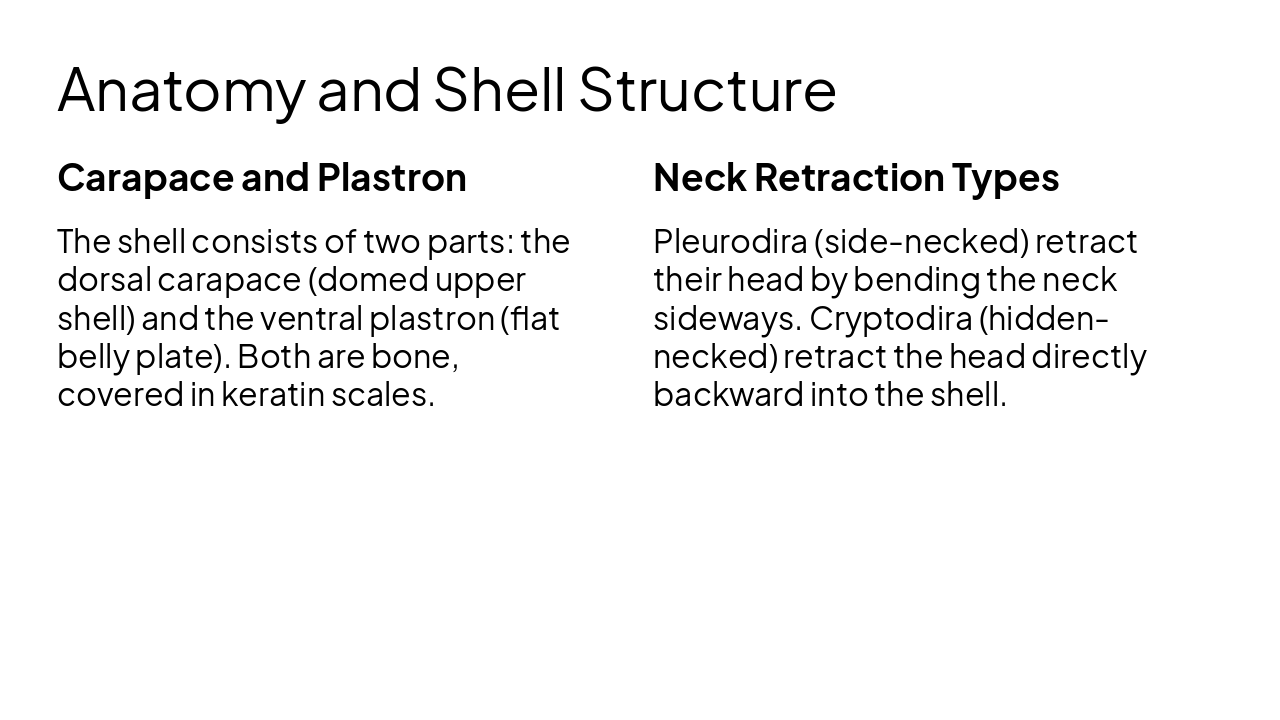
Carapace and Plastron The shell consists of two parts: the dorsal carapace (domed upper shell) and the ventral plastron (flat belly plate). Both are bone, covered in keratin scales.

Neck Retraction Types Pleurodira (side-necked) retract their head by bending the neck sideways. Cryptodira (hidden-necked) retract the head directly backward into the shell.
Slide 5 - Anatomy and Shell Structure
Slide 6 of 11

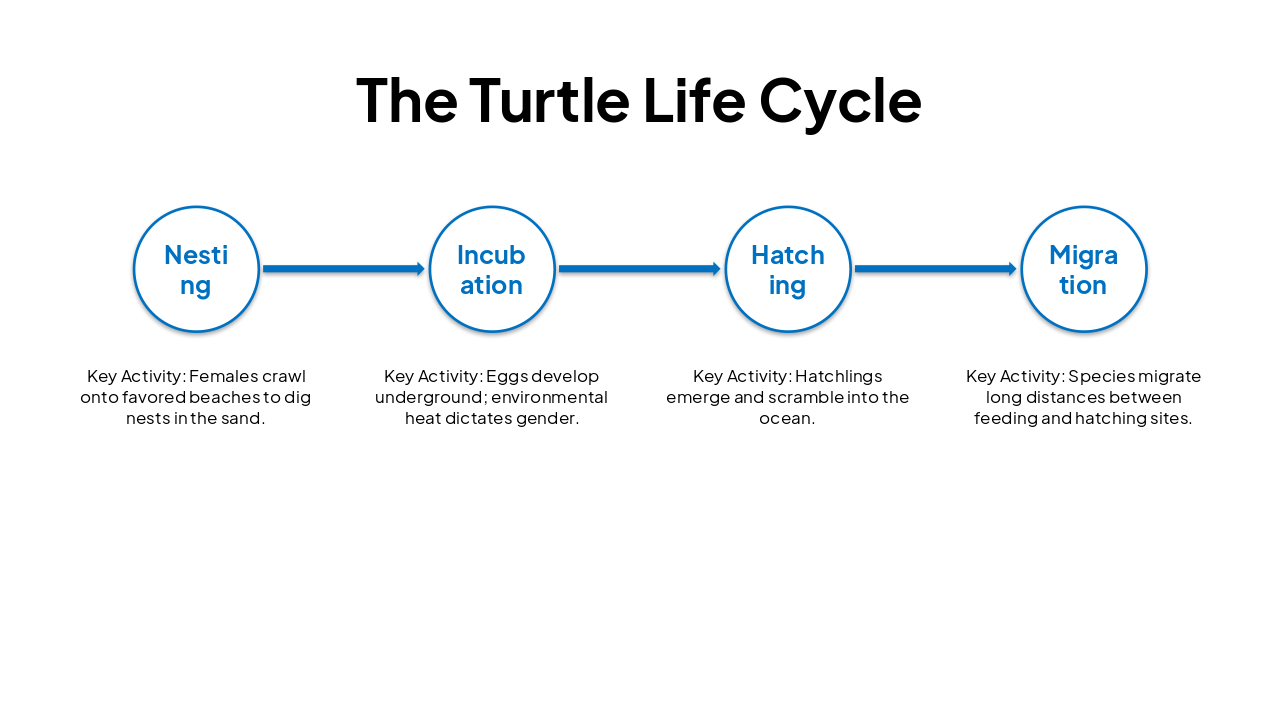
Slide 6 - The Turtle Life Cycle

StageKey Activity
NestingFemales crawl onto favored beaches to dig nests in the sand.
IncubationEggs develop underground; environmental heat dictates gender.
HatchingHatchlings emerge and scramble into the ocean.
MigrationSpecies migrate long distances between feeding and hatching sites.
Slide 6 - The Turtle Life Cycle
Slide 7 of 11

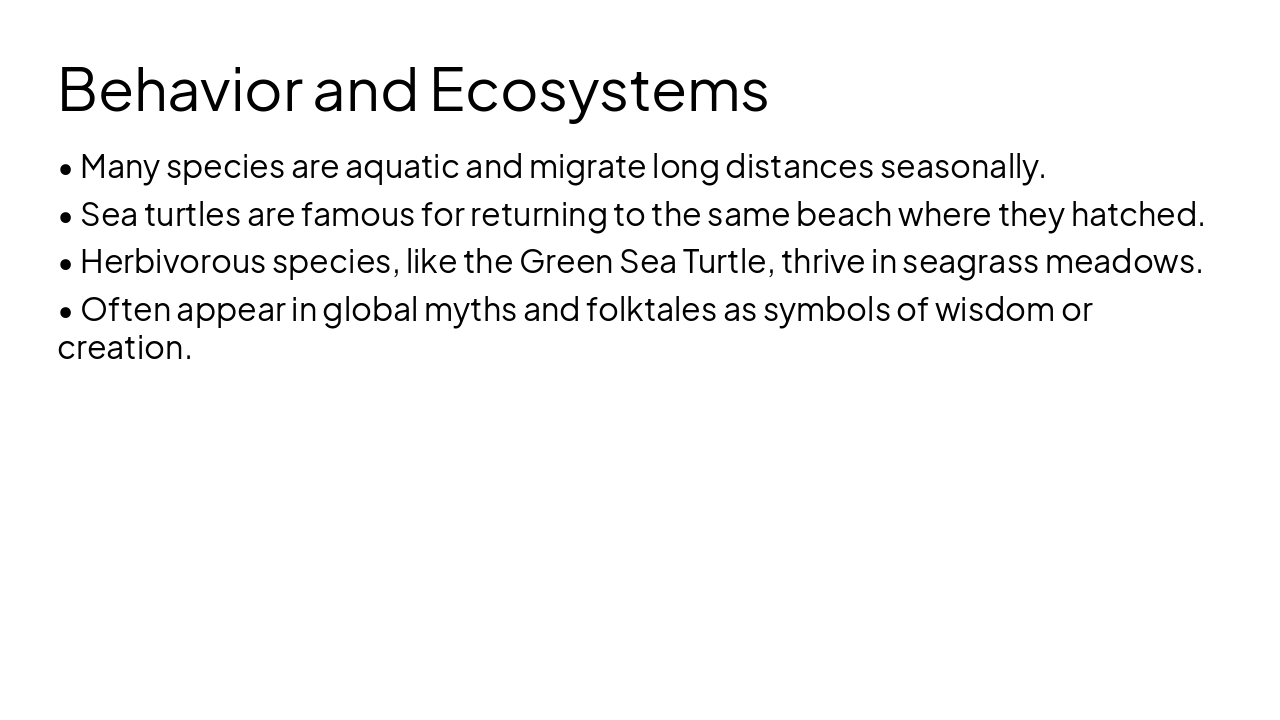
Slide 7 - Behavior and Ecosystems

  • Many species are aquatic and migrate long distances seasonally.
  • Sea turtles are famous for returning to the same beach where they hatched.
  • Herbivorous species, like the Green Sea Turtle, thrive in seagrass meadows.
  • Often appear in global myths and folktales as symbols of wisdom or creation.
Slide 7 - Behavior and Ecosystems
Slide 8 of 11

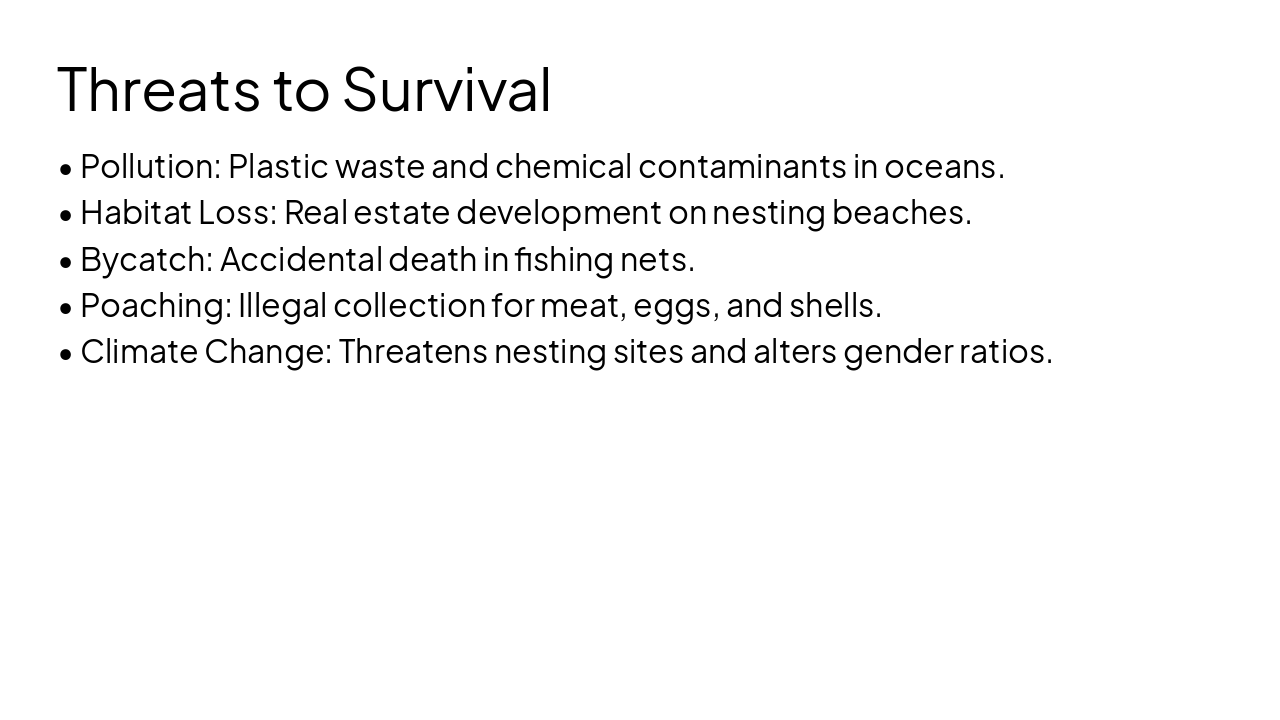
Slide 8 - Threats to Survival

  • Pollution: Plastic waste and chemical contaminants in oceans.
  • Habitat Loss: Real estate development on nesting beaches.
  • Bycatch: Accidental death in fishing nets.
  • Poaching: Illegal collection for meat, eggs, and shells.
  • Climate Change: Threatens nesting sites and alters gender ratios.
Slide 8 - Threats to Survival
Slide 9 of 11

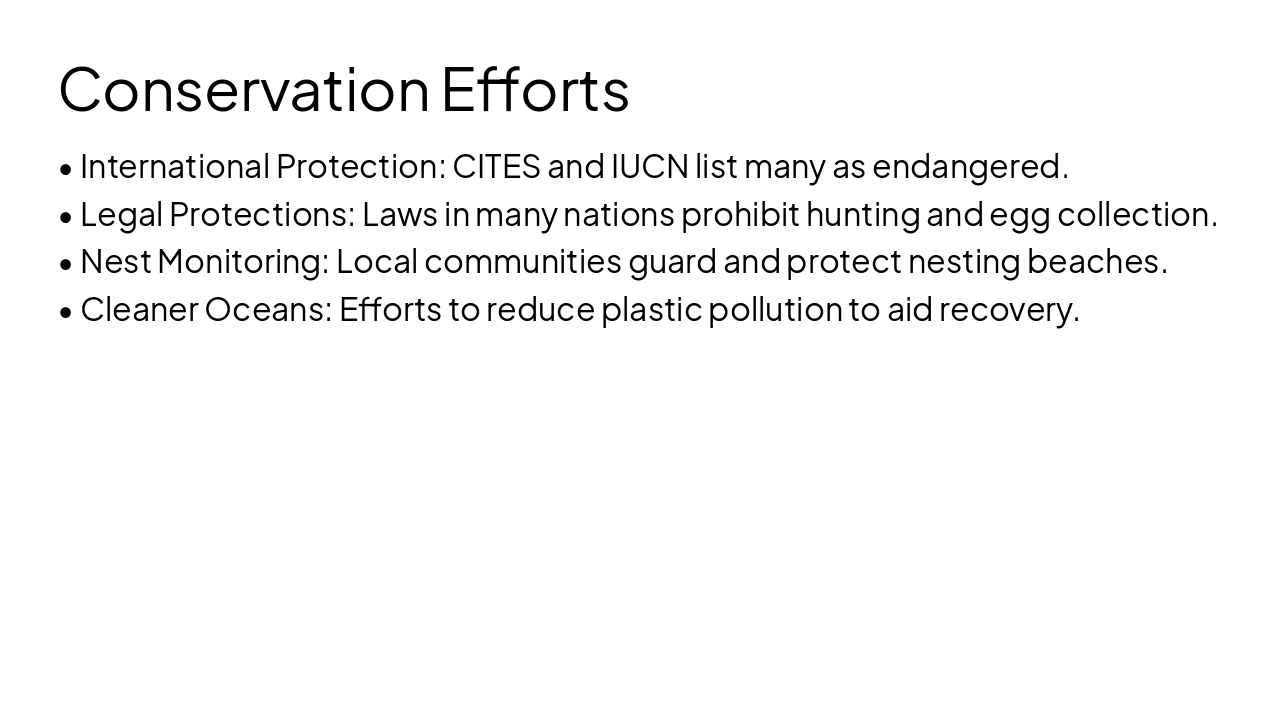
Slide 9 - Conservation Efforts

  • International Protection: CITES and IUCN list many as endangered.
  • Legal Protections: Laws in many nations prohibit hunting and egg collection.
  • Nest Monitoring: Local communities guard and protect nesting beaches.
  • Cleaner Oceans: Efforts to reduce plastic pollution to aid recovery.
Slide 9 - Conservation Efforts
Slide 10 of 11

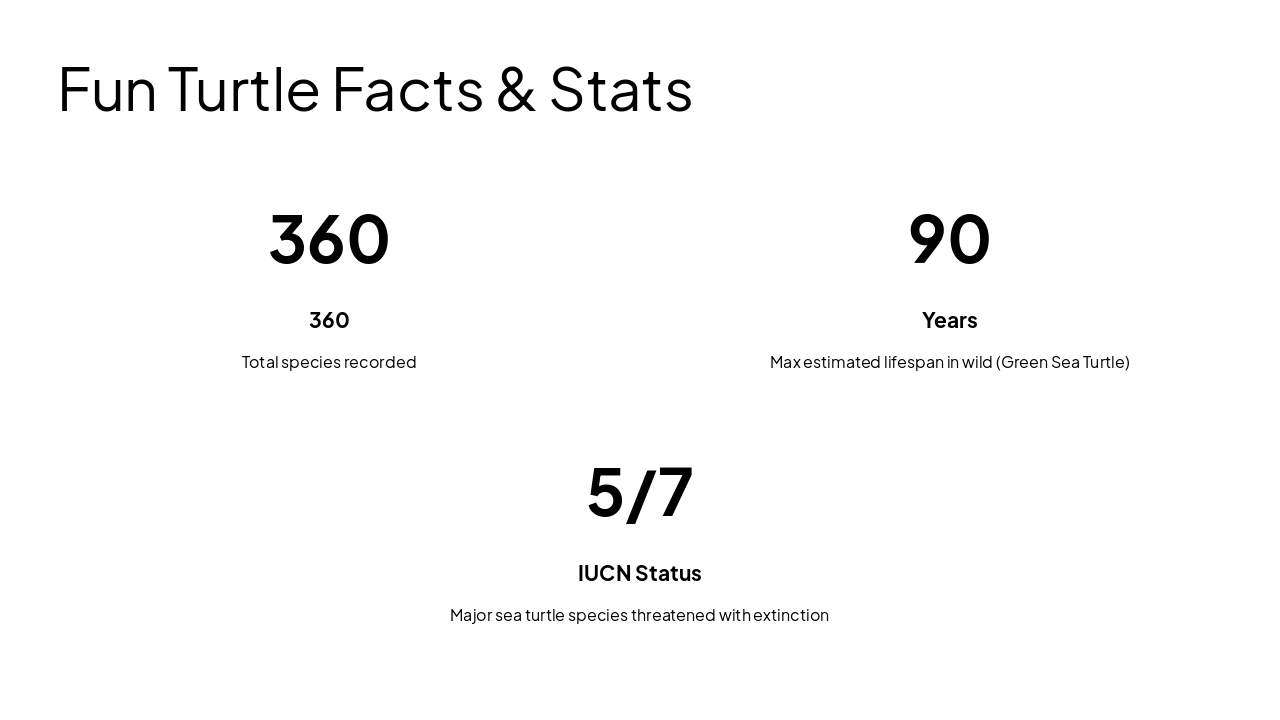
Slide 10 - Fun Turtle Facts & Stats

  • 360: 360
  • 90: Years
  • 5/7: IUCN Status
Slide 10 - Fun Turtle Facts & Stats
Slide 11 of 11

Slide 11 - Conclusion

Turtles are vital links in our global ecosystem—let's preserve them for generations to come.

Protecting our ancient ocean and land travelers.
Slide 11 - Conclusion

Discover More Presentations

Explore thousands of AI-generated presentations for inspiration

Browse Presentations
Powered by AI

Create Your Own Presentation

Generate professional presentations in seconds with Karaf's AI. Customize this presentation or start from scratch.

Create New Presentation

Powered by Karaf.ai — AI-Powered Presentation Generator