Unlocking Renewables with TES

Generated from prompt:

Create a comprehensive 5-slide presentation about renewable energy

This 5-slide presentation introduces renewable energy, covers types like solar and wind, outlines benefits/challenges, explores thermal energy storage for balancing supply/demand, and concludes on its

November 12, 202510 slides
Slide 1 of 10

Slide 1 - Introduction to Renewable Energy

The slide is a title slide titled "Introduction to Renewable Energy." Its subtitle emphasizes harnessing clean sources like solar and wind to build a sustainable future.

Introduction to Renewable Energy

Harnessing clean sources like solar and wind for a sustainable future

--- Speaker Notes: Presenter: [Your Name] šŸŒ Welcome to our exploration of sustainable energy solutions.
Slide 1
Slide 2 of 10

Slide 2 - Renewable Energy Overview

The slide, titled "Renewable Energy Overview," serves as an introductory title slide. It features a subtitle welcoming viewers to clean energy sources like solar, wind, and hydro, which harness natural resources without depleting them.

Renewable Energy Overview

Welcome to clean energy: solar, wind, and hydro harnessing natural resources without depletion.

Source: Description: Welcome to the world of clean energy sources like solar, wind, and hydro that harness natural resources without depletion. (Image: Earth with green energy icons)

Slide 2
Slide 3 of 10

Slide 3 - Types of Renewable Energy

Renewable energy sources harness natural resources to generate clean power without depletion. The slide outlines key types: solar energy from sunlight via panels, wind power from turbines, hydroelectricity from water flow, geothermal from Earth's heat, and biomass from organic materials through combustion or conversion.

Types of Renewable Energy

  • Solar: Harness sunlight with panels to generate clean electricity.
  • Wind: Convert wind motion via turbines into electrical power.
  • Hydro: Produce energy from water flow using dams and turbines.
  • Geothermal: Utilize Earth's internal heat for sustainable power generation.
  • Biomass: Transform organic materials into energy through combustion or conversion.
Slide 3
Slide 4 of 10

Slide 4 - Presentation Agenda

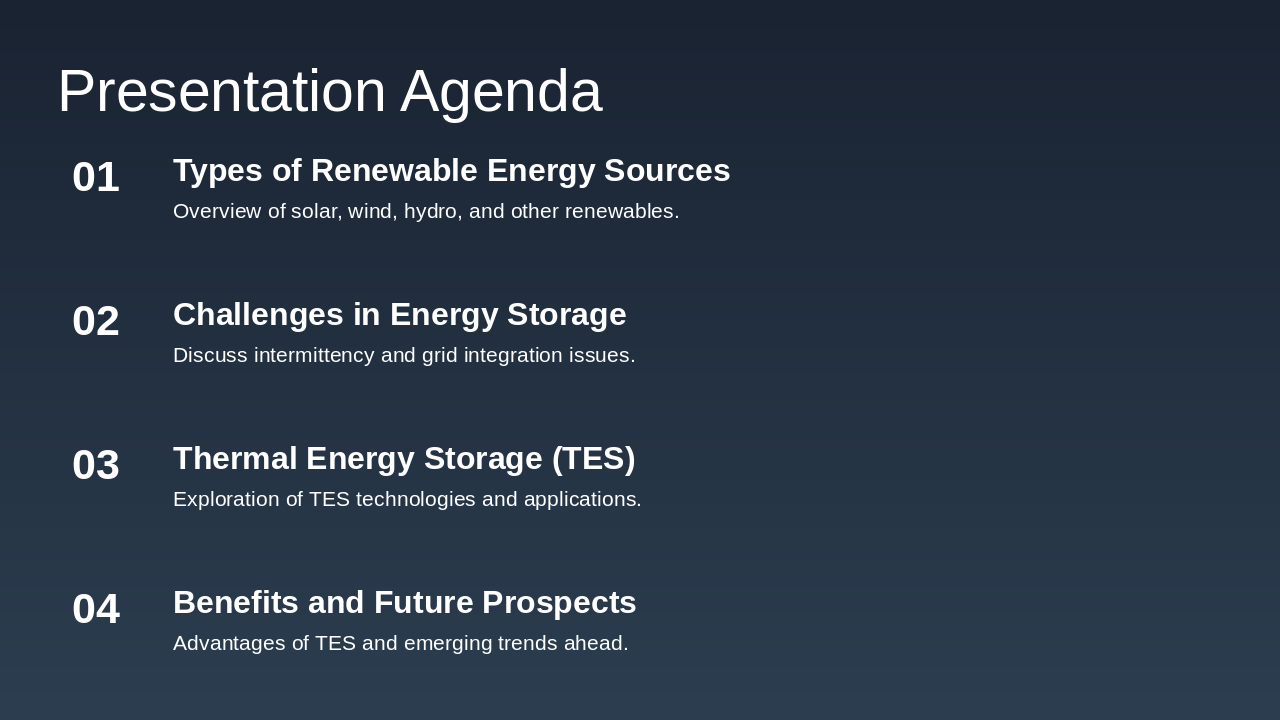
The presentation agenda outlines key topics on renewable energy, starting with an overview of sources like solar, wind, hydro, and others. It then covers challenges in energy storage such as intermittency and grid integration, followed by an exploration of Thermal Energy Storage (TES) technologies, applications, benefits, and future prospects.

Presentation Agenda

  1. Types of Renewable Energy Sources

Overview of solar, wind, hydro, and other renewables.

  1. Challenges in Energy Storage

Discuss intermittency and grid integration issues.

  1. Thermal Energy Storage (TES)

Exploration of TES technologies and applications.

  1. Benefits and Future Prospects

Advantages of TES and emerging trends ahead.

Slide 4
Slide 5 of 10

Slide 5 - Benefits and Challenges

The slide outlines the benefits of renewable energy, including reduced greenhouse gas emissions to support climate goals, job growth in key sectors, and improved energy security by decreasing dependence on imported fossil fuels. It also highlights challenges such as weather-dependent intermittency, high initial infrastructure costs, and the need for advanced storage to maintain reliable grid supply.

Benefits and Challenges

BenefitsChallenges
Renewable energy drastically cuts greenhouse gas emissions, aiding global climate goals. It spurs job creation in manufacturing, installation, and maintenance sectors. Enhanced energy security reduces reliance on imported fossil fuels, promoting sustainable independence.Intermittency from weather dependency disrupts consistent supply. High upfront costs for infrastructure and technology pose financial hurdles. Advanced storage solutions are essential to balance variable output and ensure grid reliability.
Slide 5
Slide 6 of 10

Slide 6 - Key Renewable Energy Sources

The slide outlines key renewable energy sources, including solar photovoltaics that harness sunlight for infinite clean power, wind turbines capturing air movement for sustainable electricity, and hydroelectric dams utilizing water flow for eco-friendly generation. It also covers geothermal energy tapping earth's subsurface heat and biomass converting organic waste into renewable fuel, all presented as superior alternatives to finite fossil fuels.

Key Renewable Energy Sources

  • Solar (photovoltaics): Harnesses sunlight for clean, infinite energy vs. finite fossils.
  • Wind (turbines): Captures air movement, providing sustainable power unlike depleting fuels.
  • Hydro (dams): Utilizes water flow for renewable, eco-friendly electricity over fossils.
  • Geothermal (earth heat): Taps subsurface warmth, offering endless clean energy alternative.
  • Biomass (organic matter): Converts waste into fuel, renewable unlike exhaustible fossil sources.
Slide 6
Slide 7 of 10

Slide 7 - Thermal Energy Storage (TES) Explained

Thermal Energy Storage (TES) captures and stores heat or cold for future use, utilizing materials such as water, molten salt, or phase-change substances to effectively balance energy supply and demand across seasons. Examples of TES systems include storage tanks and aquifers, enabling efficient energy management.

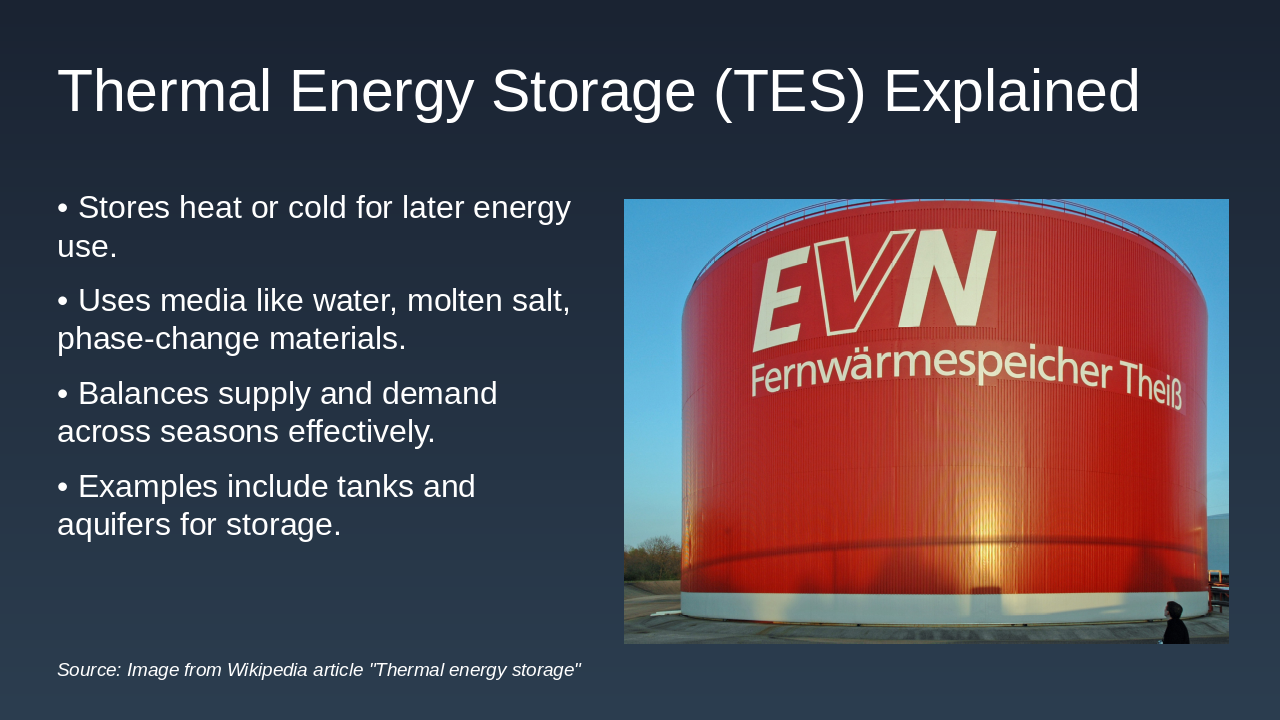
Thermal Energy Storage (TES) Explained

!Image

  • Stores heat or cold for later energy use.
  • Uses media like water, molten salt, phase-change materials.
  • Balances supply and demand across seasons effectively.
  • Examples include tanks and aquifers for storage.

Source: Image from Wikipedia article "Thermal energy storage"

Slide 7
Slide 8 of 10

Slide 8 - Thermal Energy Storage (TES) in Renewables

Thermal Energy Storage (TES) in renewables captures heat for later use to balance intermittent supply and demand, employing methods such as water tanks, molten salts, and phase-change materials. It is crucial for solar thermal systems, allowing summer-stored heat to be used in winter, with storage durations ranging from hours to months.

Thermal Energy Storage (TES) in Renewables

  • Stores heat for later use, balancing renewable supply and demand.
  • Uses methods like water tanks, molten salts, and phase-change materials.
  • Essential for solar thermal, enabling summer heat for winter.
  • Provides storage from hours to months duration.

Source: Wikipedia

--- Speaker Notes: TES is vital for renewables, storing heat to match supply with demand over varying periods.

Slide 8
Slide 9 of 10

Slide 9 - Future of Renewable Energy

Advancements in thermal energy storage (TES) and related technologies position renewable energy to fully meet global demands. The slide urges investment in clean energy to foster a sustainable future, ending with a thank you message.

Future of Renewable Energy

With advancements in TES and technology, renewables can meet global energy needs.

Shaping a Sustainable Tomorrow

Invest in clean energy for a greener planet.

Thank you!

Thank You!

--- Speaker Notes: Description: With advancements in TES and tech, renewables can meet global needs. Call to action: Invest in clean energy for a greener planet. Thank you! (Image: Futuristic green city). Closing message: Shaping a Sustainable Tomorrow. Call-to-action: Invest in clean energy for a greener planet.

Slide 9
Slide 10 of 10

Slide 10 - Conclusion: Embracing Renewables

Renewable energy cuts emissions and boosts grid reliability via Thermal Energy Storage (TES). The slide urges investment in green technology for a thriving planet, with a call to build a renewable tomorrow together.

Conclusion: Embracing Renewables

Renewable energy reduces emissions and enhances grid reliability through Thermal Energy Storage (TES).

Closing Message: Thank you for exploring sustainable futures!

Call to Action: Invest in green technology for a thriving planet.

Together, let's build a renewable tomorrow! šŸš€

Slide 10
Powered by AI

Create Your Own Presentation

Generate professional presentations in seconds with Karaf's AI. Customize this presentation or start from scratch.

Create New Presentation

Powered by Karaf.ai — AI-Powered Presentation Generator