Creating Effective Teaching and Engaging Curriculum in Early Childhood Education

Generated from prompt:

now this one - Week 6: Creating Effective Teaching and Engaging Curriculum in Early Childhood Education Overview and Outcomes: Welcome to this unit, where we will explore the science and art of teaching, individualized and culturally responsive practices, fostering critical thinking, and the role of play and grouping in education. Additionally, we will define the curriculum, discuss its components, and analyze various planning approaches, research-based curricula, and models for effective curriculum development. Join us on this journey to enhance your skills in early childhood education. The learner will: Identify effective teaching practices that are individualized and culturally responsive. Explain methods for helping children understand and acquire knowledge. Analyze the role of play in teaching and learning, focusing on foundational concepts. Demonstrate how teachers use grouping at the comprehension and application levels for instructional purposes. Define curriculum and its core components. Describe the elements of effective curriculum planning, including the role of standards. Evaluate different approaches to curriculum planning, emphasizing understanding and applications. Compare various research-based early childhood curricula in terms of their foundational concepts. Apply a practical model for planning an engaging curriculum, emphasizing understanding and application skills.

This presentation for Week 6 explores effective teaching practices and curriculum development in early childhood education. It covers individualized and culturally responsive teaching, the role of play in learning, instructional grouping strategies, curriculum fundamentals including definitions, components, and planning approaches. Key elements include research-based curricula comparisons such as HighScope, Reggio Emilia, and others, along with planning models, impact statistics, and key takeaways for transformative early education.

May 14, 202614 slides
Slide 1 of 14

Slide 1 - Week 6: Creating Effective Teaching and Engaging Curriculum in Early Childhood Education

Week 6: Creating Effective Teaching and Engaging Curriculum in Early Childhood Education

Overview, Outcomes, and Key Practices

---

Photo by Gautam Arora on Unsplash
Slide 1 - Week 6: Creating Effective Teaching
and Engaging Curriculum
in Early Childhood Education
Slide 2 of 14

Slide 2 - Unit Agenda

  • Effective Teaching Practices
  • Methods for Knowledge Acquisition
  • Role of Play in Learning
  • Instructional Grouping Strategies
  • Defining Curriculum and Components
  • Elements of Effective Planning
  • Curriculum Planning Approaches
  • Research-Based Curricula Comparison

---

Photo by Codioful (Formerly Gradienta) on Unsplash

Slide 2 - Unit Agenda
Slide 3 of 14

Slide 3 - Effective Teaching Practices

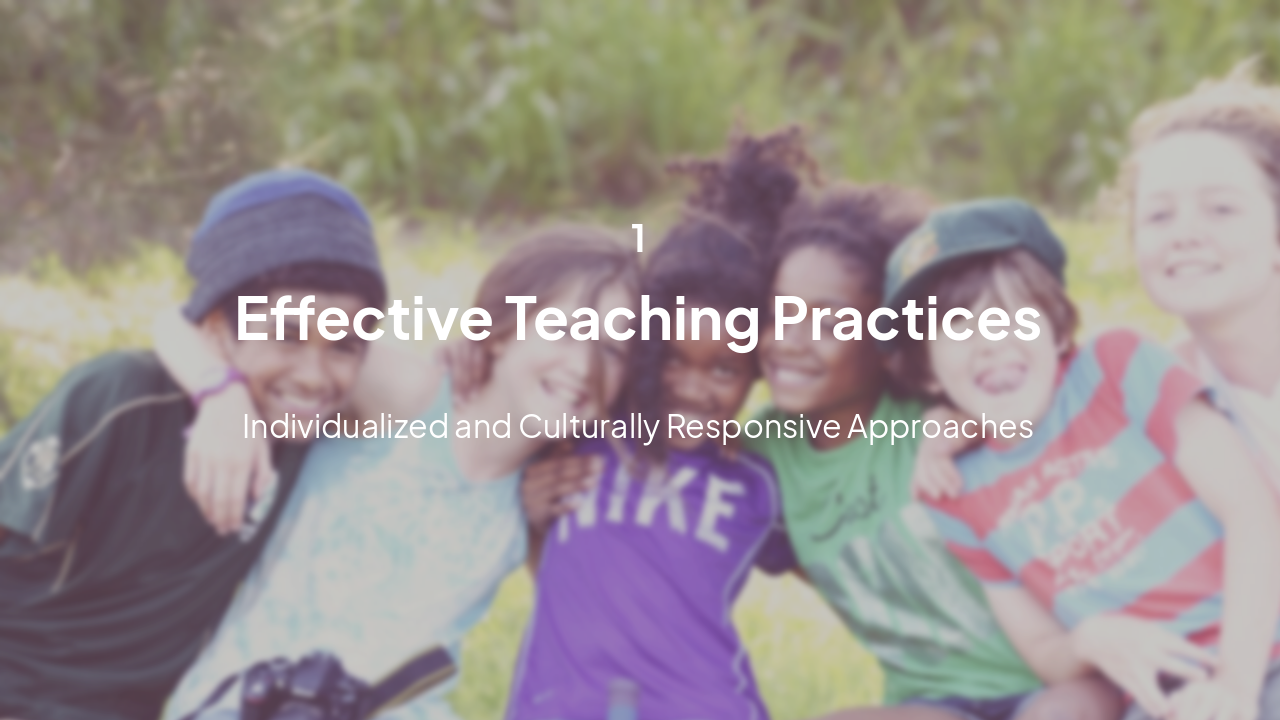
1

Effective Teaching Practices

Individualized and Culturally Responsive Approaches

---

Photo by Cybèle and Bevan on Unsplash

Slide 3 - Effective Teaching Practices
Slide 4 of 14

Slide 4 - Key Teaching Practices

  • Individualized instruction tailored to child's needs and pace
  • Culturally responsive practices honoring diverse backgrounds (Wikipedia: Culturally responsive teaching)
  • Fostering critical thinking through inquiry-based methods
  • Helping children understand and acquire knowledge via active engagement
Slide 4 - Key Teaching Practices
Slide 5 of 14

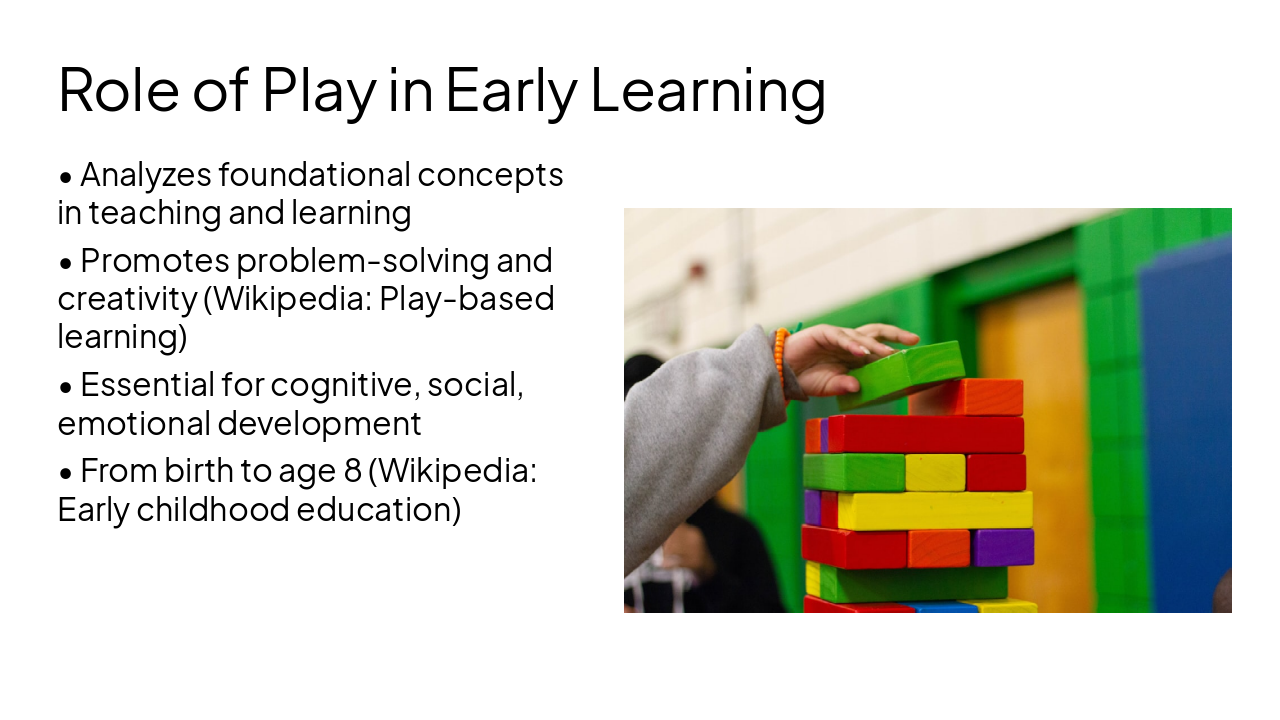
Slide 5 - Role of Play in Early Learning

  • Analyzes foundational concepts in teaching and learning
  • Promotes problem-solving and creativity (Wikipedia: Play-based learning)
  • Essential for cognitive, social, emotional development
  • From birth to age 8 (Wikipedia: Early childhood education)

---

Photo by La-Rel Easter on Unsplash

Slide 5 - Role of Play in Early Learning
Slide 6 of 14

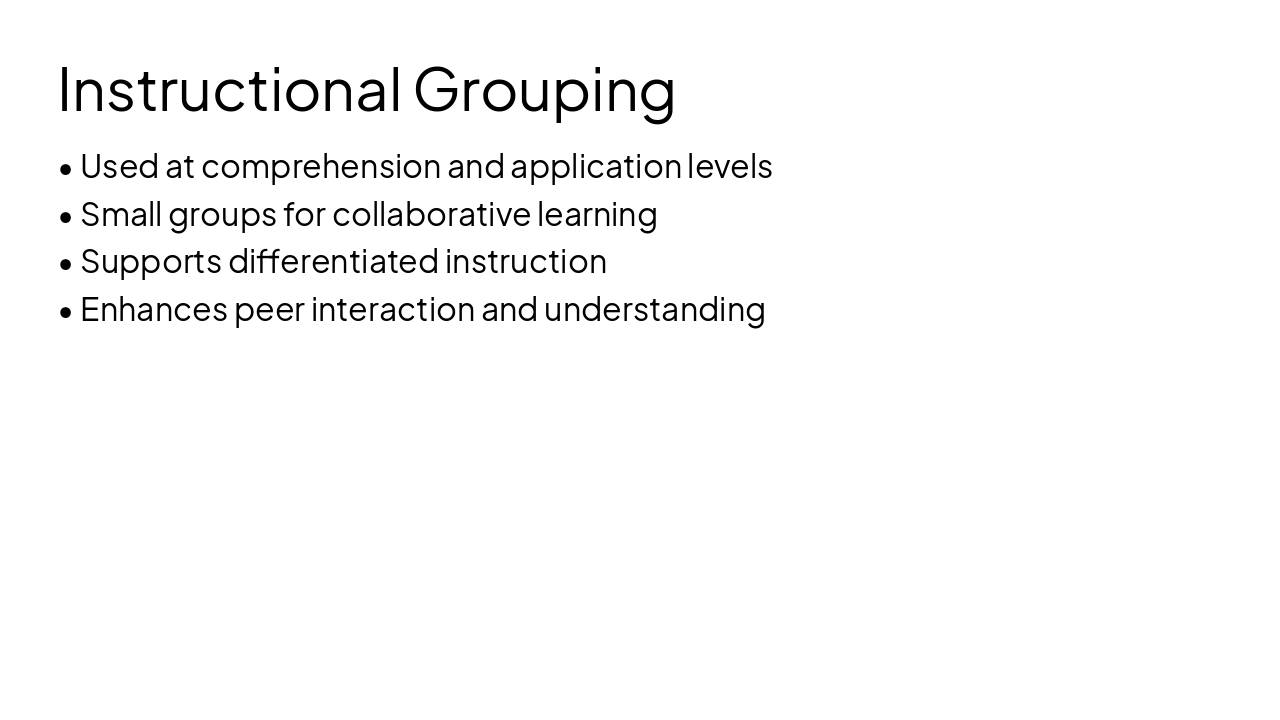
Slide 6 - Instructional Grouping

  • Used at comprehension and application levels
  • Small groups for collaborative learning
  • Supports differentiated instruction
  • Enhances peer interaction and understanding
Slide 6 - Instructional Grouping
Slide 7 of 14

Slide 7 - Curriculum Fundamentals

2

Curriculum Fundamentals

Definition, Components, and Planning

---

Photo by Paper Textures on Unsplash

Slide 7 - Curriculum Fundamentals
Slide 8 of 14

Slide 8 - What is Curriculum?

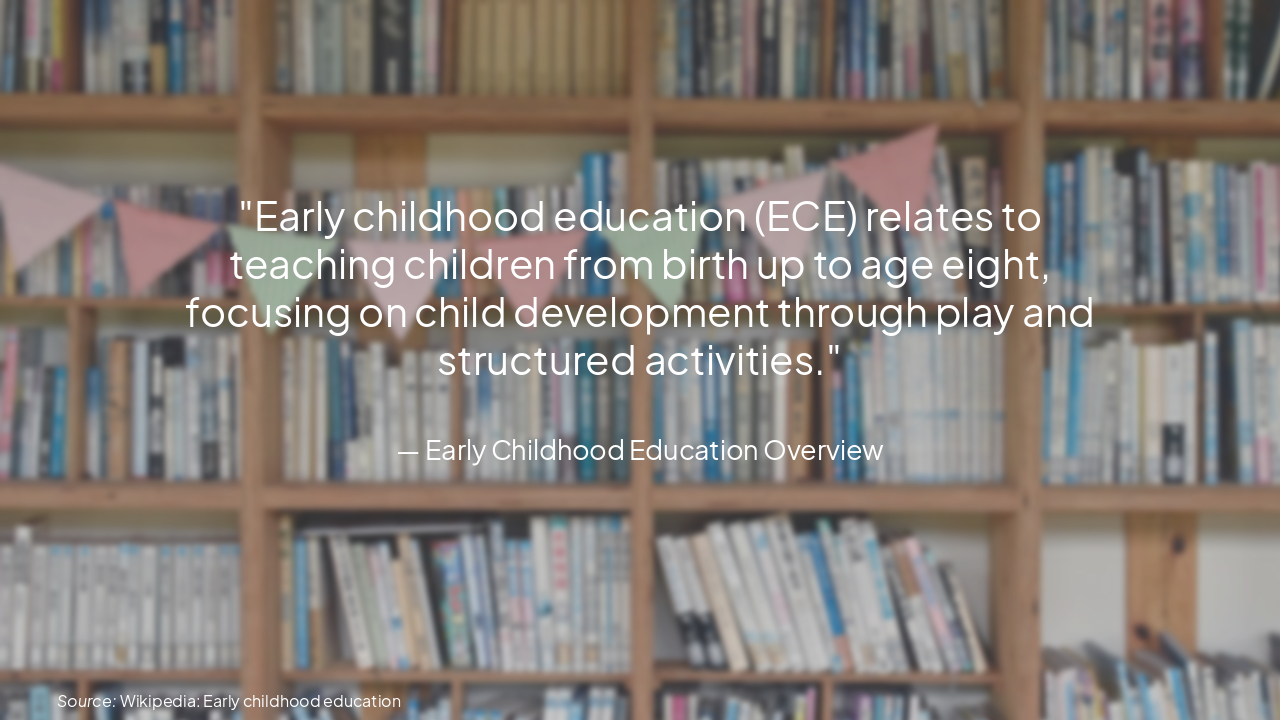
> Early childhood education (ECE) relates to teaching children from birth up to age eight, focusing on child development through play and structured activities.

— Early Childhood Education Overview

---

Photo by Geoff Oliver on Unsplash

Source: Wikipedia: Early childhood education

Slide 8 - What is Curriculum?
Slide 9 of 14

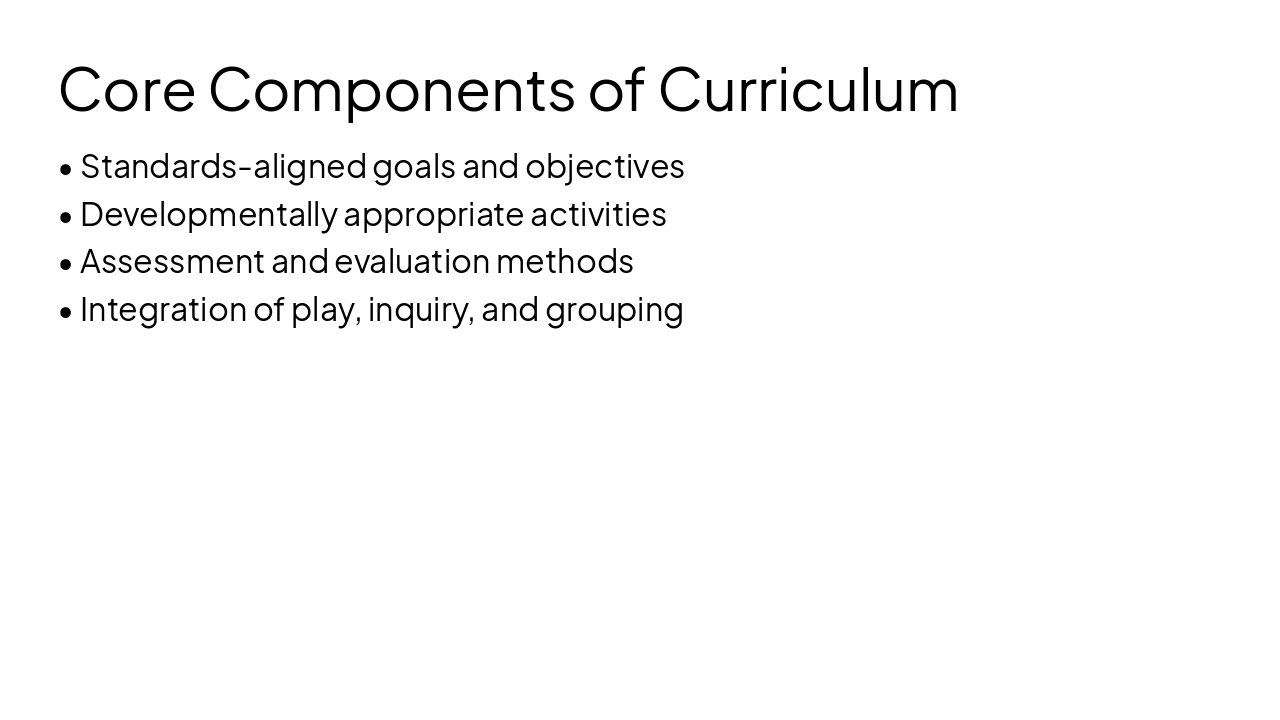
Slide 9 - Core Components of Curriculum

  • Standards-aligned goals and objectives
  • Developmentally appropriate activities
  • Assessment and evaluation methods
  • Integration of play, inquiry, and grouping
Slide 9 - Core Components of Curriculum
Slide 10 of 14

Slide 10 - Effective Curriculum Planning

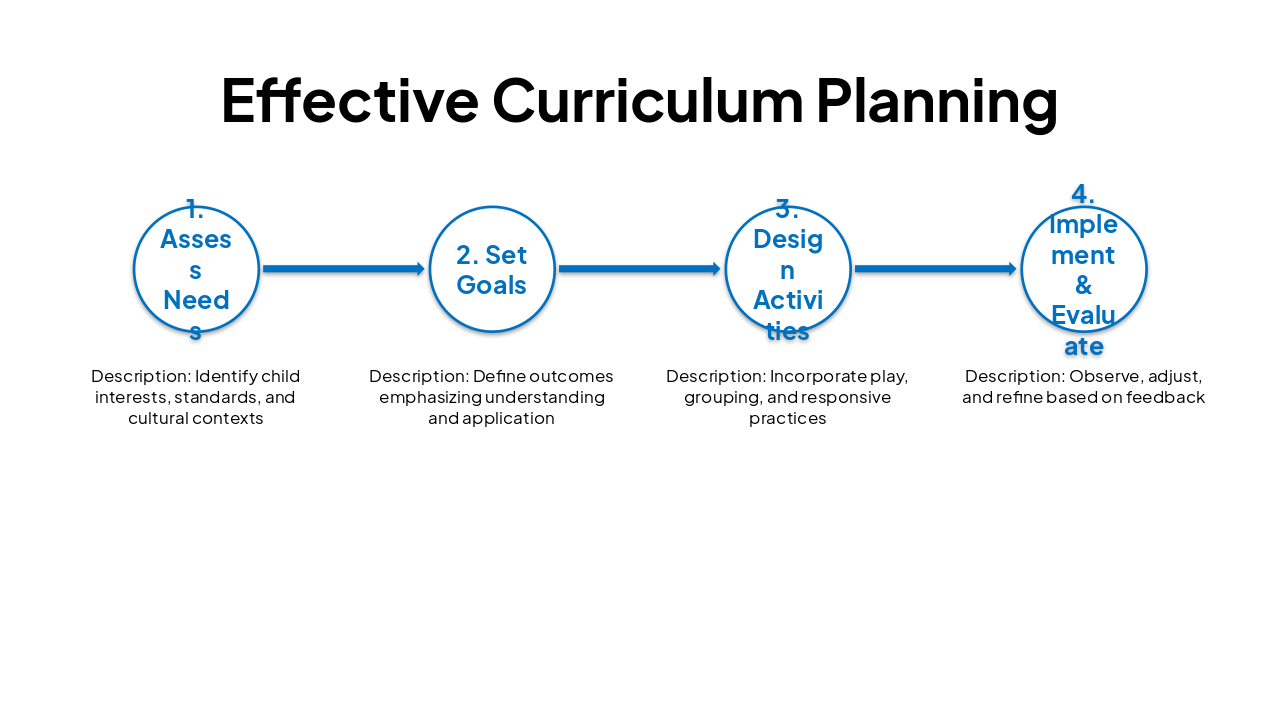
StepDescription
1. Assess NeedsIdentify child interests, standards, and cultural contexts
2. Set GoalsDefine outcomes emphasizing understanding and application
3. Design ActivitiesIncorporate play, grouping, and responsive practices
4. Implement & EvaluateObserve, adjust, and refine based on feedback
Slide 10 - Effective Curriculum Planning
Slide 11 of 14

Slide 11 - Research-Based ECE Curricula

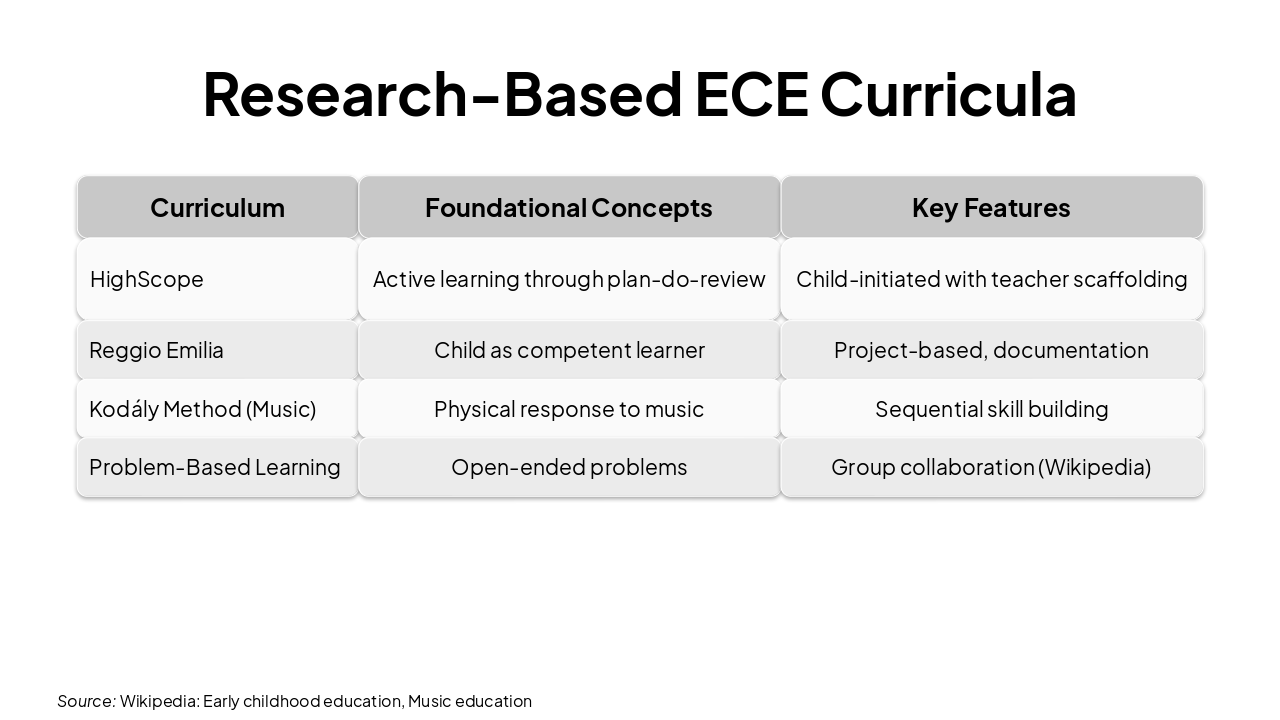
CurriculumFoundational ConceptsKey Features
HighScopeActive learning through plan-do-reviewChild-initiated with teacher scaffolding
Reggio EmiliaChild as competent learnerProject-based, documentation
Kodály Method (Music)Physical response to musicSequential skill building
Problem-Based LearningOpen-ended problemsGroup collaboration (Wikipedia)

Source: Wikipedia: Early childhood education, Music education

Slide 11 - Research-Based ECE Curricula
Slide 12 of 14

Slide 12 - Planning an Engaging Curriculum Model

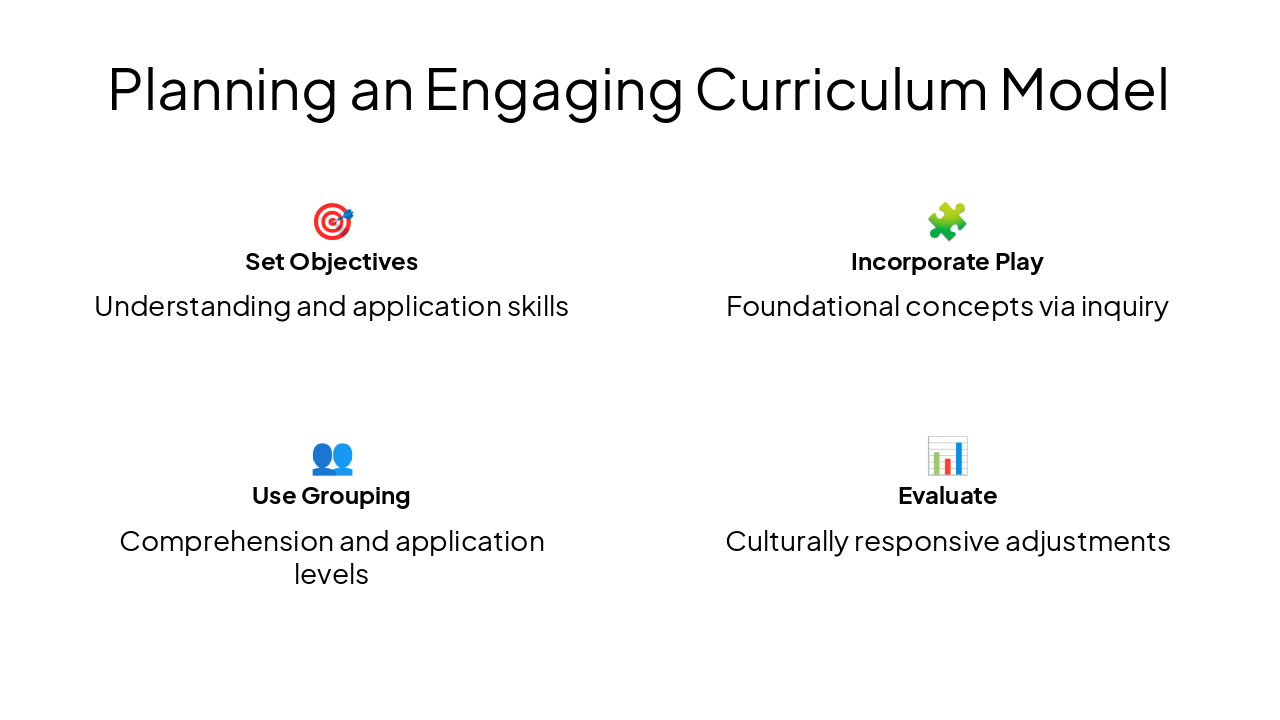
🎯 Set Objectives Understanding and application skills

🧩 Incorporate Play Foundational concepts via inquiry

👥 Use Grouping Comprehension and application levels

📊 Evaluate Culturally responsive adjustments

Slide 12 - Planning an Engaging Curriculum Model
Slide 13 of 14

Slide 13 - Impact of ECE

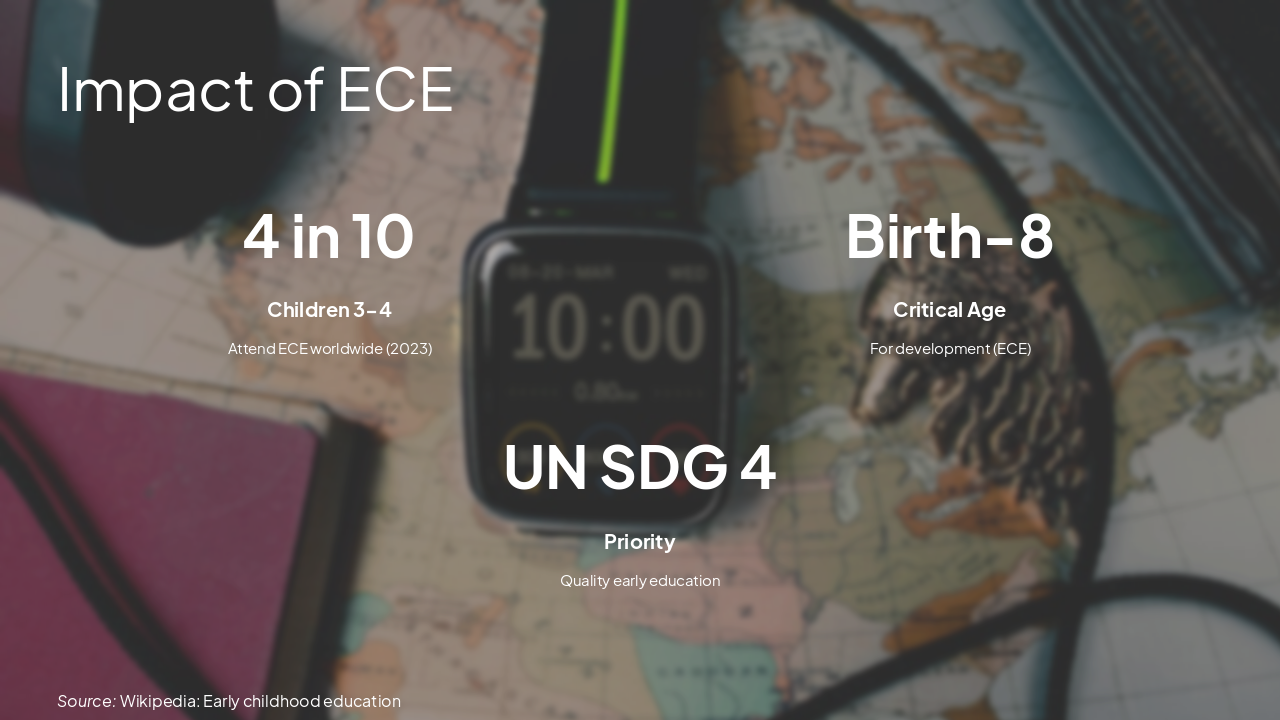
  • 4 in 10: Children 3-4
  • Birth-8: Critical Age
  • UN SDG 4: Priority

---

Photo by Debagni Sarkhel on Unsplash

Source: Wikipedia: Early childhood education

Slide 13 - Impact of ECE
Slide 14 of 14

Slide 14 - Key Takeaways

Master individualized, play-based, curriculum planning to transform early childhood education.

Enhance skills for engaging, responsive teaching.

---

Photo by Adam Winger on Unsplash

Slide 14 - Key Takeaways

Discover More Presentations

Explore thousands of AI-generated presentations for inspiration

Browse Presentations
Powered by AI

Create Your Own Presentation

Generate professional presentations in seconds with Karaf's AI. Customize this presentation or start from scratch.

Create New Presentation

Powered by Karaf.ai — AI-Powered Presentation Generator