The Death of the Author: Analyzing Barthes' Seminal Essay

Generated from prompt:

Create a clean, minimal academic PDF presentation (no link errors) on Roland Barthes' "The Death of the Author" with 13 slides. Include concise bullet points, quotes, and simple design. Ensure export-ready PDF.

This presentation delves into Roland Barthes' 1967 essay 'The Death of the Author,' covering its historical context, critique of traditional author-centric criticism, the empowerment of the reader, and its enduring influence on literary theory, with結

April 8, 202613 slides
Slide 1 of 13

Slide 1 - The Death of the Author Presentation

The Death of the Author

Analyzing Roland Barthes’ 1967 Literary Essay

---

Photo by Olga Thelavart on Unsplash
Slide 1 - The Death of the Author Presentation
Slide 2 of 13

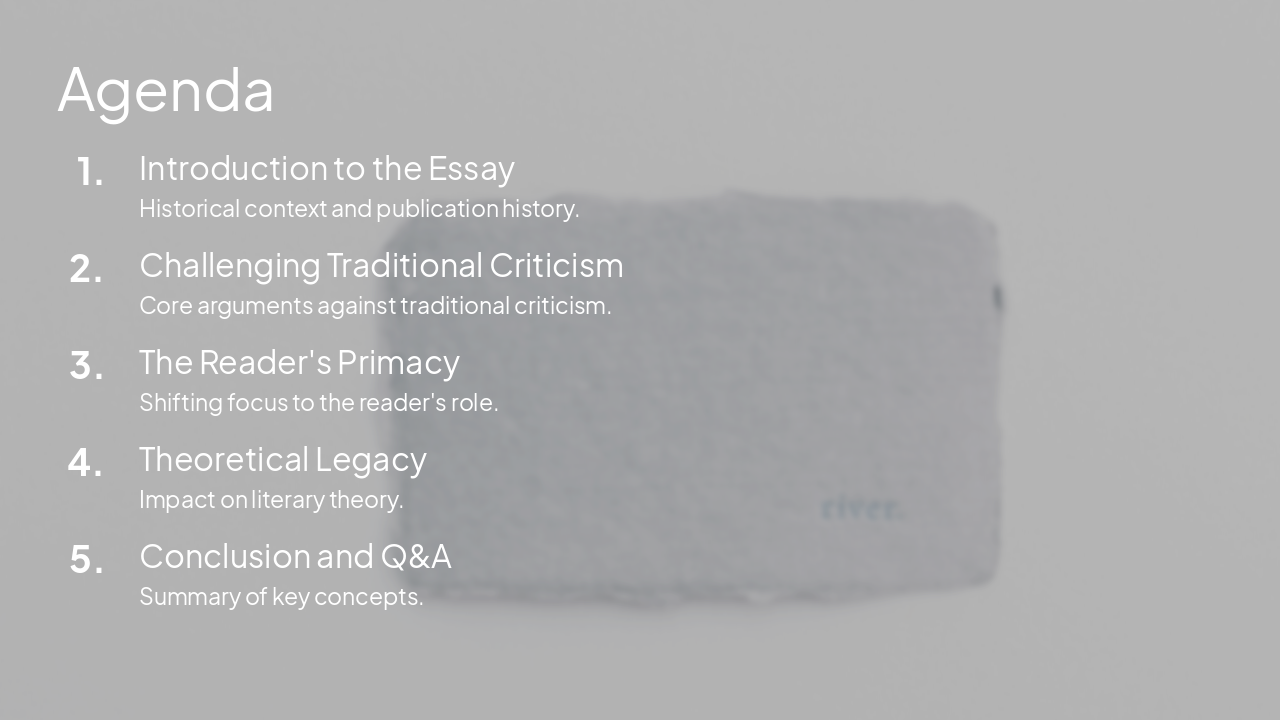
Slide 2 - Agenda

  • Introduction to the Essay: Historical context and publication history.
  • Challenging Traditional Criticism: Core arguments against traditional criticism.
  • The Reader's Primacy: Shifting focus to the reader's role.
  • Theoretical Legacy: Impact on literary theory.
  • Conclusion and Q&A: Summary of key concepts.

---

Photo by Annie Spratt on Unsplash
Slide 2 - Agenda
Slide 3 of 13

Slide 3 - Part 1

1

Introduction to the Essay

Understanding the origins of Barthes' seminal work.

---

Photo by Annie Spratt on Unsplash
Slide 3 - Part 1
Slide 4 of 13

Slide 4 - Historical Context

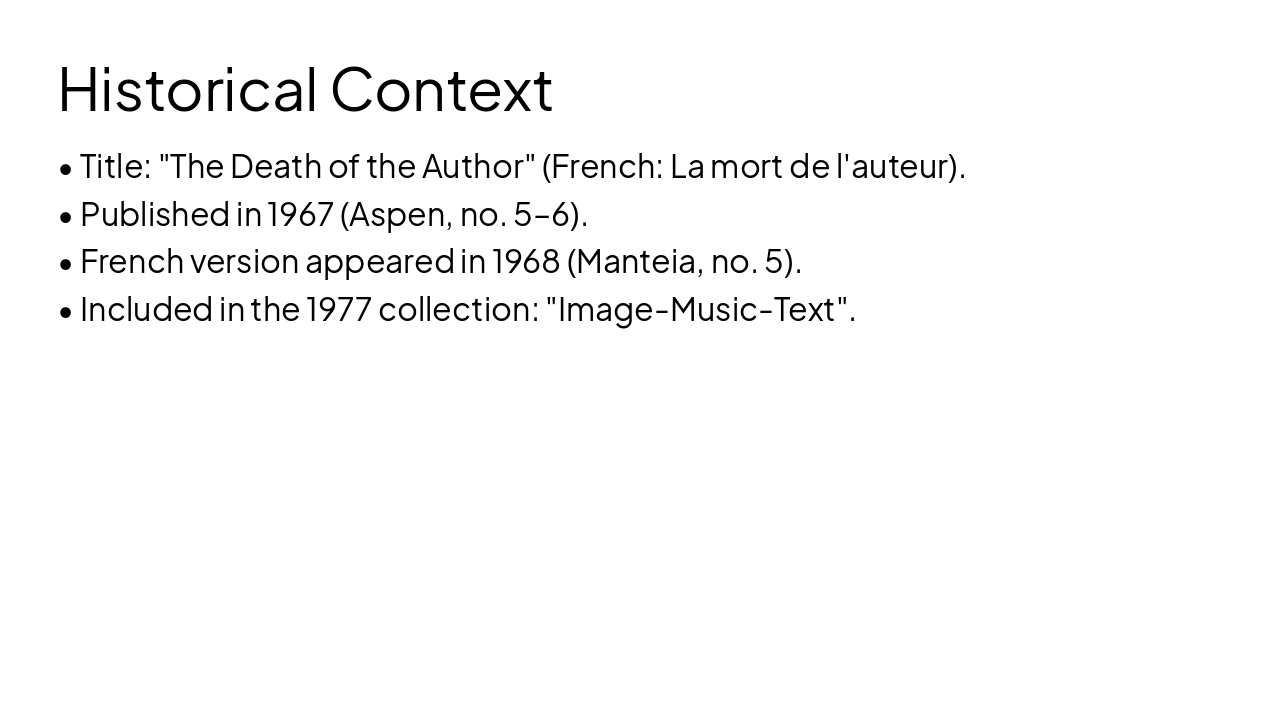
  • Title: "The Death of the Author" (French: La mort de l'auteur).
  • Published in 1967 (Aspen, no. 5–6).
  • French version appeared in 1968 (Manteia, no. 5).
  • Included in the 1977 collection: "Image-Music-Text".
Slide 4 - Historical Context
Slide 5 of 13

Slide 5 - Key Quote

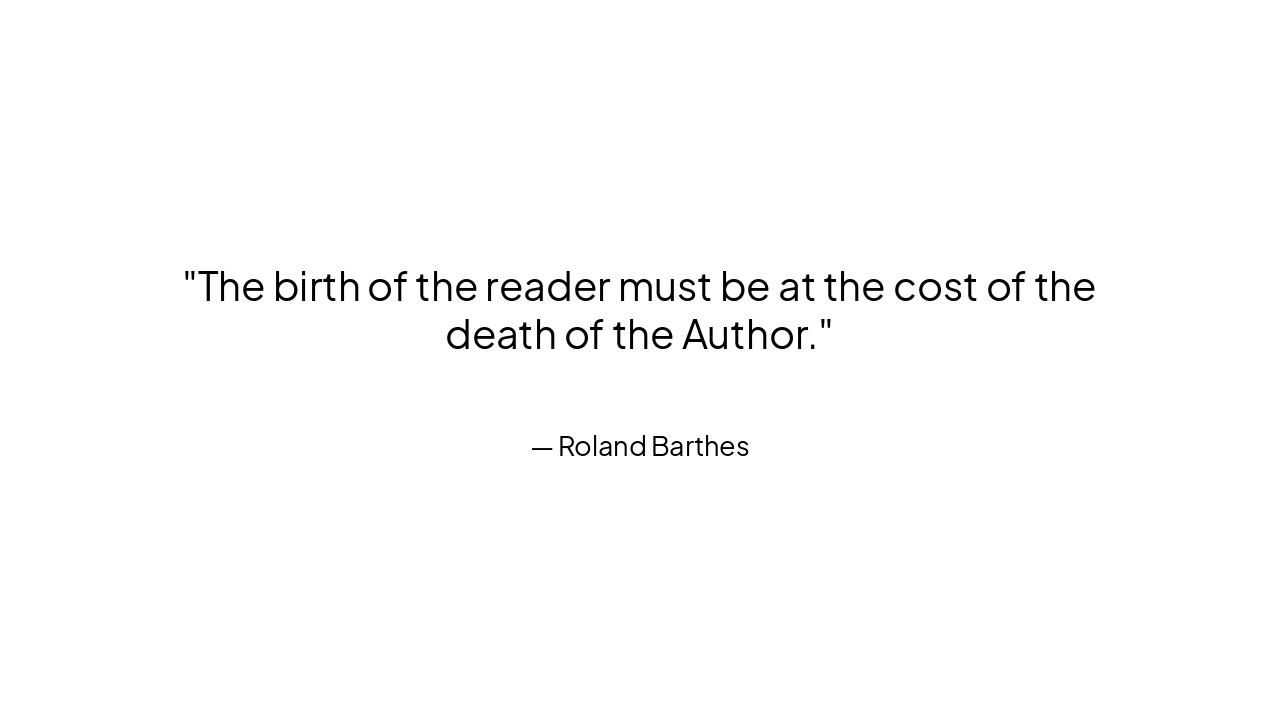
> The birth of the reader must be at the cost of the death of the Author.

— Roland Barthes
Slide 5 - Key Quote
Slide 6 of 13

Slide 6 - Part 2

2

Challenging Traditional Criticism

Barthes’ critique of biographical interpretation.

---

Photo by Annie Spratt on Unsplash
Slide 6 - Part 2
Slide 7 of 13

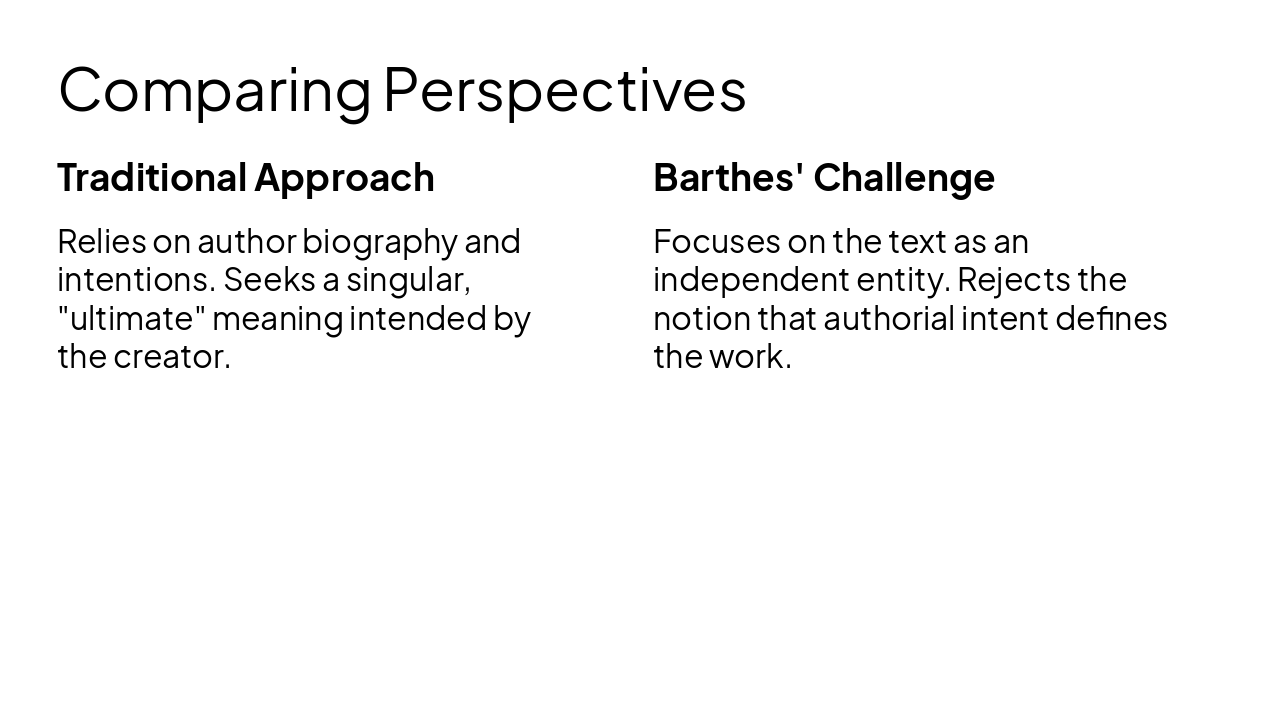
Slide 7 - Comparing Perspectives

Traditional Approach Relies on author biography and intentions. Seeks a singular, "ultimate" meaning intended by the creator.

Barthes' Challenge Focuses on the text as an independent entity. Rejects the notion that authorial intent defines the work.
Slide 7 - Comparing Perspectives
Slide 8 of 13

Slide 8 - Part 3

3

The Reader's Primacy

Empowering the individual interpretation.

---

Photo by Annie Spratt on Unsplash
Slide 8 - Part 3
Slide 9 of 13

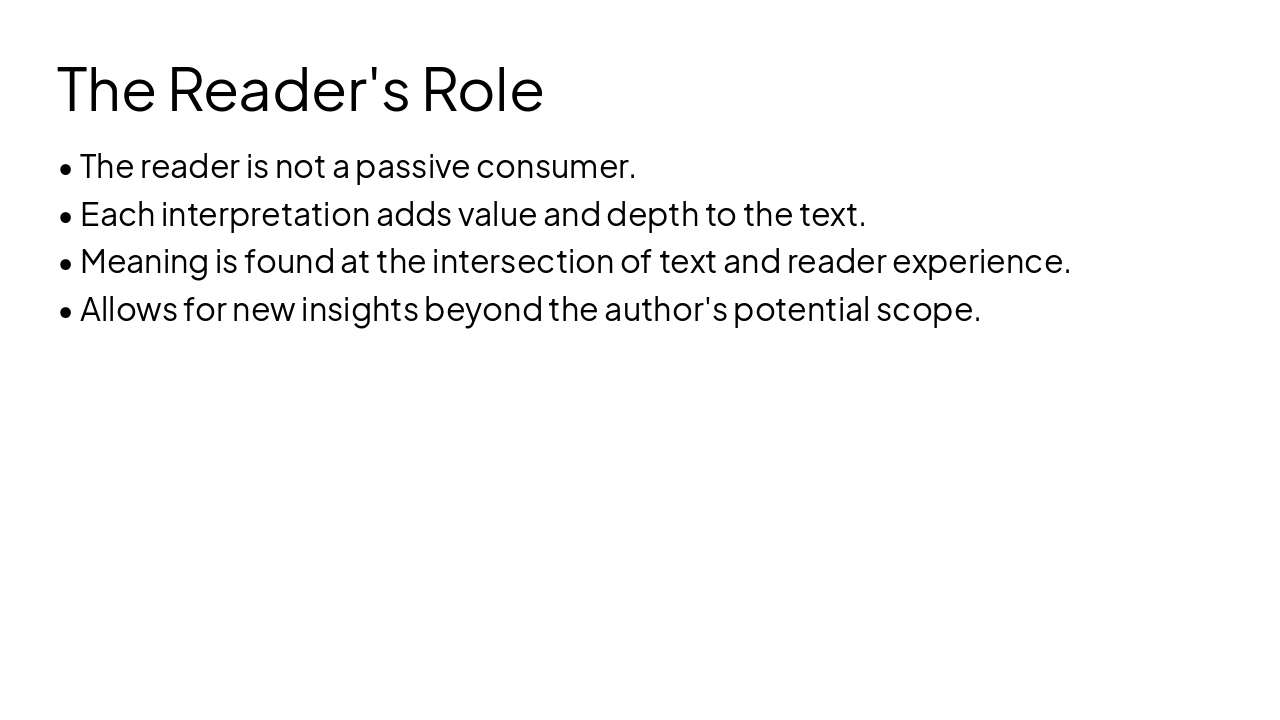
Slide 9 - The Reader's Role

  • The reader is not a passive consumer.
  • Each interpretation adds value and depth to the text.
  • Meaning is found at the intersection of text and reader experience.
  • Allows for new insights beyond the author's potential scope.
Slide 9 - The Reader's Role
Slide 10 of 13

Slide 10 - Part 4

4

Theoretical Legacy

Influence on contemporary literary theory.

---

Photo by Alexander Nedviga on Unsplash

Slide 10 - Part 4
Slide 11 of 13

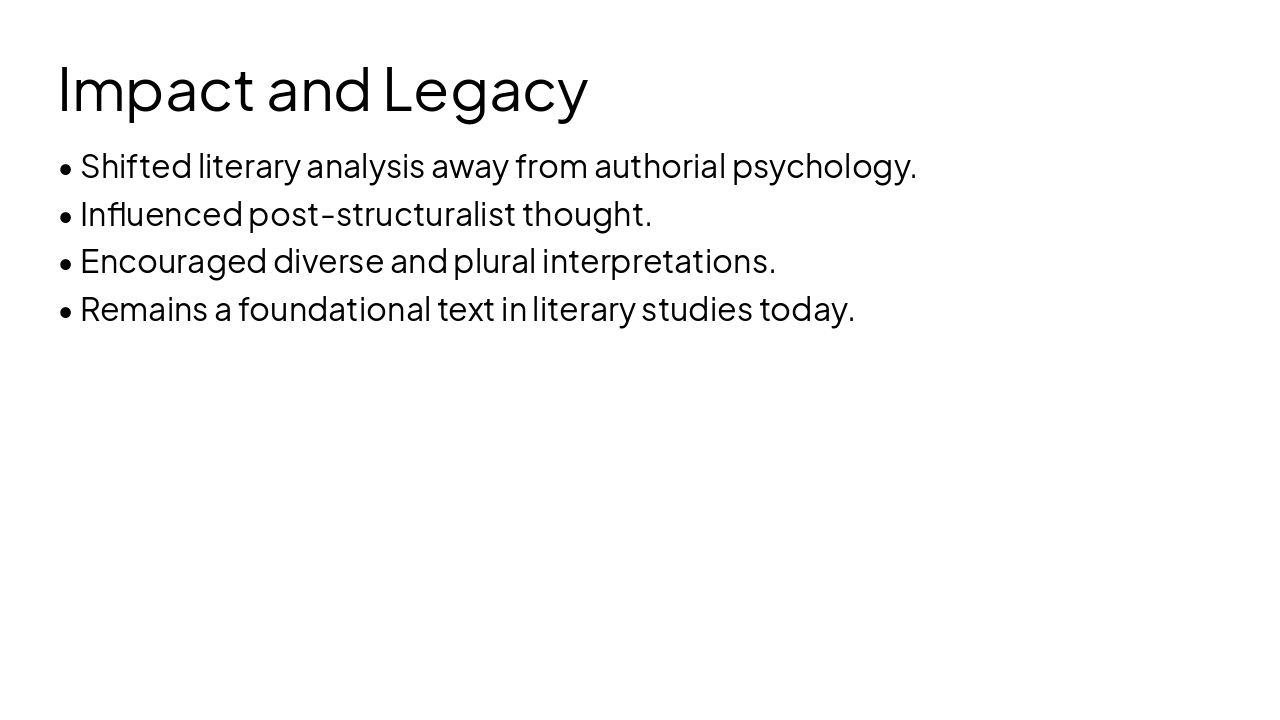
Slide 11 - Impact and Legacy

  • Shifted literary analysis away from authorial psychology.
  • Influenced post-structuralist thought.
  • Encouraged diverse and plural interpretations.
  • Remains a foundational text in literary studies today.
Slide 11 - Impact and Legacy
Slide 12 of 13

Slide 12 - Summary

5

Conclusion

Summarizing the key takeaways.

---

Photo by Annie Spratt on Unsplash
Slide 12 - Summary
Slide 13 of 13

Slide 13 - Final Thoughts

The Death of the Author remains a pivotal critique on interpretation, shifting power from the creator to the reader.

Thank you for your time. Are there any questions?

---

Photo by Annie Spratt on Unsplash
Slide 13 - Final Thoughts

Discover More Presentations

Explore thousands of AI-generated presentations for inspiration

Browse Presentations
Powered by AI

Create Your Own Presentation

Generate professional presentations in seconds with Karaf's AI. Customize this presentation or start from scratch.

Create New Presentation

Powered by Karaf.ai — AI-Powered Presentation Generator