Effective Meeting Management: Planning, Leading, and Best Practices

Generated from prompt:

Can you enhance this powerpoint?

This presentation provides a comprehensive guide to effective meeting management. It covers the definition, purposes, and types of meetings; key planning elements including objectives, agendas, participants, time, and location; strategies for leading meetings with positive attitude, structure, and steps for conducting; decision-making methods like voting and consensus; handling conflicts; and best practices such as taking minutes and encouraging discussions.

May 14, 202620 slides
Slide 1 of 20

Slide 1 - Effective Meeting Management

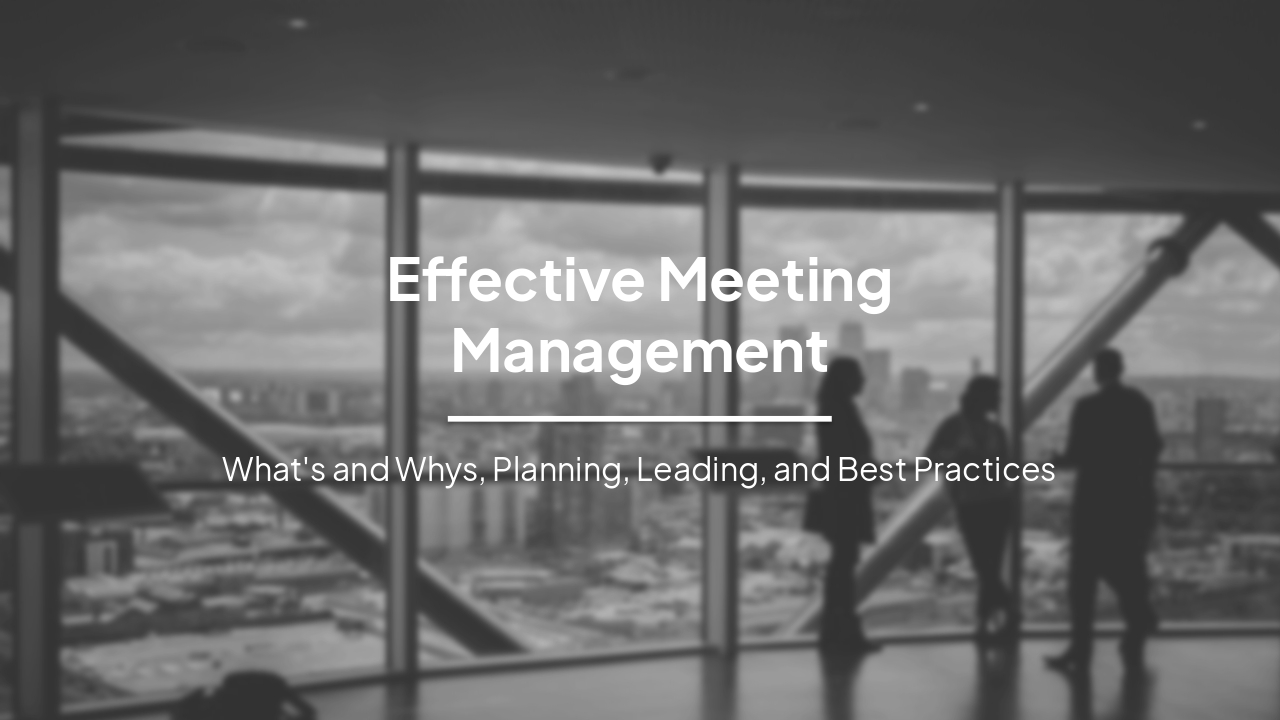
Effective Meeting Management

What's and Whys, Planning, Leading, and Best Practices

---

Photo by Charles Forerunner on Unsplash
Slide 1 - Effective Meeting
Management
Slide 2 of 20

Slide 2 - Presentation Agenda

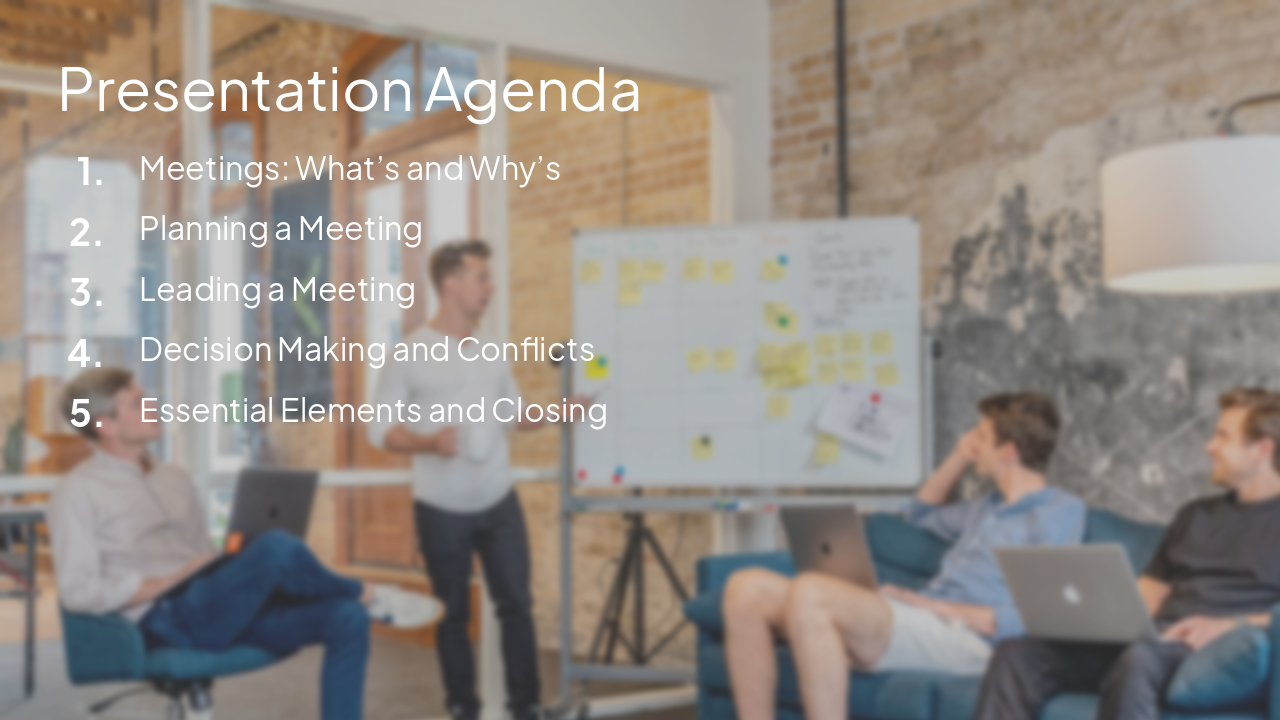
  • Meetings: What’s and Why’s
  • Planning a Meeting
  • Leading a Meeting
  • Decision Making and Conflicts
  • Essential Elements and Closing

---

Photo by Austin Distel on Unsplash
Slide 2 - Presentation Agenda
Slide 3 of 20

Slide 3 - Meetings: What’s and Why’s

1

Meetings: What’s and Why’s

Definition, purposes, and types of meetings

---

Photo by ThisisEngineering on Unsplash
Slide 3 - Meetings: What’s and Why’s
Slide 4 of 20

Slide 4 - Definition and Key Benefits

  • A meeting is a gathering of three or more people for a specific purpose.
  • Effective means of:
  • • Sharing information
  • • Creating teamwork
  • • Developing solutions
Slide 4 - Definition and Key Benefits
Slide 5 of 20

Slide 5 - Key Insight on Meetings

> A meeting is only worth having when it produces the results you desire.

— Unknown

---

Photo by Headway on Unsplash

Slide 5 - Key Insight on Meetings
Slide 6 of 20

Slide 6 - Types of Meetings

  • Information-sharing
  • Discussion
  • Problem-solving
  • Decision-making
Slide 6 - Types of Meetings
Slide 7 of 20

Slide 7 - Planning a Meeting

2

Planning a Meeting

Objectives, agenda, participants, time, and place

Slide 7 - Planning a Meeting
Slide 8 of 20

Slide 8 - Common Planning Myths

  • Meetings are best for disseminating info to large groups (use email instead)
  • Some meetings don't need an agenda
  • Agenda items in any order
  • Invite only those with time
  • Facilities unimportant if interested
  • Classroom style for problem-solving
Slide 8 - Common Planning Myths
Slide 9 of 20

Slide 9 - Key Planning Elements

  • What: Purpose and objectives
  • Why: Expected outcomes
  • Who: Right participants
  • When: Optimal time
  • Where: Suitable location
Slide 9 - Key Planning Elements
Slide 10 of 20

Slide 10 - Agenda Essentials

  • Title
  • Time and location
  • Theme and definition
  • Attendees
  • Topics (priority order)
Slide 10 - Agenda Essentials
Slide 11 of 20

Slide 11 - Participant Selection Criteria

  • Knowledge of subject area
  • Commitment to solve problems
  • Time to participate
  • Diversity of viewpoints
  • Expressiveness
  • Open-mindedness
Slide 11 - Participant Selection Criteria
Slide 12 of 20

Slide 12 - Leading a Meeting

3

Leading a Meeting

Leadership attitude, components, and conducting steps

---

Photo by Charles Forerunner on Unsplash

Slide 12 - Leading a Meeting
Slide 13 of 20

Slide 13 - The Leader's Role

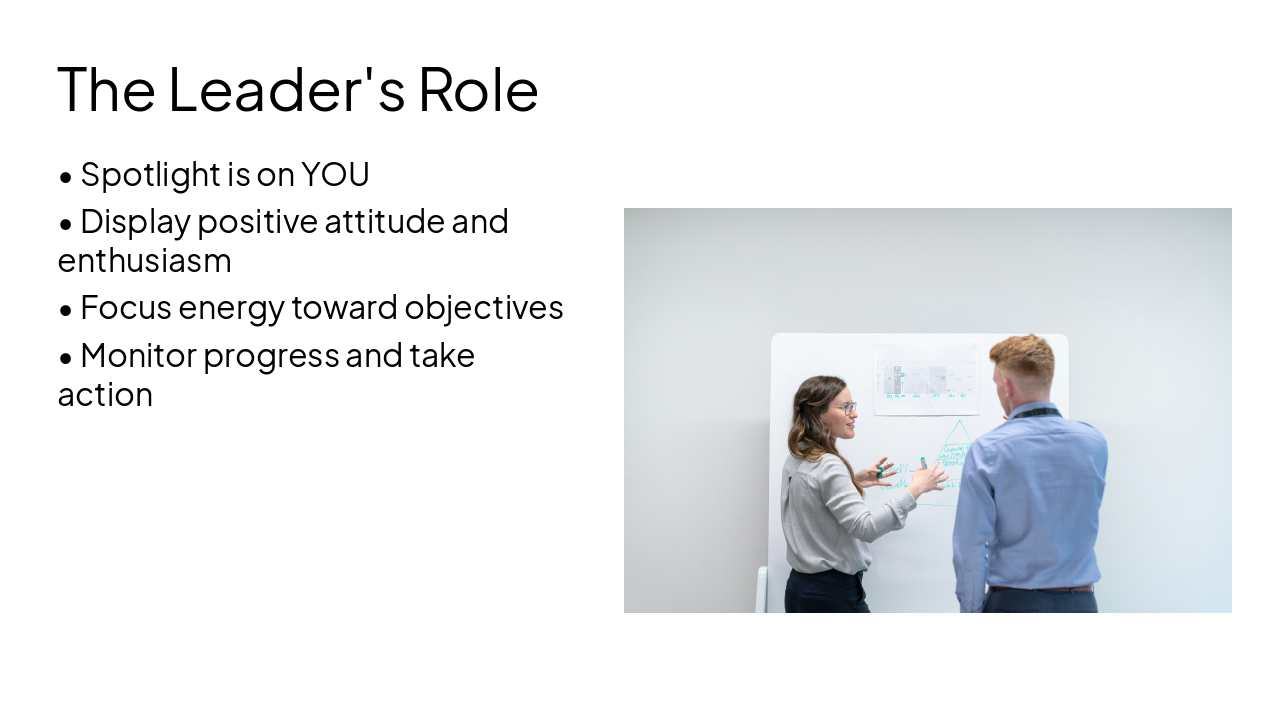
  • Spotlight is on YOU
  • Display positive attitude and enthusiasm
  • Focus energy toward objectives
  • Monitor progress and take action

---

Photo by ThisisEngineering on Unsplash
Slide 13 - The Leader's Role
Slide 14 of 20

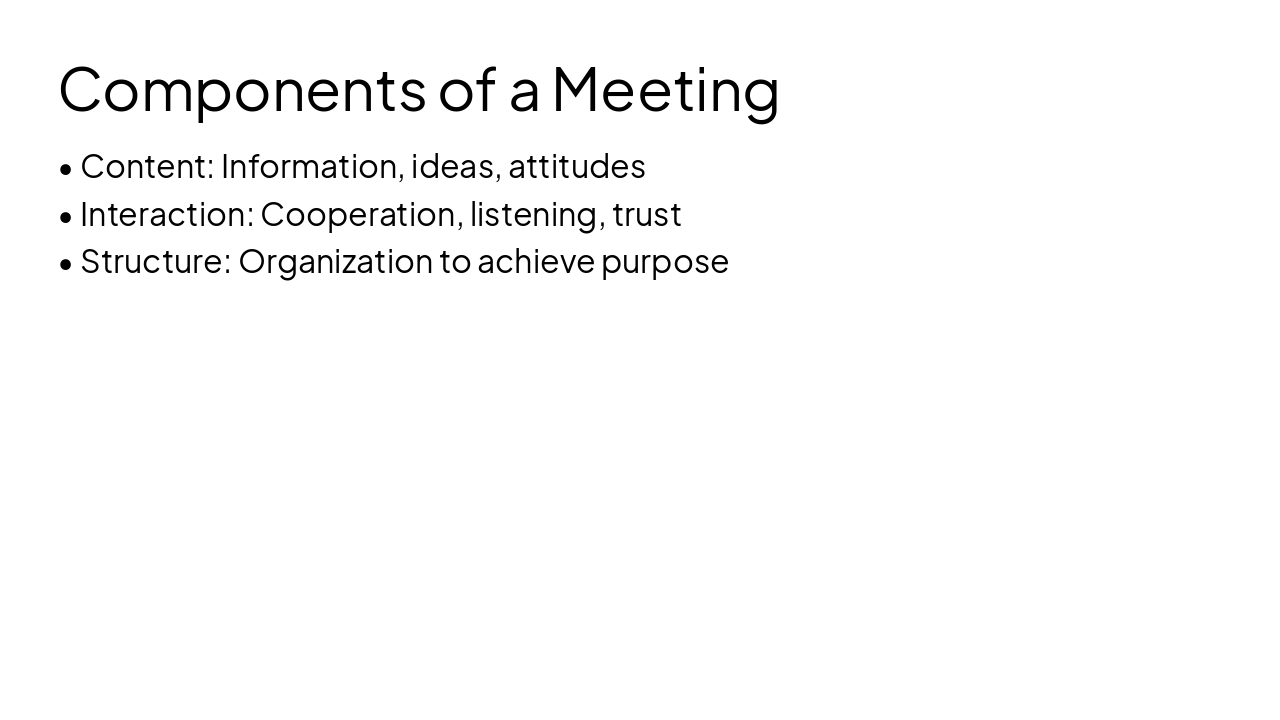
Slide 14 - Components of a Meeting

  • Content: Information, ideas, attitudes
  • Interaction: Cooperation, listening, trust
  • Structure: Organization to achieve purpose
Slide 14 - Components of a Meeting
Slide 15 of 20

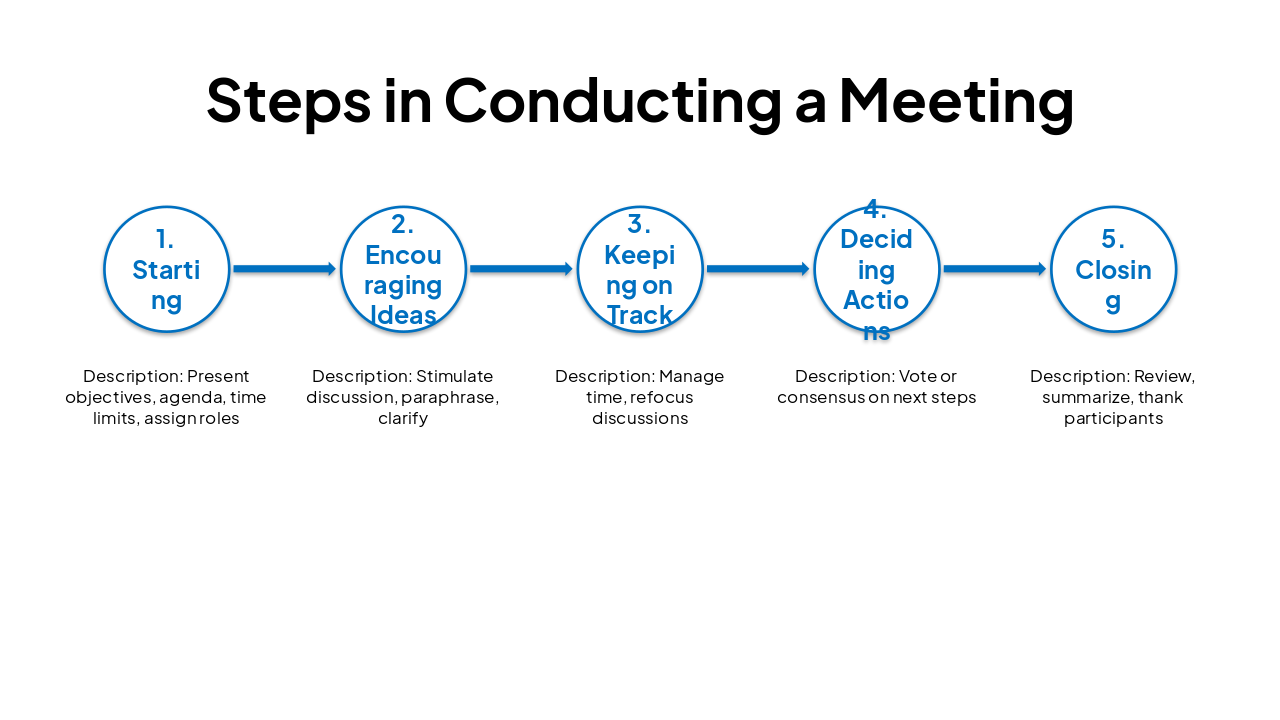
Slide 15 - Steps in Conducting a Meeting

StepDescription
1. StartingPresent objectives, agenda, time limits, assign roles
2. Encouraging IdeasStimulate discussion, paraphrase, clarify
3. Keeping on TrackManage time, refocus discussions
4. Deciding ActionsVote or consensus on next steps
5. ClosingReview, summarize, thank participants
Slide 15 - Steps in Conducting a Meeting
Slide 16 of 20

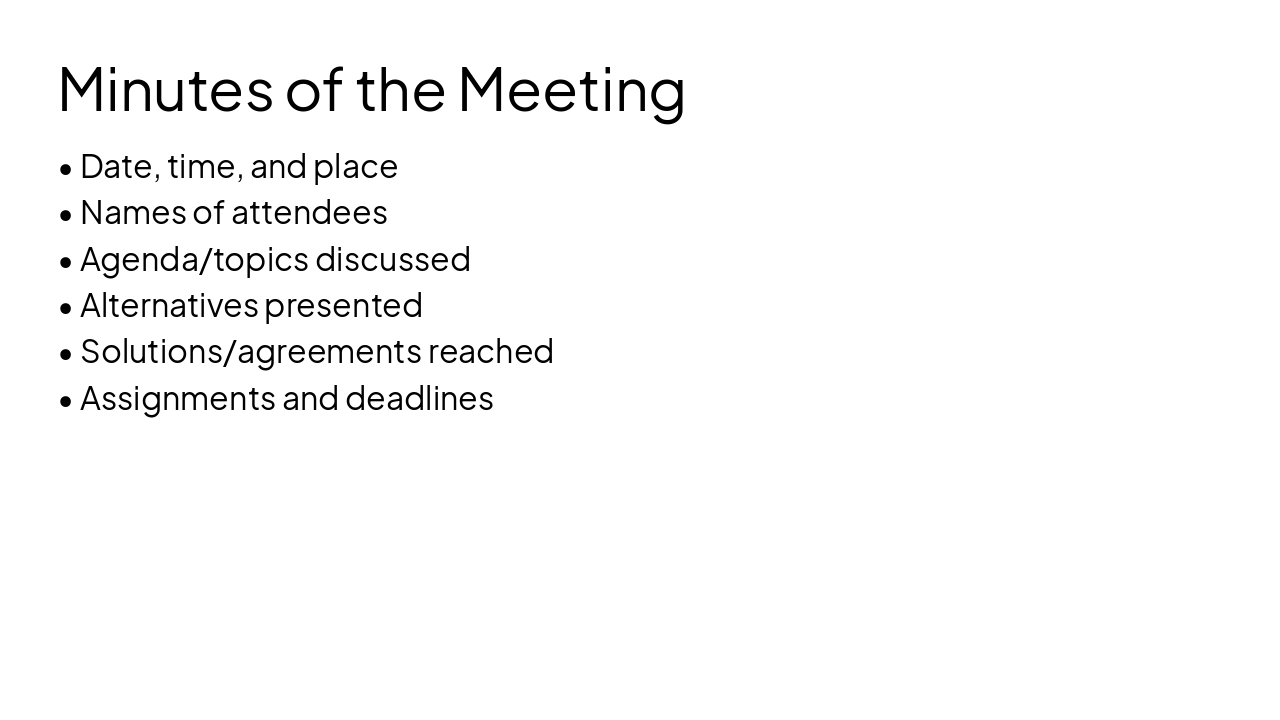
Slide 16 - Minutes of the Meeting

  • Date, time, and place
  • Names of attendees
  • Agenda/topics discussed
  • Alternatives presented
  • Solutions/agreements reached
  • Assignments and deadlines
Slide 16 - Minutes of the Meeting
Slide 17 of 20

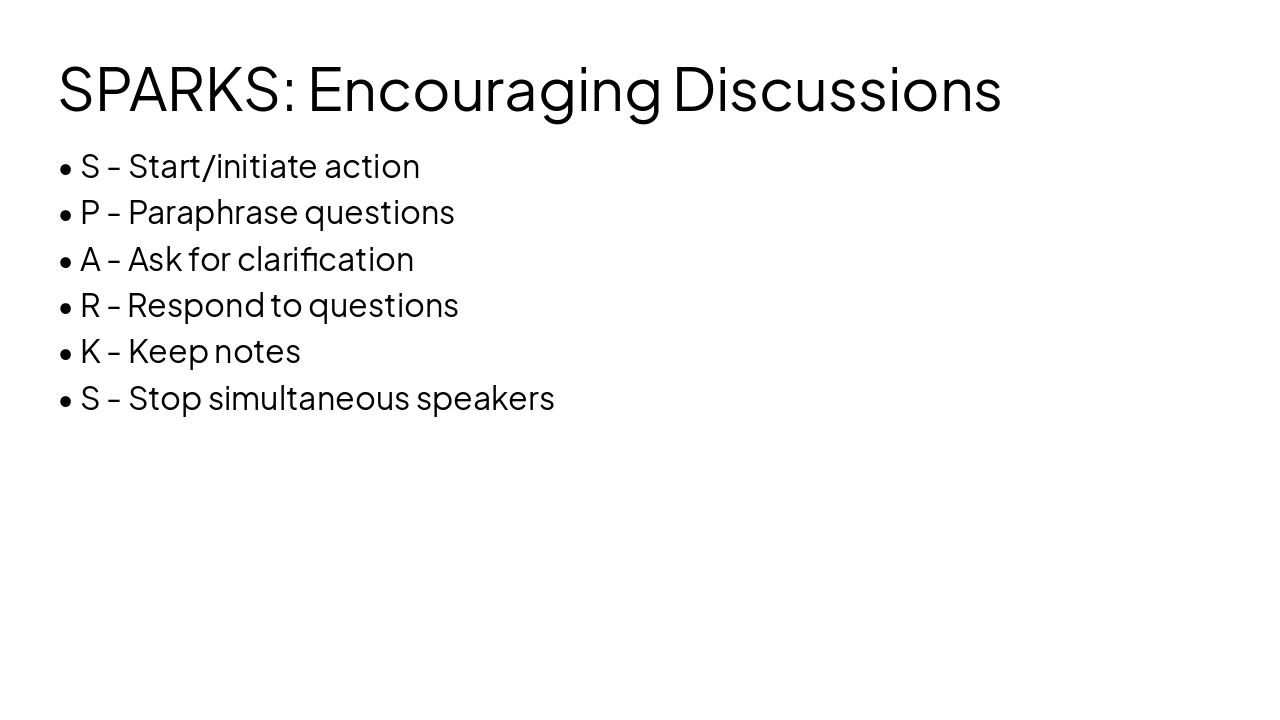
Slide 17 - SPARKS: Encouraging Discussions

  • S - Start/initiate action
  • P - Paraphrase questions
  • A - Ask for clarification
  • R - Respond to questions
  • K - Keep notes
  • S - Stop simultaneous speakers
Slide 17 - SPARKS: Encouraging Discussions
Slide 18 of 20

Slide 18 - Decision Making Methods

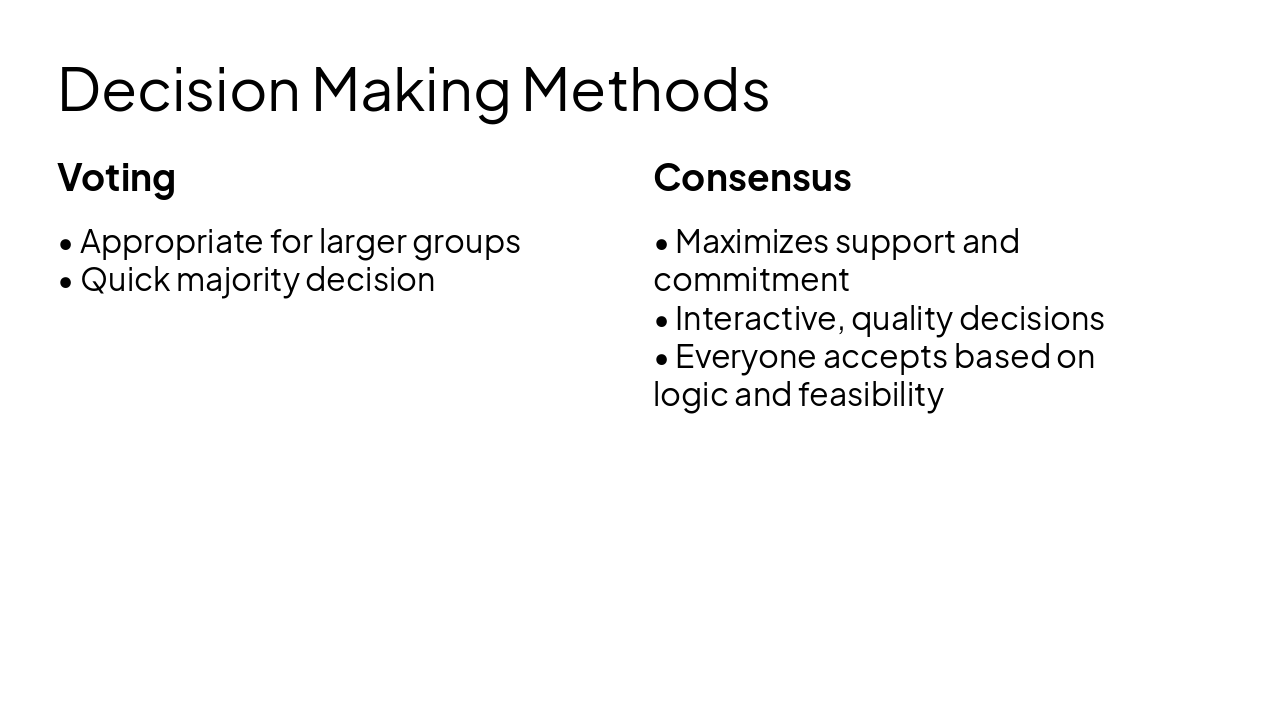
Voting

  • Appropriate for larger groups
  • Quick majority decision

Consensus

  • Maximizes support and commitment
  • Interactive, quality decisions
  • Everyone accepts based on logic and feasibility
Slide 18 - Decision Making Methods
Slide 19 of 20

Slide 19 - Communication in Meetings

> When two men communicate with each other by word of mouth, there is a twofold hazard in that communication.

— Unknown

---

Photo by Christina @ wocintechchat.com M on Unsplash
Slide 19 - Communication in Meetings
Slide 20 of 20

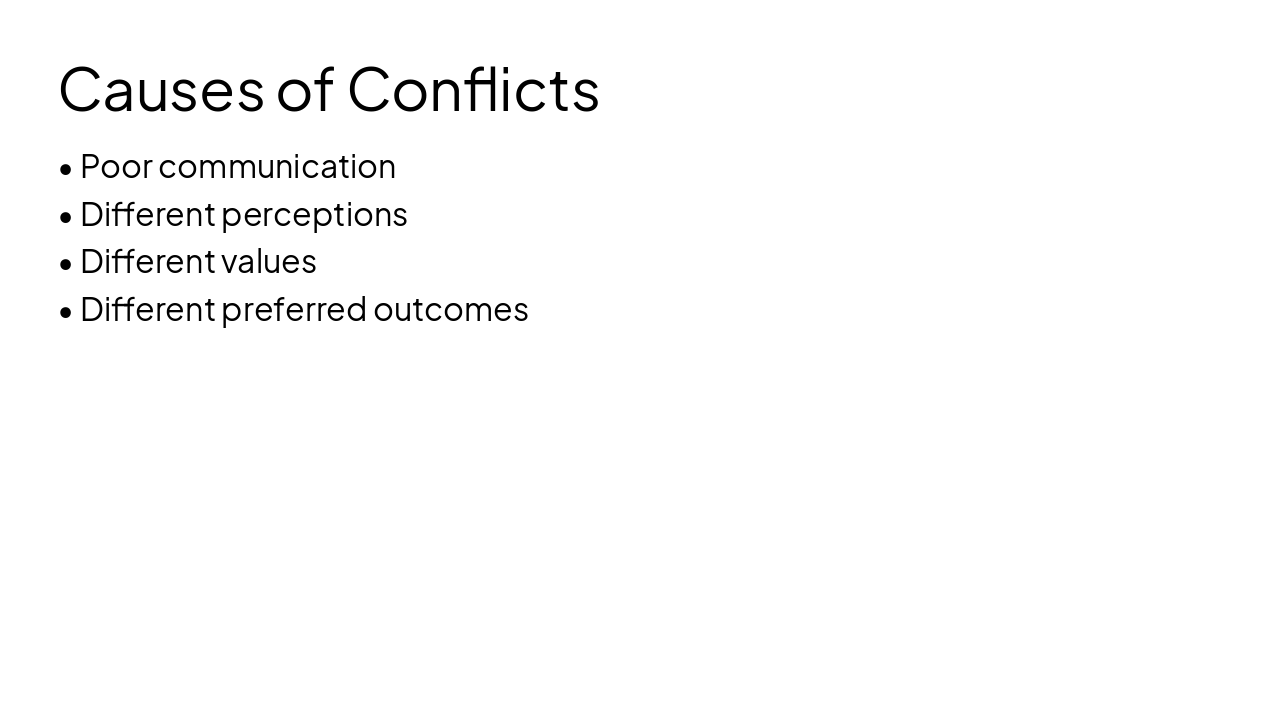
Slide 20 - Causes of Conflicts

  • Poor communication
  • Different perceptions
  • Different values
  • Different preferred outcomes
Slide 20 - Causes of Conflicts

Discover More Presentations

Explore thousands of AI-generated presentations for inspiration

Browse Presentations
Powered by AI

Create Your Own Presentation

Generate professional presentations in seconds with Karaf's AI. Customize this presentation or start from scratch.

Create New Presentation

Powered by Karaf.ai — AI-Powered Presentation Generator