The Fascinating World of Kingfishers

Generated from prompt:

Presentation about the Kingfisher bird. Include slides: title, overview of kingfishers, physical characteristics, habitat and distribution, diet and hunting behavior, different species of kingfishers, role in ecosystems, interesting facts, conservation status, and conclusion.

This presentation delves into the Alcedinidae family, exploring kingfishers' physical traits, habitats, diet, hunting behaviors, species diversity, ecological roles, interesting facts, and conservation challenges.

March 14, 202610 slides
Slide 1 of 10

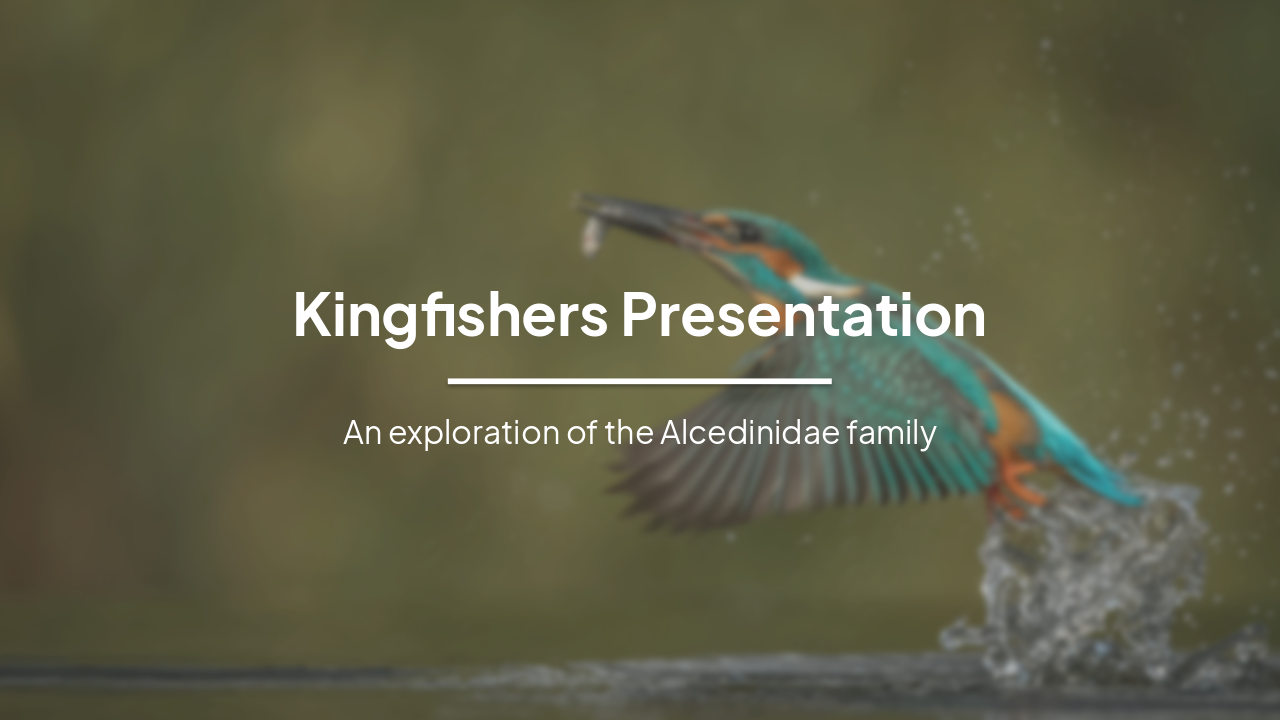
Slide 1 - Kingfishers Presentation

The Fascinating World of Kingfishers

An exploration of the Alcedinidae family

---

Photo by Vincent van Zalinge on Unsplash
Slide 1 - Kingfishers Presentation
Slide 2 of 10

Slide 2 - Overview of Kingfishers

  • Kingfishers belong to the family Alcedinidae, order Coraciiformes.
  • They are small to medium-sized, brightly coloured birds.
  • There are 118 species categorized into three subfamilies and 19 genera.
  • Commonly known for their striking plumage and hunting prowess.

---

Photo by Oleh Holodyshyn on Unsplash
Slide 2 - Overview of Kingfishers
Slide 3 of 10

Slide 3 - Physical Characteristics

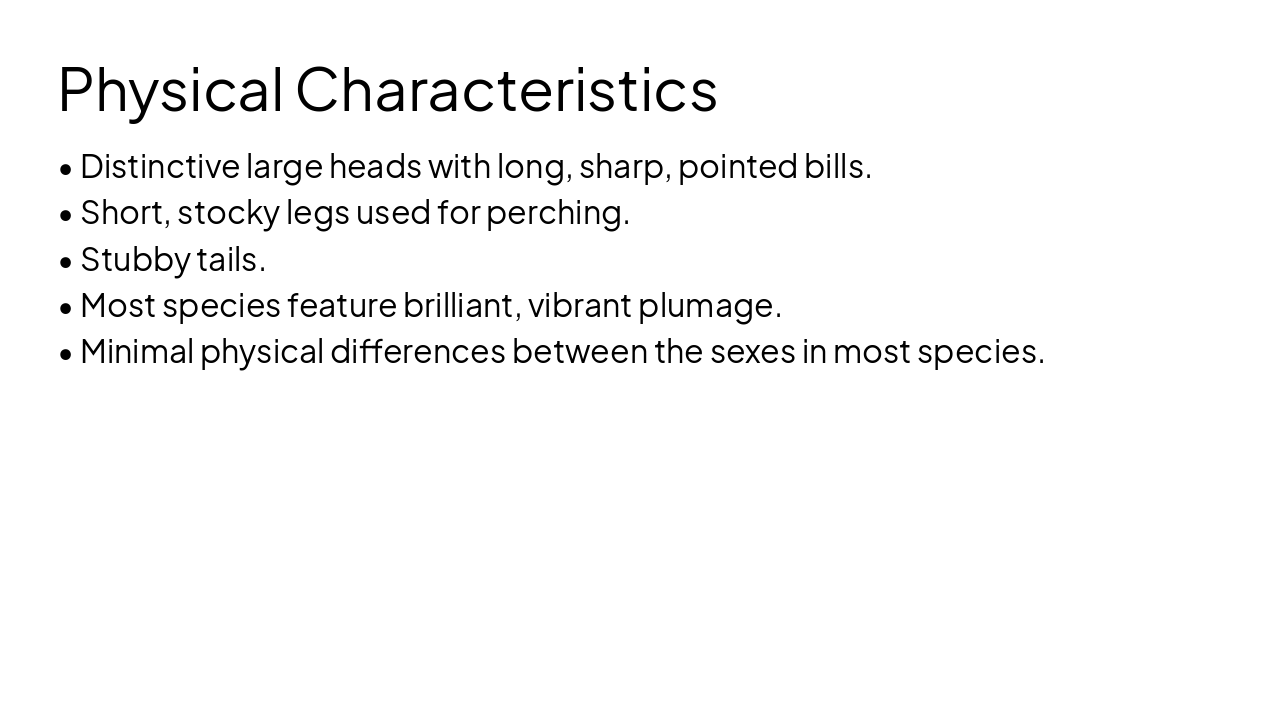
  • Distinctive large heads with long, sharp, pointed bills.
  • Short, stocky legs used for perching.
  • Stubby tails.
  • Most species feature brilliant, vibrant plumage.
  • Minimal physical differences between the sexes in most species.
Slide 3 - Physical Characteristics
Slide 4 of 10

Slide 4 - Habitat and Distribution

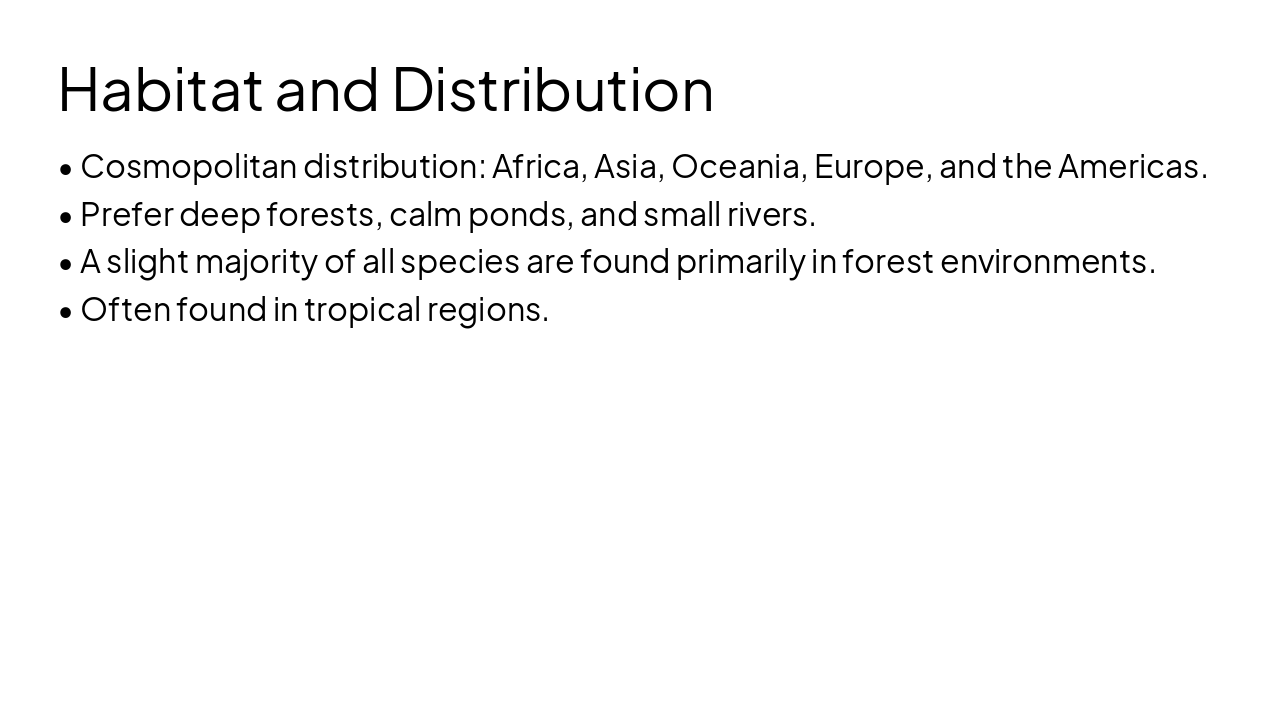
  • Cosmopolitan distribution: Africa, Asia, Oceania, Europe, and the Americas.
  • Prefer deep forests, calm ponds, and small rivers.
  • A slight majority of all species are found primarily in forest environments.
  • Often found in tropical regions.
Slide 4 - Habitat and Distribution
Slide 5 of 10

Slide 5 - Diet and Hunting Behavior

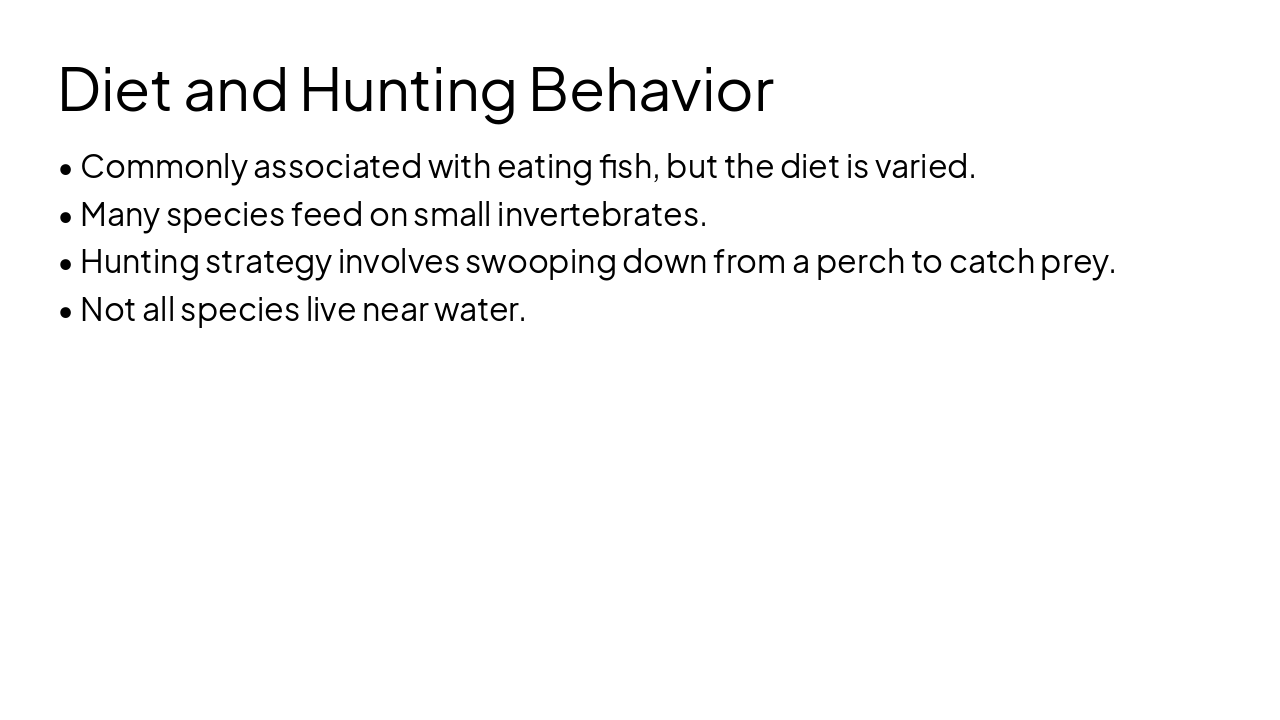
  • Commonly associated with eating fish, but the diet is varied.
  • Many species feed on small invertebrates.
  • Hunting strategy involves swooping down from a perch to catch prey.
  • Not all species live near water.
Slide 5 - Diet and Hunting Behavior
Slide 6 of 10

Slide 6 - Species Diversity

  • 118 species total.
  • Divided into 3 distinct subfamilies.
  • 19 different genera.
  • Includes the 'Common Kingfisher' often found in Britain.

---

Photo by Campaign Creators on Unsplash

Slide 6 - Species Diversity
Slide 7 of 10

Slide 7 - Role in Ecosystems

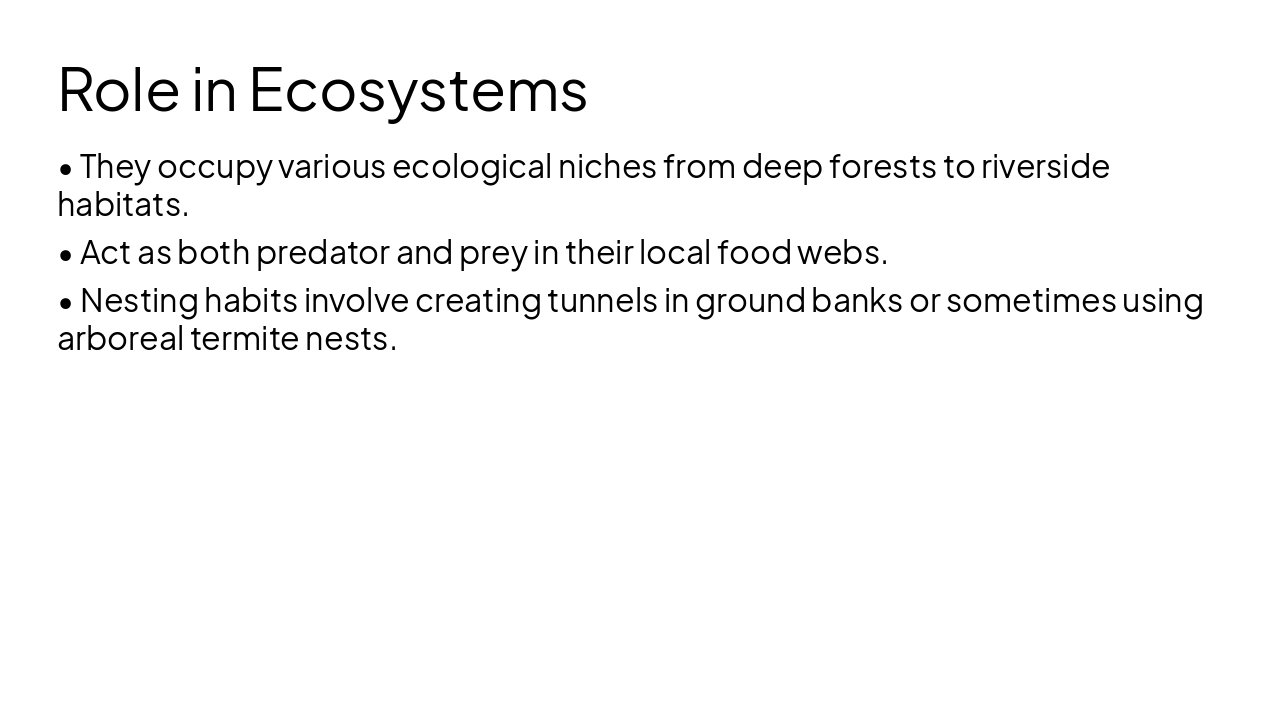
  • They occupy various ecological niches from deep forests to riverside habitats.
  • Act as both predator and prey in their local food webs.
  • Nesting habits involve creating tunnels in ground banks or sometimes using arboreal termite nests.
Slide 7 - Role in Ecosystems
Slide 8 of 10

Slide 8 - Interesting Facts

  • "Kingfisher" usually refers to the common kingfisher in Britain.
  • Can be found living in both artificial and natural tunnels.
  • Highly varied diet depending on the species and location.
Slide 8 - Interesting Facts
Slide 9 of 10

Slide 9 - Conservation Status

  • Most species are stable but face habitat loss.
  • Some species, particularly those on islands, are currently under threat of extinction.
Slide 9 - Conservation Status
Slide 10 of 10

Slide 10 - Conclusion

Kingfishers are a diverse and vital part of our global ecosystems.

Thank you for learning about these amazing birds.

---

Photo by Hai Uddin on Unsplash

Slide 10 - Conclusion

Discover More Presentations

Explore thousands of AI-generated presentations for inspiration

Browse Presentations
Powered by AI

Create Your Own Presentation

Generate professional presentations in seconds with Karaf's AI. Customize this presentation or start from scratch.

Create New Presentation

Powered by Karaf.ai — AI-Powered Presentation Generator