Lactose Intolerance: Biology, Symptoms, and Evolution

Generated from prompt:

Lactose metabolism and lactose intolerance

This presentation covers the fundamentals of lactose metabolism, defines lactose intolerance including symptoms and types, explores diagnosis and management strategies, and examines global prevalence alongside the evolutionary history of lactase pers

April 5, 202611 slides
Slide 1 of 11

Slide 1 - Lactose Metabolism and Lactose Intolerance

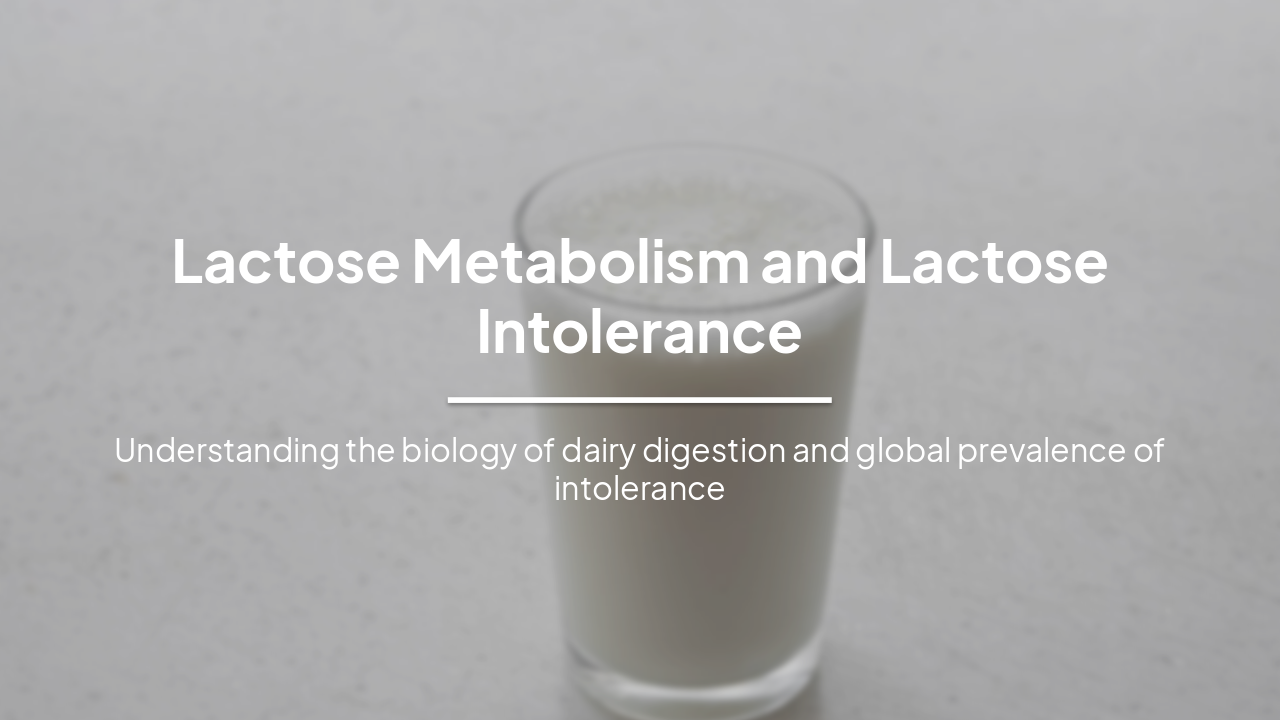
Lactose Metabolism and Lactose Intolerance

Understanding the biology of dairy digestion and global prevalence of intolerance

---

Photo by engin akyurt on Unsplash
Slide 1 - Lactose Metabolism and Lactose Intolerance
Slide 2 of 11

Slide 2 - Agenda

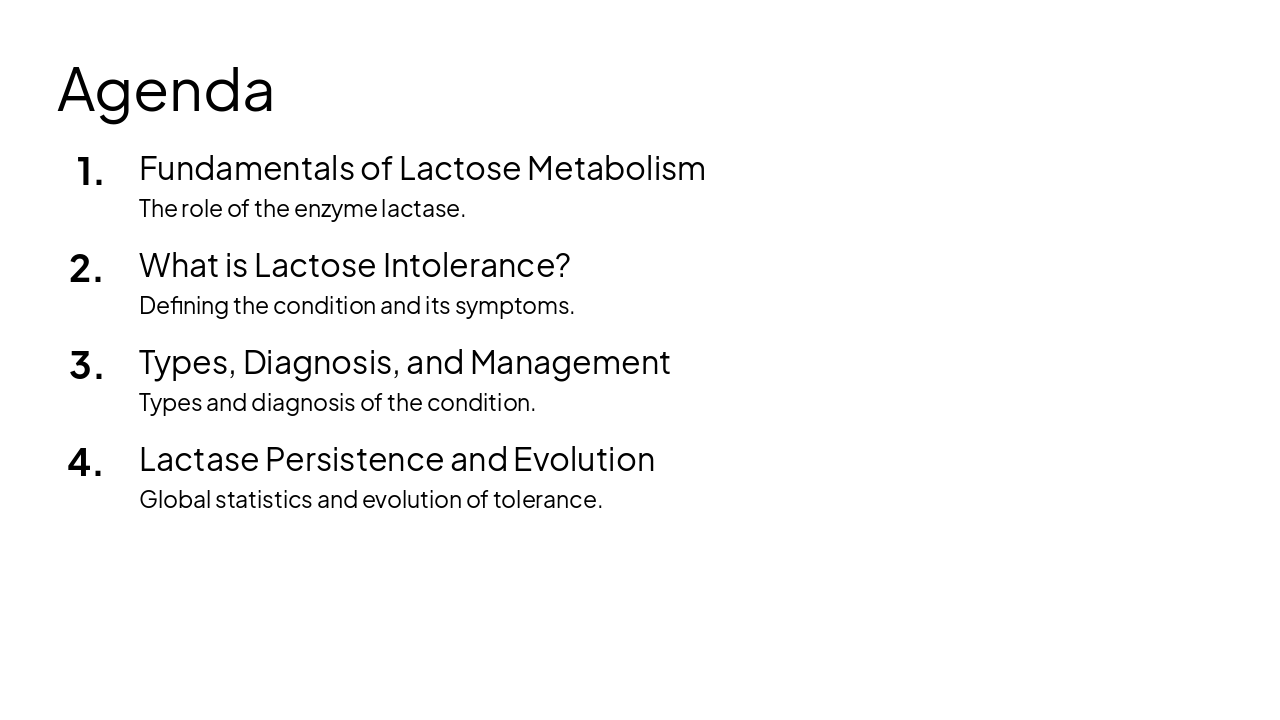
  • Fundamentals of Lactose Metabolism: The role of the enzyme lactase.
  • What is Lactose Intolerance?: Defining the condition and its symptoms.
  • Types, Diagnosis, and Management: Types and diagnosis of the condition.
  • Lactase Persistence and Evolution: Global statistics and evolution of tolerance.
Slide 2 - Agenda
Slide 3 of 11

Slide 3 - Section 1

1

Lactose Metabolism Fundamentals

How the body breaks down dairy sugars

---

Photo by National Cancer Institute on Unsplash
Slide 3 - Section 1
Slide 4 of 11

Slide 4 - How Lactose is Metabolized

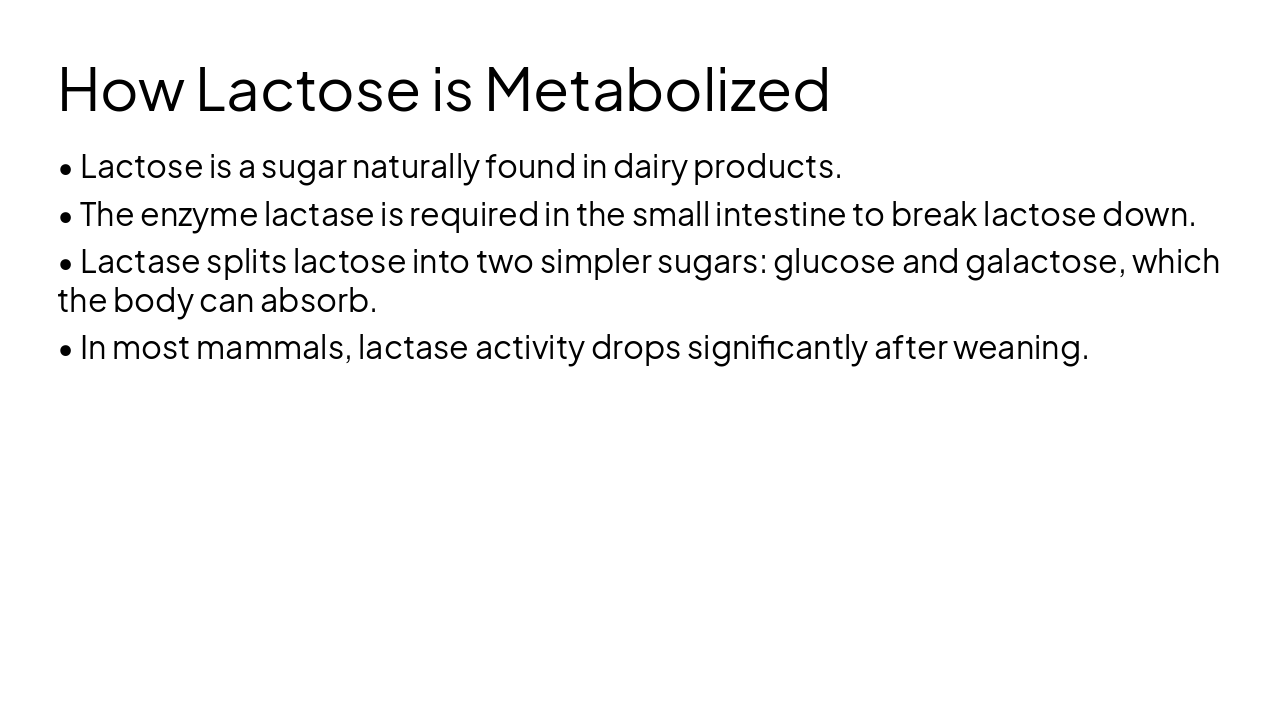
  • Lactose is a sugar naturally found in dairy products.
  • The enzyme lactase is required in the small intestine to break lactose down.
  • Lactase splits lactose into two simpler sugars: glucose and galactose, which the body can absorb.
  • In most mammals, lactase activity drops significantly after weaning.
Slide 4 - How Lactose is Metabolized
Slide 5 of 11

Slide 5 - Section 2

2

Lactose Intolerance Overview

Causes, symptoms, and clinical understanding
Slide 5 - Section 2
Slide 6 of 11

Slide 6 - What is Lactose Intolerance?

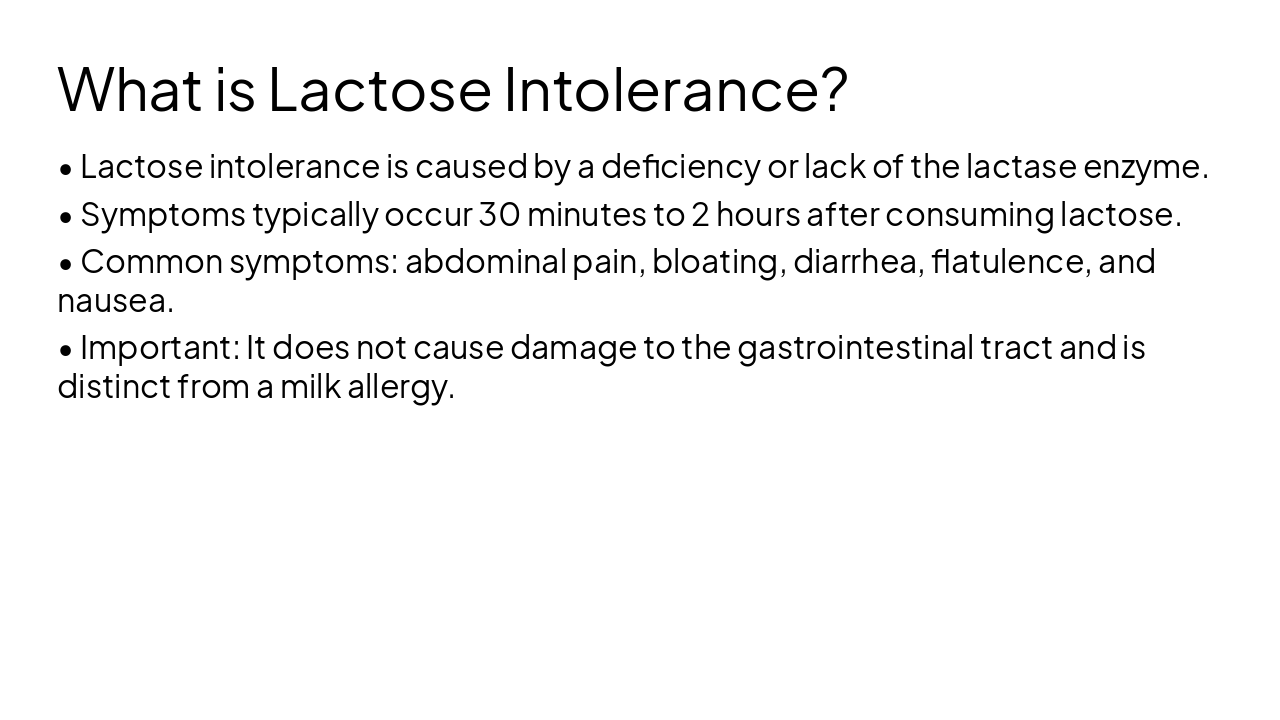
  • Lactose intolerance is caused by a deficiency or lack of the lactase enzyme.
  • Symptoms typically occur 30 minutes to 2 hours after consuming lactose.
  • Common symptoms: abdominal pain, bloating, diarrhea, flatulence, and nausea.
  • Important: It does not cause damage to the gastrointestinal tract and is distinct from a milk allergy.
Slide 6 - What is Lactose Intolerance?
Slide 7 of 11

Slide 7 - Types of Lactose Intolerance

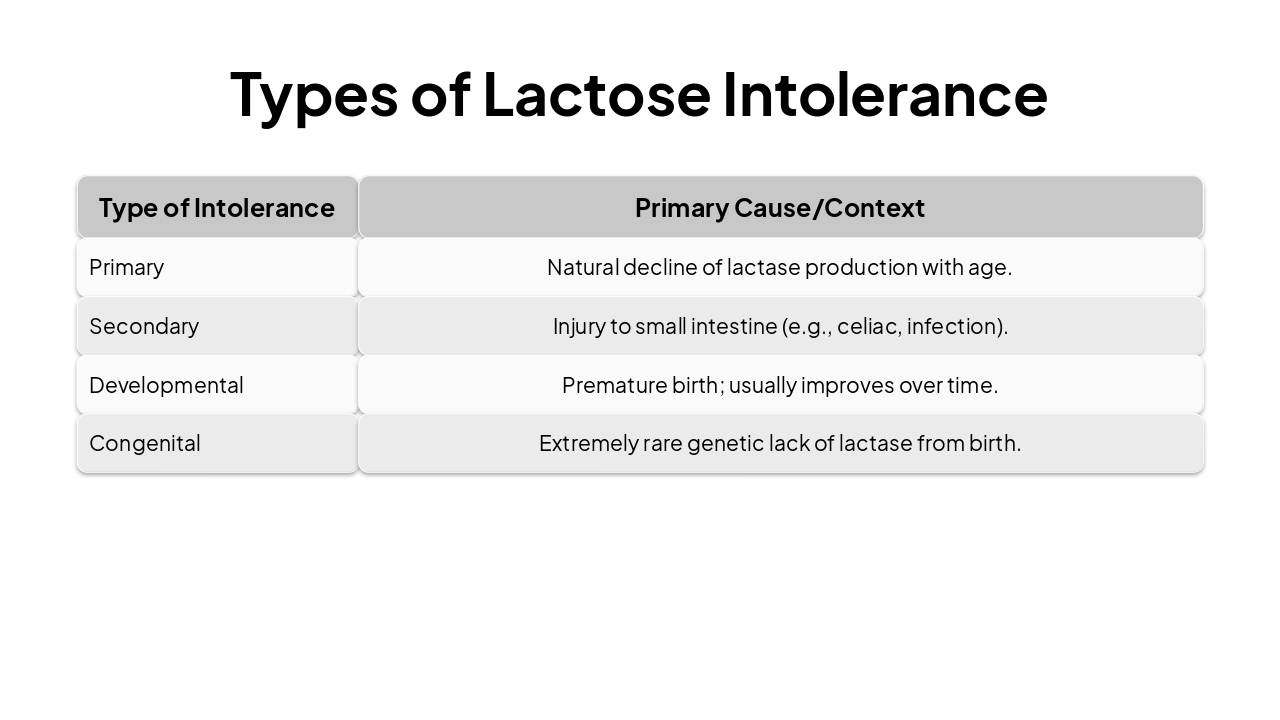
Type of IntolerancePrimary Cause/Context
PrimaryNatural decline of lactase production with age.
SecondaryInjury to small intestine (e.g., celiac, infection).
DevelopmentalPremature birth; usually improves over time.
CongenitalExtremely rare genetic lack of lactase from birth.
Slide 7 - Types of Lactose Intolerance
Slide 8 of 11

Slide 8 - Section 3

3

Global Prevalence & Evolution

Lactase persistence and cultural adaptation

---

Photo by Andrew Stutesman on Unsplash

Slide 8 - Section 3
Slide 9 of 11

Slide 9 - Global Prevalence Data

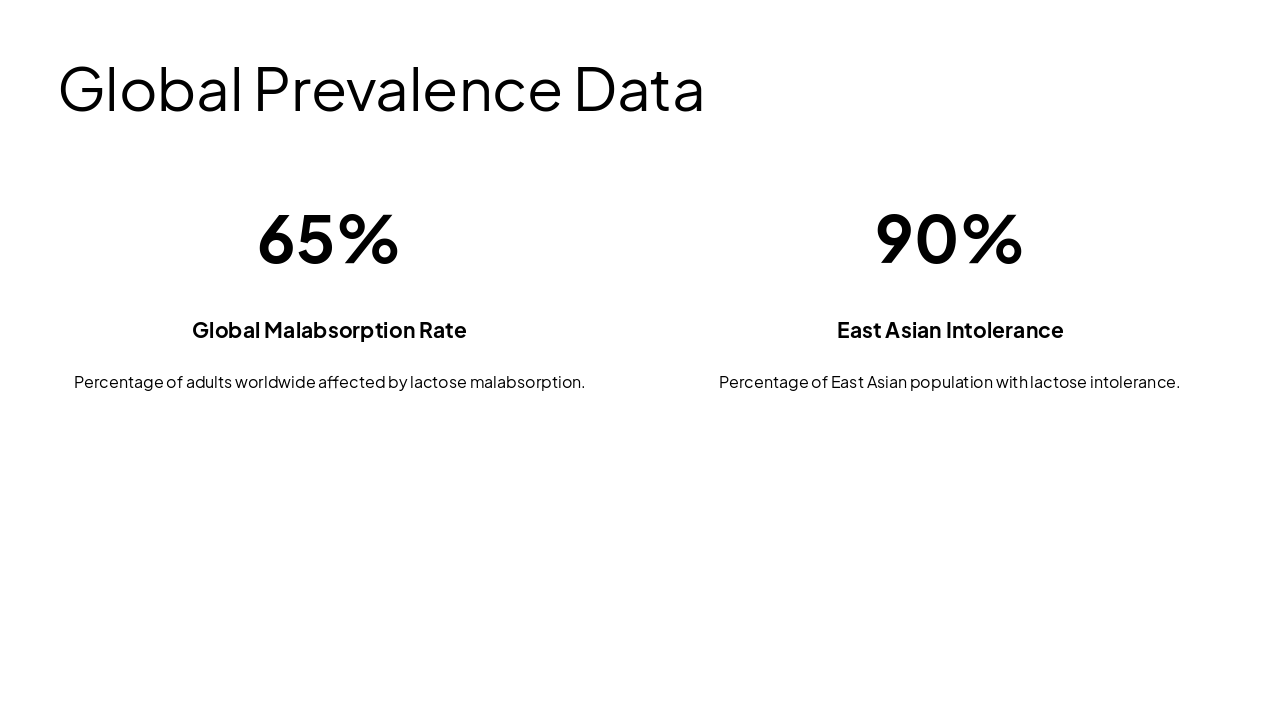
  • 65%: Global Malabsorption Rate
  • 90%: East Asian Intolerance
Slide 9 - Global Prevalence Data
Slide 10 of 11

Slide 10 - Evolutionary & Cultural Context

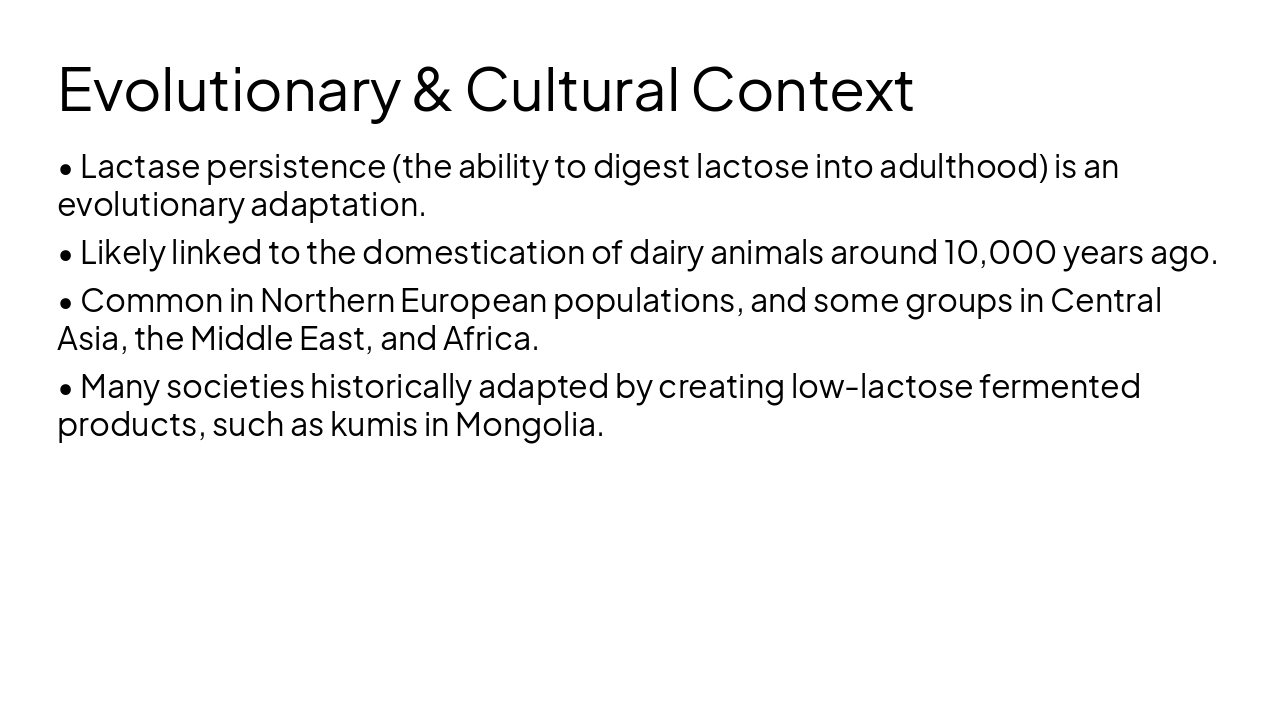
  • Lactase persistence (the ability to digest lactose into adulthood) is an evolutionary adaptation.
  • Likely linked to the domestication of dairy animals around 10,000 years ago.
  • Common in Northern European populations, and some groups in Central Asia, the Middle East, and Africa.
  • Many societies historically adapted by creating low-lactose fermented products, such as kumis in Mongolia.
Slide 10 - Evolutionary & Cultural Context
Slide 11 of 11

Slide 11 - Summary & Key Takeaways

Summary: Lactose intolerance is a common, manageable condition reflecting both biological limitations and fascinating human evolutionary history.

Managing dietary health and understanding evolutionary biology.

---

Photo by engin akyurt on Unsplash
Slide 11 - Summary & Key Takeaways

Discover More Presentations

Explore thousands of AI-generated presentations for inspiration

Browse Presentations
Powered by AI

Create Your Own Presentation

Generate professional presentations in seconds with Karaf's AI. Customize this presentation or start from scratch.

Create New Presentation

Powered by Karaf.ai — AI-Powered Presentation Generator