Slide 1 of 13
Slide 1 - Plastics in the Ocean: A Growing Environmental Crisis
Plastics in the Ocean: A Growing Environmental Crisis
ELA II Final Project Presentation
---
Photo by Naja Bertolt Jensen on Unsplash
Generated from prompt:
FINAL PROJECT GUIDE FOR ELA II ☆ : You will be required to prepare and present a presentation on one of four topics related to the environment: 1) Plastics in the ocean. 2) The melting of polar ice caps. 3) Deforestation of the rain forest in Brazil 4) The environmental impact of the cattle and livestock industry. Requirements: 1. A research bibliography (list of sources). Every member of the team is to submit an annotated list of three sources which are not the same sources as those submitted by another member of the same team. The sources will be presented in MLA format: Author last name, author first name. "Title of the Article." Publisher of the Article. Month, Date, Year of Publication, url of the article. You will write a brief evaluation (3 sentences minimum per article) which will summarize the main points of the article, and evaluate if the article passes the CRAAP test (Current, Relevant, Authoritative, Accurate, Purpose). Was the article written by a scientist, or does it quote scientists? 2. Each team will collaborate to produce a slideshow of the presentation with a minimum of six slides. A. The problem and its causes (2 slides minimum) B. What will happen if the problem continues (2 slides minimum) C. What can be done to alleviate the problem (2 slides minimum) 3. On Thursday and Friday the groups will give an oral presentation to accompany their slideshow.
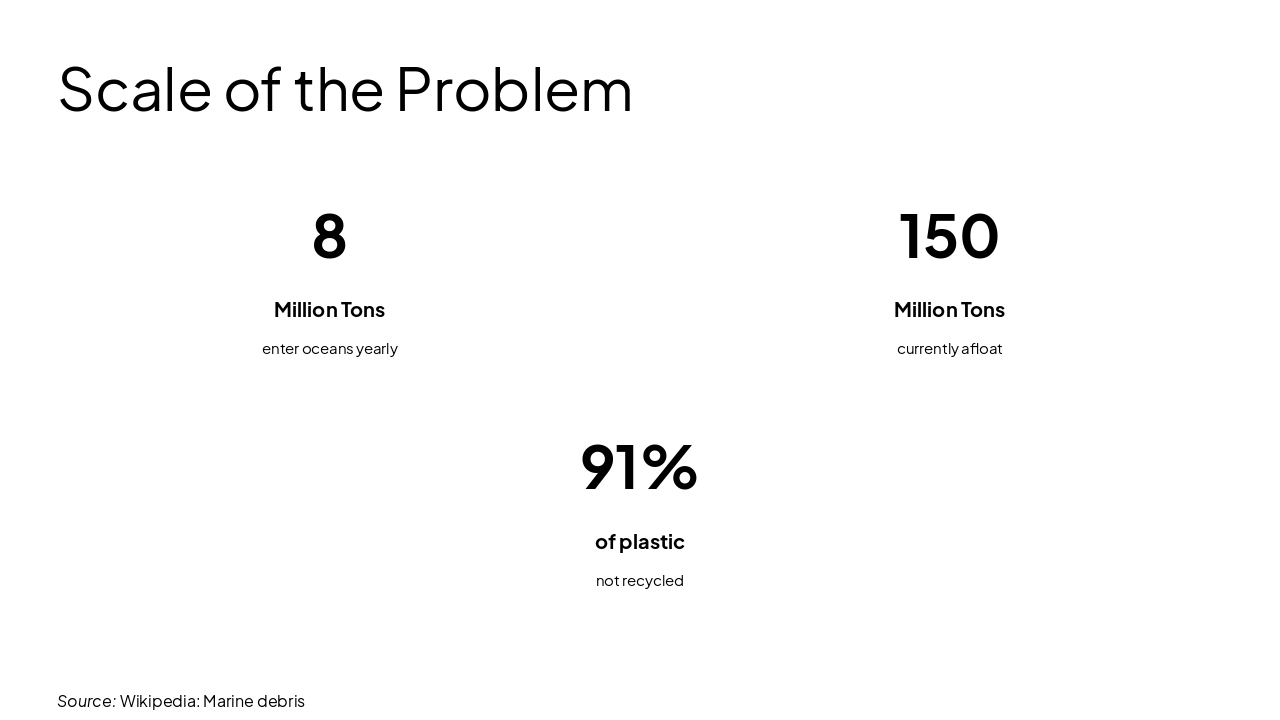
This presentation examines the escalating crisis of plastic pollution in oceans, detailing its scale with 8 million tons entering yearly and primary causes such as single-use plastics and poor waste management. It explores severe consequences for marine wildlife, ecosystems, and human health, including microplastics in food chains and human bodies. Solutions proposed include reducing single-use items, improving recycling, cleanup initiatives like Ocean Cleanup, and policy reforms. Key statistics, impacts, and a bibliography in MLA format are provided as part of an ELA II final project.
Plastics in the Ocean: A Growing Environmental Crisis
ELA II Final Project Presentation
---
Photo by Naja Bertolt Jensen on Unsplash
---
Photo by Hartono Creative Studio on Unsplash
1
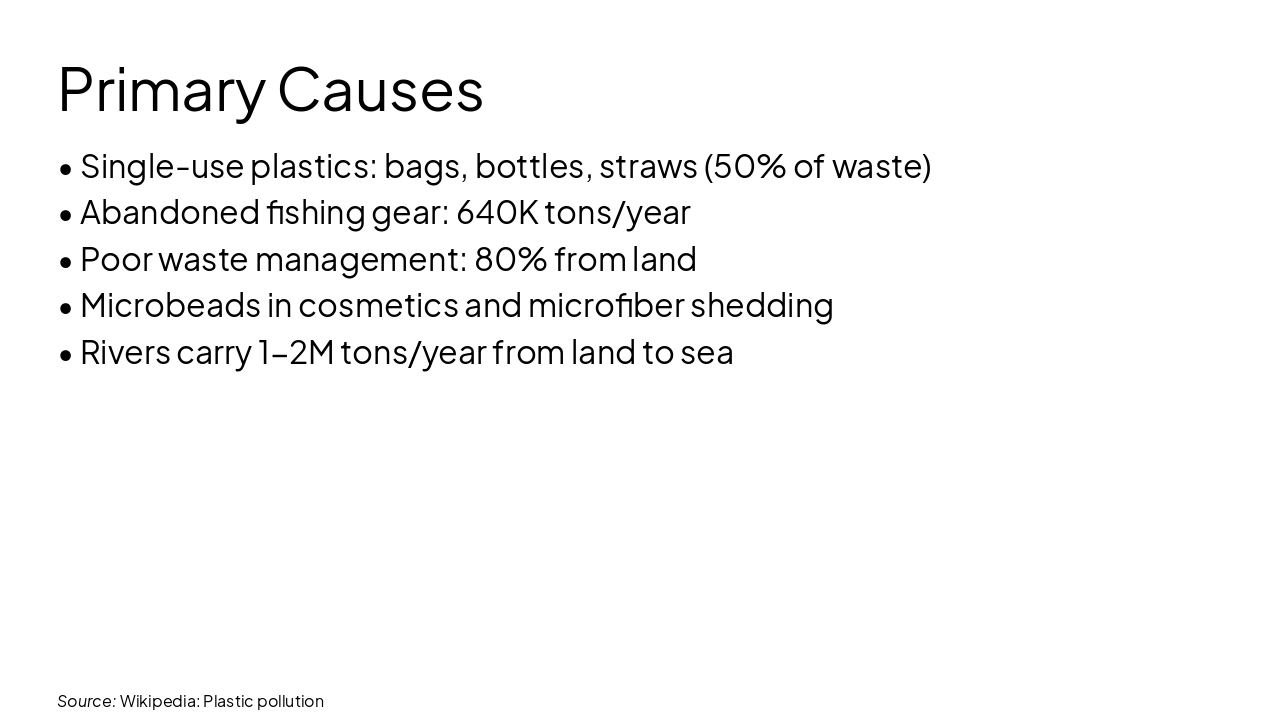
Examining the extent and sources of ocean plastic pollution
---
Photo by Dustan Woodhouse on Unsplash
Source: Wikipedia: Marine debris
Source: Wikipedia: Plastic pollution
2
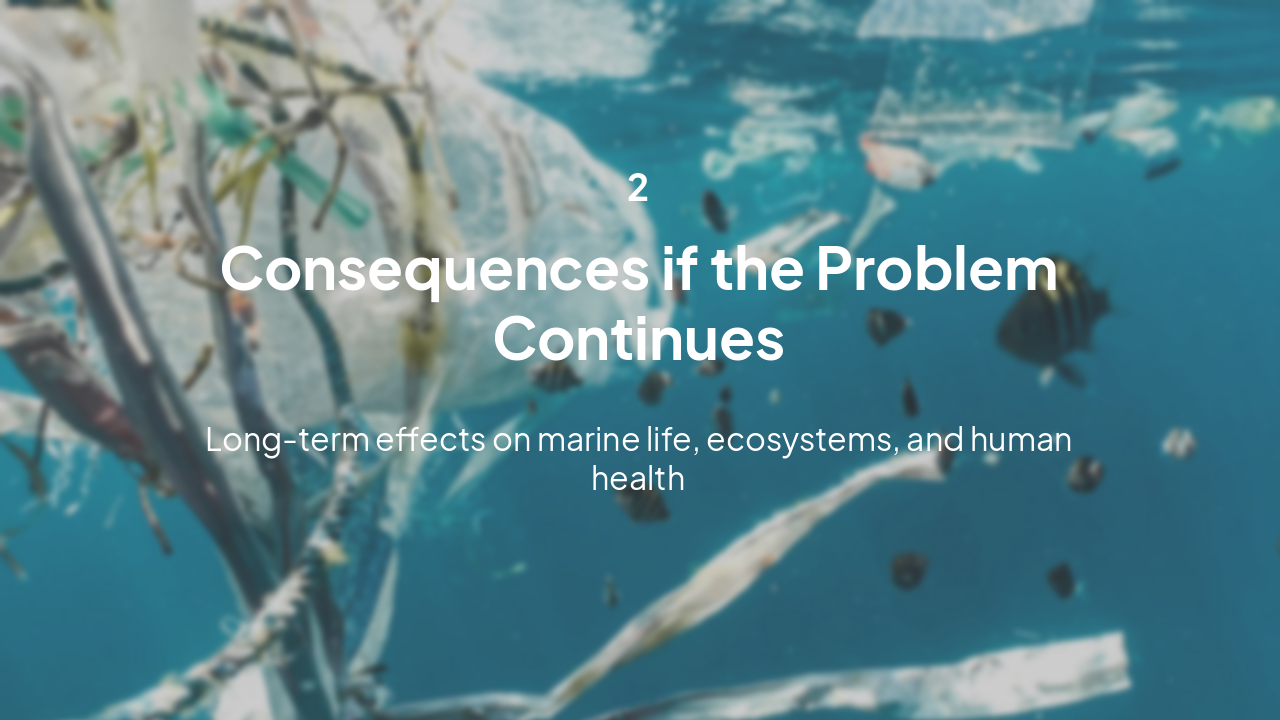
Long-term effects on marine life, ecosystems, and human health
---
Photo by Naja Bertolt Jensen on Unsplash
---
Photo by Sébastien Goldberg on Unsplash
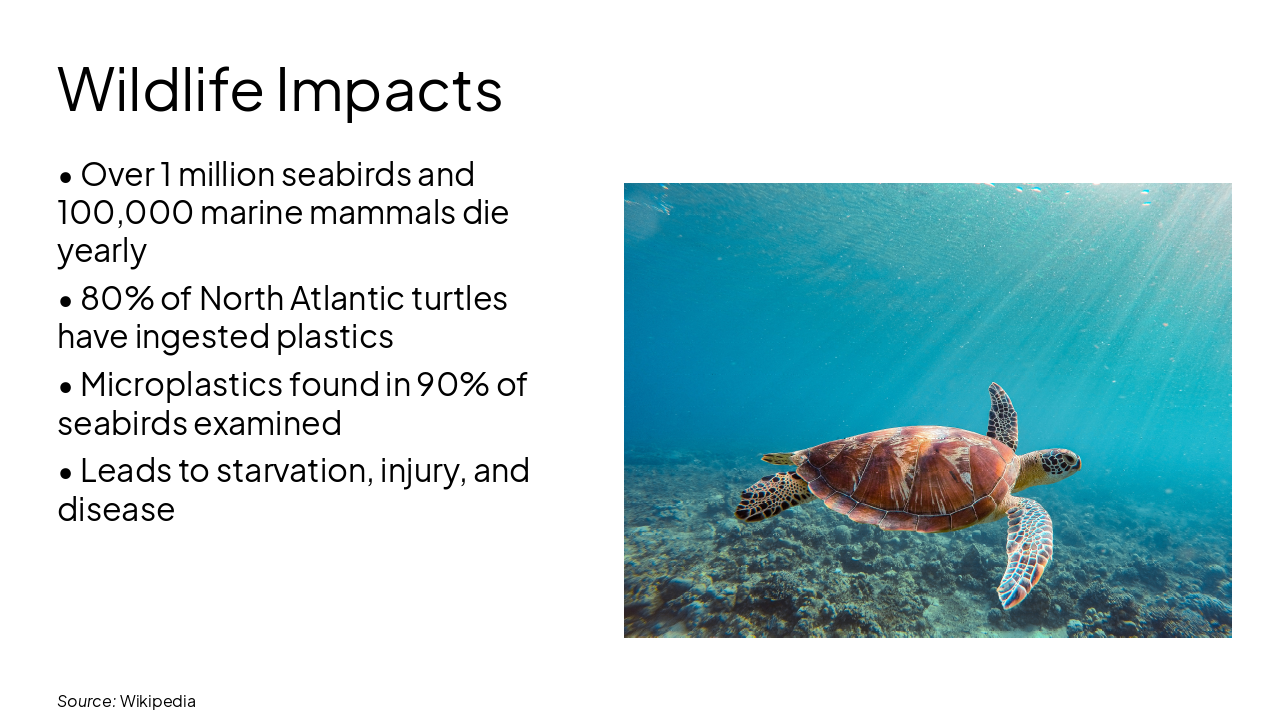
Source: Wikipedia
Ecosystem Disruption Breaks down into microplastics, enters food web. Reduces oxygen levels. Alters habitats like coral reefs (plastics cause 90% smothering deaths).
Human Health Risks Microplastics in seafood, drinking water, salt. Potential toxins leach (BPA, phthalates). Found in human blood and placentas (2022 studies).
Source: Wikipedia: Microplastics

3
Practical steps for reduction and cleanup
---
Photo by OCG Saving The Ocean on Unsplash

♻️ Reduce & Reuse Phase out single-use plastics; use reusable bags/bottles
🔄 Improve Recycling Better infrastructure; target 50% recycling rate
🛡️ Cleanup Efforts Beach cleanups, ocean drones (e.g., Ocean Cleanup project)
📜 Policy Changes Global treaties, microbead bans in 80+ countries
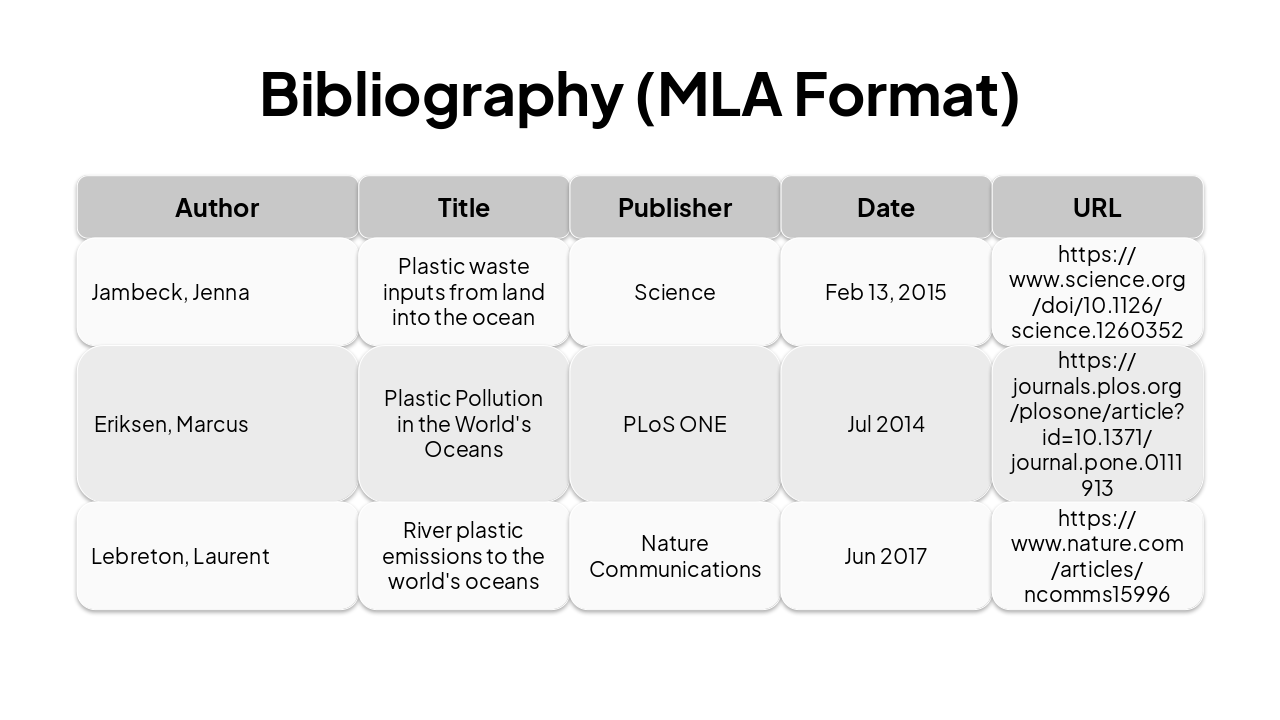
| Author | Title | Publisher | Date | URL |
|---|---|---|---|---|
| Jambeck, Jenna | Plastic waste inputs from land into the ocean | Science | Feb 13, 2015 | https://www.science.org/doi/10.1126/science.1260352 |
| Eriksen, Marcus | Plastic Pollution in the World's Oceans | PLoS ONE | Jul 2014 | https://journals.plos.org/plosone/article?id=10.1371/journal.pone.0111913 |
| Lebreton, Laurent | River plastic emissions to the world's oceans | Nature Communications | Jun 2017 | https://www.nature.com/articles/ncomms15996 |
Explore thousands of AI-generated presentations for inspiration
Generate professional presentations in seconds with Karaf's AI. Customize this presentation or start from scratch.

