Slide 1 of 10
Slide 1 - Title
Construction Materials: Properties, Uses and Environmental Impact
What our modern world is built from
Generated from prompt:
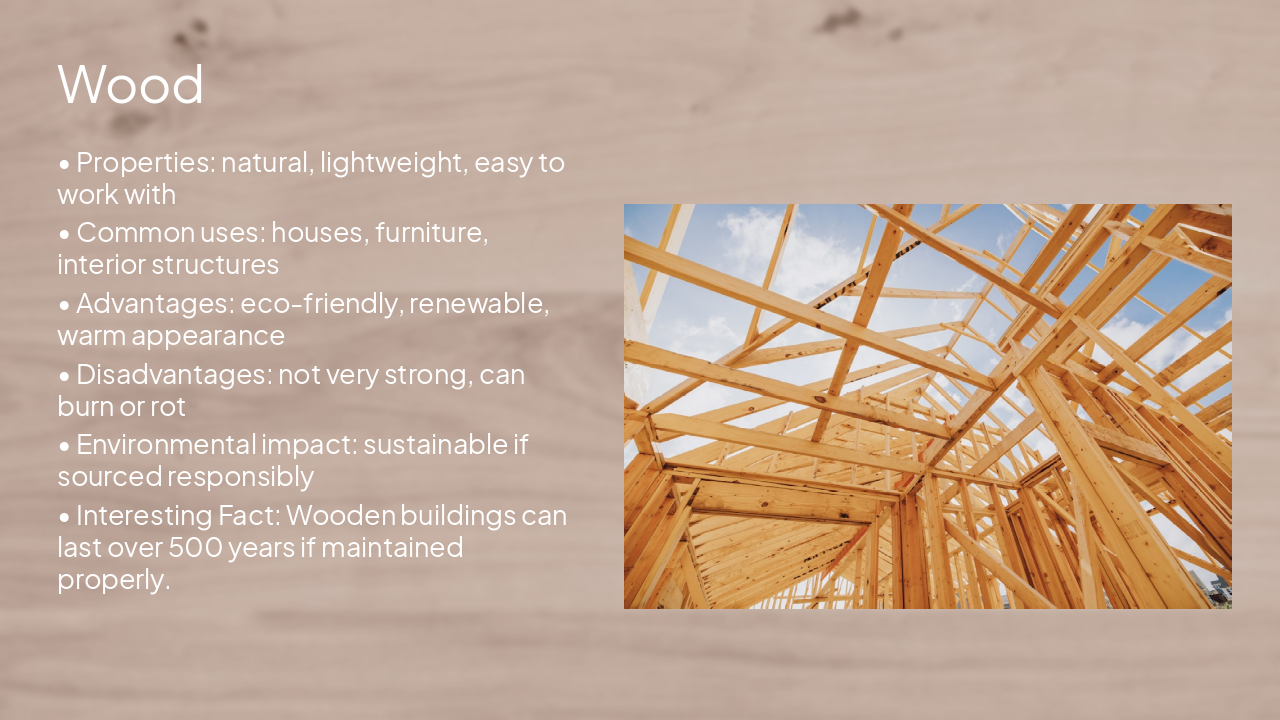
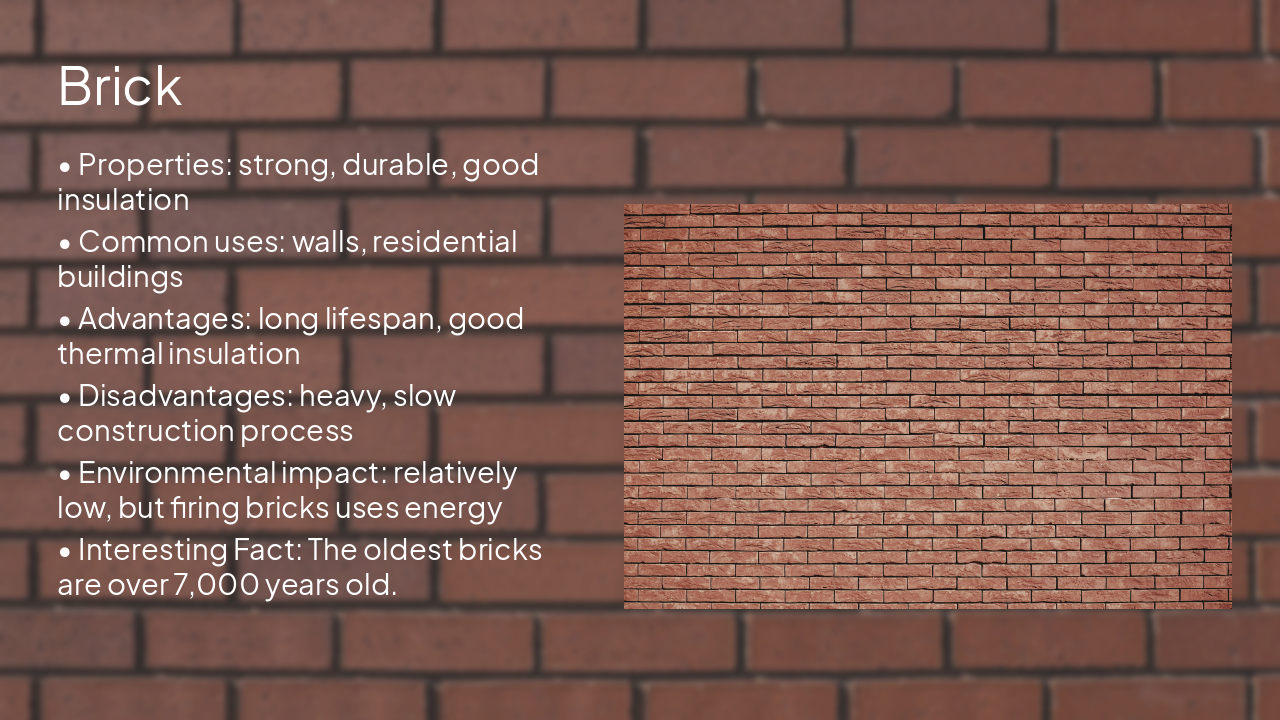
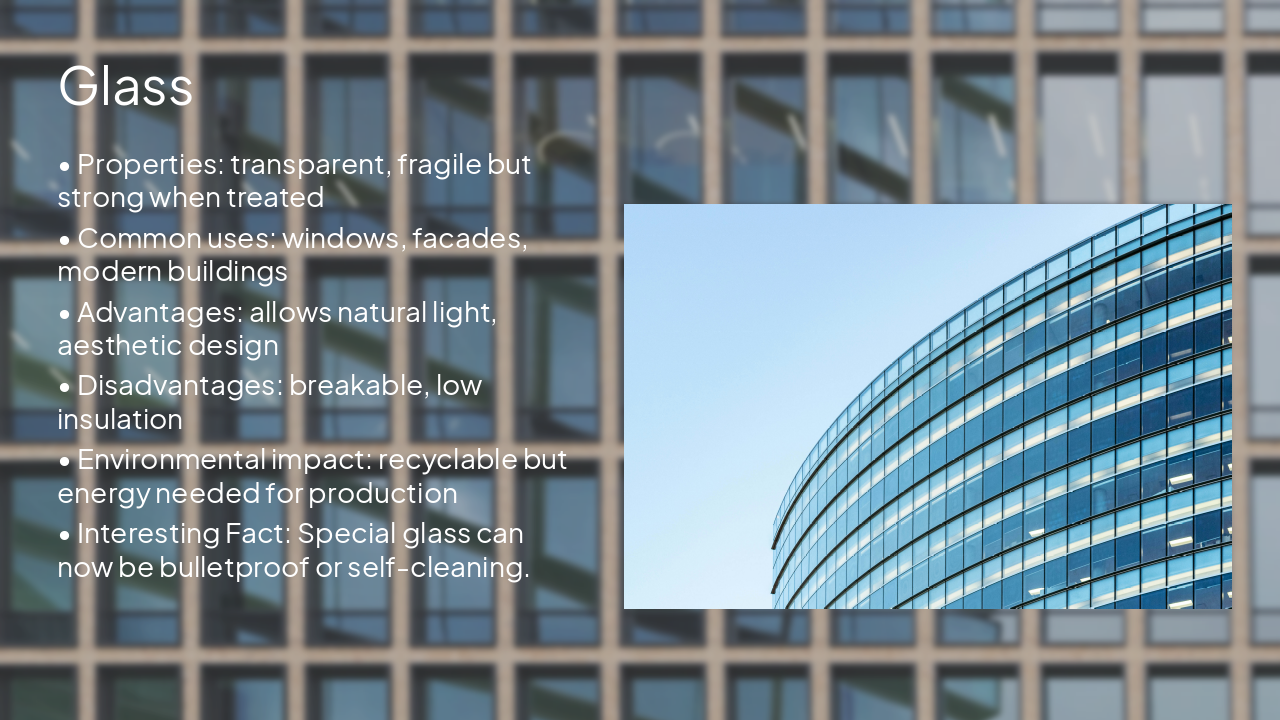
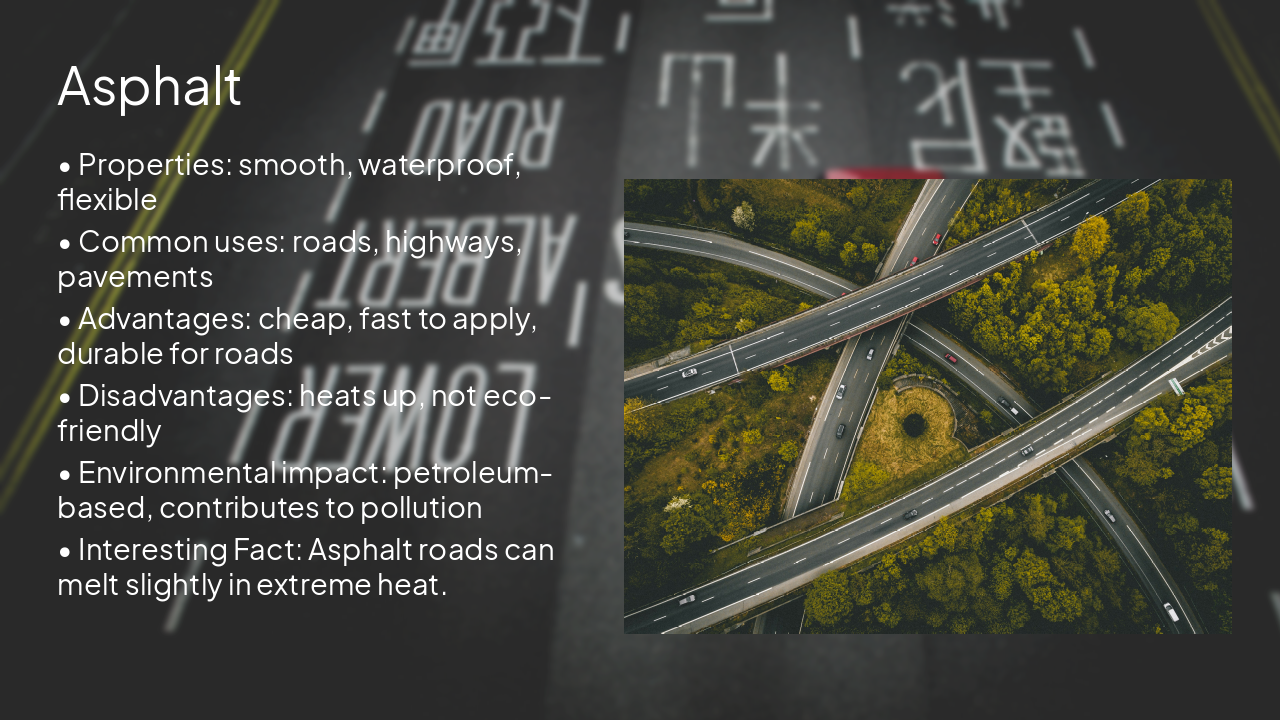
Slide 1 – Title Construction Materials Properties, Uses and Environmental Impact 🎨 Design: • Фон: колаж будівель (мости + хмарочоси + дорога) • Стиль: мінімалістичний індустріальний (сірий + синій) • Великий напівпрозорий текст по центру ✨ Додатково: • Підзаголовок: “What our modern world is built from” ⸻ Slide 2 – Introduction Construction materials are essential in civil engineering and architecture. Different materials are used depending on the type of building, its purpose, strength requirements, and environmental conditions. 🎨 Design: • Іконки: 🏗️ 🏢 🌉 🏠 • Фон: схема міста або blueprint (креслення) ✨ Цікавий факт: • Today, humans use over 10 billion tons of construction materials per year. ⸻ Slide 3 – Concrete Properties: strong, durable, heavy, fire-resistant Common uses: foundations, bridges, roads, buildings Advantages: very strong, long-lasting, affordable Disadvantages: high CO₂ emissions during production, heavy weight Environmental impact: production causes pollution, but it is widely used due to durability 🎨 Design: • Фото: будівництво моста або заливка бетону • Колір: сірий + темно-синій ✨ Цікавий факт: • Concrete is the second most used material on Earth after water. ⸻ Slide 4 – Steel Properties: strong, flexible, recyclable Common uses: skyscrapers, bridges, frameworks Advantages: high strength, flexible, reusable Disadvantages: expensive, can rust without protection Environmental impact: recyclable but energy-intensive to produce 🎨 Design: • Фото: хмарочис з металевим каркасом • Ефект: блиск металу ✨ Цікавий факт: • Steel can be recycled 100% without losing strength. ⸻ Slide 5 – Wood Properties: natural, lightweight, easy to work with Common uses: houses, furniture, interior structures Advantages: eco-friendly, renewable, warm appearance Disadvantages: not very strong, can burn or rot Environmental impact: sustainable if sourced responsibly 🎨 Design: • Фон: текстура дерева • Теплі кольори (коричневий, зелений) ✨ Цікавий факт: • Wooden buildings can last over 500 years if maintained properly. ⸻ Slide 6 – Brick Properties: strong, durable, good insulation Common uses: walls, residential buildings Advantages: long lifespan, good thermal insulation Disadvantages: heavy, slow construction process Environmental impact: relatively low, but firing bricks uses energy 🎨 Design: • Фон: цегляна стіна • Червоний + оранжевий стиль ✨ Цікавий факт: • The oldest bricks are over 7,000 years old. ⸻ Slide 7 – Glass Properties: transparent, fragile but strong when treated Common uses: windows, facades, modern buildings Advantages: allows natural light, aesthetic design Disadvantages: breakable, low insulation Environmental impact: recyclable but energy needed for production 🎨 Design: • Скляні хмарочоси, відбиття неба • Ефект прозорості ✨ Цікавий факт: • Special glass can now be bulletproof or self-cleaning. ⸻ Slide 8 – Asphalt Properties: smooth, waterproof, flexible Common uses: roads, highways, pavements Advantages: cheap, fast to apply, durable for roads Disadvantages: heats up, not eco-friendly Environmental impact: petroleum-based, contributes to pollution 🎨 Design: • Фото дороги з висоти • Темний фон + жовті лінії ✨ Цікавий факт: • Asphalt roads can melt slightly in extreme heat. ⸻ Slide 9 – Comparison All materials have different roles in construction. Engineers choose materials based on strength, cost, durability, and environmental impact. 🎨 Design: • Таблиця або діаграма (іконки матеріалів) • Мінімалістичний білий фон ✨ Додатково: • Best material = depends on the project, not “one perfect choice” ⸻ Slide 10 – Conclusion Modern construction depends on a combination of materials. The best choice depends on balancing strength, cost, and sustainability. 🎨 Design: • Фото сучасного міста • Світлий, “майбутній” стиль ✨ Фінальна фраза (дуже гарна для оцінки): • “The future of construction is sustainable and smart materials.”
This deck introduces key construction materials—concrete, steel, wood, brick, glass, asphalt—detailing their properties, uses, pros/cons, and environmental impacts. Includes facts, comparison table, emphasizing sustainable building practices.
Construction Materials: Properties, Uses and Environmental Impact
What our modern world is built from
---
---
Photo by Ant Rozetsky on Unsplash Photo by Mason Kimbarovsky on Unsplash
---
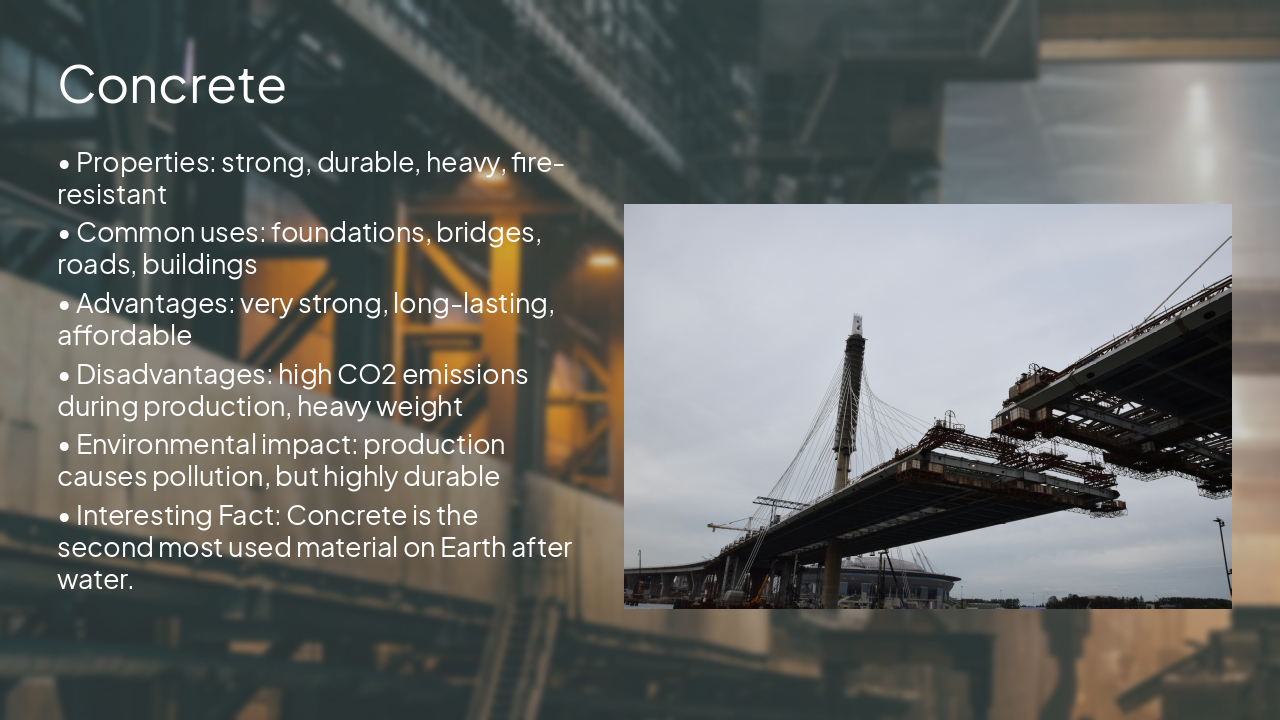
Photo by Luis Felipe Lins on Unsplash Photo by Pavel Avakumov on Unsplash
---
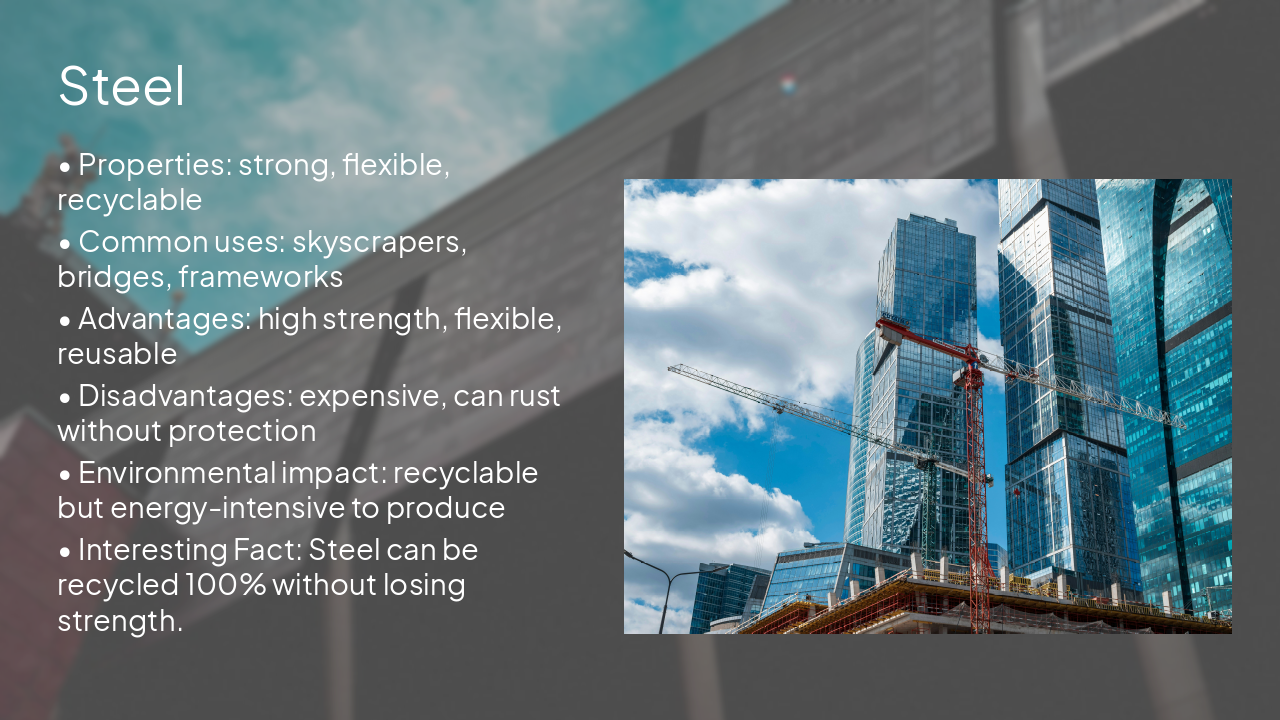
Photo by simon on Unsplash Photo by Nate Johnston on Unsplash
---
Photo by Kenny Eliason on Unsplash Photo by Bernard Hermant on Unsplash
---
Photo by Dmitrii E. on Unsplash Photo by Kenrick Baksh on Unsplash
---
Photo by Jason Mavrommatis on Unsplash Photo by Ed 259 on Unsplash
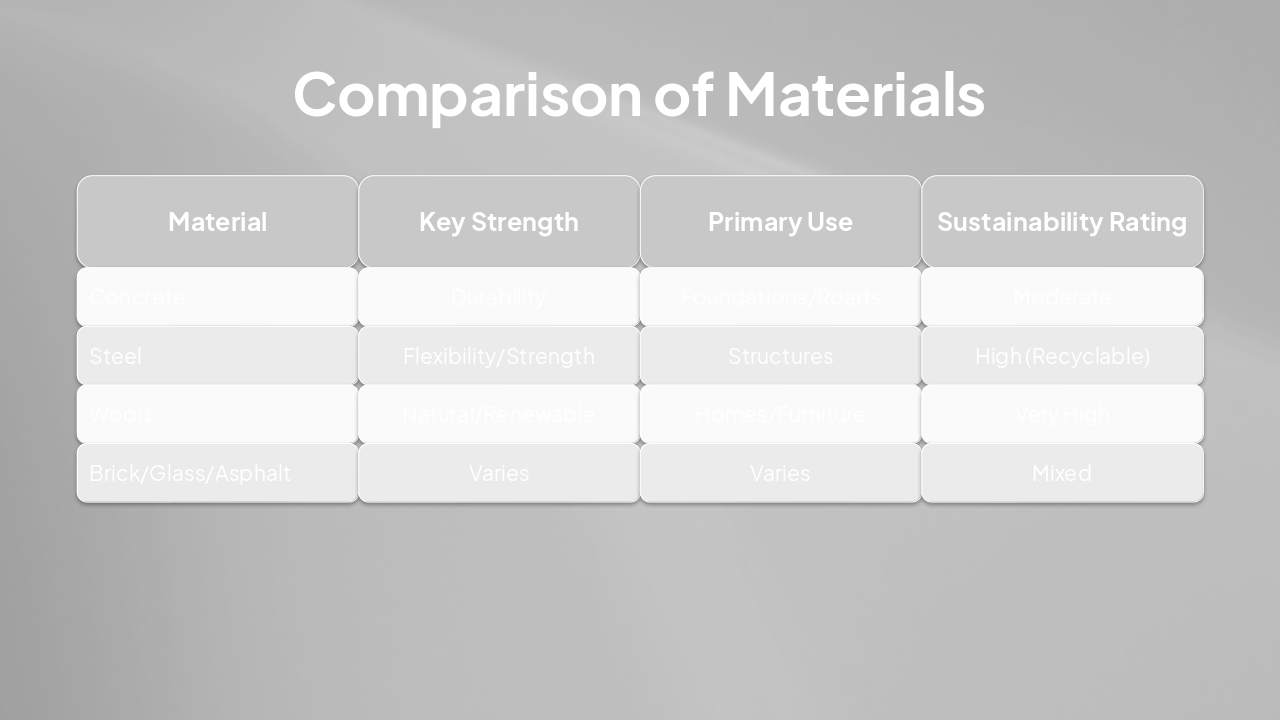
| Material | Key Strength | Primary Use | Sustainability Rating |
|---|---|---|---|
| Concrete | Durability | Foundations/Roads | Moderate |
| Steel | Flexibility/Strength | Structures | High (Recyclable) |
| Wood | Natural/Renewable | Homes/Furniture | Very High |
| Brick/Glass/Asphalt | Varies | Varies | Mixed |
---
Photo by Drew Beamer on Unsplash
Modern construction relies on balancing strength, cost, and environmental responsibility.
The future of construction is sustainable and smart materials.
---
Photo by kevin laminto on Unsplash
Explore thousands of AI-generated presentations for inspiration
Generate professional presentations in seconds with Karaf's AI. Customize this presentation or start from scratch.