Exploring Request Networks: Architecture, Protocols, and Applications

Generated from prompt:

Exhibition of the request networks

This presentation provides a comprehensive overview of request networks, the foundation of modern web applications, APIs, and cloud services. It covers fundamentals including client-server models and request-response flows, core components like load balancers, API gateways, caching, and message queues, key protocols from HTTP/1.1 and REST to HTTP/3 and gRPC, performance metrics such as uptime, latency, and RPS, as well as real-world applications in web, mobile, cloud, and microservices architectures, concluding with key takeaways and future outlook.

May 12, 202613 slides
Slide 1 of 13

Slide 1 - Exhibition of the Request Networks

Exhibition of the Request Networks

Exploring Architecture, Protocols, and Applications

---

Photo by Omar:. Lopez-Rincon on Unsplash
Slide 1 - Exhibition of the Request Networks
Slide 2 of 13

Slide 2 - Presentation Agenda

  • Introduction to Request Networks
  • Core Components and Architecture
  • Key Protocols and Standards
  • Visualizing Network Requests
  • Performance Metrics and Stats
  • Applications and Case Studies
  • Conclusion and Future Outlook

---

Photo by Francisco Kemeny on Unsplash
Slide 2 - Presentation Agenda
Slide 3 of 13

Slide 3 - Section 1

1

Introduction to Request Networks

Fundamentals and Historical Context

---

Photo by Conny Schneider on Unsplash
Slide 3 - Section 1
Slide 4 of 13

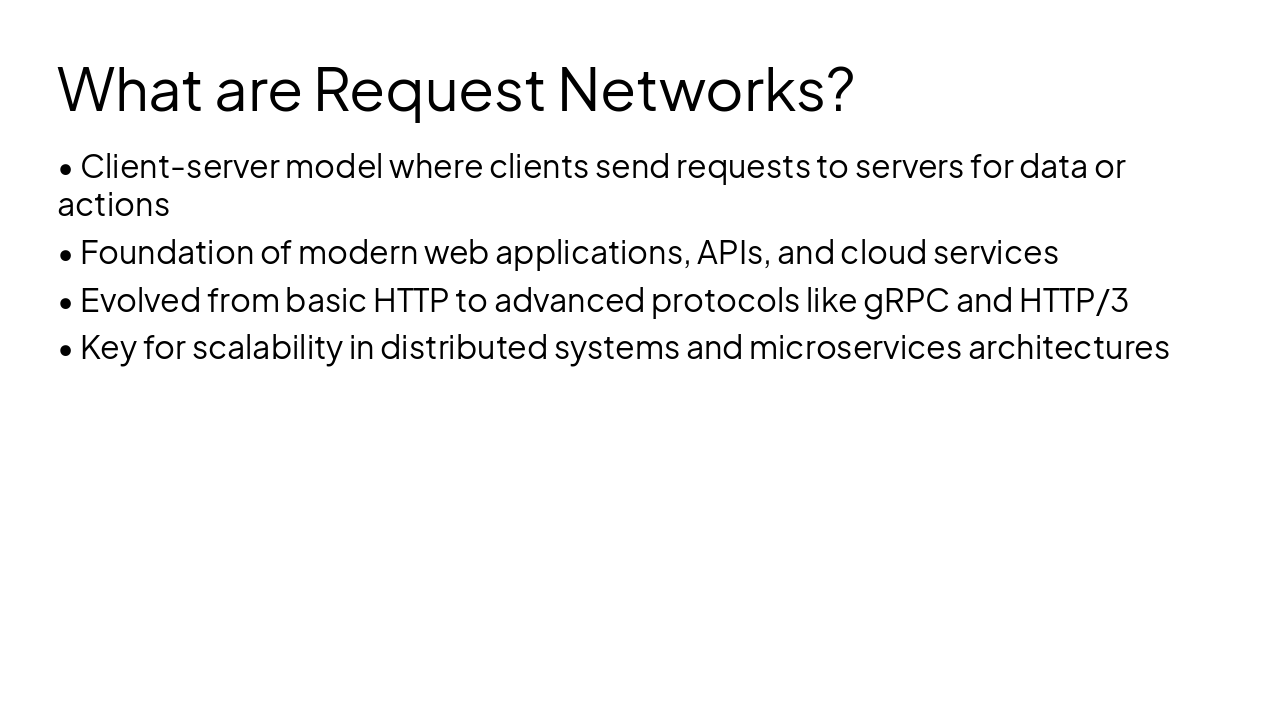
Slide 4 - What are Request Networks?

  • Client-server model where clients send requests to servers for data or actions
  • Foundation of modern web applications, APIs, and cloud services
  • Evolved from basic HTTP to advanced protocols like gRPC and HTTP/3
  • Key for scalability in distributed systems and microservices architectures
Slide 4 - What are Request Networks?
Slide 5 of 13

Slide 5 - Request-Response Flow

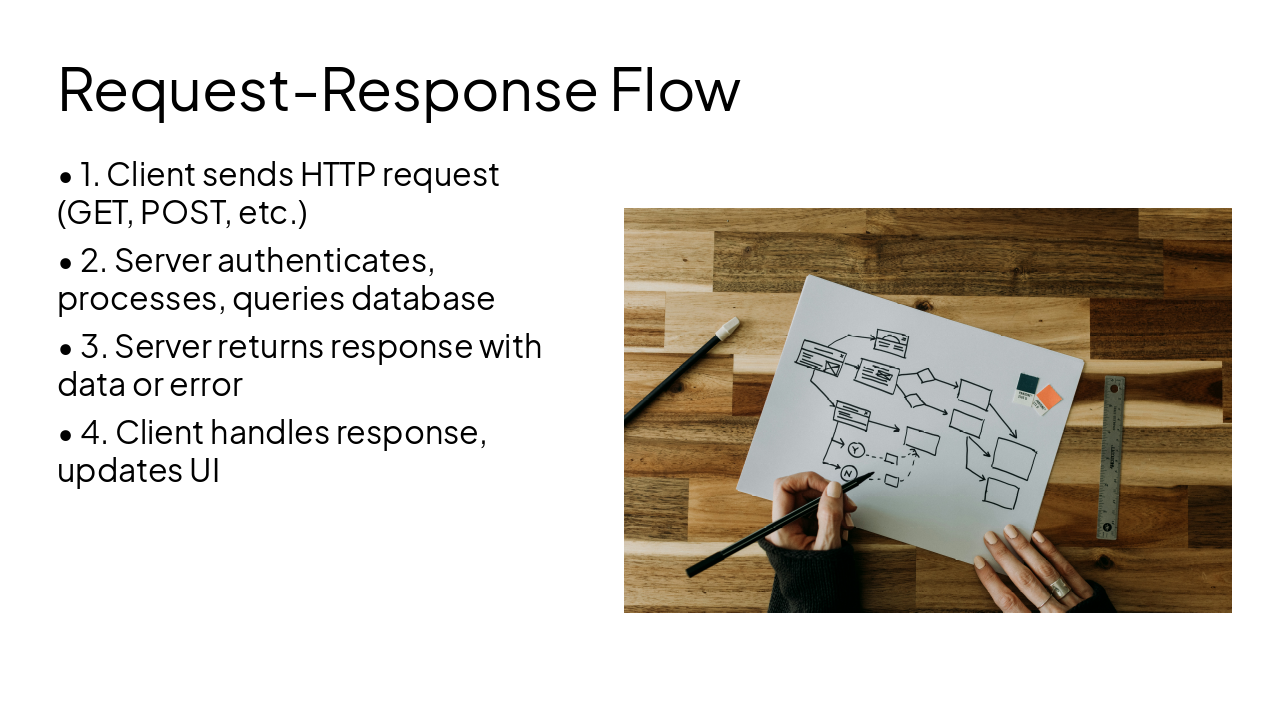
  • 1. Client sends HTTP request (GET, POST, etc.)
  • 2. Server authenticates, processes, queries database
  • 3. Server returns response with data or error
  • 4. Client handles response, updates UI

---

Photo by Kelly Sikkema on Unsplash
Slide 5 - Request-Response Flow
Slide 7 of 13

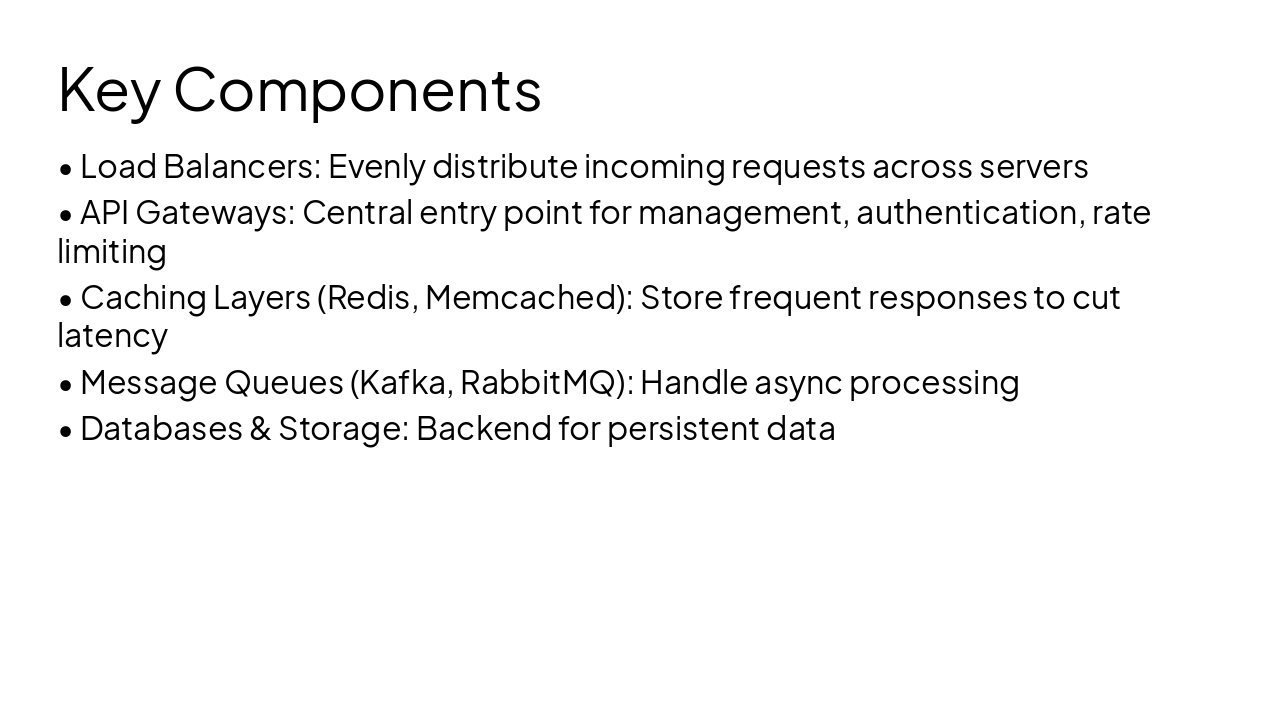
Slide 7 - Key Components

  • Load Balancers: Evenly distribute incoming requests across servers
  • API Gateways: Central entry point for management, authentication, rate limiting
  • Caching Layers (Redis, Memcached): Store frequent responses to cut latency
  • Message Queues (Kafka, RabbitMQ): Handle async processing
  • Databases & Storage: Backend for persistent data
Slide 7 - Key Components
Slide 8 of 13

Slide 8 - Typical Performance Metrics

  • 99.99%: Uptime
  • 150ms: Avg Latency
  • 10k: RPS
  • 2.5s: TTFB

---

Photo by Luke Chesser on Unsplash

Slide 8 - Typical Performance Metrics
Slide 9 of 13

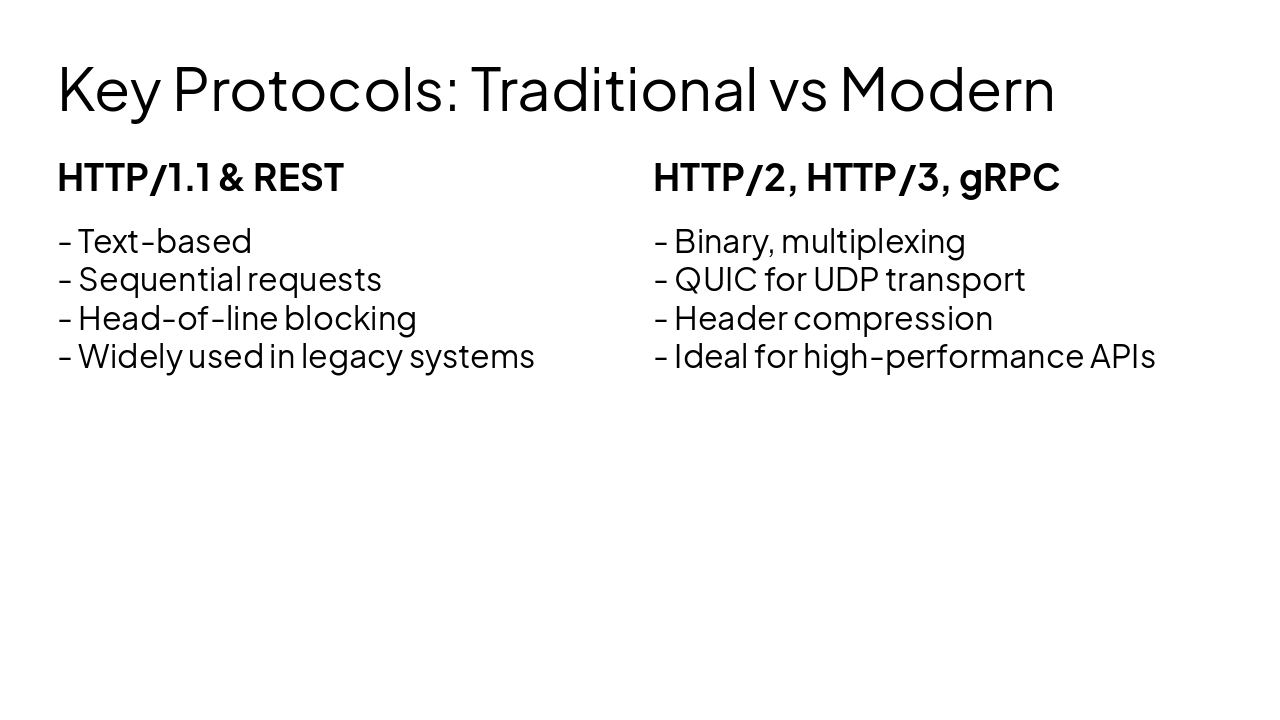
Slide 9 - Key Protocols: Traditional vs Modern

HTTP/1.1 & REST

  • Text-based
  • Sequential requests
  • Head-of-line blocking
  • Widely used in legacy systems

HTTP/2, HTTP/3, gRPC

  • Binary, multiplexing
  • QUIC for UDP transport
  • Header compression
  • Ideal for high-performance APIs
Slide 9 - Key Protocols: Traditional vs Modern
Slide 10 of 13

Slide 10 - Section 3

3

Applications and Case Studies

How Request Networks Power the Digital World

---

Photo by Debagni Sarkhel on Unsplash
Slide 10 - Section 3
Slide 11 of 13

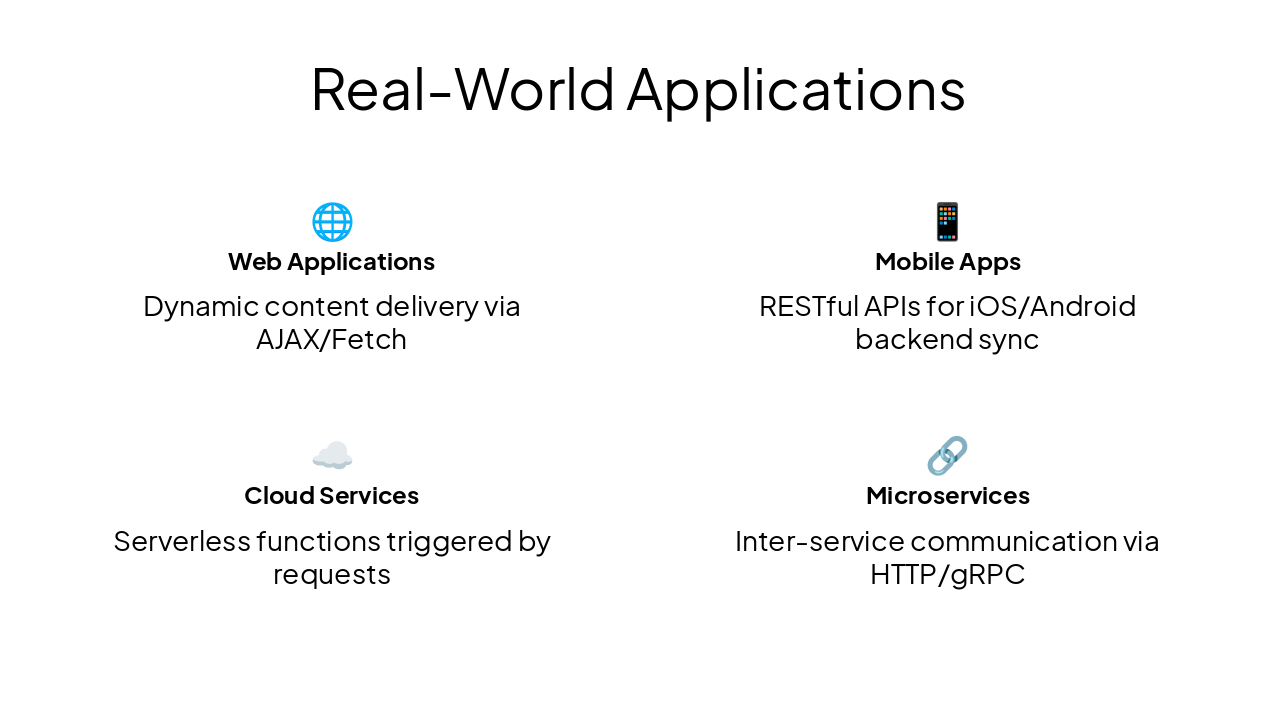
Slide 11 - Real-World Applications

🌐 Web Applications Dynamic content delivery via AJAX/Fetch

📱 Mobile Apps RESTful APIs for iOS/Android backend sync

☁️ Cloud Services Serverless functions triggered by requests

🔗 Microservices Inter-service communication via HTTP/gRPC
Slide 11 - Real-World Applications
Slide 12 of 13

Slide 12 - Industry Insight

> In the future, there will be no distinction between the network and the computer.

— John Gage, Sun Microsystems (1980s)

---

Photo by Navy Medicine on Unsplash
Slide 12 - Industry Insight
Slide 13 of 13

Slide 13 - Key Takeaways

Request networks power the internet economy:

  • Efficient client-server communication
  • Scalable architectures for global apps
  • Continuous evolution with new protocols

Thank you! Questions? Contact for deeper dive.

---

Photo by İsmail Enes Ayhan on Unsplash
Slide 13 - Key Takeaways

Discover More Presentations

Explore thousands of AI-generated presentations for inspiration

Browse Presentations
Powered by AI

Create Your Own Presentation

Generate professional presentations in seconds with Karaf's AI. Customize this presentation or start from scratch.

Create New Presentation

Powered by Karaf.ai — AI-Powered Presentation Generator