Advanced First Aid & CPR Training for Maritime Crew

Generated from prompt:

Create an advanced, highly visual and colorful premium presentation titled 'Advanced First Aid & CPR Training for Maritime Industry – Khalid Faraj Shipping'. Use the uploaded company logo (/mnt/data/KFS _ JJJ.jpg) on the title slide and footer. Apply a vibrant but professional maritime theme using red, blue, and white with high-quality images and icons on every slide. Include 20–24 slides with: - Large visual elements (illustrations of CPR, AED use, rescue, shipboard emergencies) - Minimal but powerful bullet points - Infographics, diagrams, and step-by-step visuals - Color-coded sections (red = emergency, blue = procedure, yellow = warning) Slides to include: 1. Title Slide (logo + ocean background) 2. Training Objectives (icon-based) 3. Maritime Risk Environment (with images) 4. Real Emergency Scenario (story-based visual) 5. DRABC Flow Diagram (visual) 6. Emergency Communication (radio visual) 7. Scene Safety (PPE visuals) 8. CPR Infographic Overview 9. Adult CPR Visual Step-by-Step 10. CPR on Moving Vessel (special tips) 11. Child & Infant CPR (diagram comparison) 12. AED Use (step visuals) 13. Drowning Rescue (sequence images) 14. Recovery Position (step images) 15. Bleeding Control (tourniquet visual) 16. Burns Treatment (visual guide) 17. Choking Response (step diagram) 18. Shock Management (symptoms chart) 19. Hypothermia (cold exposure visuals) 20. First Aid Kit (labeled image) 21. Crew Drill Scenario (interactive visual) 22. Safety Culture & Responsibility 23. Quick Recap (icons + keywords) 24. Thank You / Company Branding Make slides visually rich with image placeholders and descriptions for each (e.g., 'Insert CPR illustration here'). Ensure it's optimized for professional training sessions and highly engaging. Output must be export-ready PPTX and PDF.

Comprehensive training deck on advanced first aid and CPR techniques tailored for the maritime industry at Khalid Faraj Shipping. Covers objectives, DRABC protocol, CPR infographics, vessel-specific tips, and emphasizes safety culture and crew prepar

March 25, 20267 slides
Slide 1 of 7

Slide 1 - Advanced First Aid & CPR Training for Maritime Industry – Khalid Faraj Shipping

Advanced First Aid & CPR Training for Maritime Industry – Khalid Faraj Shipping

Professional First Aid and CPR Certification for Maritime Personnel

---

Photo by Matt Hardy on Unsplash
Slide 1 - Advanced First Aid & CPR Training for Maritime Industry – Khalid Faraj Shipping
Slide 2 of 7

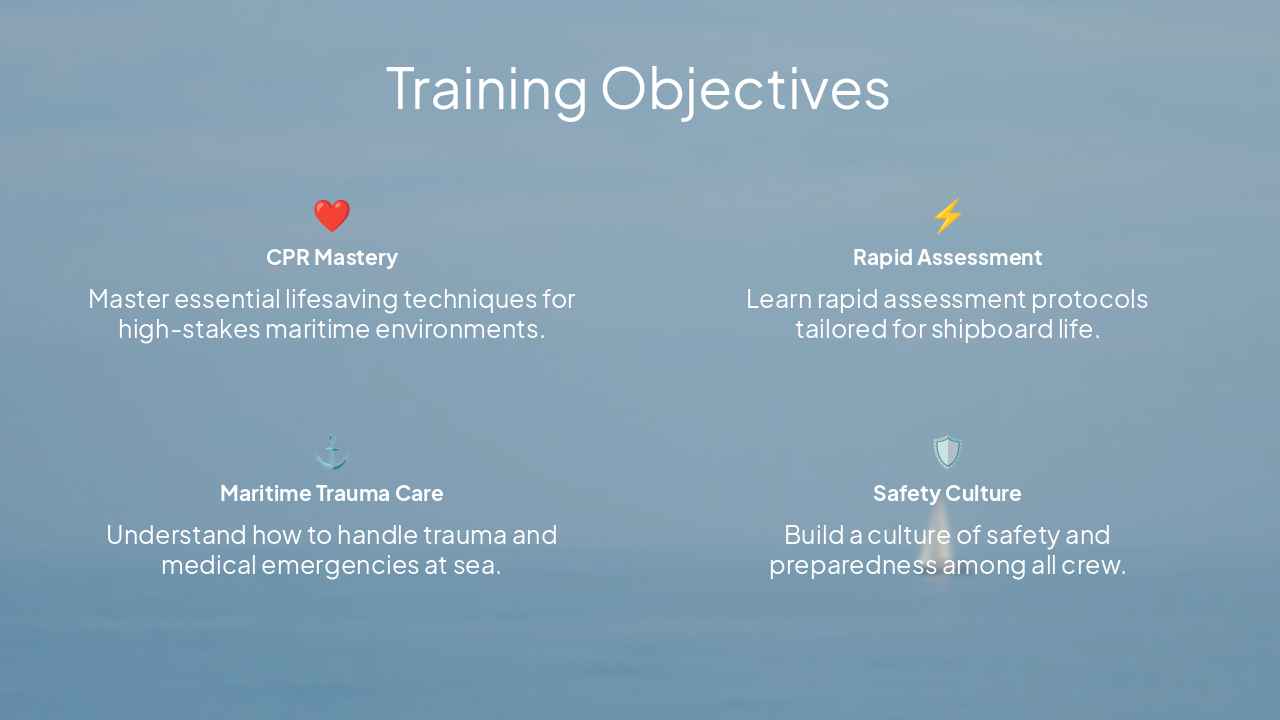
Slide 2 - Training Objectives

❤️ CPR Mastery Master essential lifesaving techniques for high-stakes maritime environments.

Rapid Assessment Learn rapid assessment protocols tailored for shipboard life.

Maritime Trauma Care Understand how to handle trauma and medical emergencies at sea.

🛡️ Safety Culture Build a culture of safety and preparedness among all crew.

---

Photo by Rasmus Gundorff Sæderup on Unsplash

Slide 2 - Training Objectives
Slide 3 of 7

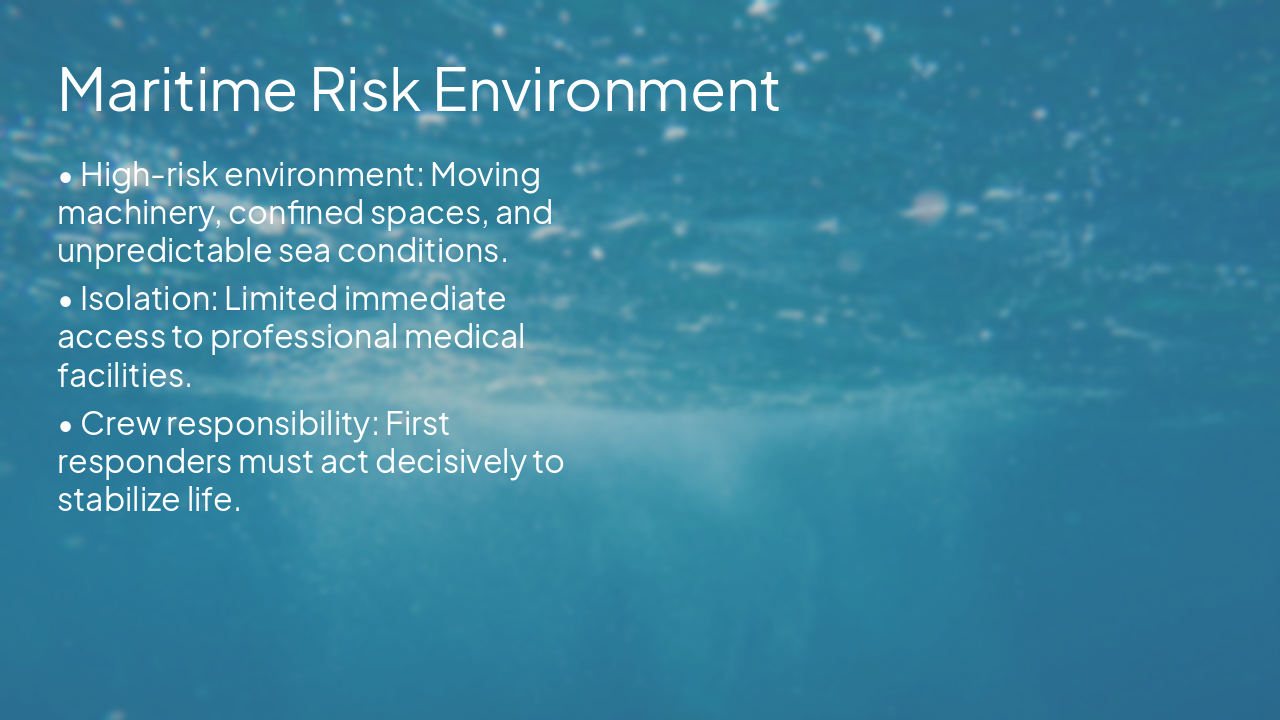
Slide 3 - Maritime Risk Environment

  • High-risk environment: Moving machinery, confined spaces, and unpredictable sea conditions.
  • Isolation: Limited immediate access to professional medical facilities.
  • Crew responsibility: First responders must act decisively to stabilize life.

---

Photo by Krystian Tambur on Unsplash

Slide 3 - Maritime Risk Environment
Slide 4 of 7

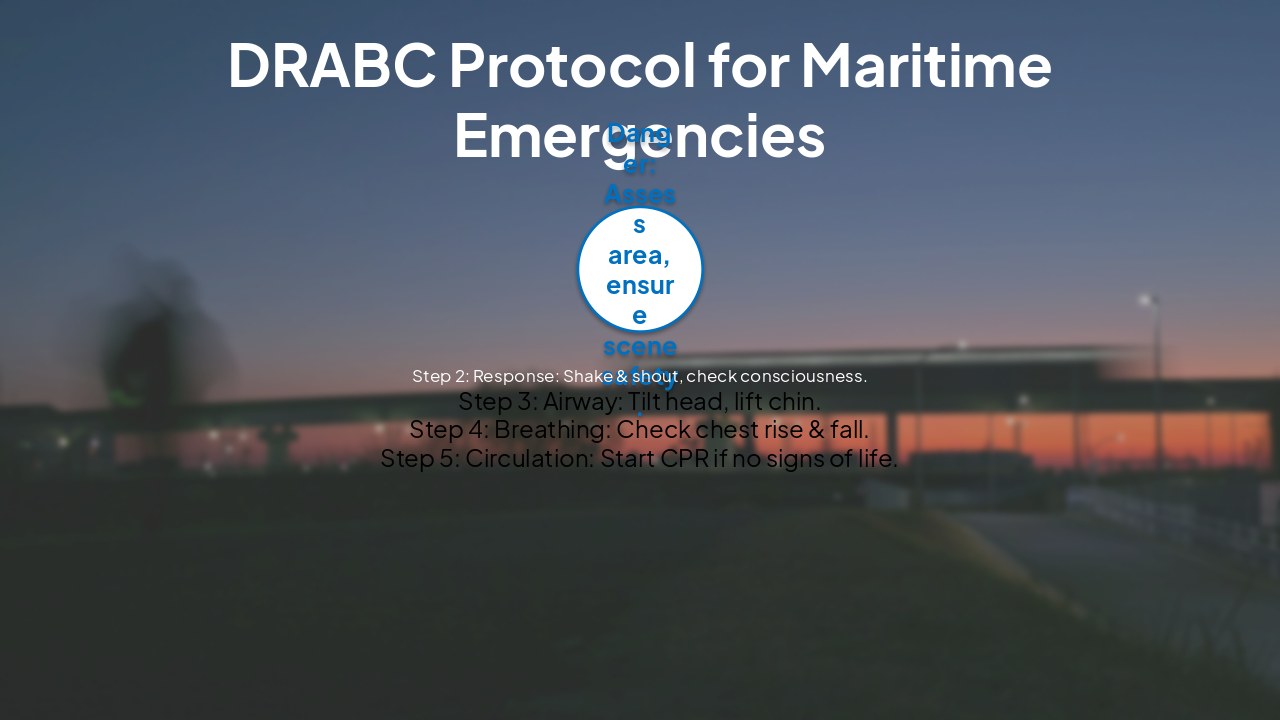
Slide 4 - DRABC Protocol for Maritime Emergencies

Step 1Step 2Step 3Step 4Step 5
Danger: Assess area, ensure scene safety.Response: Shake & shout, check consciousness.Airway: Tilt head, lift chin.Breathing: Check chest rise & fall.Circulation: Start CPR if no signs of life.

---

Photo by Takemaru Hirai on Unsplash

Slide 4 - DRABC Protocol for Maritime Emergencies
Slide 5 of 7

Slide 5 - CPR Infographic Overview

  • Compression rate: 100-120 per minute.
  • Compression depth: 5-6 cm for adults.
  • Ratio: 30 compressions to 2 rescue breaths.
  • Always allow full chest recoil.

---

Photo by Олег Мороз on Unsplash

Slide 5 - CPR Infographic Overview
Slide 6 of 7

Slide 6 - CPR on Moving Vessel: Special Tips

  • Stabilize: Ensure the patient is in a clear, flat space if possible. Secure your own balance.
  • Adaptation: If the vessel is moving, adjust your stance to accommodate motion. Use knees or feet to wedge against stable objects.
  • Communication: Maintain constant communication with bridge/other crew to alert medical support.
  • Teamwork: Swap rescuers every 2 minutes to prevent fatigue; maritime settings can be physically demanding.

---

Photo by Jakob Owens on Unsplash

Slide 6 - CPR on Moving Vessel: Special Tips
Slide 7 of 7

Slide 7 - Conclusion

Thank You: Committed to Excellence at Khalid Faraj Shipping.

Preparedness is the key to life at sea. Protect our crew, ensure a safe voyage.

---

Photo by Yousef Espanioly on Unsplash

Slide 7 - Conclusion

Discover More Presentations

Explore thousands of AI-generated presentations for inspiration

Browse Presentations
Powered by AI

Create Your Own Presentation

Generate professional presentations in seconds with Karaf's AI. Customize this presentation or start from scratch.

Create New Presentation

Powered by Karaf.ai — AI-Powered Presentation Generator