Slide 1 of 13
Slide 1 - 1750s Great Britain
Generated from prompt:
Industrial like slideshows like 1750s Great Britain like style
This presentation delves into the origins of the Industrial Revolution in 1750s Great Britain, covering key technological innovations like steam power and mechanized factories, the rise of the textile industry in Lancashire and the Pennines, economic growth with unprecedented rises in output and living standards, and lasting social impacts that sparked global transformation.
---
Photo by Danil Ahmetşah on Unsplash
1
Pioneering decade leading to global economic transformation around 1760
---
Photo by Reiji Kawata on Unsplash
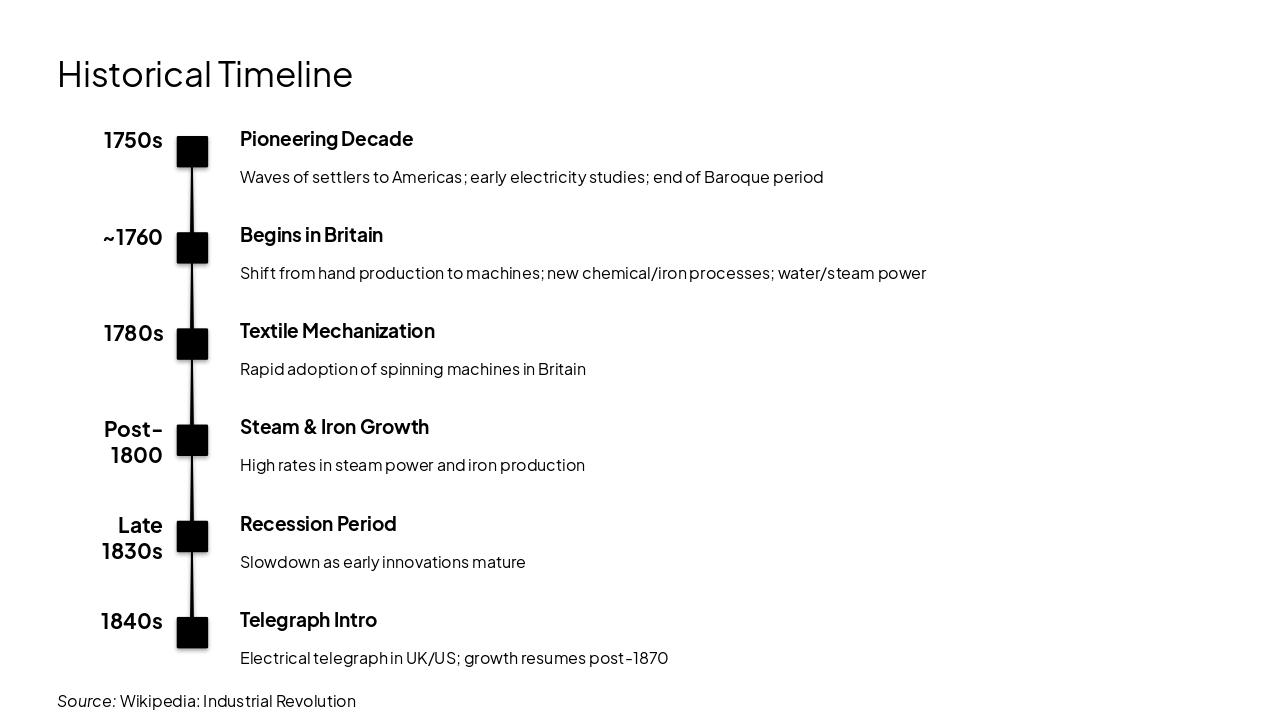
1750s: Pioneering Decade Waves of settlers to Americas; early electricity studies; end of Baroque period ~1760: Begins in Britain Shift from hand production to machines; new chemical/iron processes; water/steam power 1780s: Textile Mechanization Rapid adoption of spinning machines in Britain Post-1800: Steam & Iron Growth High rates in steam power and iron production Late 1830s: Recession Period Slowdown as early innovations mature 1840s: Telegraph Intro Electrical telegraph in UK/US; growth resumes post-1870
Source: Wikipedia: Industrial Revolution
2
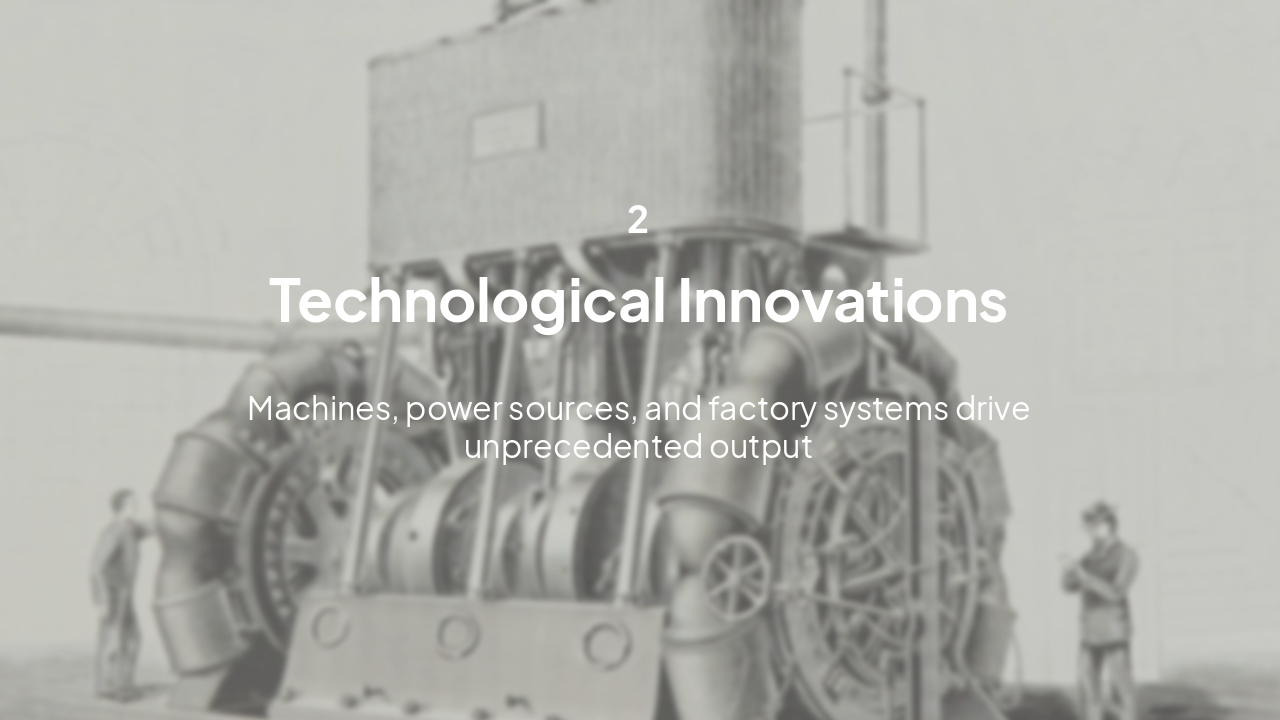
Machines, power sources, and factory systems drive unprecedented output
---
Photo by British Library on Unsplash
Source: Wikipedia: Industrial Revolution
3
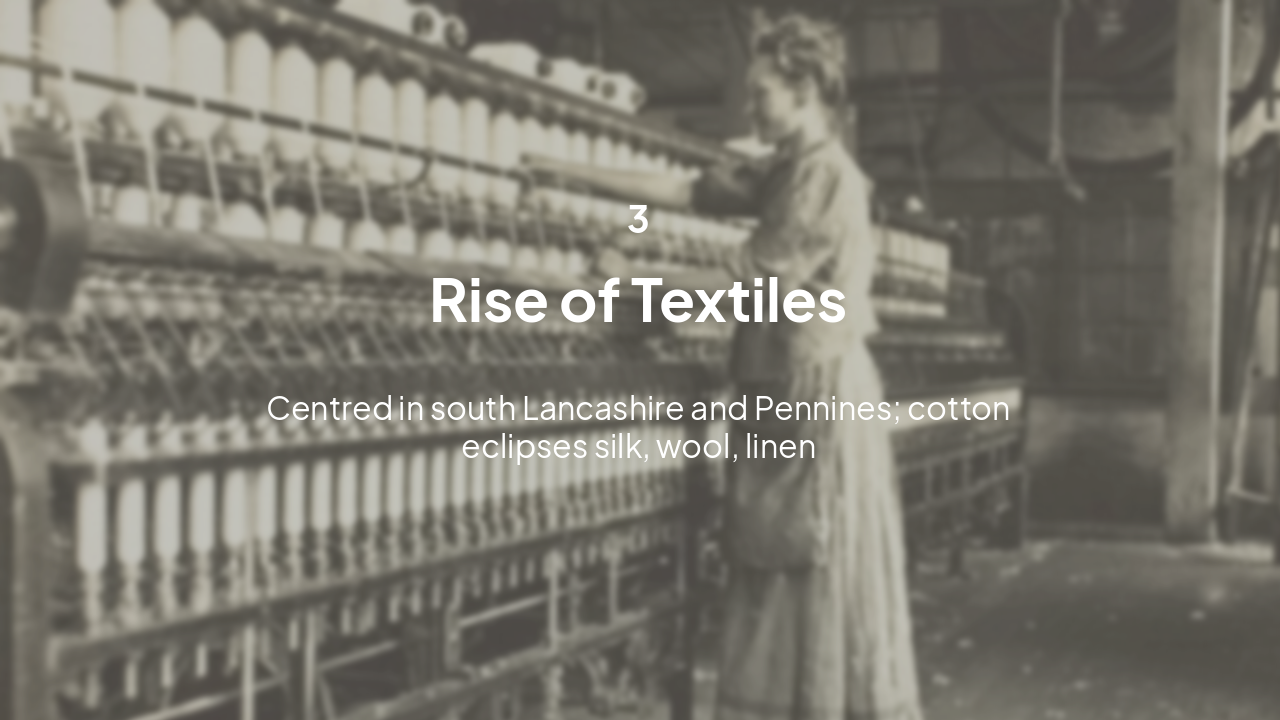
Centred in south Lancashire and Pennines; cotton eclipses silk, wool, linen
---
Photo by Art Institute of Chicago on Unsplash
Pre-Industrial (Before 18th C)
Industrial Era (Mid-18th C+)
Source: Wikipedia: Textile manufacture during the British Industrial Revolution
4
Unprecedented growth in income, population, and living standards
---
Photo by Mike Beaumont on Unsplash
---
Photo by Illiya Vjestica on Unsplash
Source: Wikipedia: Industrial Revolution
> the most important event in human history, comparable only to the adoption of agriculture with respect to material advancement.
— Economic Historians
---
Photo by Jonathan Gong on Unsplash
Source: Wikipedia: Industrial Revolution
---
Photo by Eduardo Buscariolli on Unsplash
Source: Wikipedia: Textile manufacture during the British Industrial Revolution
Industrial Revolution in 1750s Great Britain sparked global manufacturing shift from handcrafts to machines, powering unprecedented economic growth
Thank you | Questions?
---
Photo by kaori kubota on Unsplash
Explore thousands of AI-generated presentations for inspiration
Generate professional presentations in seconds with Karaf's AI. Customize this presentation or start from scratch.