Advanced First Aid & CPR Training for Maritime Industry

Generated from prompt:

Create a FULL advanced professional presentation (24 slides) titled 'Advanced First Aid & CPR Training for Maritime Industry – Khalid Faraj Shipping'. MUST include BOTH advanced CPR AND complete BASIC FIRST AID training content. No slide limitation. Use uploaded logo (/mnt/data/KFS _ JJJ.jpg) on title and footer. Use strong maritime theme (red, blue, white) with highly visual, colorful slides. Slides: SECTION 1 – INTRO & BASICS 1. Title Slide (logo, ocean visual) 2. Training Objectives (icons) 3. Importance of First Aid at Sea 4. Maritime Hazards (deck, engine, cargo visuals) SECTION 2 – BASIC FIRST AID 5. DRABC Flow (visual diagram) 6. Scene Safety & PPE 7. Checking Responsiveness & Breathing 8. Recovery Position (step images) 9. Bleeding Control (bandage + tourniquet visuals) 10. Burns (thermal, chemical, electrical visuals) 11. Choking Response (step diagram) 12. Shock Recognition & Treatment 13. Fractures & Sprains (immobilization visuals) 14. First Aid Kit onboard ships (labeled image) SECTION 3 – CPR & LIFE SAVING 15. CPR Overview infographic 16. Adult CPR step-by-step (visual) 17. CPR on moving vessel (practical tips) 18. Child & Infant CPR comparison 19. AED use (step visuals) 20. Drowning & rescue breathing (sequence) 21. Hypothermia management (cold exposure visuals) SECTION 4 – WORKPLACE TRAINING 22. Emergency communication (VHF radio visual) 23. Crew drill scenario (interactive) 24. Safety culture & responsibilities 25. Summary & key takeaways 26. Thank You slide (branding) Each slide: - Highly visual (image suggestions or placeholders) - Minimal text - Color-coded (red emergency / blue procedure / yellow warning) - Professional training style Ensure FULL downloadable PPTX + PDF output.

This presentation delivers comprehensive advanced first aid and CPR training tailored for maritime shipping personnel. It covers training objectives, sea hazards, basic protocols (DRABC, bleeding, burns, fractures), CPR techniques (adult/child/infant

March 25, 202625 slides
Slide 1 of 25

Slide 1 - Advanced First Aid & CPR Training

Advanced First Aid & CPR Training for Maritime Industry

Advanced First Aid & CPR Training for Khalid Faraj Shipping personnel

---

Photo by iridial on Unsplash
Slide 1 - Advanced First Aid & CPR Training
Slide 2 of 25

Slide 2 - Training Objectives

❤️ Advanced CPR Proficiency Master life-saving CPR techniques for maritime environments.

🩹 First Aid Fundamentals Understand and apply first aid protocols for common maritime injuries.

📡 Emergency Coordination Learn effective emergency response communication and coordination.

Safety Culture Excellence Enhance safety culture and drill preparedness on board.
Slide 2 - Training Objectives
Slide 3 of 25

Slide 3 - Importance of First Aid at Sea

  • Immediate assistance is critical on vessels far from shore.
  • Prevents condition from worsening before professional help arrives.
  • Essential for crew safety and regulatory compliance (STCW).
  • Promotes faster recovery for injured personnel.
Slide 3 - Importance of First Aid at Sea
Slide 4 of 25

Slide 4 - Maritime Hazards

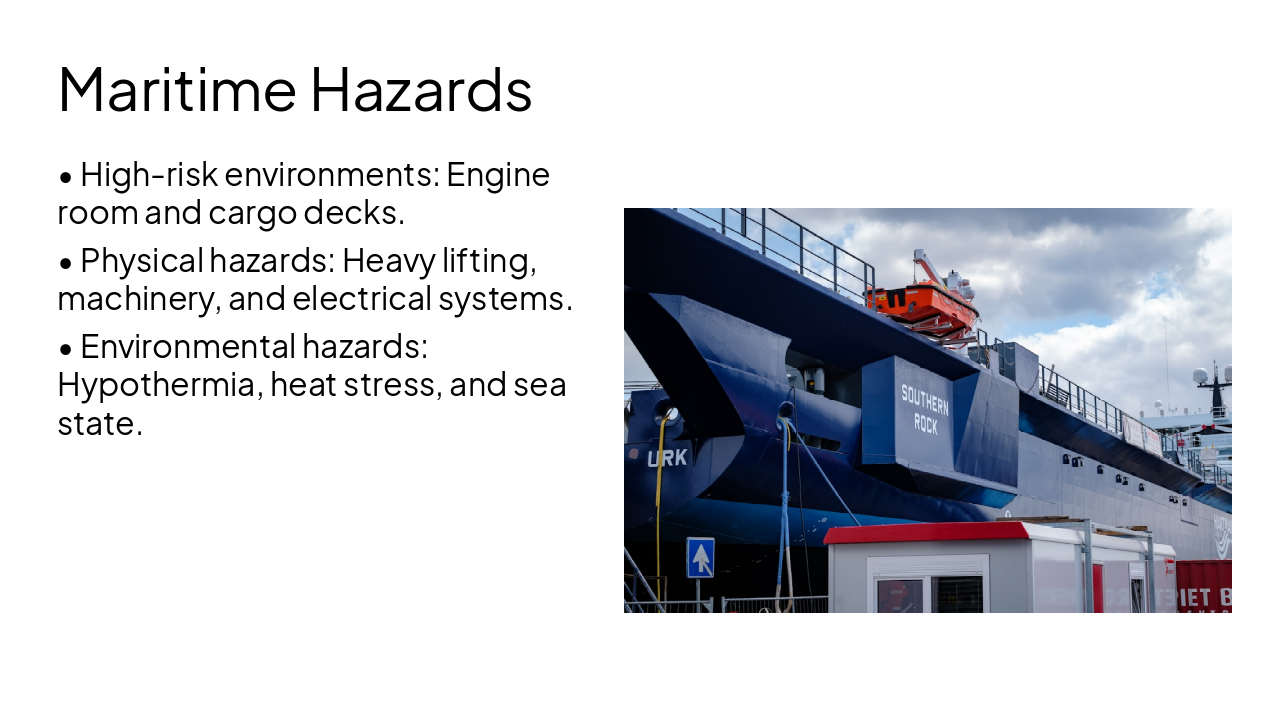
  • High-risk environments: Engine room and cargo decks.
  • Physical hazards: Heavy lifting, machinery, and electrical systems.
  • Environmental hazards: Hypothermia, heat stress, and sea state.

---

Photo by Haberdoedas on Unsplash
Slide 4 - Maritime Hazards
Slide 5 of 25

Slide 5 - Section 2: Basic First Aid

2

Basic First Aid

Essential protocols for immediate care on board.

---

Photo by Nastuh Abootalebi on Unsplash
Slide 5 - Section 2: Basic First Aid
Slide 6 of 25

Slide 6 - DRABC Flow Protocol

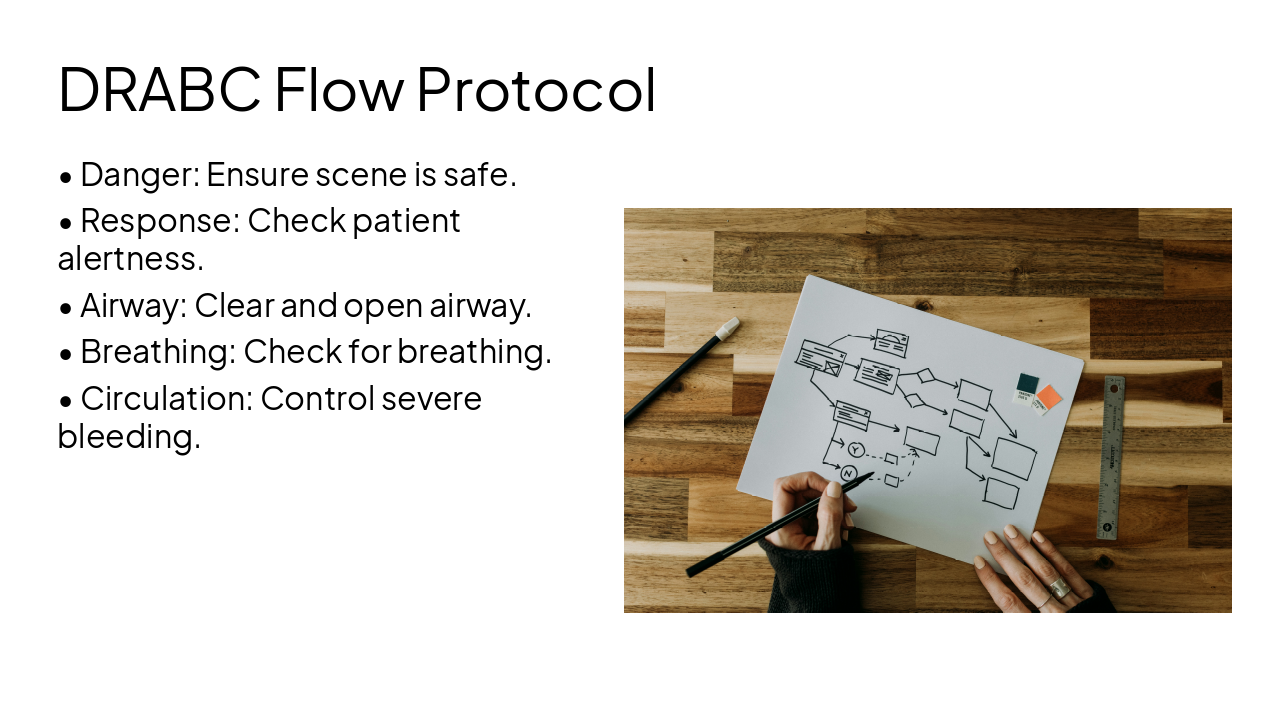
  • Danger: Ensure scene is safe.
  • Response: Check patient alertness.
  • Airway: Clear and open airway.
  • Breathing: Check for breathing.
  • Circulation: Control severe bleeding.

---

Photo by Kelly Sikkema on Unsplash
Slide 6 - DRABC Flow Protocol
Slide 7 of 25

Slide 7 - Scene Safety & PPE

  • Stop: Take a moment to assess the situation.
  • Think: Identify immediate threats to yourself and others.
  • Observe: Ensure the environment is safe before approaching.
  • PPE: Always wear gloves and appropriate barrier devices.
Slide 7 - Scene Safety & PPE
Slide 8 of 25

Slide 8 - Checking Responsiveness & Breathing

  • Check responsiveness: Shout and gently shake shoulders.
  • Look, Listen, and Feel for breathing: 10 seconds max.
  • Monitor: Keep checking periodically until help arrives.
Slide 8 - Checking Responsiveness & Breathing
Slide 9 of 25

Slide 9 - Recovery Position

  • Clear airway for unconscious, breathing patients.
  • Prevents aspiration if patient vomits.
  • Essential for prolonged wait times on board.

---

Photo by Martin Sanchez on Unsplash
Slide 9 - Recovery Position
Slide 10 of 25

Slide 10 - Bleeding Control

  • Direct Pressure: Firm, continuous pressure on wound.
  • Elevation: Raise injured limb above heart if possible.
  • Tourniquet: Use only as last resort for life-threatening limb bleeds.

---

Photo by Tom Cochereau on Unsplash
Slide 10 - Bleeding Control
Slide 11 of 25

Slide 11 - Burns Management

  • Thermal: Cool with running water for 20 mins.
  • Chemical: Flush with copious water; protect yourself.
  • Electrical: Ensure power is off; check for entry/exit wounds.

---

Photo by Vrinda Venugopal on Unsplash
Slide 11 - Burns Management
Slide 12 of 25

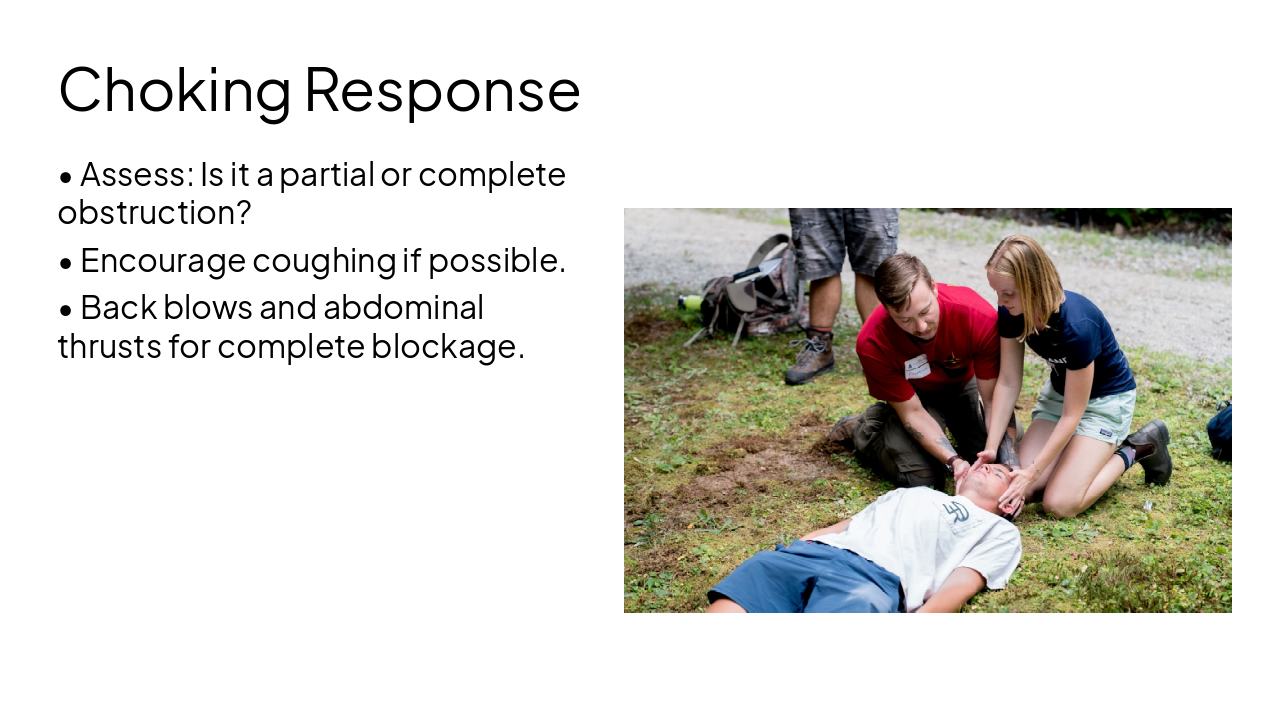
Slide 12 - Choking Response

  • Assess: Is it a partial or complete obstruction?
  • Encourage coughing if possible.
  • Back blows and abdominal thrusts for complete blockage.

---

Photo by Frederick Shaw on Unsplash
Slide 12 - Choking Response
Slide 13 of 25

Slide 13 - Shock Recognition & Treatment

  • Recognition: Pale, cold, clammy skin; rapid pulse.
  • Position: Lie patient down, elevate legs.
  • Warmth: Cover with blanket to prevent heat loss.
  • Do not give fluids if internal injury suspected.
Slide 13 - Shock Recognition & Treatment
Slide 14 of 25

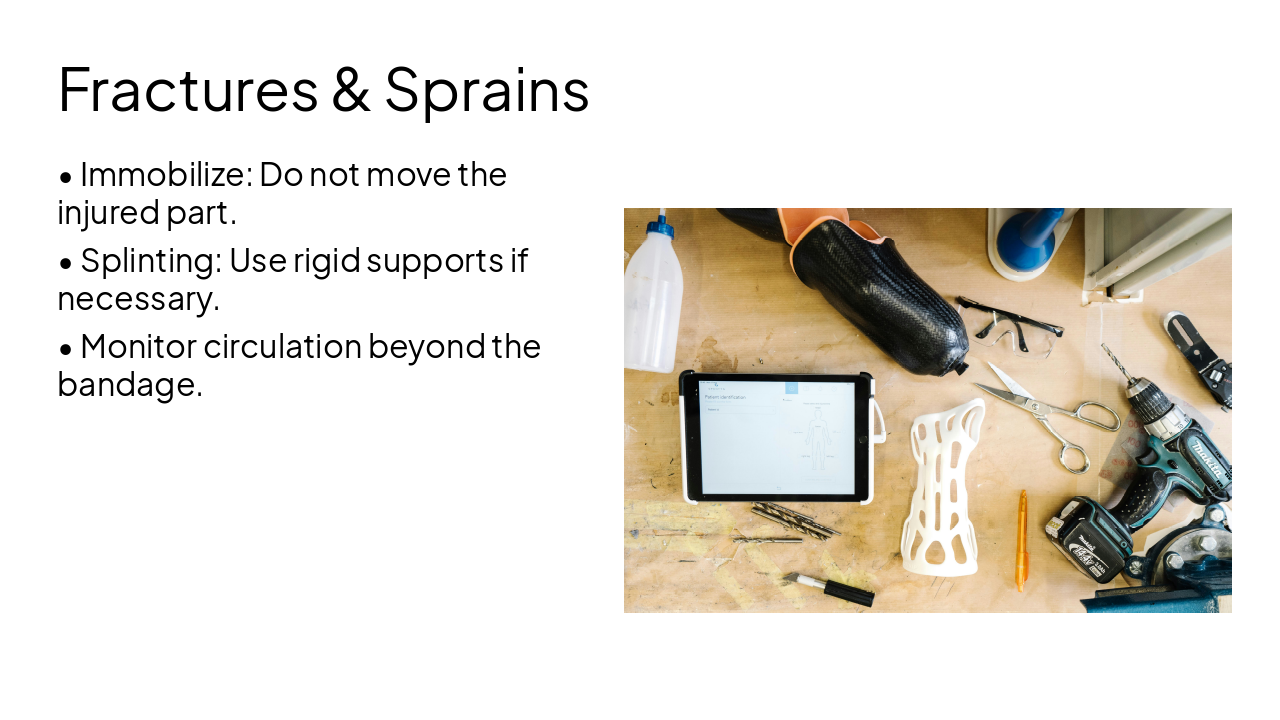
Slide 14 - Fractures & Sprains

  • Immobilize: Do not move the injured part.
  • Splinting: Use rigid supports if necessary.
  • Monitor circulation beyond the bandage.

---

Photo by Tom Claes on Unsplash

Slide 14 - Fractures & Sprains
Slide 15 of 25

Slide 15 - Shipboard First Aid Kit

  • Mandatory items: Sterile dressings, bandages, tape, scissors.
  • Specifics: Antiseptics, pain relievers, splints.
  • Maintenance: Check expiry dates regularly.
Slide 15 - Shipboard First Aid Kit
Slide 16 of 25

Slide 16 - Section 3: CPR & Life Saving

3

CPR & Life Saving

Advanced resuscitation techniques for the maritime environment.

---

Photo by Nastuh Abootalebi on Unsplash
Slide 16 - Section 3: CPR & Life Saving
Slide 17 of 25

Slide 17 - CPR Overview Infographic

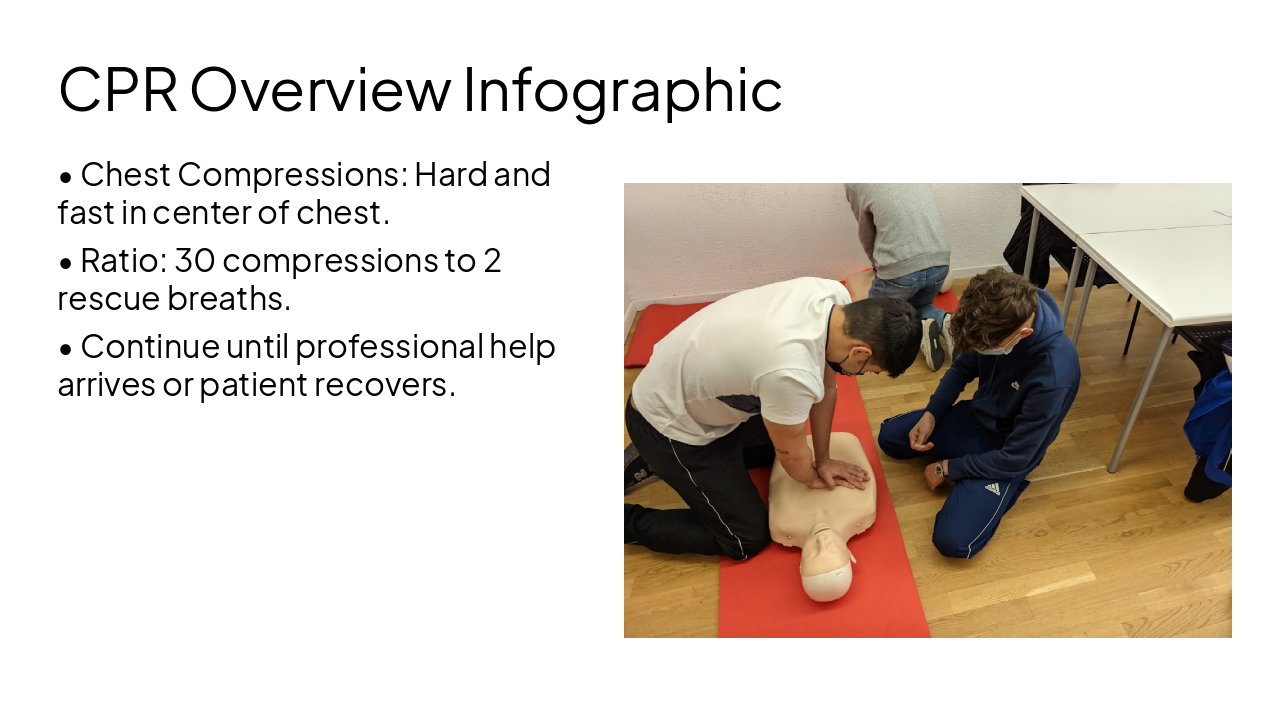
  • Chest Compressions: Hard and fast in center of chest.
  • Ratio: 30 compressions to 2 rescue breaths.
  • Continue until professional help arrives or patient recovers.

---

Photo by Martin Splitt on Unsplash
Slide 17 - CPR Overview Infographic
Slide 18 of 25

Slide 18 - Adult CPR Step-by-Step

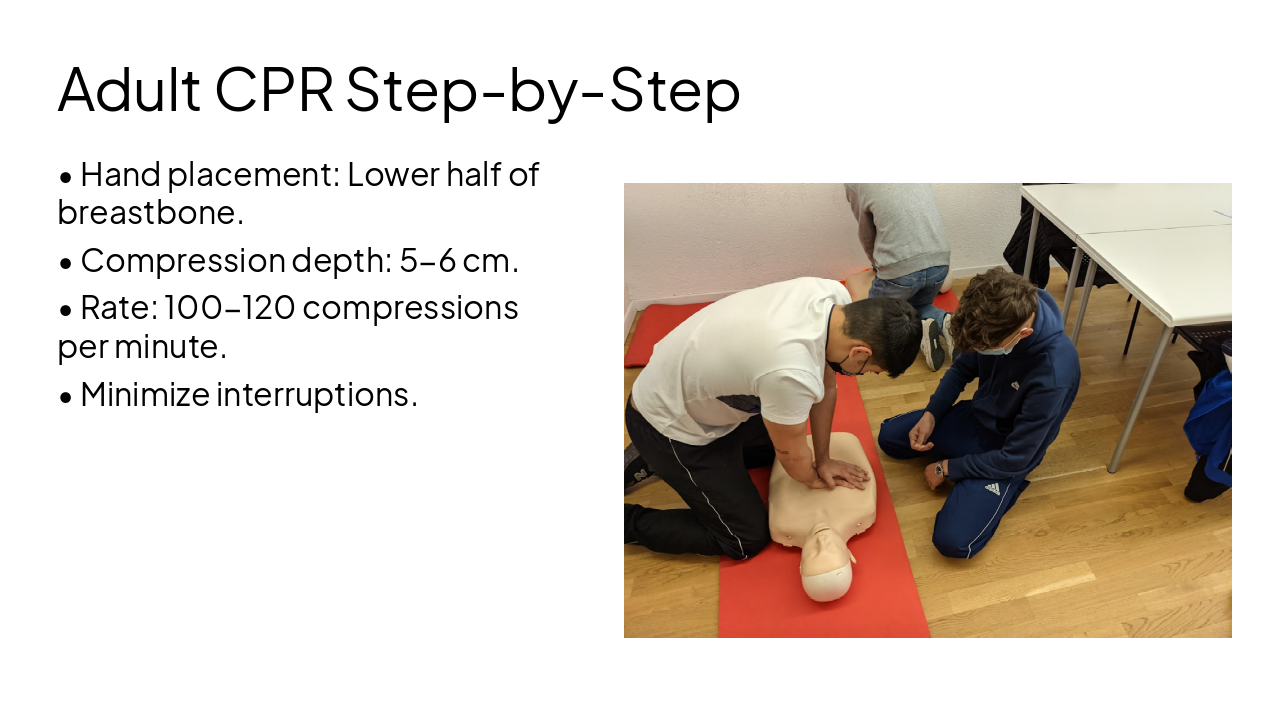
  • Hand placement: Lower half of breastbone.
  • Compression depth: 5-6 cm.
  • Rate: 100-120 compressions per minute.
  • Minimize interruptions.

---

Photo by Martin Splitt on Unsplash
Slide 18 - Adult CPR Step-by-Step
Slide 19 of 25

Slide 19 - CPR on Moving Vessel

  • Stabilization: Use straps or lean against bulkheads.
  • Team Rotation: Switch rescuers every 2 mins due to fatigue.
  • Safety: Ensure rescuer is secure to avoid ship movement risks.
Slide 19 - CPR on Moving Vessel
Slide 20 of 25

Slide 20 - Child & Infant CPR Comparison

  • Child: Use one or two hands, 5cm depth.
  • Infant: Use two fingers, 4cm depth.
  • Always check for medical history if available.
Slide 20 - Child & Infant CPR Comparison
Slide 21 of 25

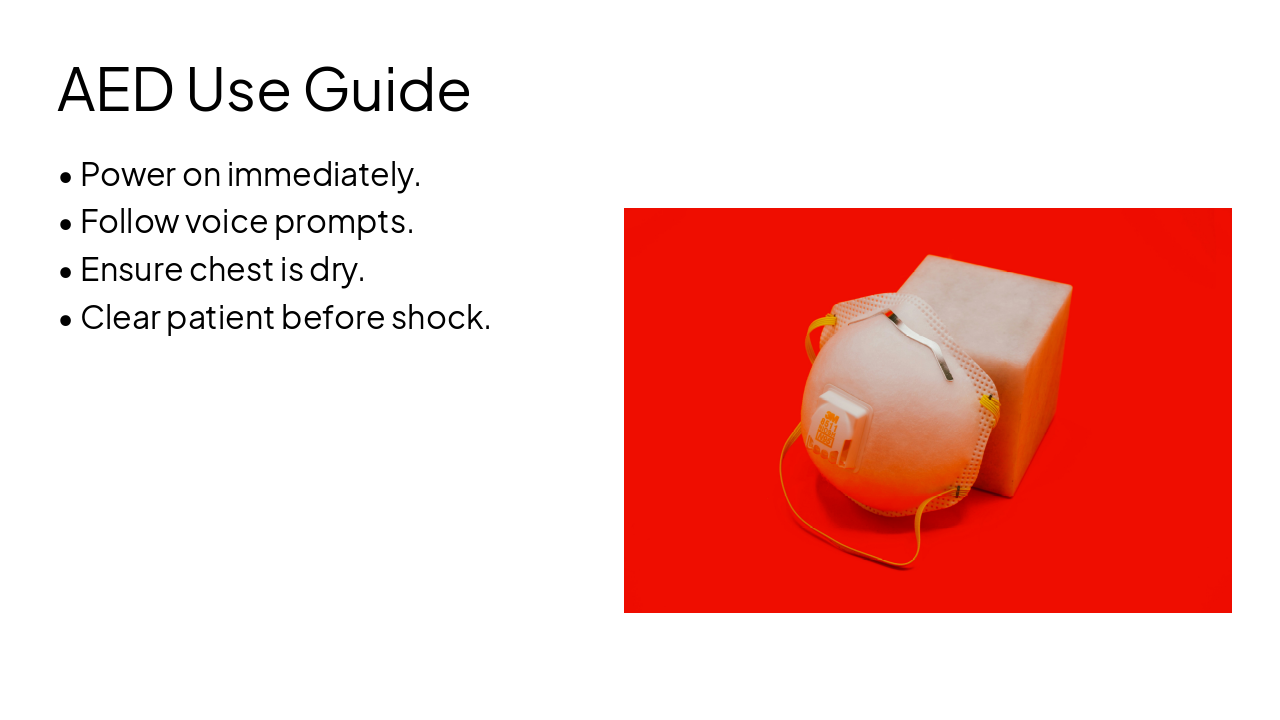
Slide 21 - AED Use Guide

  • Power on immediately.
  • Follow voice prompts.
  • Ensure chest is dry.
  • Clear patient before shock.

---

Photo by visuals on Unsplash
Slide 21 - AED Use Guide
Slide 22 of 25

Slide 22 - Drowning & Rescue Breathing

  • Rescue: Remove from water immediately.
  • Airway: Clear water from mouth.
  • Breathing: Start rescue breaths promptly.
  • Monitor: Keep airway open and patient warm.
Slide 22 - Drowning & Rescue Breathing
Slide 23 of 25

Slide 23 - Hypothermia Management

  • Symptoms: Shivering, confusion, drowsiness, pale skin.
  • Action: Move to dry, sheltered area; remove wet clothing.
  • Warmth: Wrap in blankets; protect from wind.
  • Handle gently: Sudden movement can trigger heart problems.
Slide 23 - Hypothermia Management
Slide 24 of 25

Slide 24 - Emergency Communication

  • Call 'Mayday' for imminent threat to life.
  • Use 'Pan-Pan' for urgent medical assistance.
  • Provide clear location, casualty status, and needs.
Slide 24 - Emergency Communication
Slide 25 of 25

Slide 25 - Thank You

Thank you for your commitment to safety excellence.

Always be prepared – Safety is a team effort.

---

Photo by Yousef Espanioly on Unsplash
Slide 25 - Thank You

Discover More Presentations

Explore thousands of AI-generated presentations for inspiration

Browse Presentations
Powered by AI

Create Your Own Presentation

Generate professional presentations in seconds with Karaf's AI. Customize this presentation or start from scratch.

Create New Presentation

Powered by Karaf.ai — AI-Powered Presentation Generator