Slide 1 of 11
Slide 1 - Theory of Computation Overview
Theory of Computation (TOC)
A Comprehensive Overview of Formal Languages and Automata Theory
Generated from prompt:
Regenerate a downloadable, shareable PPT for Theory of Computation (TOC) using the uploaded file /mnt/data/TOC THEORY QUEST.pptx. Ensure the link works without 403 errors. Improve design, visuals, diagrams, and clarity. Include all topics: FA problems, Closure properties (Regular & CFL), CFG, PDA, DPDA vs NPDA, Turing Machines and examples.
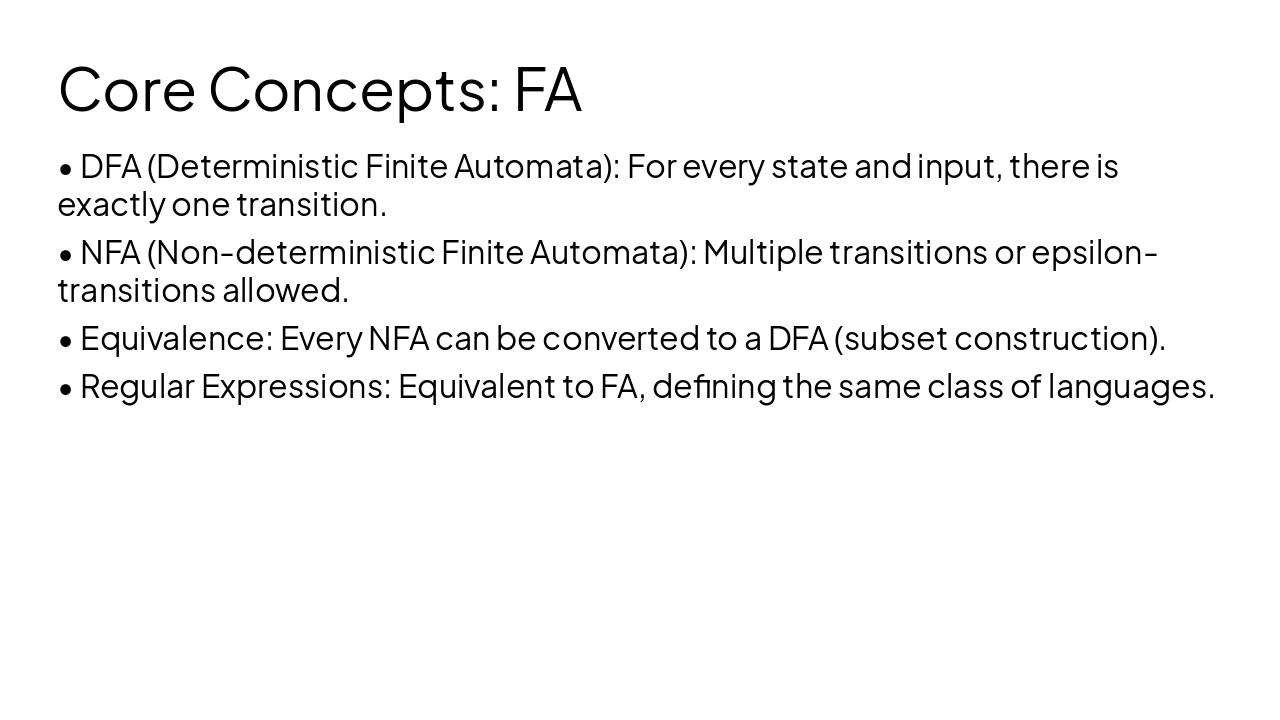
Comprehensive overview of Theory of Computation, exploring Finite Automata (DFA/NFA), closure properties of regular and context-free languages, Context-Free Grammars (CFG), Pushdown Automata (DPDA vs NPDA), and Turing Machines.
Theory of Computation (TOC)
A Comprehensive Overview of Formal Languages and Automata Theory
1
Models of computation for recognizing regular languages.
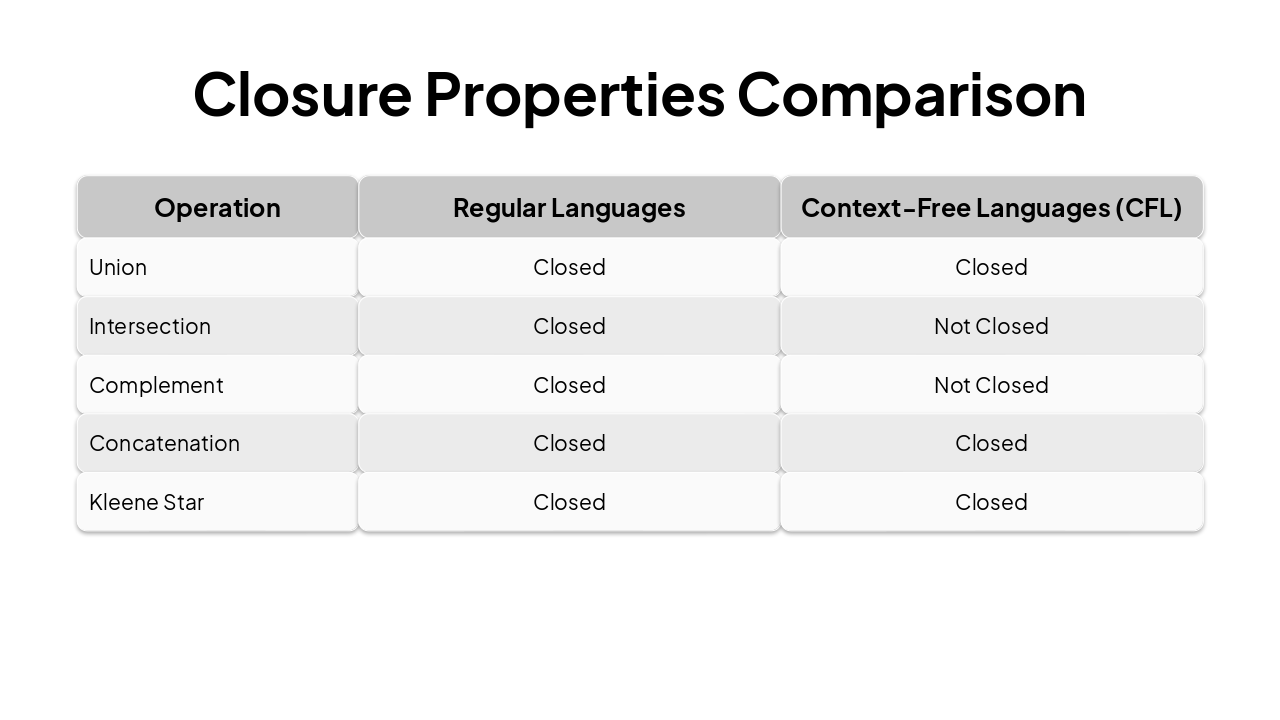
| Operation | Regular Languages | Context-Free Languages (CFL) |
|---|---|---|
| Union | Closed | Closed |
| Intersection | Closed | Not Closed |
| Complement | Closed | Not Closed |
| Concatenation | Closed | Closed |
| Kleene Star | Closed | Closed |
2
Defining and parsing more complex, non-regular languages.
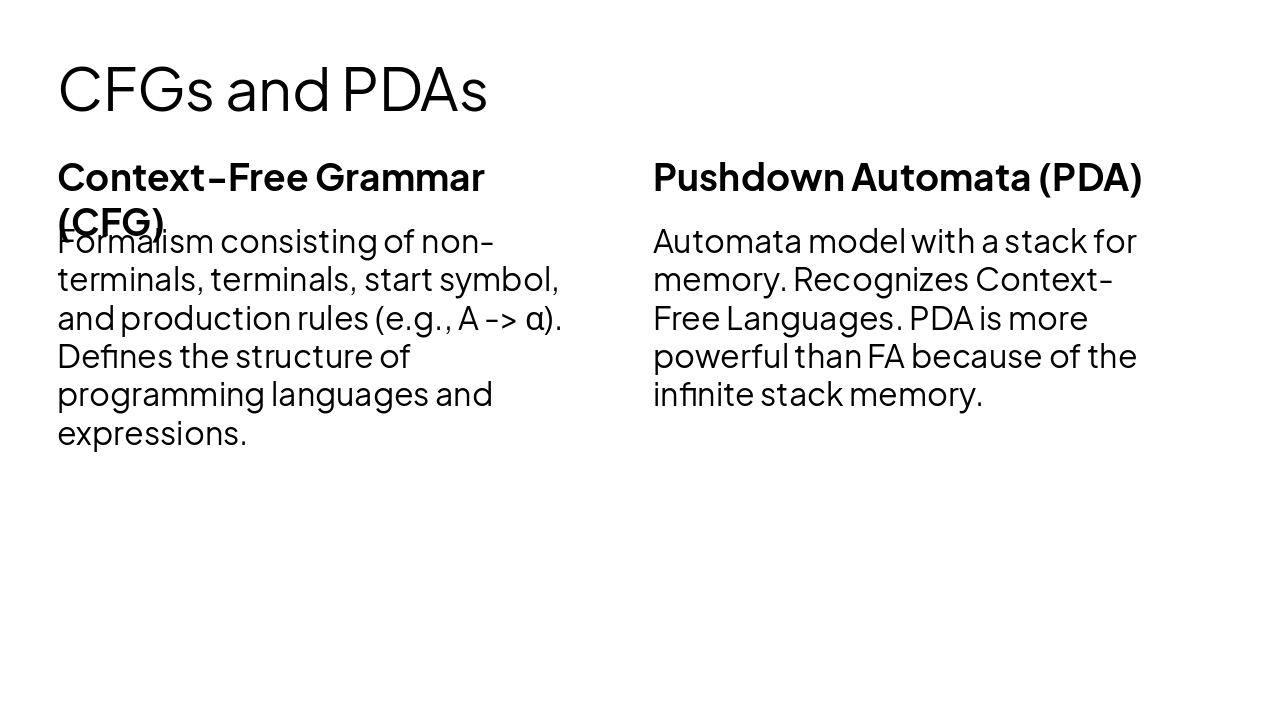
Context-Free Grammar (CFG) Formalism consisting of non-terminals, terminals, start symbol, and production rules (e.g., A -> α). Defines the structure of programming languages and expressions.
Pushdown Automata (PDA) Automata model with a stack for memory. Recognizes Context-Free Languages. PDA is more powerful than FA because of the infinite stack memory.
3
The ultimate model of computation.
Summary: From Finite Automata to Turing Machines.
Understanding the limits of computation and formal language theory.
Explore thousands of AI-generated presentations for inspiration
Generate professional presentations in seconds with Karaf's AI. Customize this presentation or start from scratch.