Slide 1 of 18
Slide 1 - Genetics & the Future of Medicine
Genetics & the Future of Medicine
Cystic Fibrosis Project - 8th Grade Presentation
---
Photo by Sangharsh Lohakare on Unsplash
Generated from prompt:
Genetics & the Future of Medicine Project How can genetic engineering be used to understand, treat, or potentially cure inherited human disorders? In this project, you will research a genetic disorder or disease and explore how it is inherited, how it affects the body, and how modern science (genetic engineering) could be used to treat or cure it. You will create a final presentation that explains your findings and proposes a solution based on real scientific ideas. Part 1: Understanding the Disorder You must research and explain: The name of the disorder What causes it (gene, chromosome, or mutation) The type of inheritance: Dominant Recessive Sex-linked Chromosomal Who is affected (age, population, frequency) Clearly explain how the disorder is passed down Recommended to Include: Include a Punnett square OR pedigree chart Part 2: Molecular Biology Connection Explain what is happening inside the body at the molecular level: What type of mutation occurs? How does this mutation affect DNA and proteins? How does that lead to the symptoms? You must include: A clear explanation of: DNA → Protein → Trait (or disorder) Part 3: Symptoms & Impact Describe how the disorder affects a person: Physical symptoms Effects on body systems Daily life challenges Part 4: Current Treatments Research what is currently being done: Are there treatments available? Are there cures? What are the limitations of current treatments? Part 5: Genetic Engineering Solution Now you become the scientist. Design a possible treatment or cure using genetic engineering. You should answer: How would you fix or replace the faulty gene? What technology could be used? (ex: gene editing, gene therapy) What would your solution do inside the body? Your idea should be: Scientifically realistic (based on what we’ve learned) Clearly explained Part 6: Ethical Considerations Think beyond the science: Should this type of genetic engineering be used in humans? What are the risks? Who should have access to these treatments? You must include your opinion AND reasoning. Final Presentation You may choose ONE: Google Slides or Canva Poster / Infographic Short video Required Presentation Components Your project must include ALL of the following: ✔ Disorder overview ✔ Inheritance explanation (Punnett square or pedigree) ✔ Molecular explanation (DNA → protein → trait) ✔ Symptoms and impact ✔ Current treatments ✔ Genetic engineering solution ✔ Ethical discussion Rubric (60 Points Total) Category Description Points Disorder & Heredity Accurate explanation of disorder, cause, and inheritance pattern (includes Punnett square or pedigree) 10 pts Molecular Biology Clear explanation of mutation and how it affects DNA → protein → trait 5 pts Symptoms & Impact Thorough description of how the disorder affects the body and daily life 10 pts Current Treatments Accurate explanation of existing treatments and limitations 5 pts Genetic Engineering Solution Creative, realistic, and well-explained solution using genetic engineering 15 pts Ethical Considerations Thoughtful discussion with clear reasoning and support 5 pts Presentation Quality Organization, clarity, visuals, and effort 10 pts Total: 60 Points *You are REQUIRED to include a slide with all of the websites you used as resources. This is a research project so you should have multiple sources to support your presentation. write this slideshow at a 8th grade level and make it look human written
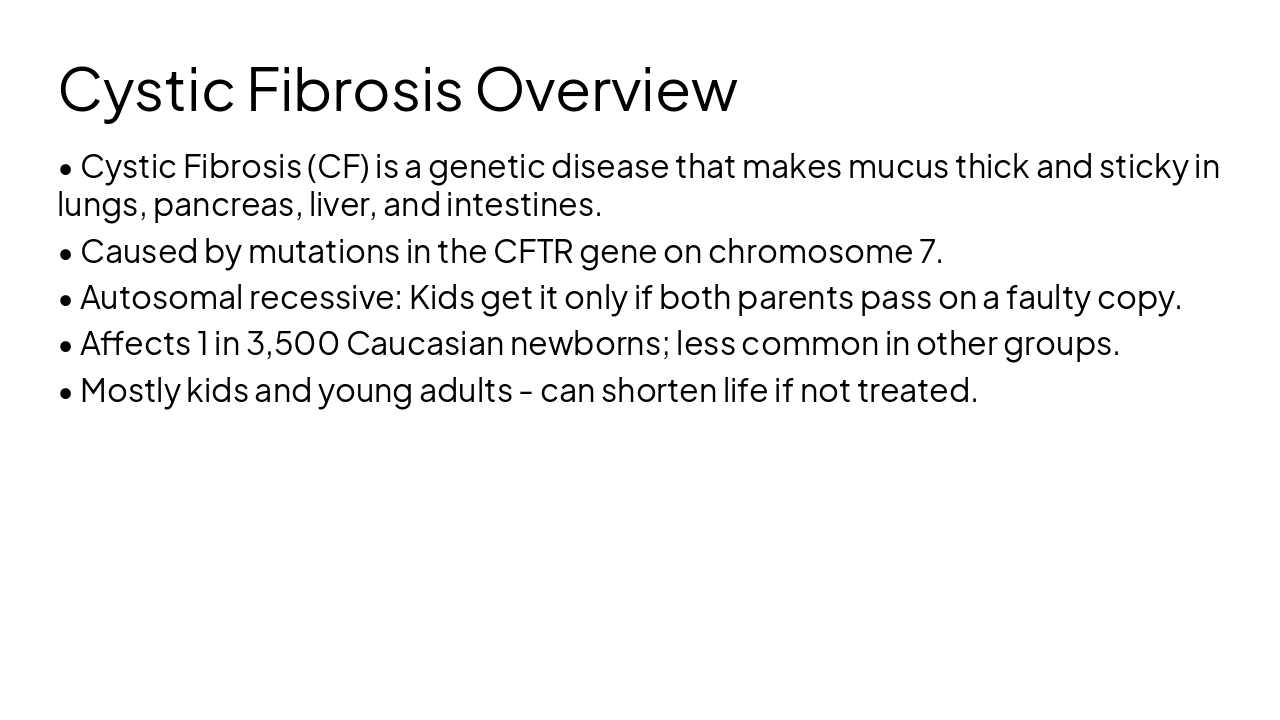
This 8th-grade presentation on Cystic Fibrosis covers the genetic disorder's overview, autosomal recessive inheritance via Punnett square, molecular biology link from CFTR gene mutations to thick mucus, symptoms impacting lungs and digestion, current treatments like modulators and their limits, a proposed CRISPR gene therapy workflow to repair the gene, ethical pros and cons, key statistics, and sources, concluding with hope for a cure.
Genetics & the Future of Medicine
Cystic Fibrosis Project - 8th Grade Presentation
---
Photo by Sangharsh Lohakare on Unsplash
---
Photo by Emmanuel Edward on Unsplash
1
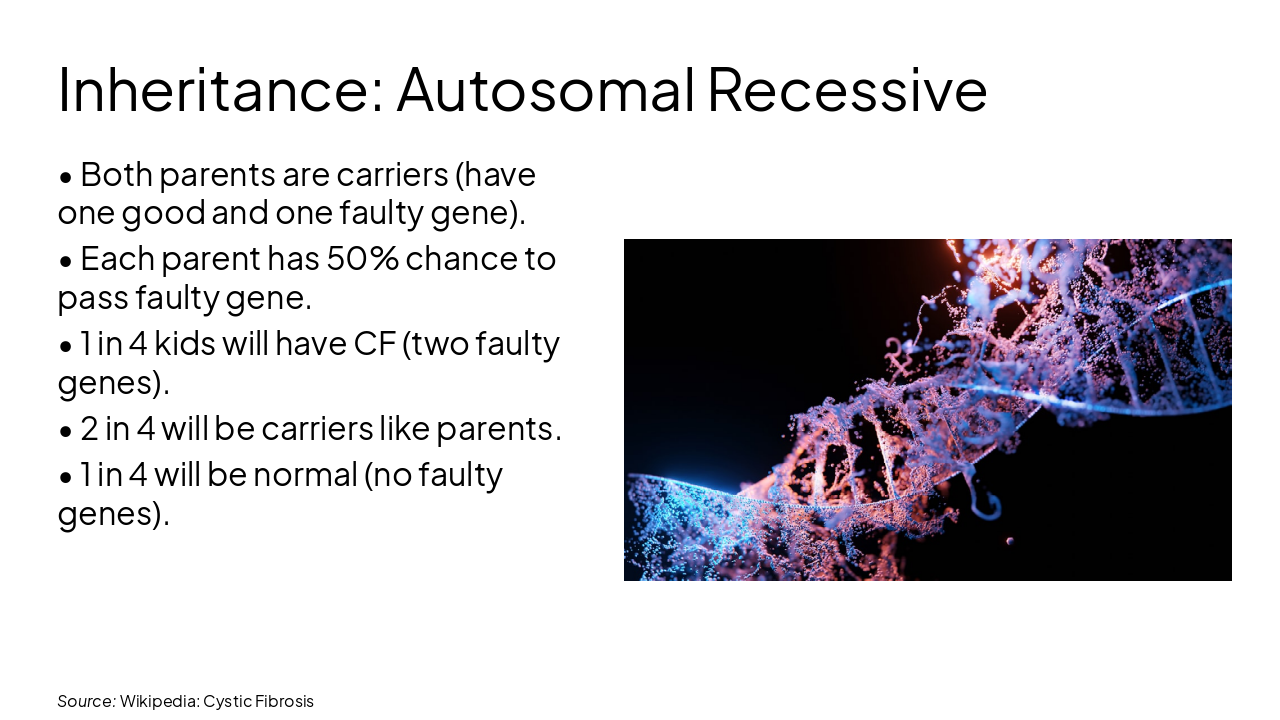
Basics of the disorder and inheritance
---
Photo by Bioscience Image Library by Fayette Reynolds on Unsplash
---
Photo by Sangharsh Lohakare on Unsplash
Source: Wikipedia: Cystic Fibrosis
2
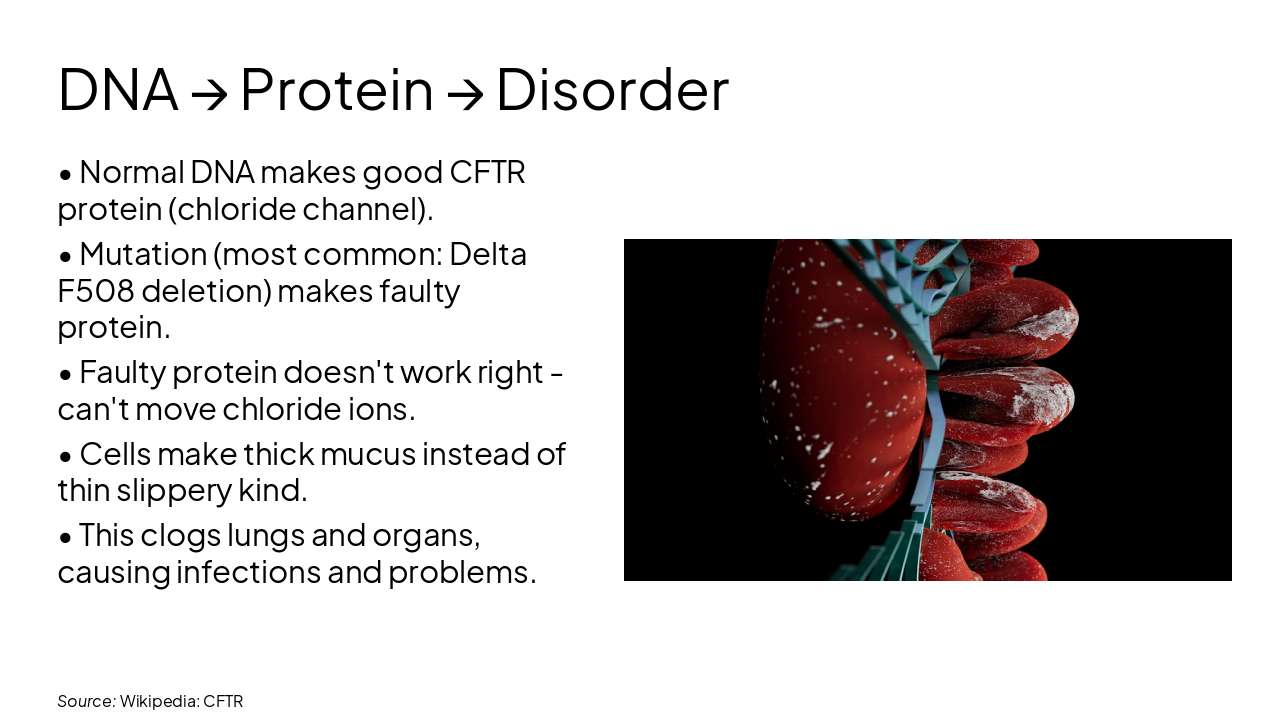
How a tiny DNA change causes big problems
---
Photo by Logan Voss on Unsplash

---
Photo by Google DeepMind on Unsplash
Source: Wikipedia: CFTR
3
How CF affects the body and life
---
Photo by volant on Unsplash


Source: Cystic Fibrosis Foundation
5
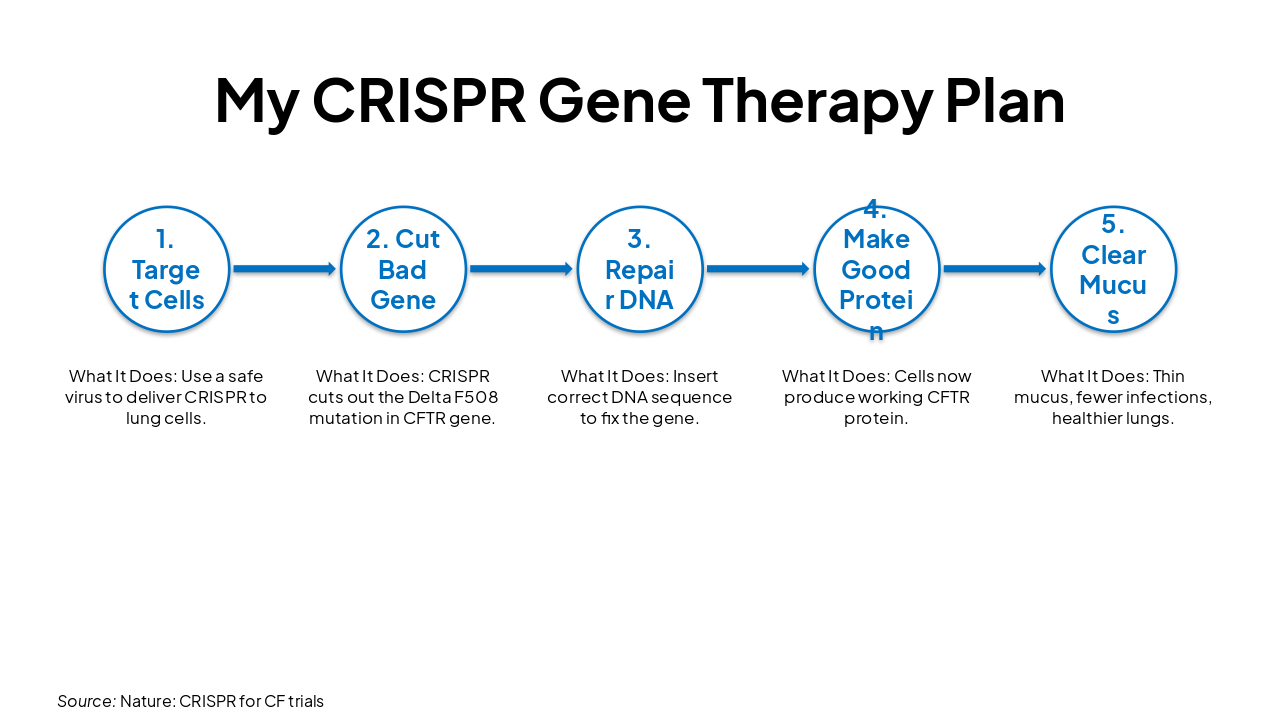
My idea to fix it with science
---
Photo by Sangharsh Lohakare on Unsplash

| Step | What It Does |
|---|---|
| 1. Target Cells | Use a safe virus to deliver CRISPR to lung cells. |
| 2. Cut Bad Gene | CRISPR cuts out the Delta F508 mutation in CFTR gene. |
| 3. Repair DNA | Insert correct DNA sequence to fix the gene. |
| 4. Make Good Protein | Cells now produce working CFTR protein. |
| 5. Clear Mucus | Thin mucus, fewer infections, healthier lungs. |
Source: Nature: CRISPR for CF trials

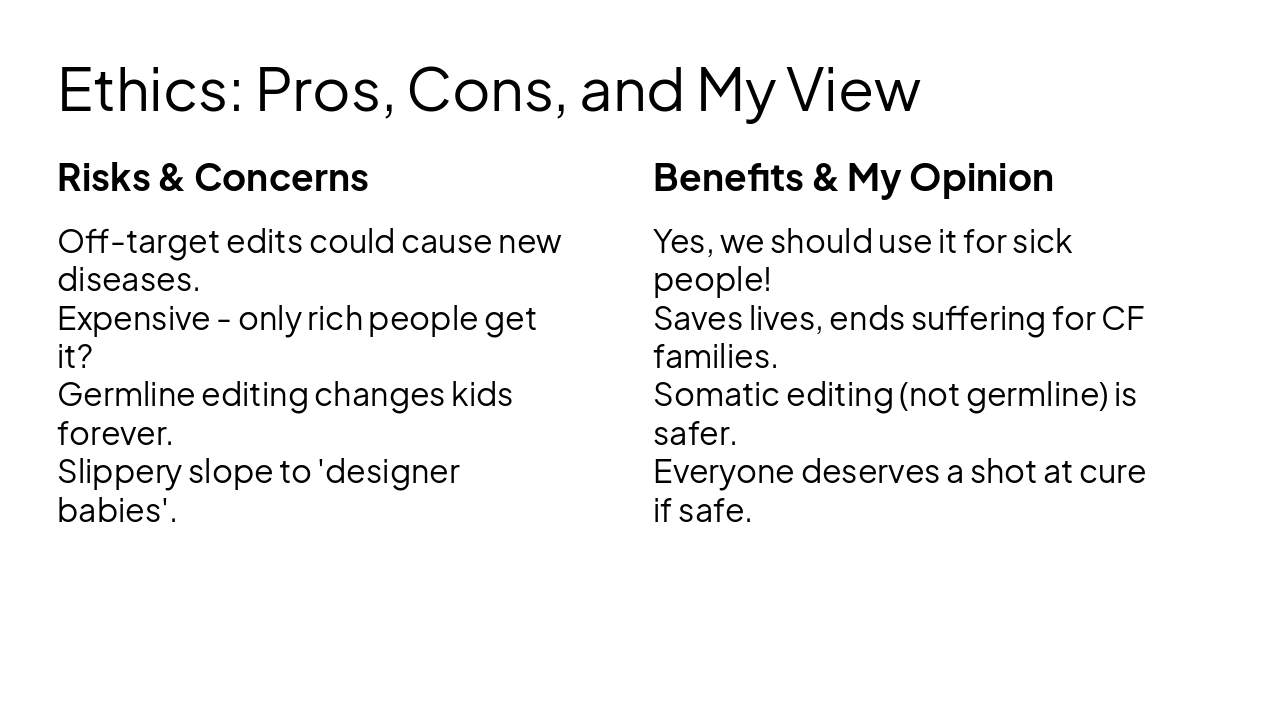
Risks & Concerns Off-target edits could cause new diseases. Expensive - only rich people get it? Germline editing changes kids forever. Slippery slope to 'designer babies'.
Benefits & My Opinion Yes, we should use it for sick people! Saves lives, ends suffering for CF families. Somatic editing (not germline) is safer. Everyone deserves a shot at cure if safe.
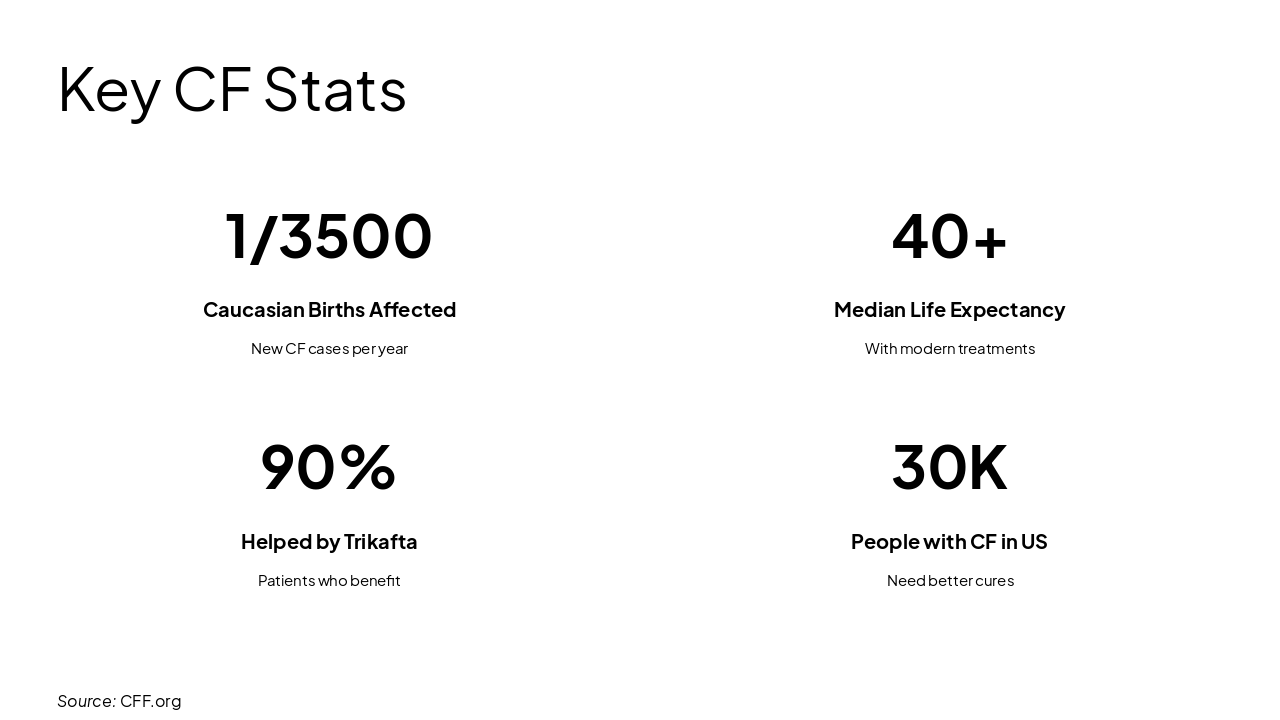
Source: CFF.org
CF is tough, but genetic engineering offers real hope for a cure! Science + ethics = better future.
Thanks for listening! Any questions?
---
Photo by Tobias Tullius on Unsplash
Explore thousands of AI-generated presentations for inspiration
Generate professional presentations in seconds with Karaf's AI. Customize this presentation or start from scratch.