Autonomous Smart Farming Robot

Generated from prompt:

Create a modern, visually appealing university-level presentation titled "Autonomous Smart Farming Robot". Include slides: 1) Title slide, 2) Introduction & problem (agriculture challenges in Sri Lanka), 3) Objectives, 4) System overview diagram, 5) Hardware components, 6) Software architecture, 7) Working process (step-by-step), 8) AI & computer vision module, 9) Smart irrigation & spraying system (relay control), 10) Team member responsibilities (5 roles), 11) Cost estimation (LKR), 12) Advantages & impact, 13) Future improvements, 14) Conclusion. Use icons, clean layout, minimal text, and engineering-style diagrams.

This deck presents an autonomous smart farming robot project addressing Sri Lanka's agriculture challenges. It details objectives, system overview, hardware (Raspberry Pi, Arduino), software architecture with AI/CV (TensorFlow Lite, OpenCV), working,

April 3, 202614 slides
Slide 1 of 14

Slide 1 - Autonomous Smart Farming Robot

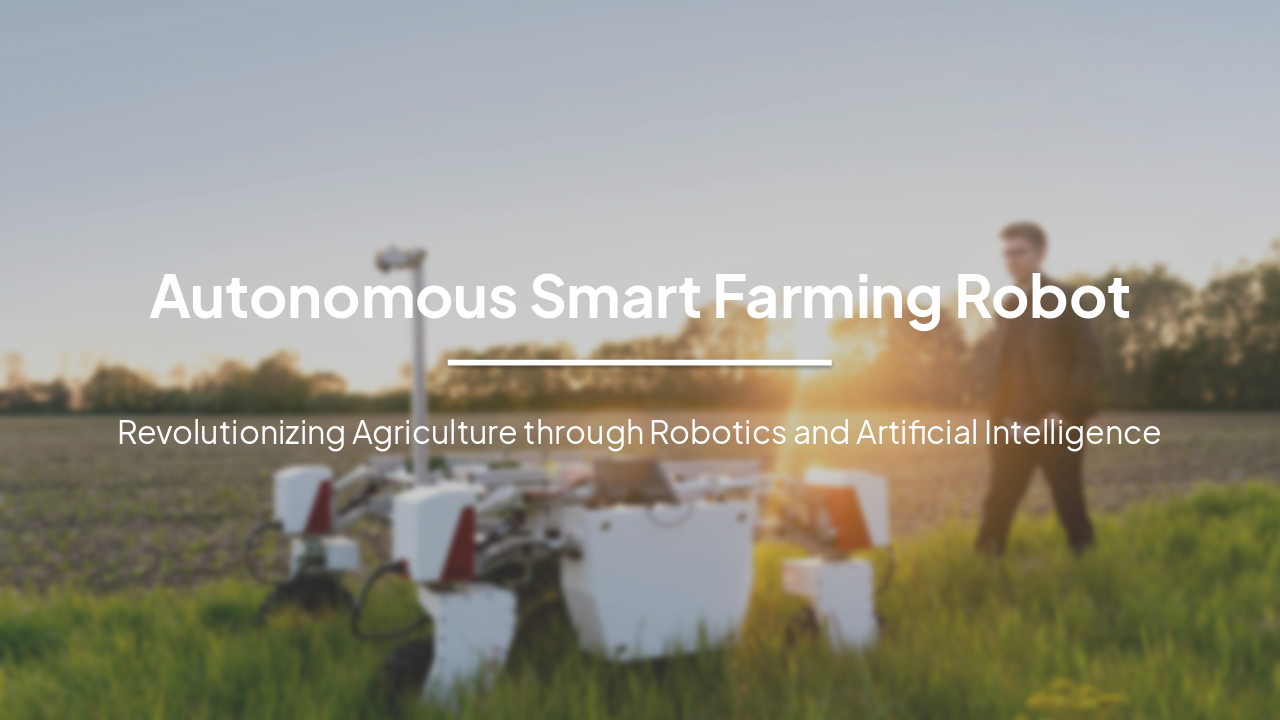
Autonomous Smart Farming Robot

Revolutionizing Agriculture through Robotics and Artificial Intelligence

---

Photo by ThisisEngineering on Unsplash
Slide 1 - Autonomous Smart Farming Robot
Slide 2 of 14

Slide 2 - Agriculture Challenges in Sri Lanka

  • Agriculture contributes 7.4% of Sri Lanka's GDP (2020)
  • 27.1% of the population engaged in agricultural activities
  • Challenges: Labor shortages, inefficient resource management, and rising costs
  • Need for technology integration to improve productivity and sustainability
Slide 2 - Agriculture Challenges in Sri Lanka
Slide 3 of 14

Slide 3 - Project Objectives

  • Automate critical farming tasks (irrigation, spraying)
  • Reduce human intervention and operational costs
  • Implement real-time precision farming using Computer Vision
  • Enhance crop yield through data-driven resource application
Slide 3 - Project Objectives
Slide 4 of 14

Slide 4 - System Overview

  • Central Microcontroller: Processes inputs and manages tasks
  • Sensors: Detect soil moisture and crop health status
  • Actuators: Control irrigation relays and spraying mechanisms
  • Vision Module: Real-time analysis for decision making

---

Photo by Daniel Beckemeier on Unsplash
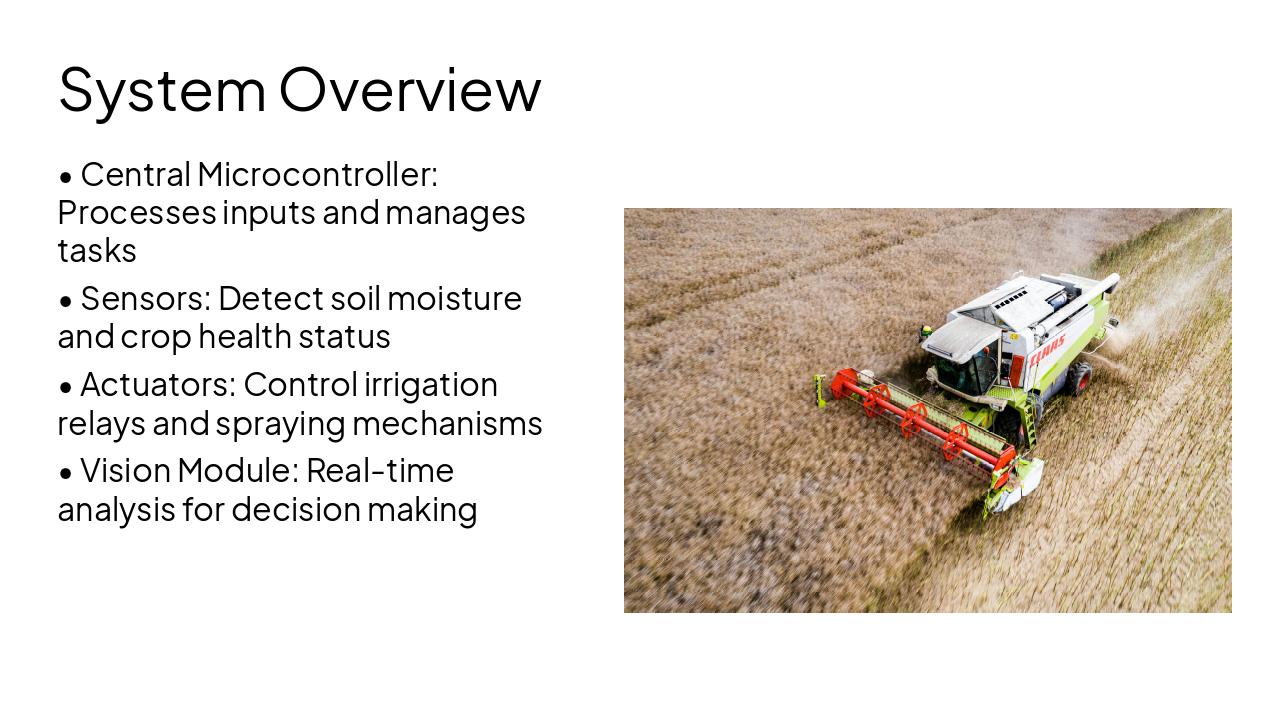
Slide 4 - System Overview
Slide 5 of 14

Slide 5 - Hardware Components

  • Processing: Raspberry Pi 4 (AI and Vision processing)
  • Controller: Arduino Mega for low-level actuator control
  • Vision: Pi Camera Module for crop detection
  • Sensors: Soil moisture sensors, ultrasonic distance sensors
  • Power: 12V Li-ion battery pack with power management system
Slide 5 - Hardware Components
Slide 6 of 14

Slide 6 - Software Architecture

ModuleTechnology/Methodology
Vision Engine,OpenCV and TensorFlow Lite],[],[],[]]},order_index:5,style:
Slide 6 - Software Architecture
Slide 7 of 14

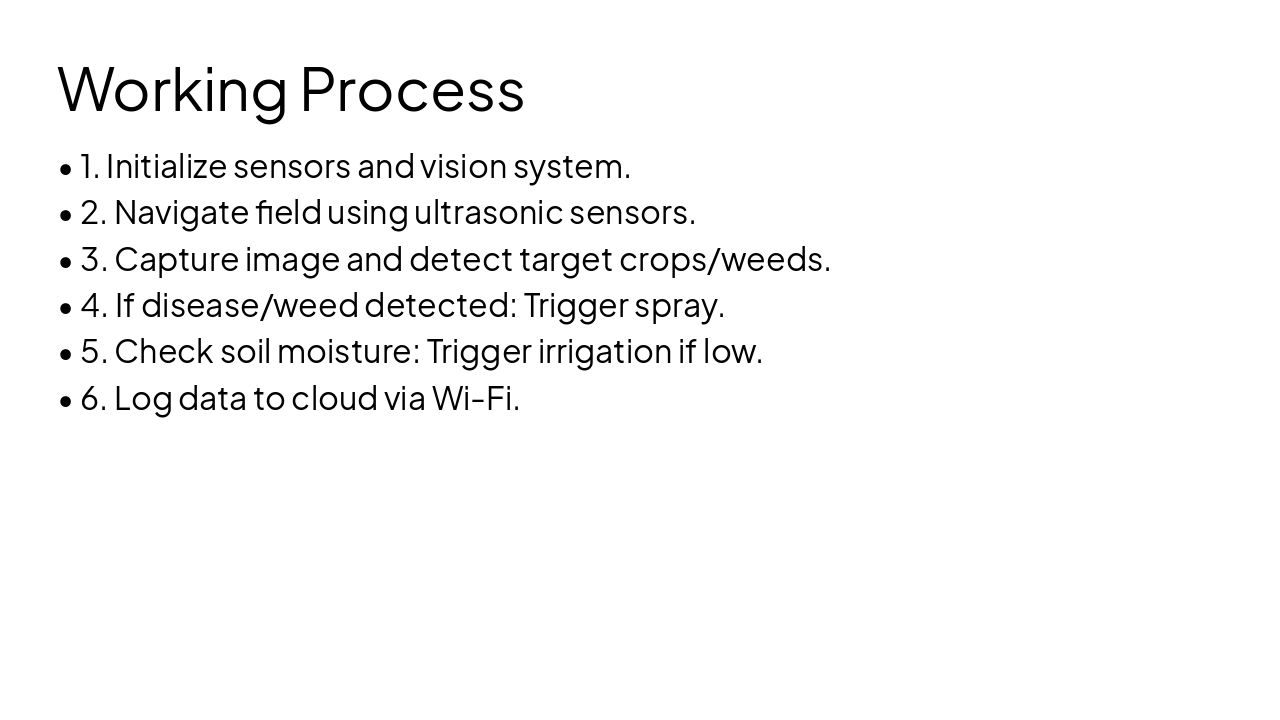
Slide 7 - Working Process

  • 1. Initialize sensors and vision system.
  • 2. Navigate field using ultrasonic sensors.
  • 3. Capture image and detect target crops/weeds.
  • 4. If disease/weed detected: Trigger spray.
  • 5. Check soil moisture: Trigger irrigation if low.
  • 6. Log data to cloud via Wi-Fi.
Slide 7 - Working Process
Slide 8 of 14

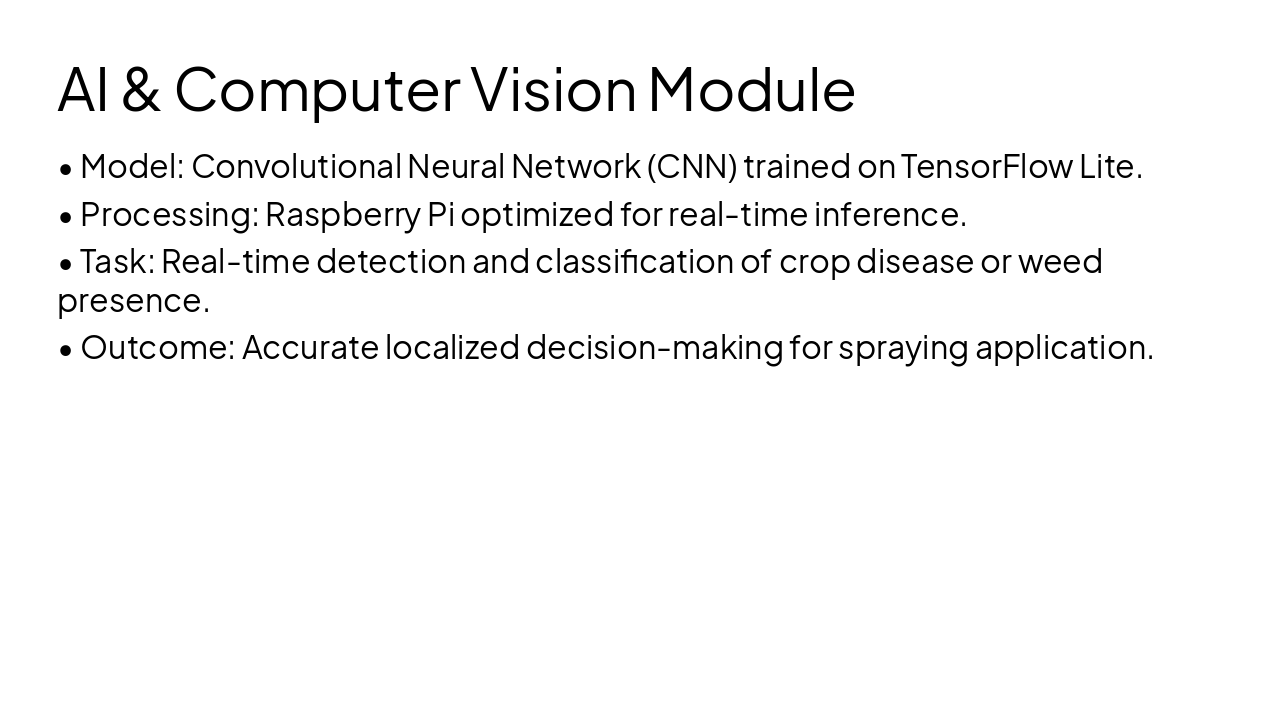
Slide 8 - AI & Computer Vision Module

  • Model: Convolutional Neural Network (CNN) trained on TensorFlow Lite.
  • Processing: Raspberry Pi optimized for real-time inference.
  • Task: Real-time detection and classification of crop disease or weed presence.
  • Outcome: Accurate localized decision-making for spraying application.
Slide 8 - AI & Computer Vision Module
Slide 9 of 14

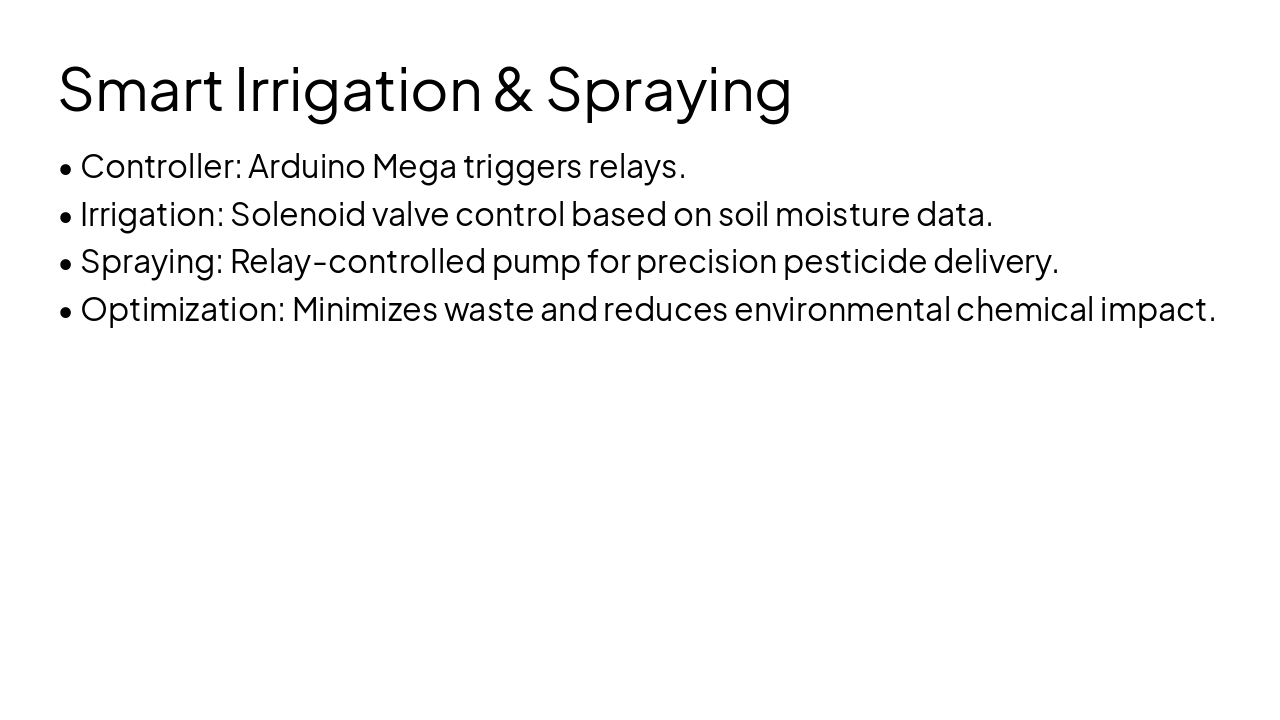
Slide 9 - Smart Irrigation & Spraying

  • Controller: Arduino Mega triggers relays.
  • Irrigation: Solenoid valve control based on soil moisture data.
  • Spraying: Relay-controlled pump for precision pesticide delivery.
  • Optimization: Minimizes waste and reduces environmental chemical impact.
Slide 9 - Smart Irrigation & Spraying
Slide 10 of 14

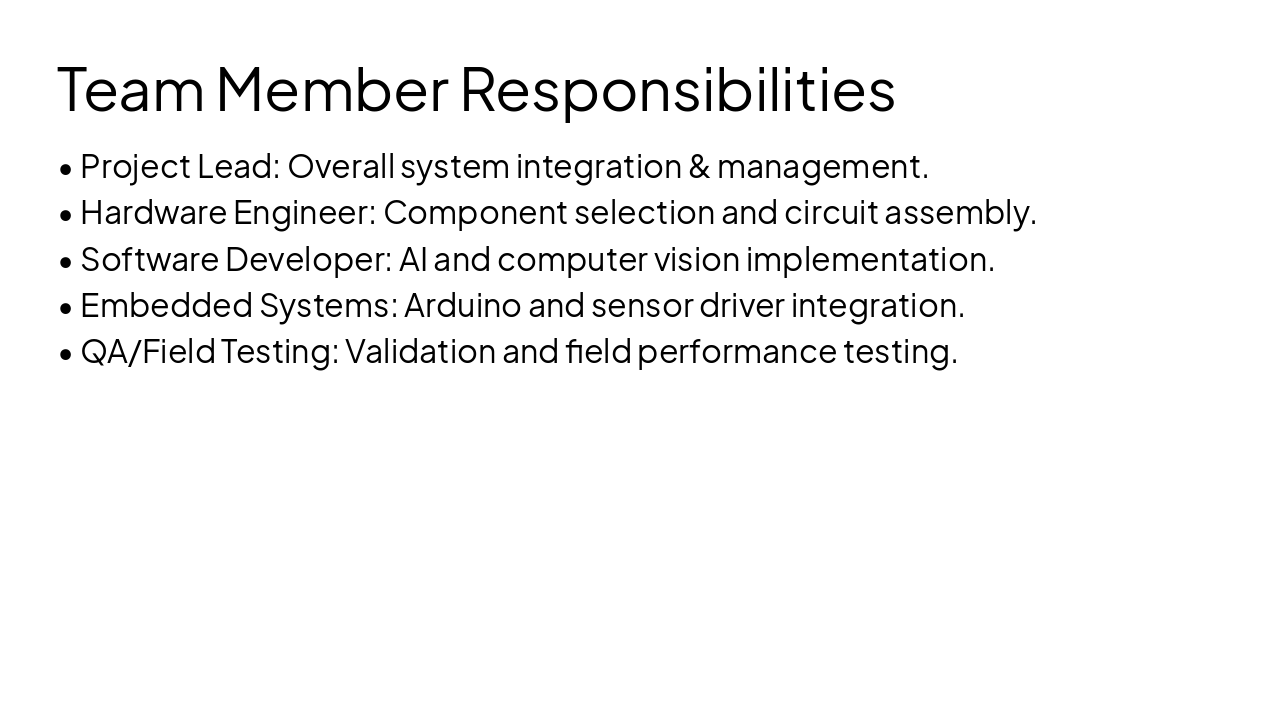
Slide 10 - Team Member Responsibilities

  • Project Lead: Overall system integration & management.
  • Hardware Engineer: Component selection and circuit assembly.
  • Software Developer: AI and computer vision implementation.
  • Embedded Systems: Arduino and sensor driver integration.
  • QA/Field Testing: Validation and field performance testing.
Slide 10 - Team Member Responsibilities
Slide 11 of 14

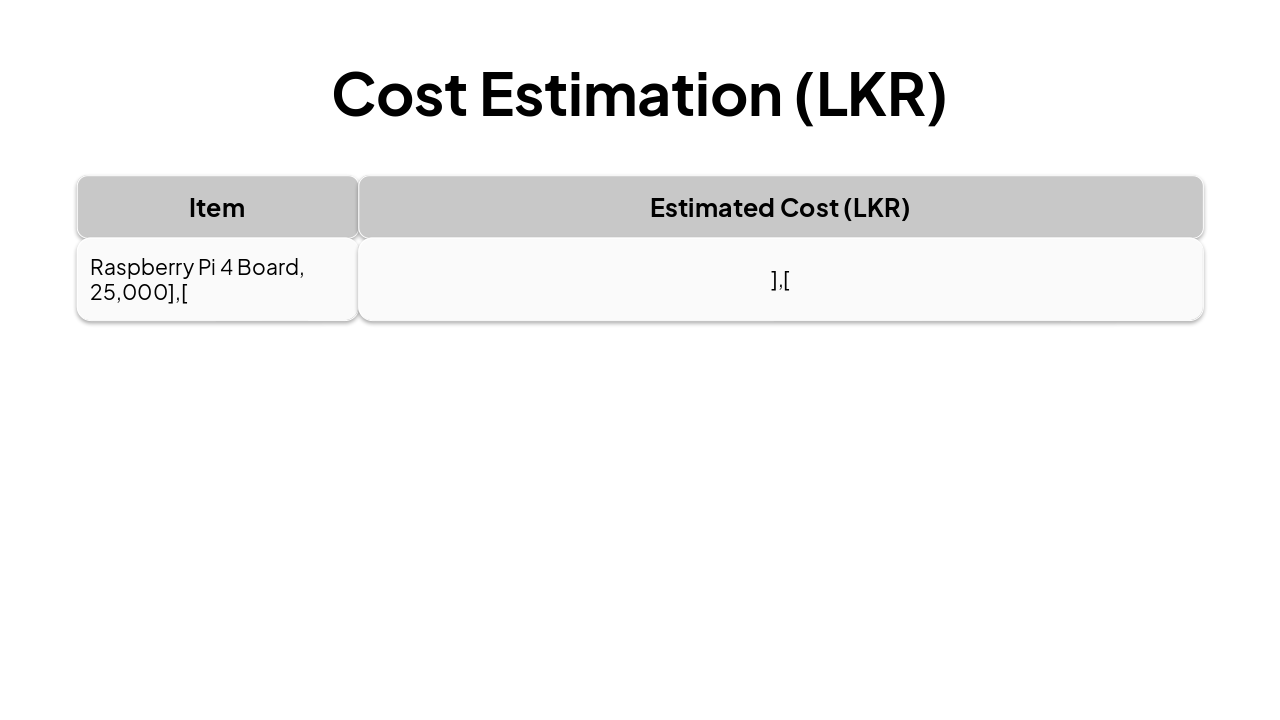
Slide 11 - Cost Estimation (LKR)

ItemEstimated Cost (LKR)
Raspberry Pi 4 Board, 25,000],[],[],[],[]]},order_index:10,style:
Slide 11 - Cost Estimation (LKR)
Slide 12 of 14

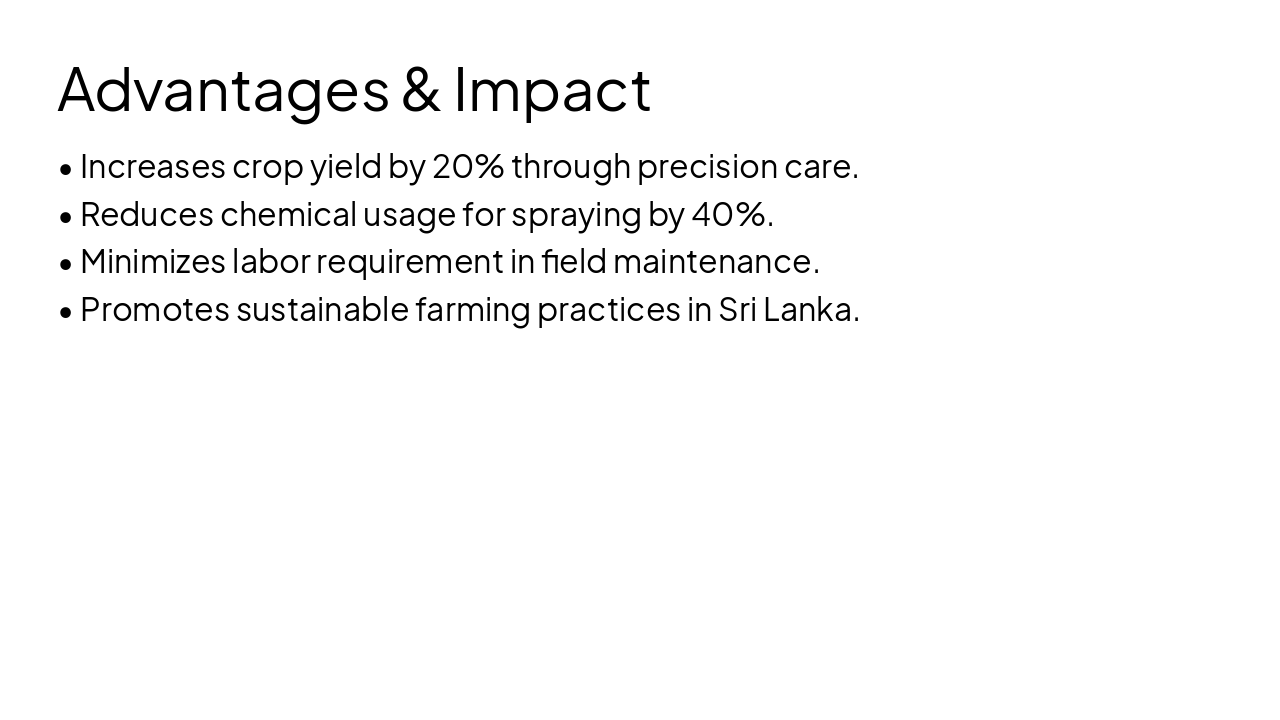
Slide 12 - Advantages & Impact

  • Increases crop yield by 20% through precision care.
  • Reduces chemical usage for spraying by 40%.
  • Minimizes labor requirement in field maintenance.
  • Promotes sustainable farming practices in Sri Lanka.
Slide 12 - Advantages & Impact
Slide 13 of 14

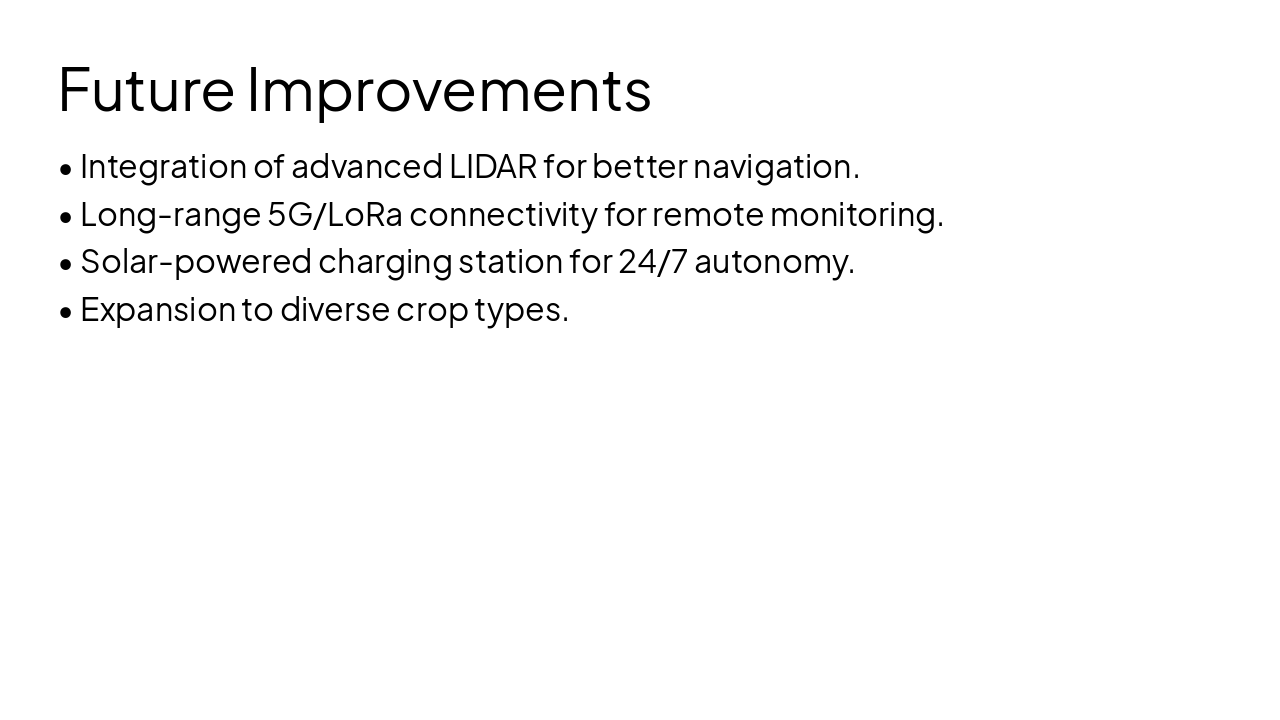
Slide 13 - Future Improvements

  • Integration of advanced LIDAR for better navigation.
  • Long-range 5G/LoRa connectivity for remote monitoring.
  • Solar-powered charging station for 24/7 autonomy.
  • Expansion to diverse crop types.
Slide 13 - Future Improvements
Slide 14 of 14

Slide 14 - Conclusion

Conclusion: Building a Smarter Future for Farming

Transforming Sri Lanka's Agricultural Sector with Advanced Robotics
Slide 14 - Conclusion

Discover More Presentations

Explore thousands of AI-generated presentations for inspiration

Browse Presentations
Powered by AI

Create Your Own Presentation

Generate professional presentations in seconds with Karaf's AI. Customize this presentation or start from scratch.

Create New Presentation

Powered by Karaf.ai — AI-Powered Presentation Generator